LMD Logo
LMD Logo
LMD Logo
  • Benefits of Last Mile TMS
  • Features of Last Mile TMS
  • Blogs

Category: Uncategorized

Blog

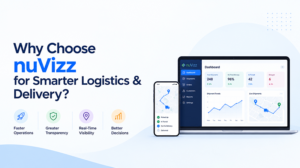
What are the benefits of using nuVizz for logistics and delivery services?

Key Takeaways

  • nuVizz is an AI-powered logistics and delivery orchestration platform.
  • AI-driven route optimization helps reduce fuel consumption, mileage, and driver hours.
  • Automated dispatch and predictive ETAs improve delivery efficiency and visibility.
  • Digital ePOD and real-time tracking help reduce missed deliveries and improve on-time performance.
  • nuVizz connects shippers, carriers, 3PLs, and fleets on a unified platform.
  • Integrated billing and settlement workflows help streamline post-delivery operations.
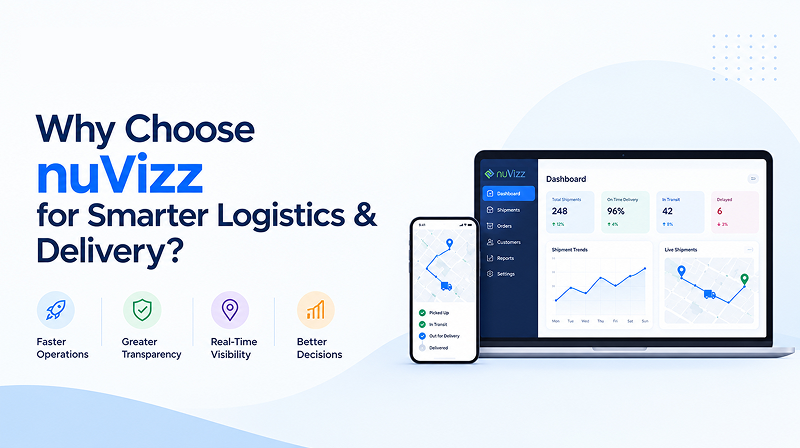
What are the benefits of using nuVizz for logistics and delivery services

Logistics and delivery operations are becoming increasingly complex. Higher delivery volumes, tighter delivery windows, rising operating costs, and growing customer expectations are putting pressure on businesses to improve how they plan and execute deliveries.

Managing these challenges through disconnected systems, manual dispatch processes, and limited shipment visibility can make it difficult to maintain efficiency at scale.

nuVizz combines AI-powered route optimization, automated dispatch, predictive visibility, digital delivery execution, and settlement workflows within a unified logistics platform.

For businesses managing enterprise delivery networks, the benefits go beyond vehicle tracking. nuVizz can help organizations:

  • Optimize routes and reduce unnecessary mileage
  • Automate dispatch and improve fleet productivity
  • Gain predictive visibility across deliveries
  • Reduce missed deliveries and improve on-time performance
  • Standardize operations across multi-carrier networks
  • Digitize proof of delivery and delivery compliance
  • Accelerate billing and settlement processes

Why Businesses Need Smarter Logistics and Delivery Management

Traditional delivery operations often depend on multiple systems and manual processes. Dispatchers may use one system for planning, another for tracking, and separate processes for proof of delivery, billing, and carrier settlements.

This fragmentation can create data silos, reporting delays, and limited operational visibility.

Challenges With Traditional Delivery Operations

As delivery networks become more complex, logistics teams commonly face:

  • Manual route and dispatch planning
  • Limited visibility into delivery progress
  • Difficulty responding to traffic and operational disruptions
  • Missed delivery windows and failed delivery attempts
  • Paper-based proof of delivery
  • Disconnected carrier and fleet information
  • Delays in billing and settlement processes

Static delivery plans can also become outdated quickly. Traffic changes, driver shortages, vehicle breakdowns, priority orders, and order modifications can all disrupt the original schedule.

The Role of AI and Delivery Orchestration

AI and delivery orchestration help logistics teams move from reactive management toward more connected and proactive operations.

Instead of treating planning, dispatch, tracking, execution, and settlement as separate activities, an orchestration platform connects these processes and uses operational data to support faster decisions.

This creates a more continuous flow of information from planning through financial settlement.

Need a smarter way to manage complex last-mile transportation operations?

Explore Last-Mile TMS

Key Benefits of Using nuVizz for Logistics and Delivery Services

nuVizz brings planning, dispatch, delivery execution, visibility, and settlement workflows together in one connected platform. By combining AI-driven optimization with real-time operational data, it helps logistics teams address everyday delivery challenges while improving efficiency, control, and customer experience.

The key benefits include:

1. Optimize Routes and Reduce Fuel & Mileage

Route efficiency has a direct impact on delivery costs. Inefficient routes can increase:

  • Fuel consumption
  • Vehicle mileage
  • Driver hours
  • Delivery times
  • Overall operating costs

nuVizz uses AI-powered route optimization to evaluate multiple delivery constraints, including:

  • Vehicle capacity
  • Delivery time windows
  • Driver availability
  • Traffic conditions
  • Order priorities

Routes can also be recalculated when conditions change during the delivery day.

How this helps

Instead of relying entirely on static routes created before vehicles leave the depot, logistics teams can respond to real-world disruptions and changing delivery conditions.

nuVizz impact: 20–25% reduction in fuel consumption and vehicle mileage.

For high-volume delivery networks, reducing unnecessary miles can translate into meaningful operational savings while improving fleet utilization.

2. Automate Dispatch and Improve Fleet Productivity

As delivery volumes increase, dispatching becomes more difficult. Operations teams need to continuously monitor vehicles, drivers, orders, and changing delivery requirements.

nuVizz supports automated dispatch through RoboDispatch™, helping reduce repetitive dispatcher activities.

The system can consider:

  • Available vehicles
  • Driver capacity
  • Delivery priorities
  • Route requirements
  • Changing operational conditions

When circumstances change, dispatch plans can be adjusted without requiring teams to rebuild the entire plan manually.

How this helps

Automation allows operations teams to spend less time on repetitive dispatch tasks and more time managing exceptions and higher-value operational decisions.

Capability: Dispatch controllers can manage 2–3× more delivery routes without a proportional increase in operational overhead.

This can be particularly useful for organizations looking to increase delivery capacity without increasing administrative workload at the same rate.

3. Gain Real-Time Predictive Visibility Across Deliveries

Visibility is critical for both logistics teams and customers.

When delivery information is delayed or spread across different systems, operations teams may struggle to identify problems while customers may repeatedly contact support for shipment updates.

nuVizz provides real-time visibility across delivery operations, supported by predictive ETA capabilities.

The platform uses field and operational data to continuously update expected arrival times.

Performance: 90–95% predictive ETA accuracy.

How this helps

More accurate ETAs can help logistics teams:

  • Identify potential delays earlier
  • Monitor delivery progress
  • Manage SLA risks
  • Communicate more accurate delivery expectations
  • Reduce routine WISMO inquiries

Predictive visibility also supports proactive exception management. Rather than waiting until a delivery becomes late, teams can identify potential issues and determine an appropriate corrective action.

Automated tracking information and live delivery updates can further improve the customer experience.

4. Reduce Missed Deliveries and Improve On-Time Performance

A missed delivery can create costs beyond the original transportation expense.

A failed attempt may require:

  • Another delivery trip
  • Additional driver hours
  • More vehicle mileage
  • Additional fuel
  • Customer-service effort

nuVizz brings together route optimization, predictive visibility, dispatch automation, and exception management to help organizations address delivery risks earlier.

For example, changing traffic conditions or another operational disruption may put a delivery window at risk. Earlier visibility into the problem gives operations teams an opportunity to respond.

Performance

  • Up to 70% reduction in missed delivery segments
  • 96–98.5%+ on-time delivery performance across high-volume networks

Actual results can vary based on the operating environment, delivery model, baseline performance, and network complexity. Businesses should therefore evaluate these metrics against their own operational baseline.

5. Standardize Operations Across Multi-Carrier Networks

Enterprise logistics networks often involve multiple transportation providers rather than a single fleet.

A business may work with:

  • Private fleets
  • Dedicated carriers
  • Regional logistics providers
  • 3PLs
  • Other delivery partners

Managing these parties through disconnected systems can make it difficult to maintain consistent processes and performance visibility.

nuVizz functions as a multi-tenant cloud platform designed to connect shippers, carriers, 3PLs, terminals, and other delivery stakeholders within a common operational environment.

How this helps

A unified environment can provide:

  • A centralized source of delivery information
  • Standardized execution processes
  • Consistent operational KPIs
  • Greater carrier performance visibility
  • Better coordination across logistics partners

For enterprise organizations, this can reduce operational silos and provide a more consistent view of delivery activity across different fleets and transportation providers.

6. Improve Delivery Compliance With Digital ePOD

Proof of delivery is a critical part of delivery execution. Paper manifests and manually recorded delivery information can make it harder to verify completed deliveries, investigate disputes, and maintain an accurate audit trail.

nuVizz supports digital field execution and electronic proof of delivery (ePOD) through mobile workflows.

Delivery processes can include:

  • Barcode scanning
  • Digital signatures
  • Geotagged timestamps
  • Photographic evidence
  • Digital delivery confirmation

How this helps

Digital execution creates a structured record of delivery activity and strengthens chain-of-custody visibility.

This can be especially valuable for industries where delivery verification and traceability are important, including:

Automotive | Healthcare | Pharmaceuticals | High-value distribution

Moving delivery confirmation into a digital workflow can also reduce paperwork and minimize manual effort associated with collecting and reconciling delivery documentation.

7. Accelerate Billing, Settlements, and Cash Flow

The delivery process does not end when a driver completes a stop.

Verified delivery information may need to flow into:

  • Client billing
  • Freight auditing
  • Driver settlements
  • Carrier payments
  • Other financial processes

When these activities depend on paper documents or manually transferred information, settlement cycles can become slower and more prone to reconciliation issues.

nuVizz connects operational delivery events with downstream financial workflows. Verified ePOD information can feed into billing, freight auditing, and driver or carrier settlement processes.

Performance: 30% faster settlement cycles.

How this helps

By reducing manual data entry and reconciliation, businesses can shorten the time between completed delivery activity and financial processing.

For logistics organizations handling large delivery volumes, improving this cash-to-cash lifecycle can become an important operational advantage.

Need a smarter way to plan efficient delivery routes at scale? Find the Right Route Planner

Measuring the Business Impact of nuVizz

A logistics technology investment should be measured through operational KPIs rather than simply comparing software features.

The performance metrics associated with nuVizz include:

KPIDocumented nuVizz Impact
Missed delivery segmentsUp to 70% reduction
Fuel consumption & mileage20–25% reduction
Driver hours & operating miles30–35% reduction
On-time delivery96–98.5%+
Predictive ETA accuracy90–95%
Settlement cycles30% faster

Businesses evaluating a delivery platform should compare these metrics against their own operational baseline.

Results can differ depending on:

  • Fleet composition
  • Delivery density
  • Geographic coverage
  • Existing processes
  • Network complexity
  • Delivery model

This makes establishing a baseline before implementation important for measuring the actual impact of a logistics platform.

How nuVizz Supports Different Logistics Operations

nuVizz can support different stakeholders and delivery models across complex logistics networks.

Enterprise Shippers and OEMs

Enterprise shippers and OEMs can use centralized delivery visibility to coordinate multiple carriers and standardize execution across distribution networks.

Key applications include:

  • Coordinating complex distribution networks
  • Monitoring carrier performance
  • Tracking operational KPIs
  • Standardizing delivery workflows
  • Improving visibility across logistics partners

Logistics Service Providers and Carriers

LSPs and carriers can use nuVizz capabilities to improve fleet and delivery operations through:

  • Route optimization
  • Automated dispatch
  • Fleet visibility
  • Digital delivery workflows
  • Automated settlement processes
  • Improved resource utilization

These capabilities can also help providers support higher delivery volumes without increasing administrative effort at the same rate.

Industry-Specific Delivery Operations

nuVizz can support a range of specialized delivery environments.

Automotive and Parts Distribution

  • Multi-stop dealership deliveries
  • Time-sensitive parts movement
  • Item-level traceability

Healthcare and Pharmaceutical Logistics

  • Delivery visibility
  • Digital chain-of-custody records
  • Time-critical shipment workflows

Retail and E-commerce

  • Scheduled last-mile deliveries
  • Dynamic delivery windows
  • Customer tracking
  • High-volume delivery execution

Big-and-Bulky and White-Glove Delivery

  • Complex delivery scheduling
  • Delivery execution management
  • Digital completion records

Ready to reduce delivery costs and improve last-mile efficiency with AI?

Find the Right Software

What Sets nuVizz Apart From Fragmented Delivery Management?

The key difference between fragmented delivery management and an orchestration-based approach is how information moves through the delivery lifecycle.

A Fragmented Model

Planning → Separate Dispatch → Separate Tracking → Manual Delivery Confirmation → Manual Billing

In this environment, information may need to be transferred manually between systems, creating delays and data gaps.

An Orchestrated Model

Planning → Dispatch → Delivery Execution → Predictive Visibility → ePOD → Billing & Settlement

nuVizz brings these capabilities together within a unified logistics platform.

Operational events captured during delivery execution can then support:

  • Real-time visibility
  • Exception management
  • Delivery compliance
  • Proof of delivery
  • Billing
  • Freight auditing
  • Driver and carrier settlements

For organizations managing high-volume or multi-party delivery networks, connecting these processes can reduce operational silos and create a more consistent flow of information.

Is nuVizz Suitable for Your Logistics Operation?

The suitability of any logistics platform depends on the specific operating environment.

Businesses should consider factors such as:

  • Delivery volume
  • Fleet size
  • Geographic coverage
  • Number of transportation partners
  • Delivery-window requirements
  • Network complexity
  • Existing technology environment
  • Level of automation required

nuVizz can be particularly relevant for organizations managing complex, high-volume, multi-carrier delivery networks that need greater automation, real-time visibility, and coordination across the delivery lifecycle.

Before adopting a platform, businesses should establish their current operational baseline and identify the KPIs they want to improve. This provides a clearer way to measure the technology’s value after implementation.

Conclusion

Modern logistics operations require more than basic vehicle tracking. Businesses need connected processes that support route planning, dispatch, delivery execution, visibility, compliance, and financial settlement.

nuVizz brings these capabilities together through an AI-powered last-mile TMS and delivery orchestration platform.

Its performance metrics include:

  • 20–25% lower fuel consumption and mileage
  • Up to 70% fewer missed delivery segments
  • 96–98.5%+ on-time delivery performance
  • 90–95% predictive ETA accuracy
  • 30% faster settlement cycles
  • 30–35% reduction in driver hours and operating miles

For businesses seeking to modernize complex logistics and delivery operations, an integrated approach such as nuVizz can provide a foundation for improving operational visibility, efficiency, delivery performance, and scalability across the delivery lifecycle.
Book A Demo | Contact Us

bookmark_fill [#fff1226] Created with Sketch. Related Content
Blog

Best Last-Mile TMS Software: How Leading...

Best Last-Mile TMS Software How Leading Platforms Compare
Blog

What Are The Best Route Planning Softwar...

What Are The Best Route Planning Software Options For Delivery Companies
Blog

The Hidden Factors Driving Supply Chain ...

The Hidden Factors Driving Supply Chain Turnover
Blog

Air and Road Delivery Are Merging Into O...

Air and Road Delivery Are Merging Into One Network — Most Systems Still Treat Them as Two
Blog

Dozens of Carriers, Dozens of Systems: W...

Dozens of Carriers, Dozens of Systems Why Delivery Networks Still Lack End-to-End Visibility
Blog

What Most Transportation Management Syst...

What Most Transportation Management Systems Get Wrong About Last-Mile Delivery
Blog

Retail Logistics: The Complete Guide to ...

Retail Logistics The Complete Guide to Order Fulfillment, Inventory Management & Last-Mile Delivery
Blog

How Shipping and Logistics Platforms Imp...

How Shipping and Logistics Platforms Improve Shipment Visibility, Route Optimization, and Delivery Performance
Blog

What Is Transportation and Last-Mile Del...

What Is Transportation and Last-Mile Delivery Optimization Benefits, Strategies & Best Practices
Blog

How Does Order Tracking Work? A Guide to...

How Does Order Tracking Work A Guide to Real-Time Delivery Visibility

FAQs

nuVizz is an AI-powered last-mile TMS and delivery orchestration platform used to manage route optimization, dispatch, real-time delivery visibility, digital proof of delivery, and billing and settlement workflows.

nuVizz helps improve last-mile delivery by optimizing routes, automating dispatch, providing predictive ETAs, identifying potential delivery exceptions, and digitizing delivery execution. These capabilities can help reduce mileage, missed deliveries, and manual operational work.

Yes. nuVizz is designed to reduce costs through route optimization, improved fleet utilization, automated dispatch, and reduced driver hours and mileage. Documented performance metrics indicate a 20–25% reduction in fuel consumption and mileage and a 30–35% reduction in driver hours and operating miles.

nuVizz connects delivery operations across planning, dispatch, field execution, and tracking to provide real-time operational visibility. Its predictive ETA capabilities can provide 90–95% ETA accuracy, helping logistics teams identify potential delays and keep customers informed.

nuVizz is designed to support complex, high-volume delivery networks involving shippers, carriers, 3PLs, fleets, terminals, and other stakeholders. Its multi-tenant platform can help businesses standardize delivery workflows, monitor carrier performance, and manage operations through a centralized environment.

Blog

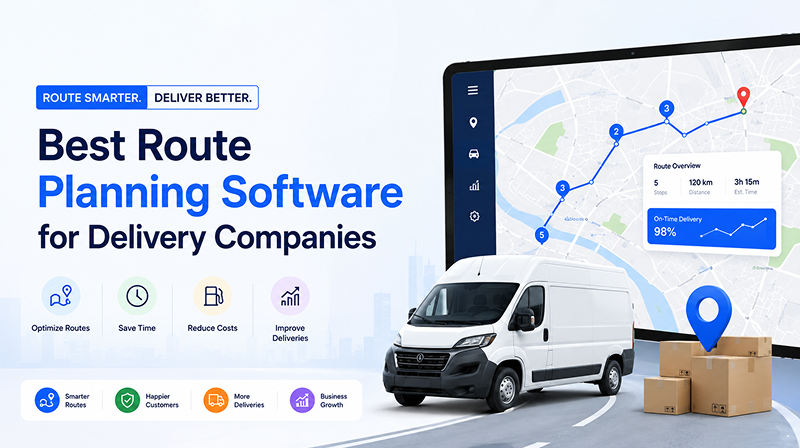
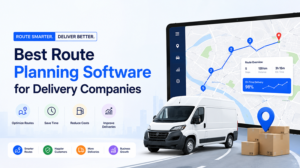
What Are The Best Route Planning Software Options For Delivery Companies?

Key Takeaways

  • The best route planning software depends on fleet size, delivery volume, and operational complexity.
  • Advanced route planners consider more than distance, including vehicle capacity, delivery windows, driver availability, and priorities.
  • Dynamic route optimization helps businesses respond to new orders, delays, and other changes during the delivery day.
  • Smaller fleets may only need dedicated routing software, while complex operations may benefit from a broader last-mile TMS.
  • nuVizz is a strong option for delivery companies that need route optimization connected with dispatch, delivery execution, and real-time visibility.
What Are The Best Route Planning Software Options For Delivery Companies

For delivery companies, efficient route planning can directly influence delivery costs, driver productivity, customer experience, and fleet utilization.

Planning a handful of stops manually may be manageable. But as order volumes increase, dispatchers often have to consider vehicle capacity, delivery time windows, driver availability, traffic, service times, and last-minute changes at the same time.

This is where route planning software for delivery companies becomes valuable.

Modern route planning solutions can automate delivery sequencing, optimize routes based on operational constraints, and help dispatch teams respond when conditions change.

But what is the best route planning software?

There isn’t one solution that is right for every delivery business. A small fleet with straightforward routes may need a simple route planner, while a larger operation may need route optimization integrated with dispatch, delivery execution, and real-time visibility.

This blog explains the main options and what delivery companies should consider when selecting a solution.

What Is Route Planning Software?

Route planning software helps delivery businesses determine which vehicles should visit which customers and in what sequence.

Instead of manually organizing stops using spreadsheets, maps, or static route plans, the software evaluates delivery information and creates routes based on defined business rules.

Depending on the platform, route planning can consider:

  • Number and location of delivery stops
  • Vehicle capacity
  • Driver availability
  • Delivery time windows
  • Pickup and delivery requirements
  • Traffic and travel time
  • Service time at each stop
  • Vehicle restrictions
  • Delivery priorities

The goal isn’t simply to find the shortest route. An effective system should create a route that is efficient and operationally feasible.

Reduce the hidden causes of supply chain turnover with smarter, more connected logistics operations.

Explore Smarter Logistics

What Should Delivery Companies Look for in Route Planning Software?

The right feature set depends on the complexity of your delivery operation. However, several capabilities are particularly important.

1. Multi-Stop Route Optimization

A delivery route may include dozens or hundreds of stops. Good route planning software should be able to determine an efficient sequence while considering operational constraints.

For example, assigning nearby customers to the same driver might reduce distance, but the route may still fail if the vehicle doesn’t have enough capacity or the driver cannot meet the customers’ delivery windows.

This is why modern route optimization needs to consider multiple variables simultaneously.

2. Vehicle Capacity and Constraints

Routes need to work in the real world.

A vehicle may have sufficient driving time but not enough space for all assigned orders. Different vehicles may also have different capacities or restrictions.

A capable route planner should account for these factors when creating delivery routes.

This is particularly useful for distributors, retailers, food and grocery businesses, pharmaceutical companies, and other operations where vehicle capacity affects planning.

3. Delivery Time Windows

Some customers require deliveries within specific time periods.

For example, a business may need to deliver to one customer between 9 AM and 11 AM while another accepts deliveries only in the afternoon.

Route planning software can use these time windows when sequencing stops, helping businesses reduce missed appointments, waiting time, and unnecessary re-routing.

4. Dynamic Route Optimization

A route created once may not remain optimal throughout the day.

New orders can arrive. Drivers can encounter delays. Vehicles can become unavailable. Customers can change delivery requirements.

Dynamic route optimization allows the system to reconsider routes when conditions change instead of requiring dispatchers to manually rebuild the entire plan.

This is especially useful for same-day, on-demand, and high-volume delivery operations.

5. Dispatch and Real-Time Visibility

Route planning shouldn’t end once routes are created.

Dispatchers need to know whether drivers are following the plan, which deliveries have been completed, and where exceptions are occurring.

Connecting route planning with:

  • Dispatch
  • Driver applications
  • GPS tracking
  • Delivery status
  • Proof of delivery
  • Customer notifications

This creates a more complete delivery workflow.

What Are the Best Route Planning Software Options?

Rather than saying that one software is universally the “best,” delivery companies should choose a solution based on their operational requirements.

Option 1: Dedicated Route Planning Software

Dedicated route planners focus primarily on creating and optimizing delivery routes.

They can be a good choice for smaller delivery businesses that already have separate systems for order management, tracking, proof of delivery, and other workflows.

Best suited for:

  • Small and mid-sized fleets
  • Straightforward delivery operations
  • Businesses primarily looking for route optimization
  • Companies with existing delivery management systems

The main advantage is simplicity. If routing is your only major requirement, you may not need a complete transportation platform.

Option 2: Fleet and Delivery Management Platforms

The next category combines route planning with features such as driver management, GPS tracking, dispatch, and delivery execution.

These platforms are useful when businesses want to connect route planning with what happens in the field.

Best suited for:

  • Growing delivery businesses
  • Fleets with multiple drivers
  • Businesses needing driver tracking
  • Companies looking for routing plus delivery execution

Option 3: Last-Mile Transportation Management Platforms

For larger or more complex delivery networks, a last-mile transportation management system (TMS) can provide a broader solution.

Instead of treating route planning as a standalone function, a last-mile TMS can connect:

Orders → Planning → Routing → Dispatch → Delivery → Tracking → Proof of Delivery → Analytics

This approach can be useful for organizations managing multiple facilities, large fleets, third-party carriers, complex delivery rules, or high delivery volumes.

This is also where nuVizz can be a strong fit.

Connect air and road operations in one unified network for faster, more flexible delivery orchestration. Unify Your Delivery Network

Why nuVizz Is a Strong Route Planning Option

nuVizz combines route optimization with broader last-mile transportation and delivery management capabilities.

nuVizz routing capabilities support different delivery scenarios, including static and recurring routes, hub-and-spoke operations, multi-pickup and multi-drop deliveries, dynamic optimization, and real-time routing.

This makes it particularly relevant for businesses where routing is only one part of a larger delivery operation.

1. AI-Powered Route Optimization

nuVizz uses AI and optimization technologies to help businesses create delivery plans based on operational requirements rather than simply calculating the shortest geographical path.

The platform can consider factors such as vehicle capacity, delivery requirements, resource availability, and route constraints.

This can help businesses create more practical routes while improving resource utilization.

2. Dynamic and Real-Time Routing

One of the biggest advantages of advanced route planning is the ability to adapt when circumstances change.

nuVizz supports dynamic and real-time route optimization, allowing businesses to adjust delivery plans based on changing operational conditions.

For example, if a new delivery is added or a driver becomes unavailable, the system can help determine how the remaining delivery workload should be handled.

3. Route Planning Connected to Dispatch

nuVizz doesn’t treat route planning as an isolated activity.

The optimized plan can be connected with dispatch and driver execution, helping operations teams move from planning to actual delivery execution within the same broader platform.

This reduces the gap between planning what should happen and managing what is actually happening.

4. Real-Time Delivery Visibility

For larger delivery operations, knowing the planned route isn’t enough.

Operations teams also need visibility into actual delivery progress.

nuVizz provides capabilities around delivery tracking, execution, proof of delivery, and visibility, allowing businesses to monitor performance beyond the initial route plan.

Which Route Planning Software Is Right for Your Business?

The right solution depends largely on the complexity of your operation.

A dedicated route planner may be enough if:

  • You operate a small fleet.
  • Your routes are relatively predictable.
  • You mainly need stop sequencing.
  • You already have systems for tracking and delivery execution.

Consider an advanced delivery platform if:

  • Your delivery volume is growing.
  • You manage many drivers or vehicles.
  • Deliveries have strict time windows.
  • Vehicle capacity affects route decisions.
  • Routes frequently change.
  • Dispatchers spend significant time planning manually.
  • You need real-time delivery visibility.

Consider a last-mile TMS such as nuVizz if:

Your business needs route optimization as part of a larger transportation workflow.

This can be particularly relevant for organizations managing multiple locations, complex delivery networks, different vehicle types, internal fleets, or third-party carriers.

Questions to Ask Before Choosing Route Planning Software

Before purchasing a route planning solution, ask vendors:

Routing

  • Can it optimize multi-stop routes?
  • Does it consider vehicle capacity?
  • Can it handle delivery time windows?
  • Can it support recurring routes?

Real-Time Operations

  • Can routes be re-optimized during the day?
  • Can new orders be added after routes are dispatched?
  • Can dispatchers manually adjust optimized routes?

Delivery Execution

  • Does it include a driver application?
  • Can drivers capture proof of delivery?
  • Can dispatchers track active routes?

Scalability

  • Can it support multiple depots?
  • Can it work with third-party carriers?
  • Can it integrate with ERP, WMS, OMS, or TMS systems?

These questions help businesses evaluate software based on their actual requirements rather than simply comparing feature lists.

Conclusion

The best route planning software is one that goes beyond finding the shortest route and helps businesses manage real-world delivery requirements.

While simple fleets may only need basic route planning, growing and complex delivery operations benefit from dynamic optimization, capacity planning, dispatch, and real-time visibility.

nuVizz is a strong fit for these operations, combining route optimization with broader last-mile delivery management capabilities.

Book A Demo | Contact nuVizz

bookmark_fill [#fff1226] Created with Sketch. Related Content
Blog

What are the benefits of using nuVizz fo...

What are the benefits of using nuVizz for logistics and delivery services
Blog

Best Last-Mile TMS Software: How Leading...

Best Last-Mile TMS Software How Leading Platforms Compare
Blog

The Hidden Factors Driving Supply Chain ...

The Hidden Factors Driving Supply Chain Turnover
Blog

Air and Road Delivery Are Merging Into O...

Air and Road Delivery Are Merging Into One Network — Most Systems Still Treat Them as Two
Blog

Dozens of Carriers, Dozens of Systems: W...

Dozens of Carriers, Dozens of Systems Why Delivery Networks Still Lack End-to-End Visibility
Blog

What Most Transportation Management Syst...

What Most Transportation Management Systems Get Wrong About Last-Mile Delivery
Blog

Retail Logistics: The Complete Guide to ...

Retail Logistics The Complete Guide to Order Fulfillment, Inventory Management & Last-Mile Delivery
Blog

How Shipping and Logistics Platforms Imp...

How Shipping and Logistics Platforms Improve Shipment Visibility, Route Optimization, and Delivery Performance
Blog

What Is Transportation and Last-Mile Del...

What Is Transportation and Last-Mile Delivery Optimization Benefits, Strategies & Best Practices
Blog

How Does Order Tracking Work? A Guide to...

How Does Order Tracking Work A Guide to Real-Time Delivery Visibility

FAQs

There is no single best solution for every delivery company. The right choice depends on fleet size, delivery volume, operational complexity, and the level of automation required. For simple operations, a dedicated route planner may be sufficient. For complex delivery networks, a broader platform such as nuVizz can combine route optimization with dispatch, delivery execution, and visibility.

It can be worthwhile when dispatchers spend substantial time creating routes manually or when deliveries involve multiple stops, time windows, or changing orders. However, small businesses should choose a solution that matches their actual needs rather than paying for unnecessary enterprise functionality.

Route planning determines how deliveries should be organized and scheduled. Route optimization evaluates possible routes against factors such as distance, time, capacity, and delivery constraints to identify a more efficient plan.

Yes. Advanced route planning platforms can dynamically adjust routes when conditions change, such as new orders, driver delays, vehicle availability, or delivery exceptions.

It can help reduce costs by minimizing unnecessary mileage, improving vehicle utilization, reducing manual planning effort, and helping businesses manage more deliveries with available resources. Actual savings depend on the company's delivery density, fleet, existing processes, and implementation.

Blog

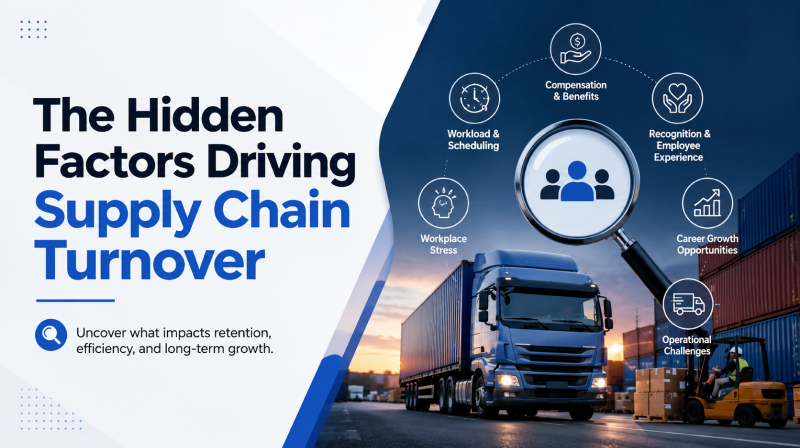
The Hidden Factors Driving Supply Chain Turnover

Key Takeaways

  • Supply chain turnover is often driven by hidden operational inefficiencies, including poor planning, limited visibility, disconnected systems, and reactive execution.
  • Limited supply chain visibility can amplify disruptions by delaying the identification and resolution of shipment, delivery, and transportation exceptions.
  • Manual route planning and dispatch can limit scalability, increase operational workload, and contribute to inefficient transportation utilization.
  • Supply chain orchestration connects planning, optimization, dispatch, execution, and real-time visibility, helping organizations respond more effectively to changing conditions.
  • nuVizz helps enterprises optimize delivery and transportation operations through route optimization, intelligent dispatch, real-time visibility, exception management, delivery execution, and customer communication.
The Hidden Factors Driving Supply Chain Turnover

Supply chain turnover is rarely caused by one obvious problem.

Rising transportation costs, labor shortages, supplier changes, demand volatility, and customer expectations often get the attention. But beneath these visible challenges are operational issues that can quietly create instability across the supply chain.

Poor planning. Limited visibility. Disconnected systems. Inefficient routes. Manual dispatch. Delayed exception management. Inconsistent delivery execution.

Individually, these problems may seem manageable. Collectively, they can create a supply chain that spends more time reacting than optimizing.

That is why understanding the hidden operational factors driving supply chain turnover matters.

The organizations that address these underlying issues can build supply chains that are more connected, predictable, responsive, and easier to scale.

What Is Driving Supply Chain Turnover?

Supply chain turnover can take many forms.

It may appear as frequent changes in carriers or suppliers, inconsistent transportation capacity, fluctuating fulfillment performance, customer churn, operational disruption, or continually changing delivery resources.

Not all turnover can be eliminated. Market conditions will always change.

The bigger concern is avoidable operational instability.

When supply chain processes depend heavily on manual coordination, disconnected data, and reactive decisions, even a relatively small disruption can create problems across multiple stages of the network.

For example:

A delayed vehicle → missed delivery window → customer complaint → additional coordination → higher operating cost → lower network efficiency.

When similar events happen repeatedly, they become more than isolated exceptions. They become structural problems.

1. Poor Planning Creates Problems Before Execution Begins

Many supply chain challenges start before a shipment ever moves.

Planning teams have to balance demand, inventory, delivery windows, vehicle capacity, transportation resources, geographic constraints, and customer requirements.

As networks become more complex, planning these variables manually becomes increasingly difficult.

A plan that looks efficient in the morning can become inefficient by afternoon because of changing demand, traffic, vehicle availability, new orders, cancellations, or unexpected delays.

This is why modern supply chain planning needs to move beyond static schedules.

Dynamic planning and optimisation can help organizations continuously evaluate changing conditions and make better decisions before those changes cascade through the network.

2. Visibility Gaps Make Small Problems Bigger

A supply chain cannot respond effectively to an event it cannot see.

Without real-time visibility, teams may not know:

  • Where a shipment is
  • Whether a vehicle is running late
  • Which deliveries are at risk
  • Whether a route is being followed
  • Where capacity is being underutilized
  • Which customer commitments may be affected
  • Where an exception originated

This often forces operations teams to rely on phone calls, emails, spreadsheets, and manual status updates.

The result is a delayed response.

Visibility is therefore not simply a tracking capability. It is the foundation for better decision-making.

Modern delivery orchestration platforms can provide network-wide visibility across fleets, carriers, agents, shipments, and delivery touchpoints, helping organizations move from fragmented information toward a more complete operational picture. nuVizz, for example, positions real-time delivery visibility as a core part of its transportation and delivery orchestration platform.

3. Disconnected Systems Increase Coordination Overhead

A typical supply chain may involve order management systems, ERP platforms, warehouse systems, transportation management systems, fleet applications, carrier systems, customer communication tools, and other technologies.

The technology itself is not necessarily the problem.

The challenge is what happens when these systems do not work together effectively.

Teams may have to move information manually between applications or use multiple screens to understand what is happening.

That creates coordination overhead.

It can also lead to:

  • Duplicate data
  • Delayed updates
  • Inconsistent information
  • Manual reconciliation
  • Slower decision-making
  • Poor exception visibility

This is where supply chain orchestration becomes important.

Instead of optimizing one isolated activity, orchestration connects planning, execution, visibility, and response across the delivery lifecycle.

Unify air and road delivery into one connected network.

See How It Works

4. Manual Route Planning Does Not Scale With Complexity

Route planning is another hidden source of supply chain inefficiency.

For a small operation with a limited number of deliveries, manual planning may be sufficient.

But enterprise delivery networks can involve hundreds or thousands of orders, multiple vehicles, different customer time windows, capacity constraints, geographic territories, and changing conditions.

The number of variables quickly becomes difficult for humans to process consistently.

Route optimization can evaluate these variables much faster and identify more efficient delivery sequences.

More importantly, dynamic route optimization can respond when conditions change.

A route should not necessarily remain fixed simply because it was optimized earlier in the day.

Modern delivery operations increasingly need routing systems that can react to real-world execution.

nuVizz’s public platform information highlights advanced route optimization alongside mobile dispatch, real-time tracking, cascading ETAs, KPI dashboards, and customer communication—illustrating how routing becomes more valuable when connected to execution and visibility rather than operating as a standalone planning tool.

5. Manual Dispatch Creates an Operational Bottleneck

Dispatch is where plans become actions.

When dispatchers have to manually assign vehicles, drivers, and shipments while simultaneously monitoring exceptions, their workload can grow rapidly as the operation scales.

This creates a difficult situation.

The more complex the network becomes, the more human intervention is required.

But increasing headcount is not always the best answer.

Automation can take over repetitive decisions while allowing operations teams to remain in control of more important exceptions and business decisions.

nuVizz addresses this area through its delivery orchestration capabilities and RoboDispatch, which publicly describes AI-based driver assignment and automated dispatch capabilities designed to help organizations manage delivery resources more efficiently.

6. Poor Exception Management Creates a Chain Reaction

Disruptions are inevitable.

Vehicles break down. Traffic changes. Customers are unavailable. Orders change. Deliveries get delayed. Capacity becomes unavailable.

The problem is not the existence of exceptions.

The problem is how long it takes to detect, understand, and respond to them.

A traditional process might look like this:

Exception occurs → customer calls → dispatcher investigates → team contacts driver → new decision is made → customer is updated.

By the time the process is complete, the disruption may already have affected multiple deliveries.

A more connected operation can identify exceptions earlier, prioritize them, and trigger the appropriate response.

That is one reason exception management is becoming a core capability of modern transportation management and delivery orchestration platforms.

7. Inaccurate ETAs Damage Customer Trust

Customers do not necessarily expect every delivery to be perfectly predictable.

They do expect accurate information.

A customer who receives an accurate ETA can plan around a delivery.

A customer who receives an inaccurate ETA may spend hours waiting, call customer service, or lose confidence in the company.

This makes delivery visibility and ETA accuracy more than operational metrics.

They are part of the customer experience.

Technologies such as real-time tracking, predictive ETAs, automated notifications, and delivery status updates can help organizations provide customers with more timely and useful information.

nuVizz includes real-time tracking, cascading ETAs, customer communication, and delivery visibility within its delivery orchestration capabilities.

8. Poor Vehicle and Capacity Utilization Raises Costs

Supply chain turnover can also be influenced by inefficient resource utilization.

Consider what happens when vehicles regularly operate below capacity or travel unnecessary miles.

The organization may need more vehicles, more drivers, or more transportation capacity to handle the same volume.

At the same time, inefficient routes can increase fuel consumption and operating costs.

This makes vehicle utilization, load planning, route efficiency, and miles driven important supply chain metrics.

nuVizz publicly highlights route optimization and delivery planning capabilities designed to improve asset utilization, reduce miles, and improve delivery efficiency. Its published customer metrics also reference improvements in asset utilization and reductions in manual labor and miles driven.

Actual results, of course, depend on the network, operating model, and implementation.

9. Fragmented Delivery Execution Creates Hidden Costs

A supply chain does not end when a route is planned.

The real test happens during execution.

Drivers need the right information. Dispatchers need visibility. Customers need updates. Operations teams need proof of delivery. Finance teams need accurate billing and settlement information.

If each activity operates independently, organizations can end up with multiple disconnected workflows.

This creates hidden costs through:

  • Manual data entry
  • Repeated communication
  • Paper-based processes
  • Delayed proof of delivery
  • Billing discrepancies
  • Customer service inquiries
  • Manual reconciliation

A connected delivery platform can bring these processes into a more unified workflow.

nuVizz’s publicly described capabilities include delivery execution, electronic proof of delivery, document management, billing and settlement, real-time tracking, and network-wide visibility.

10. Reactive Supply Chains Struggle to Scale

Perhaps the biggest hidden factor is the operating model itself.

A reactive supply chain constantly responds to problems.

A proactive supply chain continuously monitors conditions, identifies risks, optimizes decisions, and adapts execution.

The difference can be represented simply:

Reactive model

Problem → Manual investigation → Decision → Action

Proactive model

Data → Visibility → Prediction → Optimization → Action

This is the shift from managing individual transportation activities to orchestrating the delivery network.

Bring fragmented carriers and systems into one connected view. Get End-to-End Visibility

Why Supply Chain Orchestration Matters

Supply chain visibility tells you what is happening.

Optimization helps determine what should happen.

Execution makes the decision happen.

Orchestration connects all three.

This distinction is particularly important in last-mile and transportation operations, where conditions can change rapidly.

For example:

A vehicle becomes delayed.

A visibility system identifies the problem.

A routing engine evaluates alternative options.

An orchestration platform can coordinate the resulting change across dispatch, drivers, customers, and other stakeholders.

That creates a closed operational loop rather than another disconnected software workflow.

Where nuVizz Fits

This is the operational gap nuVizz is designed to address.

nuVizz positions itself as a delivery and transportation orchestration SaaS platform, with capabilities spanning route optimization, dispatch, real-time visibility, delivery execution, customer communication, proof of delivery, analytics, and transportation management.

Rather than treating route optimization, tracking, dispatch, and delivery execution as separate problems, the platform brings these capabilities together around the delivery lifecycle.

For organizations managing complex delivery networks, that approach can help connect:

Plan → Optimize → Dispatch → Execute → Track → Respond → Measure

This connected model is particularly relevant for enterprises operating across fleets, carriers, agents, multiple facilities, and complex delivery networks.

nuVizz also describes its platform as supporting multiple supply chain environments, including manufacturers, distributors, retailers, carriers and 3PLs, as well as industries such as automotive parts, food distribution, pharmaceuticals, furniture, and retail.

How Supply Chain Leaders Can Reduce Operational Turnover

Technology is only one part of the solution.

Organizations should first identify where operational instability originates.

Start by asking:

1. Are planning decisions based on real-time information?

If planners are working with outdated information, optimization decisions may already be obsolete when execution begins.

2. Can teams see the entire delivery network?

Visibility should extend beyond individual shipments to fleets, carriers, facilities, routes, and delivery events.

3. How much manual intervention is required?

High levels of manual coordination can indicate opportunities for automation.

4. How quickly are exceptions detected?

The earlier an organization identifies a disruption, the more options it has to respond.

5. Are transportation resources being fully utilized?

Look beyond transportation spend and analyze vehicle utilization, miles driven, capacity, route efficiency, and delivery density.

6. Can planning and execution communicate with each other?

Optimization becomes significantly more valuable when the plan can adapt to what is actually happening in the field.

Turn smarter routing into better driver retention and lower turnover.

Explore Dynamic Routing

The Future of Supply Chain Management Is More Connected

The future of supply chain management is not simply about adding more software.

It is about connecting the right data, decisions, people, and processes.

Organizations need to move beyond isolated systems that solve individual problems and toward platforms that can coordinate the entire delivery lifecycle.

That means combining:

  • Real-time supply chain visibility
  • AI-powered route optimization
  • Intelligent dispatch
  • Dynamic delivery planning
  • Predictive ETAs
  • Exception management
  • Digital proof of delivery
  • Customer communication
  • Operational analytics

The objective is simple:

Make the supply chain easier to see, easier to manage, and easier to adapt.

Conclusion

Supply chain turnover is often driven by hidden operational inefficiencies such as poor planning, limited visibility, disconnected systems, and reactive execution. Addressing these gaps requires a connected approach to transportation and delivery management. With delivery orchestration capabilities spanning route optimization, dispatch, real-time visibility, and execution, nuVizz helps enterprises build more connected, agile, and predictable delivery operations.

Book A Demo | Contact nuVizz

bookmark_fill [#fff1226] Created with Sketch. Related Content
Blog

What are the benefits of using nuVizz fo...

What are the benefits of using nuVizz for logistics and delivery services
Blog

Best Last-Mile TMS Software: How Leading...

Best Last-Mile TMS Software How Leading Platforms Compare
Blog

What Are The Best Route Planning Softwar...

What Are The Best Route Planning Software Options For Delivery Companies
Blog

Air and Road Delivery Are Merging Into O...

Air and Road Delivery Are Merging Into One Network — Most Systems Still Treat Them as Two
Blog

Dozens of Carriers, Dozens of Systems: W...

Dozens of Carriers, Dozens of Systems Why Delivery Networks Still Lack End-to-End Visibility
Blog

What Most Transportation Management Syst...

What Most Transportation Management Systems Get Wrong About Last-Mile Delivery
Blog

Retail Logistics: The Complete Guide to ...

Retail Logistics The Complete Guide to Order Fulfillment, Inventory Management & Last-Mile Delivery
Blog

How Shipping and Logistics Platforms Imp...

How Shipping and Logistics Platforms Improve Shipment Visibility, Route Optimization, and Delivery Performance
Blog

What Is Transportation and Last-Mile Del...

What Is Transportation and Last-Mile Delivery Optimization Benefits, Strategies & Best Practices
Blog

How Does Order Tracking Work? A Guide to...

How Does Order Tracking Work A Guide to Real-Time Delivery Visibility

FAQs

The main factors driving supply chain turnover include poor supply chain planning, limited visibility, disconnected systems, inefficient route planning, manual dispatch, weak exception management, and poor transportation utilization. These operational inefficiencies can increase costs, create delays, and make supply chains less predictable.

Poor supply chain visibility makes it difficult to identify shipment delays, delivery exceptions, capacity issues, and other disruptions in real time. Without timely information, teams often rely on manual coordination, which can increase operational costs and create recurring inefficiencies across the supply chain.

Route optimization can reduce supply chain inefficiencies by identifying more efficient delivery sequences based on factors such as vehicle capacity, delivery windows, locations, and changing operational conditions. Dynamic route optimization can also help organizations respond when conditions change during execution.

Supply chain orchestration connects planning, optimization, dispatch, delivery execution, real-time visibility, and exception management into a coordinated workflow. It helps organizations move from reactive decision-making toward a more connected and responsive supply chain operation.

nuVizz helps enterprises improve delivery and transportation operations through capabilities such as route optimization, intelligent dispatch, real-time visibility, delivery execution, exception management, predictive ETAs, and customer communication. By connecting these processes, nuVizz helps organizations build more connected and predictable delivery operations.

Blog

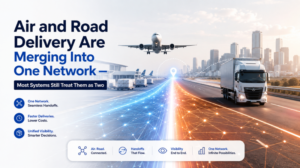
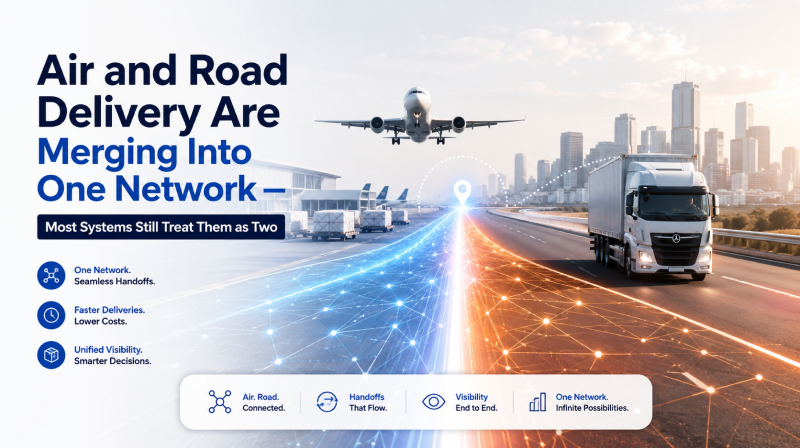
Air and Road Delivery Are Merging Into One Network — Most Systems Still Treat Them as Two

Key Takeaways

  • Air and road logistics increasingly operate as one physical network, but disconnected systems create visibility and coordination gaps.
  • Multimodal logistics visibility connects shipment data, handoffs, ETAs, and operational events across air and road transportation.
  • A unified shipment identity keeps air, road, and last-mile movements connected throughout the delivery journey.
  • Predictive ETAs and exception intelligence help enterprises identify disruptions before they impact delivery SLAs.
  • At enterprise scale, integrated air-road orchestration can coordinate thousands of vehicles, facilities, shipments, carriers, and time-critical handoffs.
  • nuVizz enables enterprises to connect multimodal transportation visibility, orchestration, dispatch, and last-mile execution through a unified platform.
Air and Road Delivery Are Merging Into One Network — Most Systems Still Treat Them as Two

Modern supply chains rarely move shipments through a single transportation mode.

A time-critical shipment may leave a local distribution center on a road vehicle, move through a regional hub, travel by air, transfer through another facility, and finally reach the customer through a road-based last-mile delivery vehicle.

Physically, that is one continuous shipment journey.

Digitally, however, many enterprises still manage those movements through separate transportation systems, carrier portals, tracking platforms, warehouse systems, and dispatch workflows.

That disconnect creates what can be called the multimodal execution gap: the difference between what is happening to a shipment in the physical network and what an enterprise can actually see, predict, and act on digitally.

The result is more than a visibility problem.

When air and road transportation operate as disconnected networks, delays become harder to predict, handoffs become harder to manage, ETAs become less reliable, and downstream teams often discover a problem only after it has already affected the customer.

The physical transportation network is already multimodal. The digital execution layer needs to become multimodal too.

For enterprise logistics organizations, the next step is not simply adding another tracking dashboard.

It is creating one operational view of the shipment journey across air, road, hubs, terminals, carriers, and last-mile operations.

What Is Multimodal Logistics Visibility?

Multimodal logistics visibility is the ability to track and understand a shipment continuously as it moves across multiple transportation modes—including air, road, linehaul, and last-mile delivery—through a connected operational view.

Instead of treating each transportation leg as an independent journey, multimodal visibility connects the events, identifiers, ETAs, and exceptions associated with the complete shipment.

Consider a shipment moving through this network:

Distribution Center → Road Transport → Air Terminal → Air Network → Regional Hub → Road Transport → Customer

A traditional approach may provide separate tracking for each stage.

A multimodal approach connects those stages into one continuous shipment journey.

This distinction becomes increasingly important as enterprises work with multiple carriers, private fleets, 3PLs, transportation modes, distribution facilities, and last-mile networks.

Get one clear view across carriers, systems, and every delivery stage.

Explore End-to-End Visibility

Why Air and Road Logistics Can No Longer Be Managed in Isolation

Transportation networks have become increasingly interconnected.

A single shipment may involve:

  • Private road fleets
  • Regional and local delivery carriers
  • Long-haul road networks
  • Air cargo or parcel networks
  • Cross-docks and distribution centers
  • Third-party logistics providers
  • Last-mile delivery operations

Each participant may generate its own tracking events, shipment identifiers, ETAs, and operational data.

The shipment, however, does not care which system owns each transportation leg.

If an aircraft arrives late, the downstream road operation still has to deal with the consequences.

If a cross-dock processes a shipment late, the final-mile route may need to change.

If congestion delays a road vehicle, the customer still experiences one delivery journey—not three separate transportation legs.

This creates a fundamental enterprise requirement:

Transportation systems need to understand the entire shipment journey, not just the individual transportation leg.

The challenge is therefore shifting from transportation tracking to transportation orchestration.

Where Siloed Air and Road Systems Break Down

When air and road operations run on disconnected platforms, organizations often rely on people to connect the dots.

A dispatcher, planner, or control-tower analyst may have to compare flight information, carrier updates, warehouse events, and road dispatch schedules to determine whether a shipment is still on track.

At enterprise scale, that approach becomes increasingly difficult to sustain.

Three failure points appear repeatedly.

1. Handoffs Create Visibility Blind Spots

Transportation handoffs are among the most vulnerable points in the shipment journey.

Consider a shipment moving from a regional road facility to an air terminal.

The road system may show that the shipment departed.

The air carrier may not yet show it as received.

The warehouse system may record a different event such as arrived at dock or processed at terminal.

Physically, the shipment is progressing.

Digitally, the organization may see several disconnected events with no clear representation of the shipment’s current state.

The shipment keeps moving, but the digital record can lose continuity.

This is where multimodal shipment visibility becomes critical.

A unified platform should connect events across transportation modes and facilities so that the shipment remains visible throughout the handoff.

2. Different Systems Speak Different Operational Languages

Another challenge is inconsistent milestone data.

One carrier may report:

  • Departed facility
  • In transit
  • Arrived at terminal
  • Out for delivery

Another may use:

  • Tendered
  • Accepted
  • Flight arrived
  • Received at station

A third-party logistics provider may use an entirely different event structure.

Without a common data model, these events remain difficult to correlate.

Enterprise logistics teams therefore need more than data aggregation.

They need event normalization—the ability to translate different carrier, mode, and facility events into a common operational language.

This creates a consistent view of:

  • Where the shipment is
  • What has already happened
  • What should happen next
  • Whether the shipment is still on schedule
  • Whether downstream operations are at risk

3. Small Delays Can Become Large Operational Problems

A delay on one transportation leg does not necessarily remain isolated to that leg.

Imagine a shipment scheduled to arrive at an air terminal at 8:00 AM.

The flight arrives 20 minutes late.

If the downstream road operation does not receive that update quickly, the vehicle assigned to the next leg may still operate according to the original plan.

The result could be:

Air delay → missed transfer → road vehicle waiting → route disruption → missed delivery window → failed delivery attempt

The initial disruption was small.

The operational impact was not.

This is why enterprise transportation visibility needs to move beyond historical tracking toward predictive and cascading ETA management.

Siloed Transportation vs. Unified Multimodal Visibility

CapabilitySiloed Air + Road SystemsUnified Multimodal Platform
Shipment identityMultiple identifiers across carriers and modesOne continuous shipment identity
Handoff visibilityManual reconciliation between systemsConnected events across every transfer
ETA managementLeg-by-leg estimatesPredictive ETA across the complete journey
Delay responseReactive after disruption occursException detection before downstream impact
Event dataCarrier-specific terminologyNormalized operational events
Road coordinationPlanners manually monitor upstream eventsRoad operations receive relevant updates automatically
Customer visibilityDifferent tracking experiences by carrierConsistent shipment journey
Exception managementHuman monitoring and escalationAutomated, prioritized exceptions

The fundamental difference is simple:

Siloed systems track transportation legs. Unified orchestration manages the shipment journey.

What Does Unified Multimodal Logistics Visibility Require?

Closing the multimodal execution gap is not simply a matter of connecting more APIs or adding another tracking dashboard.

For enterprise organizations, a unified multimodal visibility and orchestration layer needs several capabilities working together.

1. Cross-Dock and Terminal Visibility

Cross-docks, terminals, hubs, and transfer facilities are critical execution points.

They determine whether a shipment moves from one transportation leg to the next as planned.

A unified system should capture operational events such as:

  • Arrival
  • Check-in
  • Scan
  • Dock assignment
  • Loading
  • Unloading
  • Transfer
  • Departure

These events provide the operational context needed to maintain shipment visibility across handoffs.

Instead of allowing the shipment record to become fragmented at every transfer point, the system maintains continuity across the network.

The terminal should be treated as an execution checkpoint—not simply another location in a tracking timeline.

2. Predictive and Cascading ETAs

Traditional tracking often answers:

Where is the shipment now?

Enterprise logistics teams increasingly need to answer:

When will it arrive at the next operational checkpoint, and what does that mean for everything downstream?

That requires ETAs to continuously incorporate changes from multiple sources, including:

  • Flight arrival information
  • Road transportation status
  • Traffic and congestion
  • Facility processing times
  • Delivery schedules
  • Historical operational patterns
  • Current exceptions

If an upstream transportation leg changes, the downstream ETA should change accordingly.

More importantly, the operational plan should be able to respond.

For example:

Flight delay → revised terminal ETA → updated transfer expectation → revised delivery ETA → road route or resource adjustment

This is where visibility begins to evolve into transportation orchestration.

Move beyond basic TMS capabilities and take control of complex last-mile delivery. Optimize Last-Mile Operations

3. One Shipment Identity Across Transportation Modes

A shipment may have different identifiers as it moves through different carriers and transportation modes.

The air carrier may use one tracking number.

The road carrier may use another.

The warehouse may use an internal shipment or order identifier.

Without connecting these identifiers, enterprises can end up managing multiple digital records for what is physically one shipment.

A unified multimodal platform should create a common shipment identity and map the relevant identifiers to it.

This allows operational teams to see the complete journey rather than searching across multiple systems to reconstruct it.

A unified shipment identity connects the different tracking numbers, carrier events, and operational milestones associated with one physical shipment.

4. Exception Intelligence

Enterprise control towers cannot realistically monitor every shipment manually.

The objective should not be to create more alerts.

It should be to identify the exceptions that require action.

Examples include:

  • An upstream flight is delayed.
  • A shipment is unlikely to make its planned road transfer.
  • A delivery window is at risk.
  • A facility has not processed a shipment within the expected time.
  • A required milestone has not occurred.
  • A downstream road route needs to be reconsidered.
  • A temperature or other shipment condition crosses an operational threshold.

This moves logistics teams from:

Monitoring everything

to:

Managing what matters.

That distinction becomes increasingly important as transportation networks scale across thousands of shipments, facilities, carriers, and vehicles.

From Visibility to Orchestration: The Enterprise Shift

Visibility alone does not necessarily improve execution.

Knowing that a shipment is delayed is useful.

Knowing what that delay will affect and what action should happen next is far more valuable.

This is the difference between a visibility platform and an orchestration capability.

A mature multimodal logistics architecture connects four layers.

1. Data

Collect transportation and operational events from carriers, fleets, facilities, terminals, and other systems.

2. Normalization

Convert different carrier and mode-specific events into a common operational model.

3. Intelligence

Use current conditions and operational data to identify risks, predict ETAs, and detect exceptions.

4. Orchestration

Translate those insights into operational actions across transportation, facilities, dispatch, and customer-facing workflows.

This creates a continuous operating loop:

Sense → Understand → Predict → Act

That is the foundation of a connected transportation network.

Case in Point: How an Integrated Air-Road Network Operates at Enterprise Scale

The complexity of multimodal logistics becomes much clearer when viewed through the lens of a large-scale medical logistics network.

Consider one of the nation’s largest diagnostics providers, operating a transportation network that supports 1 in 3 adults and approximately half of all hospitals and physicians in the United States.

At this scale, transportation is not simply about moving shipments from point A to point B.

It requires continuous coordination across facilities, road vehicles, air networks, hubs, drivers, and time-critical delivery windows.

The operational footprint includes:

  • 2,250+ physical locations nationwide
  • 75,000+ daily time-critical pickups
  • 4,500+ road vehicles
  • 17 dedicated cargo aircraft
  • 50+ million critical shipments transported and processed annually

Why Integration Matters at This Scale

When thousands of time- and temperature-sensitive specimens move through road courier networks, regional hubs, dedicated air transportation, and destination laboratories, every handoff becomes an operational checkpoint.

A delay at one point in the network can affect downstream transportation, laboratory schedules, delivery commitments, and ultimately the customer experience.

Managing air and road as separate transportation environments makes it difficult to understand those dependencies in real time.

A unified execution layer changes that model.

By connecting the multimodal network through a single digital shipment identity, the organization can maintain continuity across transportation legs while providing operational teams with a common view of the shipment journey.

The technology can support capabilities such as:

  • Continuous chain-of-custody visibility across road and air movements
  • Automated dock and facility check-ins at major hubs
  • Real-time shipment and milestone tracking
  • Exception intelligence across transportation legs
  • Connected shipment identities across carriers and modes
  • Downstream visibility when an upstream transportation event changes

The result is a transportation network where an event in one part of the network can be understood in the context of what happens next.

For example:

Road pickup → Regional hub → Air movement → Destination hub → Road delivery → Laboratory

Instead of managing each stage as an isolated workflow, the entire journey can be monitored as one connected operational process.

Bring fragmented logistics systems together without slowing down your operations.

Simplify Logistics Integration

How nuVizz Enables Multimodal Transportation Orchestration

This type of enterprise execution is where nuVizz’s transportation orchestration technology comes into play.

nuVizz provides a connected platform for coordinating transportation, shipment visibility, dispatch, routing, and last-mile execution across complex logistics networks.

Rather than forcing enterprises to replace every system already operating in their network, the platform can connect operational data across carriers, fleets, facilities, transportation modes, and downstream delivery operations.

That creates a common execution layer where teams can move from simply seeing transportation events to understanding their downstream impact and taking action.

Visibility tells you what happened. Orchestration connects that event to what should happen next.

For enterprise organizations managing high-volume, time-critical, and multimodal transportation networks, that distinction can become critical to maintaining service levels as network complexity increases.

Want to See How It Works?

See how nuVizz can connect multimodal transportation, shipment visibility, dispatch, and last-mile execution through a unified orchestration platform.

[BOOK A DEMO]

What Are the Benefits of Unified Air-Road Visibility?

When air and road operations are managed as one connected network, the benefits extend beyond shipment tracking.

Enterprise ImpactOperational Benefit
Labor utilizationHubs, terminals, and delivery teams can better prepare for actual inbound volumes and arrival times.
Vehicle utilizationRoad resources can be aligned more closely with changing shipment availability.
Delivery performanceTeams can identify at-risk shipments earlier and take corrective action before delivery commitments are missed.
Exception managementPlanners focus on meaningful disruptions instead of manually monitoring every shipment.
Customer experienceCustomers receive a more consistent view of shipment progress regardless of transportation mode.
Network efficiencyOrganizations can identify recurring bottlenecks across transportation legs and transfer points.
Operational scalabilityA common orchestration layer reduces dependence on manual reconciliation as shipment volumes and carrier relationships grow.

The biggest opportunity is not simply reducing the time spent tracking shipments.

It is reducing the amount of reactive work created by disconnected systems.

Why Multimodal Visibility Matters for Enterprise Logistics Networks

For a small transportation operation, manually reconciling a few shipments may be manageable.

For an enterprise network involving multiple transportation modes, carriers, facilities, and thousands of daily shipments, manual coordination becomes a scalability constraint.

Enterprise logistics leaders increasingly need systems that can:

  • Connect air and road transportation
  • Normalize data from different carriers
  • Maintain shipment identity across the journey
  • Predict downstream impacts
  • Prioritize exceptions
  • Coordinate operational responses
  • Provide consistent shipment visibility
  • Integrate with existing TMS, WMS, ERP, and carrier systems

The goal is not necessarily to replace every system already operating in the network.

Instead, an orchestration layer can connect those systems and create a common operational view across the transportation ecosystem.

This approach allows enterprises to preserve existing investments while improving how transportation data and decisions flow across the network.

Turn backroom bottlenecks into faster, more efficient store operations. Optimize Store Operations

The Enterprise Multimodal Architecture

A connected multimodal logistics network brings together data from carriers, fleets, facilities, terminals, and transportation systems into a common operational view.

The first requirement is connected transportation data.

Carrier, fleet, facility, and shipment events need to be captured across air, road, and last-mile operations.

That data then needs to be normalized so different carriers and systems can be understood through a consistent shipment and event model.

This allows an enterprise to maintain one connected view of a shipment even when it moves between different transportation providers and modes.

From there, multimodal visibility and predictive intelligence provide context around what is happening and what is likely to happen next.

Changes in flight arrivals, road transportation, facility processing, or delivery schedules can be evaluated together rather than in isolation.

The final layer is transportation orchestration—connecting those insights to operational decisions across road transportation, air networks, facilities, dispatch, and last-mile execution.

This creates a more responsive transportation network.

A flight delay can influence a downstream road ETA.

A facility delay can affect dispatch planning.

A missed milestone can trigger an operational exception.

A shipment moving across multiple carriers can remain connected through one digital journey.

For enterprise logistics organizations, the value is not simply having more transportation data.

It is creating the operational context needed to turn that data into timely decisions and actions.

Conclusion: The Future of Air and Road Logistics Is One Network

Air and road logistics already operate as one physical network.

The challenge is connecting them digitally.

For enterprise logistics teams, multimodal visibility is no longer just about tracking shipments. It is about connecting shipment events, ETAs, exceptions, and operational decisions across the entire journey.

Visibility tells you where a shipment is. Orchestration helps you decide what happens next.

As transportation networks become more complex, enterprises need a unified execution layer that connects air, road, facilities, carriers, and last-mile operations.

See how nuVizz connects multimodal transportation visibility and orchestration from a single operational platform.

BOOK A DEMO | Contact Us

bookmark_fill [#fff1226] Created with Sketch. Related Content
Blog

What are the benefits of using nuVizz fo...

What are the benefits of using nuVizz for logistics and delivery services
Blog

Best Last-Mile TMS Software: How Leading...

Best Last-Mile TMS Software How Leading Platforms Compare
Blog

What Are The Best Route Planning Softwar...

What Are The Best Route Planning Software Options For Delivery Companies
Blog

The Hidden Factors Driving Supply Chain ...

The Hidden Factors Driving Supply Chain Turnover
Blog

Dozens of Carriers, Dozens of Systems: W...

Dozens of Carriers, Dozens of Systems Why Delivery Networks Still Lack End-to-End Visibility
Blog

What Most Transportation Management Syst...

What Most Transportation Management Systems Get Wrong About Last-Mile Delivery
Blog

Retail Logistics: The Complete Guide to ...

Retail Logistics The Complete Guide to Order Fulfillment, Inventory Management & Last-Mile Delivery
Blog

How Shipping and Logistics Platforms Imp...

How Shipping and Logistics Platforms Improve Shipment Visibility, Route Optimization, and Delivery Performance
Blog

What Is Transportation and Last-Mile Del...

What Is Transportation and Last-Mile Delivery Optimization Benefits, Strategies & Best Practices
Blog

How Does Order Tracking Work? A Guide to...

How Does Order Tracking Work A Guide to Real-Time Delivery Visibility

FAQs

Multimodal logistics visibility is the ability to track and understand a shipment continuously as it moves across multiple transportation modes, including air, road, linehaul, and last-mile delivery, through a connected operational view. It connects shipment events, identifiers, ETAs, and exceptions across the complete transportation journey.

Air and road shipments lose visibility primarily because carriers, facilities, and transportation modes often operate on separate systems with different shipment identifiers and event definitions. Without a common data model, information can become fragmented when a shipment moves between carriers, terminals, cross-docks, and transportation modes.

An air delay can change when a shipment reaches a terminal or distribution facility, which can affect downstream road transportation, routing, labor, and delivery schedules. Without connected visibility, road operations may continue planning against outdated arrival assumptions.

Shipment visibility shows what is happening to a shipment. Transportation orchestration determines what should happen next. Visibility provides the operational information needed to understand shipment status. Orchestration connects that information to predictions, exceptions, decisions, and downstream actions.

Yes. A multimodal orchestration layer can integrate with existing TMS, WMS, ERP, carrier, fleet, and operational systems rather than requiring every transportation process to be replaced. For enterprise organizations, this approach can create a common operational view while preserving existing technology investments.

Blog

Dozens of Carriers, Dozens of Systems: Why Delivery Networks Still Lack End-to-End Visibility

Key Takeaways

  • Multi-carrier delivery networks create flexibility but also significant data complexity.
  • Tracking individual shipments does not automatically provide network-wide visibility.
  • Carrier-specific systems, inconsistent event definitions, and handoffs can create blind spots.
  • A common data model helps turn fragmented carrier information into a unified operational view.
  • Effective visibility should cover status, ETA, exceptions, handoffs, performance, and customer impact.
  • Visibility becomes more valuable when it is connected to workflows and operational decisions.
  • The objective is not to eliminate carrier complexity, but to make that complexity visible and manageable.
Dozens of Carriers, Dozens of Systems Why Delivery Networks Still Lack End-to-End Visibility

A modern delivery network rarely depends on a single carrier.

A shipment might move through a national parcel carrier, a regional delivery company, a specialized freight provider, a local courier, a final-mile contractor, or a third-party logistics provider. In larger networks, several of these partners may operate simultaneously across different regions, service levels, and transportation modes.

That flexibility is valuable. It helps companies expand geographic coverage, control transportation costs, handle seasonal demand, and match shipments to the right service provider.

But it creates another problem that is much harder to solve:

How do you see what is happening across the entire network when every carrier sees only its own part of it?

The challenge is not necessarily a lack of tracking technology. Most carriers have tracking systems. The problem is that those systems were not designed to create one unified view of a shipper’s entire delivery network.

One carrier may provide an API. Another may rely on EDI. A regional carrier may use a web portal. A smaller provider may send spreadsheets or email updates. A 3PL may introduce another layer of systems between the shipper and the actual transportation provider.

The result is a delivery network that can be highly connected physically while remaining surprisingly fragmented digitally.

And that fragmentation can make end-to-end visibility much harder than simply tracking a shipment.

The Multi-Carrier Delivery Network Is the New Normal

Companies use multiple carriers for good reasons.

A single transportation provider may not offer the right combination of geographic coverage, capacity, pricing, delivery speed, or specialized services for every shipment.

A retailer, for example, might use:

  • A national parcel carrier for standard residential deliveries
  • Regional carriers for specific geographic markets
  • Local couriers for same-day delivery
  • Freight carriers for oversized shipments
  • Specialized providers for temperature-sensitive products
  • Dedicated transportation providers for high-volume lanes
  • 3PLs to manage specific regions or fulfillment operations

The same organization may therefore have dozens of transportation relationships without having dozens of corresponding visibility connections.

This distinction matters.

Physical network complexity does not automatically translate into digital visibility.

Research into multi-carrier logistics describes the transportation industry as highly fragmented, particularly among regional and smaller carriers that often operate independently across specific regions or corridors.

At the same time, current logistics technology discussions increasingly focus on consolidating carrier-specific tracking into unified visibility architectures rather than managing every carrier separately.

The more carriers a network adds, the more important that distinction becomes.

Tracking a Shipment Is Not the Same as Seeing the Network

This is where many visibility conversations become confusing.

A shipment can be “trackable” without the company having network-level visibility.

Imagine a company has 20 carriers.

Each carrier provides tracking information.

Carrier A has its own dashboard.

Carrier B provides an API.

Carrier C sends EDI events.

Carrier D updates a portal.

Carrier E provides only milestone notifications.

The remaining carriers use different combinations of systems.

Technically, the company may have tracking information for every carrier.

Operationally, however, employees may still have to move between multiple systems to answer a basic question:

What is happening across our delivery network right now?

That is the difference between tracking and visibility.

Tracking answers:

Where is this shipment?

Visibility answers:

What is happening across the network, which shipments are at risk, which carriers are underperforming, and what should we do about it?

The second question requires much more than location data.

It requires data normalization, consistent milestones, comparable performance metrics, exception management, and context.

Turn last-mile challenges into smarter, more efficient deliveries.

See How nuVizz Works

The Problem Starts With Fragmented Data

Every carrier has its own operational environment.

One carrier might define “picked up” differently from another.

One might send an event when a package leaves a facility. Another might send an event only when it reaches the next hub.

One system might use a standard status such as “Out for Delivery.”

Another might use a carrier-specific code that means roughly the same thing.

These differences create a data translation problem.

A shipper trying to build a network-wide view must bring together information from systems that were never designed around a common data model.

A typical logistics technology environment can include:

  • Transportation management systems
  • Warehouse management systems
  • Carrier portals
  • EDI connections
  • APIs
  • Telematics platforms
  • GPS feeds
  • Customer service systems
  • ERP systems
  • 3PL platforms
  • Spreadsheet-based processes
  • Email-based updates

Supply Chain Management Review noted in 2026 that many shippers operate across multiple platforms, including TMS, WMS, carrier portals, rail systems, and financial tools, creating conflicting data and slowing disruption response.

This means the visibility problem is often less about whether data exists and more about whether the data can be connected and understood consistently.

Carrier Handoffs Create Some of the Biggest Blind Spots

The most difficult visibility problems often occur at transitions.

A shipment moves from one organization to another.

For example:

Warehouse → Carrier A → Regional Carrier B → Local Delivery Provider → Customer

Each handoff creates an opportunity for information to become delayed, incomplete, or disconnected.

The physical shipment continues moving.

But the digital record may not.

This is particularly important in multimodal and multi-provider transportation. Research published in 2025 identified delayed data updates, transshipment blind spots, inconsistent reporting, and fragmented systems as continuing challenges to end-to-end visibility.

Consider a simple example.

A shipment is transferred from a national carrier to a regional partner.

The national carrier’s system shows:

Transferred to delivery partner

The regional carrier’s system shows:

Shipment received

But those two events may not be connected in the shipper’s system.

For several hours, the shipment can effectively appear to exist in two different digital worlds.

The package is moving.

The data is fragmented.

That is a visibility gap.

Why More Dashboards Don’t Necessarily Solve the Problem

One obvious response to fragmented visibility is to add more dashboards.

But dashboards alone do not create a unified network view.

If an operations team has to monitor:

  • Carrier portal A
  • Carrier portal B
  • TMS dashboard
  • 3PL dashboard
  • GPS platform
  • Warehouse system
  • Customer service platform

then the organization may have more information without necessarily having more visibility.

The employee becomes the integration layer.

Someone has to compare statuses, identify discrepancies, determine which event is current, and decide whether an exception requires action.

This creates another hidden problem:

Human attention becomes part of the visibility architecture.

That approach may work when shipment volumes are small.

It becomes increasingly difficult as networks grow.

The Cost of Fragmented Visibility

Poor visibility does not always create one dramatic failure.

More often, it creates dozens of smaller operational problems.

1. Delayed exception detection

A shipment may be delayed long before someone notices.

If a carrier’s exception event is not integrated into the primary operational workflow, the issue may remain hidden until a customer calls.

2. More manual investigation

Customer service and transportation teams spend time searching multiple systems to answer basic shipment questions.

Instead of solving exceptions, employees spend time locating information.

3. Inconsistent ETAs

Different systems may calculate or report arrival estimates differently.

That can create conflicting information between transportation teams, customer service representatives, and customers.

4. Difficulty comparing carriers

A carrier may appear to have a different performance profile simply because its data is reported differently.

Without standardized metrics, comparing on-time performance, exception rates, delivery times, or failed delivery rates becomes difficult.

5. Slower response to disruptions

Visibility matters most when something goes wrong.

If a disruption is detected late, the organization has fewer options to recover.

6. Customer experience problems

Customers do not care which carrier has the data.

They care about one question:

Where is my order, and when will it arrive?

A fragmented backend can therefore become a fragmented customer experience.

Ready to simplify retail fulfillment from order to doorstep? Explore Retail Delivery Solutions

The Real Challenge: Creating One Common View

True end-to-end visibility does not necessarily mean replacing every carrier system.

That would be unrealistic.

Instead, the goal is to create a common visibility layer that can interpret information coming from different transportation partners.

This requires several capabilities.

1. Data integration

Carrier information needs to enter a centralized environment through appropriate methods such as APIs, EDI, webhooks, telematics, or other data feeds.

2. Data normalization

Different carrier events need to be translated into a consistent operational language.

For example:

Carrier A: Out for delivery

Carrier B: Vehicle dispatched

Carrier C: Delivery route started

The system should be able to recognize that these events represent a similar operational state.

3. Shipment identity

A shipment may have different identifiers as it moves between systems.

Connecting those identifiers is essential to maintaining continuity throughout the journey.

4. Event sequencing

Visibility requires understanding not only individual events but their sequence.

Picked up → In transit → Arrived at hub → Transferred → Out for delivery → Delivered

When an expected event does not occur, that absence can itself become important.

5. Exception intelligence

A visibility system should not simply show that something is late.

It should help determine:

  • What happened?
  • Where did it happen?
  • Which shipment is affected?
  • Which carrier is responsible?
  • How serious is the issue?
  • What is the expected impact?
  • Does someone need to intervene?

That turns visibility from passive tracking into operational intelligence.

Visibility Should Be Carrier-Agnostic

One of the most important principles in a multi-carrier environment is that the customer experience should not depend on which carrier is executing the shipment.

From the shipper’s perspective, the network should look like one connected operation.

The customer should not need to know:

“Your shipment changed from Carrier A to Carrier B, so you need to check another tracking system.”

The operations team should not have to think:

“Which carrier portal contains the latest status?”

Instead, the network should provide a consistent view regardless of who is moving the shipment.

Current industry thinking around multi-carrier visibility increasingly emphasizes this carrier-agnostic approach: common tracking models, comparable performance data, and a unified experience across different transportation providers.

Visibility Is Also About Performance, Not Just Location

A map showing thousands of shipments may look impressive.

But a map is not necessarily operational visibility.

A useful visibility system should help organizations understand performance.

For example:

Visibility AreaQuestions the Network Should Answer
Shipment statusWhere is the shipment now?
ETAWhen is it expected to arrive?
Carrier performanceWhich carriers are meeting commitments?
ExceptionsWhat has gone wrong?
HandoffsWhere has custody changed?
GeographyWhich regions have recurring issues?
Service levelAre promised delivery windows being met?
Customer impactWhich customers or orders are affected?
CostWhat operational impact is the disruption creating?
RecoveryWhat action can reduce the impact?

This is why end-to-end visibility should be viewed as an operational capability, not merely a tracking feature.

From Visibility to Action

There is another important distinction.

Knowing that a shipment is delayed is useful.

Knowing what to do about the delay is more valuable.

For example, imagine a carrier reports that a shipment will miss its delivery commitment.

A basic tracking platform might display:

Delayed — ETA changed from Tuesday to Wednesday

A more operationally useful system could identify:

  • The shipment’s customer commitment
  • The cause of the delay
  • The affected delivery window
  • Other shipments in the same region
  • Whether the carrier has available recovery capacity
  • Whether another service option exists
  • Whether customer communication is required

This is the evolution from visibility to decision support.

Supply Chain Management Review has highlighted a similar issue: tracking and dashboards can generate large amounts of data, but visibility alone does not necessarily produce better decisions unless it is connected to workflows and execution.

Why Integration Quality Matters More Than the Number of Integrations

A company can claim to have integrated 50 carriers and still have poor visibility.

The important question is not:

How many carriers are connected?

It is:

How consistently and reliably does their data become usable operational information?

An integration that sends one tracking update every several hours may not provide the same operational value as a reliable real-time event stream.

Likewise, an integration that captures location but not exceptions, handoffs, proof of delivery, or service commitments may leave important gaps.

The goal should therefore be meaningful coverage, not simply integration volume.

What a Truly Connected Delivery Network Looks Like

A mature multi-carrier visibility environment has several characteristics.

1. One operational view

Teams can see shipments across carriers without switching between multiple carrier-specific dashboards.

2. Consistent shipment states

Different carrier terminology is translated into a common operational language.

3. Continuous shipment identity

The shipment remains connected across carrier changes, handoffs, and transportation legs.

4. Real-time or appropriately timed updates

The frequency of data reflects the operational importance of the shipment and event.

5. Exception-first workflows

Teams are not forced to manually search thousands of shipments to find the few that require attention.

6. Comparable carrier performance

Carrier data is standardized enough to support meaningful benchmarking.

7. Customer-facing consistency

Customers receive a coherent experience regardless of which carrier executes the delivery.

8. Actionable information

Visibility is connected to decisions and workflows rather than existing only as another dashboard.

Struggling to keep up with today’s last-mile delivery complexity?

Explore Smarter Last-Mile TMS

The Future of Multi-Carrier Visibility

The direction of logistics technology is moving beyond isolated tracking systems.

The next stage is increasingly about connectivity, normalization, and orchestration.

Artificial intelligence can add another layer by identifying patterns across large volumes of transportation data.

For example, AI could help identify:

  • Repeated delays on specific lanes
  • Carrier performance deterioration
  • Unusual transit times
  • Emerging regional disruptions
  • Shipment combinations likely to experience problems
  • Exceptions that require human intervention

But AI does not eliminate the underlying data problem.

If the underlying carrier data is incomplete, inconsistent, or disconnected, sophisticated analytics will still be working with an imperfect picture.

In other words:

Better intelligence starts with better-connected data.

That is why data architecture remains fundamental to visibility.

The Goal Isn’t to Eliminate Carrier Complexity

Using multiple carriers is not inherently a problem.

In many cases, it is a strategic advantage.

Multiple carriers can provide:

  • Geographic flexibility
  • Additional capacity
  • Competitive pricing
  • Specialized capabilities
  • Faster delivery options
  • Business continuity
  • Reduced dependence on a single provider

The objective is therefore not to make a complex transportation network simple.

The objective is to make the complexity manageable and visible.

A company can have dozens of carriers and still operate with a unified view.

The key is ensuring that the systems connecting those carriers can translate fragmented information into one operational picture.

A Practical Framework for Improving Multi-Carrier Visibility

Organizations looking to address visibility gaps can start with a few practical questions.

1. Map every carrier and logistics partner

Identify every transportation provider involved in the network, including regional and specialized providers that may not appear in high-level reporting.

2. Document every source of shipment data

List APIs, EDI connections, portals, spreadsheets, telematics systems, email workflows, and other data sources.

3. Identify visibility gaps

Look specifically at handoffs, transportation legs, regional operations, and carriers with delayed or incomplete updates.

4. Standardize critical events

Define a common set of shipment milestones and exception categories.

5. Establish a common shipment identity

Ensure shipments can be tracked continuously when identifiers change between systems.

6. Prioritize exceptions

Not every shipment needs human attention.

Build processes that surface the events most likely to affect customer commitments, cost, or service.

7. Measure carrier performance consistently

Use standardized metrics across carriers wherever possible.

8. Connect visibility to action

Make sure the people responsible for resolving exceptions can act directly from the information they receive.

Conclusion

Modern delivery networks rely on multiple carriers, 3PLs, regional providers, and technology platforms. That flexibility creates a visibility challenge: each provider generates its own piece of the data.

End-to-end visibility means connecting and standardizing those pieces so teams can quickly see what is happening, what is at risk, and what action is needed.

The goal isn’t another dashboard. It’s turning dozens of disconnected systems into one connected view of the delivery network.

Want to see what network-wide visibility can look like for your delivery operation?

Explore nuVizz

bookmark_fill [#fff1226] Created with Sketch. Related Content
Blog

What are the benefits of using nuVizz fo...

What are the benefits of using nuVizz for logistics and delivery services
Blog

Best Last-Mile TMS Software: How Leading...

Best Last-Mile TMS Software How Leading Platforms Compare
Blog

What Are The Best Route Planning Softwar...

What Are The Best Route Planning Software Options For Delivery Companies
Blog

The Hidden Factors Driving Supply Chain ...

The Hidden Factors Driving Supply Chain Turnover
Blog

Air and Road Delivery Are Merging Into O...

Air and Road Delivery Are Merging Into One Network — Most Systems Still Treat Them as Two
Blog

What Most Transportation Management Syst...

What Most Transportation Management Systems Get Wrong About Last-Mile Delivery
Blog

Retail Logistics: The Complete Guide to ...

Retail Logistics The Complete Guide to Order Fulfillment, Inventory Management & Last-Mile Delivery
Blog

How Shipping and Logistics Platforms Imp...

How Shipping and Logistics Platforms Improve Shipment Visibility, Route Optimization, and Delivery Performance
Blog

What Is Transportation and Last-Mile Del...

What Is Transportation and Last-Mile Delivery Optimization Benefits, Strategies & Best Practices
Blog

How Does Order Tracking Work? A Guide to...

How Does Order Tracking Work A Guide to Real-Time Delivery Visibility

FAQs

Multi-carrier visibility is difficult because each carrier may use different systems, data formats, tracking events, and update processes. Connecting these sources into one consistent operational view can be challenging, especially when shipments move between carriers.

End-to-end delivery visibility means having a connected view of a shipment throughout its journey, including carrier handoffs, transportation milestones, exceptions, estimated delivery times, and final delivery.

Businesses can improve visibility by connecting carrier data through APIs, EDI, and other integrations, standardizing shipment events, and bringing the information into a centralized operational view.

Fragmented visibility can lead to delayed exception detection, manual tracking, inconsistent shipment information, difficulty comparing carrier performance, and slower responses to delivery problems.

Yes. A multi-carrier visibility platform can connect information from different transportation providers and present it through a common view, helping logistics teams monitor shipments, identify exceptions, and understand carrier performance across the network.

Blog

What Most Transportation Management Systems Get Wrong About Last-Mile Delivery

Key Takeaways

  • Many Transportation Management Systems (TMS) were originally built for freight planning, not the fast-changing demands of last-mile delivery.
  • Static route planning cannot keep up with same-day delivery, dynamic customer requests, and real-time traffic conditions.
  • Driver productivity depends on mobile-first tools, yet many legacy TMS platforms still offer limited mobile capabilities.
  • Disconnected systems create visibility gaps between dispatch, customer service, finance, and operations.
  • Purpose-built last-mile delivery platforms combine routing, dispatch, driver management, proof of delivery, and analytics in one unified ecosystem.
What Most Transportation Management Systems Get Wrong About Last-Mile Delivery

Last-Mile Delivery Has Changed—Has Your TMS?

For years, Transportation Management Systems (TMS) have helped businesses optimize freight movement, manage carrier relationships, and improve long-haul transportation planning. These systems transformed logistics by making shipment planning, load consolidation, and carrier management more efficient.

However, the logistics landscape has evolved dramatically.

Today’s customers expect same-day deliveries, live order tracking, narrow delivery windows, instant notifications, and flexible delivery options. Businesses are no longer judged solely by how quickly products leave the warehouse—they’re evaluated by how smoothly the final delivery reaches the customer’s doorstep.

This shift has exposed a fundamental challenge.

Many traditional TMS platforms were designed when transportation planning focused primarily on long-haul freight. They excel at optimizing loads, selecting carriers, and planning predictable routes. But the last mile is a completely different operational environment.

Unlike freight transportation, last-mile delivery involves:

  • Hundreds or thousands of delivery stops every day
  • Constant route adjustments
  • Customer schedule changes
  • Driver availability fluctuations
  • Traffic disruptions
  • Failed delivery attempts
  • Proof-of-delivery requirements
  • Real-time communication

These aren’t occasional exceptions—they’re everyday realities.

As a result, organizations relying solely on traditional TMS software often discover that managing the last mile requires significant manual intervention, disconnected tools, and constant firefighting.

The issue isn’t that traditional TMS platforms are ineffective.

They were simply designed to solve a different logistics problem.

The Biggest Gaps Between Traditional TMS and Last-Mile Operations

Modern last-mile delivery operations demand far more than efficient transportation planning. Businesses need real-time visibility, intelligent route optimization, seamless driver communication, and the flexibility to respond instantly to changing delivery conditions. While many traditional Transportation Management Systems (TMS) excel at freight planning, they often struggle to support the speed and complexity of today’s last-mile environment. Below are the most common gaps that prevent legacy TMS platforms from delivering the agility, visibility, and operational efficiency modern logistics networks require. 

1. Static Route Planning Doesn’t Match Dynamic Delivery Networks

Most legacy Transportation Management Systems follow a simple workflow:

  1. Orders are collected.
  2. Routes are planned.
  3. Drivers leave the depot.
  4. Routes remain mostly unchanged throughout the day.

This approach works reasonably well for freight transportation because shipments generally move between fixed locations with relatively predictable schedules.

Last-mile delivery rarely follows this pattern.

Throughout a single day, operations teams may need to respond to:

  • New delivery orders
  • Customer rescheduling requests
  • Vehicle breakdowns
  • Driver call-outs
  • Heavy traffic
  • Road closures
  • Weather disruptions
  • Priority deliveries
  • Failed delivery attempts

Every one of these events can affect route efficiency.

Without dynamic route optimization, dispatchers are forced to manually adjust schedules using phone calls, spreadsheets, messaging apps, or whiteboards. Instead of relying on automation, operations become dependent on individual dispatcher experience.

Over time, this creates several business challenges:

  • Longer delivery routes
  • Higher fuel costs
  • Increased overtime
  • Reduced fleet utilization
  • Lower on-time delivery performance
  • Dispatcher burnout

A modern last-mile delivery platform continuously analyzes new information throughout the day and automatically recommends—or even executes—route adjustments as conditions change.

Instead of planning once, it optimizes continuously.

Streamline retail logistics from inventory to last-mile delivery with proven best practices.

Read the Complete Guide

2. Drivers Need an Operational platform-not just a Mobile App

Drivers are the face of every delivery operation.

They’re responsible for customer interactions, proof of delivery, exception reporting, product handling, and maintaining schedule accuracy. Despite this, many traditional TMS platforms still treat drivers as the final step in the workflow rather than active participants in real-time operations.

In many legacy systems, drivers receive a delivery manifest and little else.

Modern last-mile operations require far more.

Today’s drivers need mobile applications that allow them to:

  • View optimized routes
  • Receive real-time dispatch updates
  • Capture electronic proof of delivery (ePOD)
  • Scan barcodes and QR codes
  • Upload photos
  • Collect digital signatures
  • Report delivery exceptions
  • Communicate with dispatch instantly
  • Access turn-by-turn navigation
  • Record delivery notes

When these capabilities are missing—or spread across multiple applications—productivity declines.

The consequences extend beyond driver frustration.

Organizations often experience:

  • Longer onboarding times
  • More delivery errors
  • Increased support calls
  • Poor customer communication
  • Lower driver satisfaction
  • Higher turnover

Considering the ongoing driver shortage affecting logistics providers worldwide, improving the driver experience is no longer just a workforce initiative—it’s a competitive advantage.

Purpose-built last-mile delivery software places drivers at the center of the operation by providing a single mobile interface for every delivery task.

3. Visibility Breaks Down Across Departments

Many organizations assume that implementing a TMS automatically creates end-to-end visibility.

In practice, visibility often remains fragmented.

Dispatch teams may know exactly where drivers are.

Customer service may not.

Finance may rely on different datasets.

Executives may only receive reports after deliveries are complete.

These information silos slow decision-making and increase operational costs.

For example:

  • A customer calls asking for an updated ETA.
  • Customer service contacts dispatch.
  • Dispatch contacts the driver.
  • The driver responds several minutes later.
  • The customer waits.

Multiply this process across hundreds of deliveries each day, and the operational inefficiencies become significant.

The same issue affects billing, carrier settlements, compliance reporting, and performance analytics.

A modern last-mile platform eliminates these disconnects by creating a single source of operational truth where dispatchers, customer service teams, finance, warehouse staff, and leadership access the same real-time delivery information.

Instead of chasing updates, every stakeholder works from shared, live data.

Customization Isn’t the Same as Purpose-Built Functionality

One of the biggest misconceptions in logistics technology is that any Transportation Management System can support last-mile operations with enough customization.

Technically, that’s often true.

Practically, it’s rarely the most efficient approach.

Many enterprise TMS platforms were designed to solve freight transportation challenges. When organizations expand into home delivery, field service, retail distribution, or B2B last-mile operations, they frequently rely on custom workflows, third-party integrations, or bespoke development to bridge functionality gaps.

Initially, these customizations may appear to solve the problem.

Over time, however, they often introduce new operational complexities.

Common challenges include:

  • Lengthy implementation timelines
  • Higher deployment and maintenance costs
  • Heavy reliance on IT teams or external consultants
  • More complex upgrades and version migrations
  • Increased technical debt
  • Difficulties scaling across regions or business units

The result is a system that technically supports last-mile delivery—but only after significant customization.

As delivery networks grow, every new workflow, customer requirement, or service expansion may require additional configuration, slowing innovation and increasing operational costs.

Purpose-built last-mile delivery platforms take a different approach.

Instead of adapting freight workflows, they are designed around last-mile operations from the outset. Core capabilities such as dynamic dispatch, proof of delivery (POD), driver settlements, dock scheduling, customer notifications, and delivery exception management are built into the platform, reducing the need for extensive customization.

This allows organizations to scale operations without continuously redesigning their technology stack.

Gain real-time shipment visibility and optimize every delivery with a modern logistics platform. Read the Guide

Exception Management Is the Core of Last-Mile Operations

In long-haul transportation, exceptions are relatively infrequent. A delayed shipment, vehicle breakdown, or weather event may require intervention, but these incidents are generally manageable on a case-by-case basis.

Last-mile delivery is different.

Exceptions happen constantly.

On any given day, operations teams may encounter:

  • Customers unavailable at delivery
  • Incorrect addresses
  • Last-minute order changes
  • Traffic congestion
  • Vehicle breakdowns
  • Delivery refusals
  • Damaged goods
  • Driver delays
  • Route deviations
  • Failed proof-of-delivery attempts

For fleets managing hundreds or thousands of daily stops, these situations aren’t unusual—they’re part of normal operations.

The issue with many traditional TMS platforms is that they treat exceptions as isolated events requiring manual attention.

Dispatchers must:

  • Identify the issue
  • Contact the driver
  • Determine the next best action
  • Notify the customer
  • Update delivery records
  • Adjust the remaining schedule

Repeat this process dozens—or even hundreds—of times each day, and dispatch teams quickly become overwhelmed.

Modern last-mile delivery software takes a proactive approach.

Instead of simply recording exceptions, it identifies issues in real time, prioritizes them based on business impact, recommends corrective actions, and automates customer communication wherever possible.

This enables dispatchers to focus on critical decisions rather than routine coordination.

AI Is Transforming Last-Mile Execution—Not Just Planning

Artificial intelligence is reshaping logistics, but its role extends far beyond route optimization.

Many legacy TMS platforms use optimization algorithms to generate routes before drivers leave the depot. Once the day begins, however, these routes often remain static unless someone manually intervenes.

Modern last-mile platforms use AI throughout the delivery lifecycle.

AI can continuously evaluate:

  • Live traffic conditions
  • New customer orders
  • Driver availability
  • Vehicle capacity
  • Delivery priorities
  • Service-level agreements (SLAs)
  • Historical delivery performance
  • Weather conditions
  • Customer preferences

Based on these inputs, the system can recommend—or automatically execute—operational adjustments in real time.

Examples include:

  • Reassigning deliveries when a driver is delayed
  • Re-optimizing routes after a failed delivery
  • Predicting late deliveries before they occur
  • Balancing workloads across drivers
  • Suggesting the most efficient delivery sequence
  • Improving estimated arrival times (ETAs)

The value of AI isn’t replacing dispatchers.

It’s helping them make faster, better-informed decisions while reducing manual effort and improving service consistency.

Traditional Transportation Management System vs. Purpose-Built Last-Mile Platform

CapabilityTraditional TMSPurpose-Built Last-Mile Platform
Primary FocusFreight planning and carrier managementEnd-to-end last-mile execution
Route PlanningStatic, batch-basedDynamic, real-time optimization
DispatchManual adjustmentsAI-assisted dynamic dispatch
Driver ExperienceBasic mobile supportMobile-first driver workflow
Proof of DeliveryOften requires additional modulesBuilt-in digital POD
Customer VisibilityLimitedReal-time tracking and notifications
Exception ManagementManualAutomated detection and resolution workflows
ScalabilityRequires extensive customizationDesigned for high-volume delivery operations
AnalyticsHistorical reportingLive operational dashboards and predictive insights

This comparison doesn’t suggest that traditional TMS platforms lack value.

They remain highly effective for freight transportation, carrier management, and long-haul logistics.

The challenge arises when businesses expect freight-centric systems to support the speed, flexibility, and customer expectations of modern last-mile delivery without purpose-built capabilities.

Why Legacy TMS Architecture Struggles to Scale

Many logistics organizations don’t notice these limitations during the early stages of growth.

A fleet with 20 drivers and a few hundred daily deliveries may successfully manage operations through a combination of TMS software, spreadsheets, emails, and dispatcher expertise.

As the business grows, however, complexity increases rapidly.

Organizations begin adding:

  • New distribution centers
  • Regional delivery hubs
  • Additional carriers
  • Contract drivers
  • Multiple delivery windows
  • Diverse service offerings
  • Same-day and next-day delivery
  • Reverse logistics
  • White-glove services
  • Customer-specific SLAs

Each addition increases the volume of data, decisions, and coordination required.

When core processes depend on manual intervention or disconnected systems, scaling becomes increasingly difficult.

Instead of improving efficiency, growth can introduce operational bottlenecks, inconsistent service quality, and rising costs.

Purpose-built last-mile platforms are designed with this complexity in mind, providing the flexibility and automation needed to support expanding delivery networks without relying on workarounds.

Learn how AI-powered auto dispatch improves routing, scheduling, and driver assignment in real time.

Explore the Blog

Why This Gap Still Exists

The shortcomings of many traditional Transportation Management Systems aren’t necessarily the result of poor technology—they’re a reflection of how logistics has evolved.

When many TMS platforms were introduced, their primary objective was to help businesses move freight efficiently across long distances. Success was measured by optimizing loads, selecting the right carriers, and reducing transportation costs.

Today’s logistics environment looks very different.

Customers expect:

  • Same-day and next-day delivery
  • Accurate ETAs
  • Live shipment tracking
  • Flexible delivery windows
  • Instant delivery notifications
  • Seamless delivery experiences

At the same time, logistics providers are managing larger fleets, tighter service-level agreements (SLAs), and more frequent delivery exceptions than ever before.

In this environment, execution has become just as important as planning.

A system that excels at transportation planning but lacks real-time operational capabilities can leave dispatchers, drivers, and customer service teams filling the gaps through manual processes.

The technology hasn’t necessarily failed—it’s simply being asked to solve problems it wasn’t originally designed to address.

What Modern Last-Mile Leaders Do Differently

Organizations that consistently achieve high on-time delivery rates, lower operational costs, and better customer experiences tend to share a common approach.

Rather than treating the last mile as an extension of freight transportation, they manage it as a distinct operational discipline with its own technology requirements.

Modern last-mile leaders invest in platforms that provide:

1. Real-Time Dynamic Dispatch

Routes are continuously optimized throughout the day based on traffic, delivery priorities, driver availability, and new orders, enabling operations to adapt as conditions change.

2. Mobile-First Driver Experience

Drivers use intuitive mobile applications to manage navigation, proof of delivery, barcode scanning, customer communication, and exception reporting from a single interface.

3. Unified Operational Visibility

Dispatch, customer service, warehouse teams, finance, and leadership work from the same real-time operational data, improving collaboration and reducing delays.

4. Automated Exception Management

Potential issues are detected early, prioritized automatically, and routed to the appropriate teams, allowing dispatchers to focus on resolving critical events rather than monitoring every delivery manually.

5. AI-Powered Decision Support

Artificial intelligence analyzes live operational data to improve routing, predict delays, optimize fleet utilization, and help dispatchers make faster, more informed decisions.

Together, these capabilities create a more resilient and scalable delivery operation—one that’s better equipped to meet evolving customer expectations.

Choosing the Right Platform for Modern Last-Mile Delivery

Selecting a transportation platform shouldn’t be based solely on feature checklists.

The more important question is whether the platform aligns with the realities of your delivery operation.

If your teams regularly rely on spreadsheets, phone calls, manual route adjustments, or disconnected systems to manage daily deliveries, it may indicate that your current technology is compensating for architectural limitations.

When evaluating solutions, consider whether the platform can support:

  • Continuous route optimization throughout the day
  • AI-assisted dispatch and planning
  • Mobile-first workflows for drivers
  • Digital proof of delivery (ePOD)
  • Real-time shipment visibility
  • Automated customer notifications
  • Driver settlement and performance management
  • Delivery analytics and operational dashboards
  • Seamless integrations with ERP, WMS, CRM, and eCommerce platforms
  • Scalability across multiple regions, fleets, and business units

A platform designed around these capabilities is more likely to support long-term operational growth than one requiring extensive customization to achieve the same outcomes.

Discover how generative AI helps enterprise fleets optimize routes and improve last-mile efficiency. Read the Guide

How Purpose-Built Platforms Like nuVizz Bridge the Gap

As last-mile delivery becomes increasingly dynamic, many organizations are adopting platforms built specifically for execution rather than adapting freight-centric systems.

Solutions like nuVizz are designed around the operational realities of modern last-mile logistics, combining capabilities such as AI-powered route optimization, dynamic dispatch, driver mobile applications, digital proof of delivery, customer visibility, carrier management, and real-time analytics within a unified platform.

Rather than relying on multiple disconnected tools, businesses can manage planning, execution, visibility, and performance from a single ecosystem.

For enterprises operating high-volume delivery networks, this integrated approach helps improve efficiency, reduce manual intervention, and enhance the overall customer experience while supporting future growth.

Final Thoughts

Transportation Management Systems remain essential to modern logistics.

For freight transportation, carrier procurement, and shipment planning, they continue to deliver significant value.

However, last-mile delivery introduces a different set of operational challenges—ones defined by real-time decision-making, continuous route optimization, customer communication, mobile workforce management, and high-frequency exceptions.

As customer expectations continue to rise, organizations need technology that supports both strategic transportation planning and operational execution.

For many businesses, the next stage of logistics transformation isn’t replacing the TMS—it’s complementing or extending it with a purpose-built last-mile delivery platform capable of handling the speed, complexity, and visibility demands of today’s delivery networks.

The organizations that recognize this distinction will be better positioned to improve operational efficiency, enhance customer satisfaction, and scale confidently in an increasingly competitive logistics landscape.

Ready to transform your last-mile operations? Book a demo and see how nuVizz helps optimize every delivery. 

bookmark_fill [#fff1226] Created with Sketch. Related Content
Blog

What are the benefits of using nuVizz fo...

What are the benefits of using nuVizz for logistics and delivery services
Blog

Best Last-Mile TMS Software: How Leading...

Best Last-Mile TMS Software How Leading Platforms Compare
Blog

What Are The Best Route Planning Softwar...

What Are The Best Route Planning Software Options For Delivery Companies
Blog

The Hidden Factors Driving Supply Chain ...

The Hidden Factors Driving Supply Chain Turnover
Blog

Air and Road Delivery Are Merging Into O...

Air and Road Delivery Are Merging Into One Network — Most Systems Still Treat Them as Two
Blog

Dozens of Carriers, Dozens of Systems: W...

Dozens of Carriers, Dozens of Systems Why Delivery Networks Still Lack End-to-End Visibility
Blog

Retail Logistics: The Complete Guide to ...

Retail Logistics The Complete Guide to Order Fulfillment, Inventory Management & Last-Mile Delivery
Blog

How Shipping and Logistics Platforms Imp...

How Shipping and Logistics Platforms Improve Shipment Visibility, Route Optimization, and Delivery Performance
Blog

What Is Transportation and Last-Mile Del...

What Is Transportation and Last-Mile Delivery Optimization Benefits, Strategies & Best Practices
Blog

How Does Order Tracking Work? A Guide to...

How Does Order Tracking Work A Guide to Real-Time Delivery Visibility

FAQs

Traditional TMS platforms were primarily designed for freight planning, carrier management, and long-haul transportation. Last-mile delivery requires real-time route optimization, dynamic dispatch, mobile-first driver tools, and continuous exception management—capabilities that many freight-centric systems weren't originally built to provide.

A traditional TMS focuses on transportation planning, freight movement, carrier selection, and shipment optimization. Last-mile delivery software is designed for delivery execution, including dynamic routing, driver management, proof of delivery, customer notifications, real-time visibility, and delivery exception handling.

Many TMS platforms can support last-mile workflows through customization and third-party integrations. However, organizations with high-volume or complex delivery operations often benefit from purpose-built last-mile platforms that offer these capabilities natively.

Key capabilities include:

  • AI-powered route optimization
  • Dynamic dispatch
  • Driver mobile applications
  • Electronic proof of delivery (ePOD)
  • Real-time delivery tracking
  • Automated customer notifications
  • Exception management
  • Fleet performance analytics
  • Integration with ERP, WMS, CRM, and TMS systems

Not necessarily.
Many organizations continue using their existing Transportation Management System for freight planning and carrier management while integrating a dedicated last-mile delivery platform for execution, visibility, and customer experience. This approach allows businesses to enhance last-mile capabilities without replacing their core transportation infrastructure.

Blog

Retail Logistics: The Complete Guide to Order Fulfillment, Inventory Management & Last-Mile Delivery

Key Takeaways

  • Retail logistics encompasses the entire order journey—from inventory management and order fulfillment to transportation, last-mile delivery, and returns.
  • Efficient fulfillment and optimized last-mile delivery help retailers reduce costs, improve delivery speed, and enhance customer satisfaction.
  • AI-powered logistics technologies, including route optimization, intelligent dispatch, and real-time tracking, enable faster and more efficient delivery operations.
  • Tracking key logistics KPIs such as on-time delivery, order accuracy, fulfillment cycle time, and cost per delivery helps retailers continuously improve performance.
  • An integrated retail logistics platform connects inventory, warehouses, fulfillment, and delivery operations to improve visibility, scalability, and customer experience.
Retail Logistics The Complete Guide to Order Fulfillment, Inventory Management & Last-Mile Delivery

Every online purchase sets off a complex logistics process behind the scenes. From the moment a customer places an order to the package arriving at their doorstep, multiple teams, systems, and transportation networks work together to ensure the right product reaches the right customer at the right time.

For today’s retailers, logistics is no longer just an operational function—it’s a competitive advantage. Customers expect fast shipping, real-time order tracking, flexible delivery options, and hassle-free returns. At the same time, retailers must balance rising transportation costs, inventory accuracy, labor shortages, and increasing delivery expectations while maintaining profitability.

Retail logistics encompasses every stage of this journey, including inventory management, warehousing, order fulfillment, transportation, and last-mile delivery. Organizations that optimize these processes can reduce operational costs, improve delivery performance, and build long-term customer loyalty.

This blog explains how retail logistics works, the technologies driving modern fulfillment operations, common challenges retailers face, and best practices for building a scalable and customer-centric logistics network.

What Is Retail Logistics?

Retail logistics is the process of planning, managing, and optimizing the movement of products from suppliers to customers. It includes inventory management, warehouse operations, order fulfillment, transportation, delivery, and returns management.

Unlike traditional wholesale distribution, where products are shipped in bulk to retail stores, modern retail logistics focuses on fulfilling thousands—or even millions—of individual customer orders across multiple sales channels.

A typical retail logistics process includes:

  • Inventory planning
  • Warehouse management
  • Order processing
  • Picking and packing
  • Carrier selection
  • Transportation management
  • Last-mile delivery
  • Customer notifications
  • Returns and reverse logistics

For eCommerce retailers, logistics extends beyond simply shipping products. It also involves providing customers with accurate delivery estimates, real-time shipment visibility, convenient delivery options, and efficient returns processing.

As customer expectations continue to evolve, retail logistics has become one of the most important drivers of customer experience, operational efficiency, and business growth.

Why Retail Logistics Matters

Retail logistics directly impacts nearly every aspect of a retailer’s business.

Poor logistics performance often results in delayed deliveries, inventory shortages, canceled orders, and increased operational costs. These issues not only reduce profitability but also damage customer trust and brand reputation.

Conversely, an efficient logistics operation helps retailers:

  • Deliver orders faster
  • Improve inventory accuracy
  • Reduce transportation expenses
  • Increase warehouse productivity
  • Minimize delivery failures
  • Improve customer satisfaction
  • Support business growth across multiple sales channels

For enterprise retailers managing thousands of daily orders, even small improvements in fulfillment speed or delivery efficiency can translate into significant annual cost savings.

As same-day and next-day delivery become increasingly common, logistics has shifted from being a support function to becoming a strategic differentiator.

Looking to boost delivery performance with AI-powered routing and real-time tracking?

See How It Works

How Retail Logistics Works: End-to-End Workflow

Retail logistics consists of several interconnected stages that work together to move products efficiently through the supply chain.

Retail Logistics Workflow

Each stage depends on accurate data and seamless coordination. A delay or error at any point—whether inaccurate inventory counts, warehouse bottlenecks, or inefficient route planning—can impact the overall customer experience.

Modern retailers rely on integrated logistics technologies such as Warehouse Management Systems (WMS), Transportation Management Systems (TMS), Order Management Systems (OMS), and delivery management platforms to synchronize these operations in real time.

Understanding the Order Fulfillment Process

Order fulfillment begins the moment a customer places an order and ends when the shipment is handed over to a delivery carrier.

Although the process appears simple from a customer’s perspective, multiple operational steps occur behind the scenes.

1. Order Processing

Once an order is received, the retailer’s order management system validates payment, verifies inventory availability, and allocates stock from the most appropriate fulfillment location.

Retailers operating multiple warehouses often fulfill orders from the nearest location to reduce shipping costs and improve delivery speed.

Accurate inventory synchronization across warehouses, retail stores, and online marketplaces helps prevent overselling and stock discrepancies.

2. Inventory Allocation

The system reserves inventory specifically for that customer order.

Modern retailers increasingly use intelligent inventory allocation to determine the optimal fulfillment location based on factors such as:

  • Customer location
  • Inventory availability
  • Shipping cost
  • Delivery commitments
  • Warehouse workload

This approach improves both operational efficiency and customer satisfaction.

3. Picking

Warehouse associates receive digital picking instructions generated by the Warehouse Management System.

Depending on order volume, warehouses may use several picking methods, including:

  • Single-order picking
  • Batch picking
  • Zone picking
  • Wave picking

High-performing fulfillment centers also organize products using slotting strategies, placing frequently ordered items closer to packing stations to reduce travel time and increase productivity.

Automation technologies such as barcode scanning, mobile devices, and wearable picking solutions further improve picking accuracy while minimizing human error.

4. Packing

After picking, products move to packing stations where they are inspected, securely packaged, and labeled for shipment.

Efficient packing operations focus on:

  • Selecting the right packaging size
  • Protecting fragile items
  • Minimizing packaging waste
  • Reducing shipping costs through dimensional optimization

Many retailers also include branded packaging, promotional inserts, or return labels to enhance the post-purchase customer experience.

5. Carrier Selection and Shipping

Once packed, shipments are assigned to the most suitable carrier.

Rather than relying on a single logistics provider, many retailers adopt a multi-carrier shipping strategy that automatically selects carriers based on factors such as:

  • Delivery destination
  • Transit time
  • Shipping rates
  • Service reliability
  • Package dimensions
  • Customer delivery preferences

Automated carrier selection helps retailers balance cost and service quality while reducing manual decision-making.

Delivery management platforms like nuVizz further streamline this process by integrating order management, route optimization, dispatch automation, and real-time shipment visibility into a single platform. This enables retailers to manage deliveries across both private fleets and third-party carriers while improving delivery performance and operational efficiency.

Warehousing and Inventory Management

A warehouse is more than a storage facility—it’s the operational hub where inventory is received, organized, picked, packed, and prepared for shipment. Efficient warehouse operations directly influence fulfillment speed, order accuracy, and overall logistics costs.

As retailers expand their product catalogs and sales channels, maintaining accurate inventory visibility becomes increasingly challenging. Without real-time inventory data, businesses risk stockouts, overselling, delayed shipments, and dissatisfied customers.

Modern retailers rely on Warehouse Management Systems (WMS) to optimize warehouse operations by:

  • Tracking inventory in real time
  • Managing stock locations
  • Automating receiving and put-away processes
  • Improving picking accuracy
  • Reducing manual errors
  • Increasing warehouse productivity

When integrated with Order Management Systems (OMS) and Transportation Management Systems (TMS), warehouse operations become part of a connected logistics ecosystem that supports faster and more accurate order fulfillment.

Centralized vs. Distributed Warehousing

One of the most important strategic decisions retailers make is determining where inventory should be stored.

Centralized Warehousing

A centralized warehouse model stores inventory in one or a few large facilities.

Advantages

  • Easier inventory management
  • Lower facility operating costs
  • Simplified replenishment
  • Better inventory utilization

Challenges

  • Longer delivery distances
  • Higher transportation costs
  • Slower delivery to distant customers

This approach works well for retailers with predictable demand or nationwide shipping requirements.

Distributed Warehousing

Distributed warehousing places inventory across multiple regional fulfillment centers closer to customers.

Advantages

  • Faster delivery times
  • Lower last-mile transportation costs
  • Better customer experience
  • Reduced shipping distances

Challenges

  • More complex inventory planning
  • Higher operational complexity
  • Increased coordination across locations

Many enterprise retailers adopt distributed fulfillment networks to support same-day or next-day delivery while maintaining service levels across multiple regions.

Turn every delivery into a competitive advantage with intelligent transportation and last-mile optimization. Discover Best Practices

Omnichannel Retail Logistics

Today’s customers expect a consistent shopping experience regardless of whether they purchase online, through a mobile app, via a marketplace, or inside a physical store.

This is where omnichannel retail logistics becomes essential.

Unlike traditional fulfillment models, omnichannel logistics coordinates inventory, fulfillment, and delivery across every sales channel from a unified platform.

Common omnichannel fulfillment strategies include:

  • Ship-from-store
  • Buy Online, Pick Up In Store (BOPIS)
  • Buy Online, Return In Store (BORIS)
  • Curbside pickup
  • Endless aisle fulfillment
  • Marketplace fulfillment

These capabilities require accurate inventory visibility across stores, warehouses, and distribution centers.

Without centralized inventory management, retailers may fulfill orders from the wrong location, incur unnecessary shipping costs, or miss delivery commitments.

Integrated logistics platforms help retailers dynamically determine the most efficient fulfillment location based on inventory availability, customer proximity, shipping costs, and delivery timelines.

Reverse Logistics and Returns Management

Returns have become an expected part of online shopping. While customers appreciate flexible return policies, managing returns efficiently remains one of the biggest operational challenges for retailers.

Reverse logistics refers to the process of moving products from customers back to warehouses, stores, or manufacturers for inspection, restocking, refurbishment, recycling, or disposal.

A typical reverse logistics workflow includes:

  1. Customer initiates a return request.
  2. Return authorization is approved.
  3. Shipping labels are generated.
  4. Product is collected or dropped off.
  5. Returned items are inspected.
  6. Products are restocked, repaired, recycled, or discarded.
  7. Refunds or replacements are processed.

Poorly managed returns increase labor costs, inventory inaccuracies, and customer dissatisfaction.

Modern logistics platforms streamline reverse logistics by automating return workflows, providing shipment visibility, and updating inventory records in real time.

Last-Mile Delivery: The Most Critical Stage of Retail Logistics

The final stage of retail logistics is also the most expensive and customer-facing.

Last-mile delivery refers to transporting products from a fulfillment center, local warehouse, or distribution hub to the customer’s doorstep.

Although it’s called the “last mile,” the actual distance may range from a few blocks to several hundred miles depending on the delivery network.

Industry studies consistently show that last-mile delivery represents the largest portion of total delivery costs because each shipment requires individualized routing, scheduling, and customer interactions.

For retailers, improving last-mile performance has a direct impact on customer satisfaction, delivery costs, and brand reputation.

Gain a single, real-time view of every shipment to improve delivery performance and customer satisfaction.

Learn About Delivery Visibility

5 Common Last-Mile Delivery Challenges

Last-mile delivery is often the most complex and costly stage of retail logistics. As customer expectations for faster, more flexible deliveries continue to rise, retailers face increasing pressure to balance speed, cost, and service quality. From rising transportation expenses to urban congestion and failed delivery attempts, overcoming these challenges is essential for improving operational efficiency and delivering a seamless customer experience. 

1. Rising Delivery Costs

Fuel prices, labor expenses, vehicle maintenance, and growing customer expectations continue to increase delivery costs.

Retailers must optimize delivery routes and vehicle utilization to maintain profitability without compromising service quality.

2. Increasing Customer Expectations

Consumers increasingly expect:

  • Same-day delivery
  • Next-day shipping
  • Accurate delivery windows
  • Real-time shipment tracking
  • Flexible delivery options

Meeting these expectations consistently requires advanced planning, automation, and real-time operational visibility.

3. Traffic and Route Complexity

Urban congestion, road closures, weather disruptions, and changing traffic conditions make delivery planning increasingly difficult.

Static delivery routes created hours before dispatch often become inefficient as conditions change throughout the day.

Dynamic routing technologies continuously adjust delivery sequences based on live traffic, driver locations, and new delivery requests.

4. Failed Delivery Attempts

Incorrect addresses, unavailable recipients, apartment access restrictions, and missed delivery windows all contribute to failed deliveries.

Each failed attempt increases transportation costs while negatively affecting customer satisfaction.

Providing customers with delivery notifications, estimated arrival times, and real-time driver tracking significantly improves first-attempt delivery success.

5. Fleet Visibility

Without real-time visibility, dispatchers struggle to monitor delivery progress, respond to delays, or reassign drivers when unexpected events occur.

GPS tracking, live driver updates, and centralized dashboards allow logistics teams to proactively manage delivery operations rather than reacting after problems occur.

4 Technologies Transforming Last-Mile Delivery

Technology has become the foundation of modern retail logistics.

Instead of relying on manual planning and disconnected systems, retailers increasingly adopt integrated logistics platforms that automate decision-making throughout the delivery lifecycle.

1. Route Optimization

Route optimization software calculates the most efficient delivery sequence based on:

  • Traffic conditions
  • Delivery time windows
  • Vehicle capacity
  • Driver schedules
  • Customer locations
  • Road restrictions

Optimized routing reduces mileage, fuel consumption, and delivery times while enabling drivers to complete more stops per day.

2. Dynamic Dispatch

Traditional dispatching often relies on manually assigning deliveries at the start of the day.

Dynamic dispatch continuously evaluates new orders, driver availability, and changing road conditions to automatically assign deliveries to the most appropriate driver.

This improves fleet utilization and enables retailers to respond quickly to same-day orders and unexpected disruptions.

3. Real-Time Delivery Tracking

Customers increasingly expect visibility throughout the delivery journey.

Real-time tracking provides:

  • Live vehicle locations
  • Estimated arrival times (ETAs)
  • Delivery progress updates
  • Automated customer notifications
  • Delivery status alerts

Improved visibility reduces customer support inquiries while building trust through transparency.

4. Electronic Proof of Delivery (ePOD)

Digital proof of delivery replaces traditional paper documentation with electronic confirmation.

Drivers can capture:

  • Digital signatures
  • Delivery photos
  • GPS coordinates
  • Time stamps
  • Delivery notes

Electronic proof of delivery helps resolve disputes, improves compliance, and creates a reliable audit trail for every completed delivery.

How AI Is Transforming Retail Logistics

Artificial Intelligence (AI) is reshaping how retailers manage logistics by enabling faster, data-driven decisions across fulfillment and delivery operations.

Rather than replacing logistics teams, AI enhances decision-making by analyzing large volumes of operational data in real time.

Some of the most impactful AI applications in retail logistics include:

1. Intelligent Route Optimization

AI evaluates traffic conditions, weather, delivery windows, vehicle capacity, and historical delivery patterns to generate more efficient routes that reduce travel time and fuel costs.

2. Predictive Demand Forecasting

Machine learning models analyze historical sales trends, seasonal demand, promotions, and regional buying patterns to help retailers position inventory closer to future demand.

This reduces stockouts while minimizing excess inventory.

3. Smart Dispatch

AI-powered dispatch systems automatically assign deliveries based on driver proximity, vehicle capacity, service levels, and delivery priorities.

This reduces manual planning while improving fleet utilization.

4. Predictive Delivery ETAs

Instead of relying on static estimates, AI continuously updates estimated arrival times using live traffic conditions and driver progress, keeping customers informed throughout the delivery journey.

5. Delivery Exception Management

AI can identify deliveries at risk of delay before they become customer issues.

Operations teams receive proactive alerts, allowing them to reroute drivers, communicate with customers, or adjust schedules before service levels are impacted.

Retailers managing high delivery volumes increasingly rely on integrated delivery management platforms such as nuVizz to combine route optimization, dispatch automation, real-time tracking, proof of delivery, and delivery analytics into a single operational platform. By connecting warehouse operations with transportation and last-mile execution, retailers gain end-to-end visibility that improves efficiency, reduces costs, and enhances the customer experience.

Key Retail Logistics KPIs Every Retailer Should Track

Measuring logistics performance is essential for identifying inefficiencies, improving customer satisfaction, and controlling operational costs. The following key performance indicators (KPIs) provide valuable insights into the health of your retail logistics operations.

KPIWhat It MeasuresWhy It Matters
On-Time Delivery RatePercentage of orders delivered within the promised delivery windowDirectly impacts customer satisfaction and brand trust
Order Accuracy RatePercentage of orders delivered without errorsReduces returns, refunds, and customer complaints
Fulfillment Cycle TimeTime from order placement to shipmentSupports faster delivery promises and operational efficiency
Cost per DeliveryTotal delivery cost divided by completed deliveriesHelps control transportation and last-mile expenses
First-Attempt Delivery RatePercentage of deliveries completed on the first attemptReduces failed delivery costs and improves customer experience
Inventory AccuracyDifference between physical inventory and system recordsPrevents stockouts, overselling, and fulfillment delays
Return RatePercentage of products returned by customersIdentifies potential product, fulfillment, or delivery issues

Rather than monitoring these metrics individually, leading retailers use integrated analytics dashboards to identify trends, benchmark performance, and continuously optimize logistics operations.

How to Choose the Right Retail Logistics Software

As retail operations grow, spreadsheets and disconnected systems become difficult to manage. Investing in the right logistics software helps retailers automate workflows, improve visibility, and scale efficiently.

When evaluating a retail logistics platform, consider the following capabilities:

1. End-to-End Visibility

The platform should provide a unified view of inventory, orders, deliveries, and returns across warehouses, stores, and transportation partners.

2. Intelligent Route Optimization

Look for software that dynamically plans delivery routes based on traffic conditions, delivery windows, vehicle capacity, and customer locations.

3. Automated Dispatch Management

Automated dispatch reduces manual planning by assigning deliveries to the most suitable drivers while adapting to real-time operational changes.

4. Real-Time Delivery Tracking

Customers and operations teams should be able to monitor deliveries with live tracking, proactive notifications, and continuously updated estimated arrival times.

5. Multi-Carrier Support

Retailers working with multiple delivery providers benefit from a platform that supports carrier selection, shipment tracking, and performance monitoring from a single interface.

6. Proof of Delivery

Electronic proof of delivery (ePOD), including digital signatures, delivery photos, GPS verification, and timestamps, helps reduce disputes while improving accountability.

7. Analytics and Reporting

Built-in dashboards should provide actionable insights into delivery performance, driver productivity, fulfillment efficiency, and logistics costs to support continuous improvement.

Selecting a scalable platform that integrates with your existing Order Management System (OMS), Warehouse Management System (WMS), ERP, CRM, and eCommerce platforms creates a connected logistics ecosystem capable of supporting future business growth.

Struggling with high return volumes and inefficient reverse logistics operations? Discover Smarter Returns

6 Best Practices for Building an Efficient Retail Logistics Operation

Successful retailers continuously optimize their logistics operations to improve customer service while reducing costs.

Consider these proven best practices:

1. Maintain Real-Time Inventory Visibility

Accurate inventory data enables better fulfillment decisions, minimizes stock discrepancies, and prevents overselling across multiple sales channels.

2. Optimize Warehouse Operations

Improving warehouse layouts, adopting barcode scanning, and implementing standardized picking processes can significantly reduce fulfillment times and increase order accuracy.

3. Automate Repetitive Tasks

Automation reduces manual effort across inventory allocation, dispatch planning, shipment tracking, and customer notifications, allowing teams to focus on exception management.

4. Improve Last-Mile Efficiency

Route optimization, dynamic dispatch, and delivery tracking help reduce fuel consumption, increase driver productivity, and improve on-time delivery performance.

5. Use Data to Drive Decisions

Regularly monitoring logistics KPIs helps identify operational bottlenecks, improve forecasting, and support informed decision-making.

6. Build a Scalable Technology Stack

Retail logistics software should support increasing order volumes, additional fulfillment locations, and evolving customer expectations without requiring significant process changes.

5 Future Trends Shaping Retail Logistics

Retail logistics continues to evolve as customer expectations, technology, and supply chain strategies advance.

Several trends are expected to shape the future of retail logistics:

1. AI-Powered Decision Making

Artificial intelligence will continue improving route planning, inventory forecasting, delivery scheduling, and exception management through predictive analytics and automation.

2. Hyperlocal Fulfillment

Retailers are increasingly positioning inventory closer to customers using micro-fulfillment centers and local distribution hubs to support same-day delivery.

3. Sustainability Initiatives

Businesses are adopting electric delivery vehicles, optimized delivery routes, recyclable packaging, and carbon reduction strategies to meet sustainability goals while lowering operating costs.

4. Predictive Customer Communication

Rather than simply notifying customers after delays occur, retailers are increasingly using predictive systems to identify potential disruptions and communicate proactively.

5. Connected Logistics Ecosystems

Future retail logistics operations will rely on seamless integration between OMS, WMS, ERP, TMS, delivery management platforms, IoT devices, and AI-powered analytics, providing end-to-end visibility across the supply chain.

Organizations that invest in scalable, connected logistics technologies today will be better positioned to adapt to changing customer expectations and market demands.

Conclusion

Retail logistics has become a strategic driver of customer satisfaction, operational efficiency, and long-term business growth. From inventory planning and warehouse operations to order fulfillment and last-mile delivery, every stage of the logistics journey influences the customer experience and the retailer’s bottom line.

As delivery expectations continue to rise, retailers need more than efficient transportation—they need connected, data-driven logistics operations that provide real-time visibility, intelligent automation, and the flexibility to scale.

Modern retail logistics platforms bring together inventory management, order fulfillment, route optimization, dispatch management, delivery tracking, and analytics into a unified ecosystem. This enables retailers to reduce operational costs, improve delivery performance, and deliver a consistent customer experience across every sales channel.

For retailers managing private fleets, third-party carriers, or complex omnichannel fulfillment networks, nuVizz helps streamline last-mile delivery with AI-powered route optimization, real-time shipment visibility, automated dispatch, and proof of delivery—helping organizations improve efficiency while delivering exceptional customer experiences.

Optimize Your Retail Logistics with nuVizz. Request a Demo

bookmark_fill [#fff1226] Created with Sketch. Related Content
Blog

What are the benefits of using nuVizz fo...

What are the benefits of using nuVizz for logistics and delivery services
Blog

Best Last-Mile TMS Software: How Leading...

Best Last-Mile TMS Software How Leading Platforms Compare
Blog

What Are The Best Route Planning Softwar...

What Are The Best Route Planning Software Options For Delivery Companies
Blog

The Hidden Factors Driving Supply Chain ...

The Hidden Factors Driving Supply Chain Turnover
Blog

Air and Road Delivery Are Merging Into O...

Air and Road Delivery Are Merging Into One Network — Most Systems Still Treat Them as Two
Blog

Dozens of Carriers, Dozens of Systems: W...

Dozens of Carriers, Dozens of Systems Why Delivery Networks Still Lack End-to-End Visibility
Blog

What Most Transportation Management Syst...

What Most Transportation Management Systems Get Wrong About Last-Mile Delivery
Blog

How Shipping and Logistics Platforms Imp...

How Shipping and Logistics Platforms Improve Shipment Visibility, Route Optimization, and Delivery Performance
Blog

What Is Transportation and Last-Mile Del...

What Is Transportation and Last-Mile Delivery Optimization Benefits, Strategies & Best Practices
Blog

How Does Order Tracking Work? A Guide to...

How Does Order Tracking Work A Guide to Real-Time Delivery Visibility

FAQs

Retail logistics is the process of managing the movement of products from suppliers to customers. It includes inventory management, warehousing, order fulfillment, transportation, last-mile delivery, and reverse logistics to ensure products are delivered efficiently and on time.

Supply chain management covers the entire lifecycle of a product—from sourcing raw materials to manufacturing and distribution. Retail logistics focuses specifically on storing, fulfilling, transporting, and delivering finished products to customers.

Last-mile delivery is the final stage of the delivery process and often the most expensive. It has a significant impact on customer satisfaction because it determines whether orders arrive on time, accurately, and within the promised delivery window.

Retailers commonly use several integrated systems, including:

  • Order Management Systems (OMS)
  • Warehouse Management Systems (WMS)
  • Transportation Management Systems (TMS)
  • Route Optimization Software
  • Delivery Management Platforms
  • Fleet Management Software
  • Electronic Proof of Delivery (ePOD) solutions
Together, these technologies help automate logistics operations and improve visibility across the supply chain.

AI helps retailers optimize delivery routes, forecast demand, automate dispatch, predict delivery times, identify potential delays, and improve inventory planning. These capabilities reduce operational costs while improving delivery reliability and customer satisfaction.

Common challenges include:

  • Rising transportation costs
  • Inventory inaccuracies
  • Labor shortages
  • Last-mile delivery complexity
  • Failed delivery attempts
  • Omnichannel fulfillment
  • Managing product returns
  • Meeting increasing customer delivery expectations

Key logistics metrics include:

  • On-Time Delivery Rate
  • Order Accuracy Rate
  • Cost per Delivery
  • Fulfillment Cycle Time
  • Inventory Accuracy
  • First-Attempt Delivery Rate
  • Return Rate
Monitoring these KPIs helps retailers improve efficiency and identify opportunities for optimization.

Retailers can reduce logistics costs by optimizing delivery routes, improving warehouse efficiency, maintaining accurate inventory, automating dispatch, consolidating deliveries, reducing failed delivery attempts, and using integrated logistics software to improve operational visibility.

Blog

How Shipping and Logistics Platforms Improve Shipment Visibility, Route Optimization, and Delivery Performance

Key Takeaways

  • Why shipping and logistics platforms are becoming essential for modern supply chains
  • How real-time shipment visibility helps reduce delays and improve customer satisfaction
  • The role of AI-powered route optimization in lowering costs and boosting on-time deliveries
  • Key features to look for when evaluating enterprise logistics platforms
  • How leading solutions like nuVizz support smarter, scalable delivery operations
How Shipping and Logistics Platforms Improve Shipment Visibility, Route Optimization, and Delivery Performance

The logistics industry has undergone a dramatic transformation over the past decade. Customers now expect real-time shipment updates, accurate delivery estimates, and faster order fulfillment regardless of whether they are purchasing consumer goods, medical supplies, industrial equipment, or groceries. At the same time, businesses face increasing pressure to reduce transportation costs, improve fleet utilization, and deliver exceptional customer experiences.

Managing these expectations with spreadsheets, phone calls, and disconnected software is becoming increasingly difficult. As supply chains grow more complex and delivery volumes increase, organizations need a centralized platform that provides end-to-end visibility, intelligent route planning, automated workflows, and actionable insights.

This is where shipping and logistics platforms play a vital role.

A modern shipping and logistics platform helps businesses coordinate shipments, optimize delivery routes, monitor fleet performance, automate dispatch operations, and keep customers informed throughout the delivery journey. Instead of managing logistics through multiple disconnected systems, organizations can oversee transportation operations from a single platform.

Solutions such as nuVizz have expanded this concept further by combining AI-powered route optimization, real-time shipment visibility, delivery orchestration, proof of delivery, customer notifications, and enterprise integrations into one configurable platform. This enables organizations to manage complex delivery networks more efficiently while improving customer satisfaction and operational performance.

Whether you’re managing local deliveries or coordinating nationwide transportation, selecting the right logistics platform can significantly impact delivery speed, operational efficiency, and long-term business growth.

In this blog, you’ll learn:

  • What a shipping and logistics platform is
  • How shipment visibility improves operations
  • The role of AI-powered route optimization
  • How logistics platforms enhance delivery performance
  • Key features to look for
  • Benefits across different industries
  • How enterprise platforms like nuVizz compare with other leading solutions
  • Best practices for choosing the right platform

A shipping and logistics platform is a software solution that helps businesses plan, execute, monitor, and optimize transportation and delivery operations. It centralizes shipment tracking, route optimization, dispatch management, proof of delivery, customer communication, and analytics into a single platform. By providing real-time visibility and AI-driven decision-making, these platforms help organizations reduce transportation costs, improve on-time deliveries, increase fleet efficiency, and deliver better customer experiences. 

What Is a Shipping and Logistics Platform?

A shipping and logistics platform is a centralized software solution that enables organizations to manage the movement of goods from origin to destination. It connects transportation planning, shipment execution, fleet management, driver communication, customer updates, and performance analytics within a unified system.

Unlike standalone tools that handle only one aspect of logistics, such as route planning or shipment tracking, a modern logistics platform integrates multiple operational functions into a single environment. This reduces manual work, minimizes errors, and improves coordination across teams.

For example, when a customer places an order, the platform can automatically:

  • Assign the shipment to the most suitable vehicle or carrier
  • Generate the most efficient delivery route
  • Monitor shipment progress in real time
  • Send automated delivery notifications
  • Capture digital proof of delivery
  • Update operational dashboards with delivery status and performance metrics

This end-to-end approach enables businesses to streamline logistics operations while improving visibility for dispatchers, drivers, customer service teams, and end customers.

Shipping Platform vs. Logistics Platform

Although these terms are often used interchangeably, there are subtle differences:

Shipping PlatformLogistics Platform
Primarily focuses on shipping labels, carrier selection, and parcel managementCovers the entire transportation lifecycle, including planning, routing, dispatch, tracking, delivery, and analytics
Often used for parcel shippingSuitable for enterprise transportation operations
Limited operational visibilityEnd-to-end operational visibility
Basic shipment managementAdvanced orchestration and optimization capabilities

For organizations managing large fleets, multiple distribution centers, or complex delivery networks, a comprehensive logistics platform typically offers greater operational value than a shipping-only solution.

Why Traditional Logistics Systems Are No Longer Enough

Many organizations still rely on spreadsheets, emails, phone calls, and legacy software to manage transportation operations. While these methods may work for smaller operations, they often become inefficient as delivery volumes grow.

Common challenges include:

1. Limited Shipment Visibility

Without real-time tracking, dispatchers and customers have limited insight into shipment locations or estimated arrival times. This can lead to increased customer inquiries and reduced confidence in delivery operations.

2. Manual Route Planning

Planning routes manually takes time and may not account for live traffic, delivery priorities, vehicle capacities, or changing conditions. As a result, businesses may experience longer travel times and higher fuel consumption.

3. Communication Gaps

When drivers, dispatchers, warehouses, and customers rely on separate communication channels, important updates can be delayed or missed, leading to operational inefficiencies.

4. Inconsistent Customer Experience

Customers increasingly expect proactive delivery updates, accurate ETAs, and proof of delivery. Manual processes make it difficult to consistently meet these expectations.

5. Limited Data for Decision-Making

Without centralized reporting, organizations may struggle to measure key performance indicators such as on-time delivery rates, fleet utilization, route efficiency, or delivery costs.

As logistics operations become more complex, these challenges can affect profitability, customer satisfaction, and scalability.

Turn fragmented logistics data into real-time supply chain intelligence.

See the Platform

8 Core Components of a Modern Shipping and Logistics Platform

Modern logistics platforms combine multiple capabilities into one integrated solution.

1. Transportation Management

Transportation management enables organizations to plan, execute, and monitor shipments across various carriers, fleets, and delivery networks. It provides centralized control over transportation operations while improving efficiency and reducing costs.

2. Real-Time Shipment Visibility

Real-time visibility allows businesses to monitor shipments throughout the delivery journey.

Key capabilities include:

  • Live GPS tracking
  • Estimated arrival times (ETAs)
  • Delay alerts
  • Exception management
  • Customer shipment tracking portals

Platforms like nuVizz support end-to-end shipment visibility by providing real-time tracking and configurable customer notifications, helping businesses improve transparency and customer communication.

3. AI-Powered Route Optimization

Modern route optimization goes beyond selecting the shortest path. Advanced algorithms evaluate multiple factors simultaneously, including:

  • Traffic conditions
  • Delivery time windows
  • Vehicle capacity
  • Driver schedules
  • Road restrictions
  • Stop priorities
  • Fuel efficiency

By continuously optimizing routes, businesses can reduce travel distances, improve on-time delivery performance, and make better use of fleet resources.

4. Dispatch Management

Dispatch management automates the assignment of drivers and vehicles based on operational requirements.

Benefits include:

  • Faster scheduling
  • Better resource allocation
  • Reduced manual effort
  • Improved dispatcher productivity

Automated dispatching also enables businesses to respond more quickly to unexpected changes such as urgent deliveries or vehicle breakdowns.

5. Driver Mobile Applications

Mobile applications keep drivers connected throughout the delivery process.

Typical capabilities include:

  • Route navigation
  • Delivery schedules
  • Customer information
  • Digital signatures
  • Barcode scanning
  • Photo capture
  • Status updates
  • Proof of delivery

These features improve communication between drivers and dispatch teams while reducing paperwork and manual data entry.

6. Proof of Delivery (POD)

Digital proof of delivery confirms that shipments have been successfully completed.

Electronic POD may include:

  • Customer signatures
  • Delivery photos
  • GPS location
  • Date and time stamps
  • Notes on delivery conditions

Digital records help reduce disputes and improve customer confidence.

7. Customer Communication

Modern logistics platforms automate customer engagement through:

  • Delivery confirmations
  • Estimated arrival notifications
  • Delay alerts
  • Completed delivery notifications
  • Self-service tracking portals

Proactive communication helps reduce “Where is my order?” (WISMO) inquiries while improving the overall customer experience.

8. Analytics and Reporting

Operational dashboards provide visibility into logistics performance by tracking metrics such as:

  • On-time delivery rates
  • Fleet utilization
  • Delivery costs
  • Route efficiency
  • Driver productivity
  • Failed deliveries
  • Customer satisfaction

These insights enable organizations to identify trends, optimize operations, and make data-driven decisions.

Why Enterprise Organizations Need an Integrated Platform

As organizations expand into multiple regions, manage larger fleets, or serve diverse customer segments, disconnected logistics tools often create operational silos. An integrated shipping and logistics platform brings together planning, execution, tracking, and analytics into a single ecosystem, enabling teams to collaborate more effectively and respond quickly to changing conditions.

For enterprises, this integration supports greater scalability, operational consistency, and visibility across the entire delivery network.

Transform delivery operations with smarter routing and real-time optimization. Get Started

How Real-Time Shipment Visibility Transforms Logistics Operations

Shipment visibility has become one of the most important capabilities in modern logistics. Businesses no longer want to know where a shipment was a few hours ago—they need to know where it is right now, whether it is on schedule, and if any disruptions require immediate action.

A shipping and logistics platform provides real-time visibility by collecting data from GPS-enabled vehicles, driver mobile applications, IoT devices, telematics systems, and carrier integrations. This information is displayed through centralized dashboards, allowing dispatchers, customer service teams, and operations managers to monitor every shipment from pickup to final delivery.

Instead of reacting to delivery issues after they occur, businesses can proactively identify delays, reroute vehicles, and keep customers informed.

Benefits of Real-Time Shipment Visibility

Real-time visibility helps organizations:

  • Track shipments throughout the delivery lifecycle
  • Monitor vehicle locations with GPS
  • Receive automatic delay and exception alerts
  • Improve estimated arrival time (ETA) accuracy
  • Reduce “Where is my order?” (WISMO) inquiries
  • Enhance customer communication
  • Improve dispatcher decision-making
  • Increase accountability across transportation operations

For enterprises managing hundreds or thousands of daily deliveries, these capabilities improve operational control while creating a better customer experience.

What Is End-to-End Shipment Visibility?

End-to-end shipment visibility means tracking a shipment across every stage of its journey rather than monitoring only the final delivery.

This typically includes:

Shipment StageVisibility Provided
Order CreatedShipment scheduled
Warehouse ProcessingPicking and packing status
DispatchDriver assignment
In TransitLive GPS location
Delivery AttemptsSuccess or exception status
Proof of DeliverySignature, photo, timestamp
Completed DeliveryCustomer confirmation

Instead of relying on separate systems for each stage, modern logistics platforms consolidate this information into a single interface.

Why Visibility Matters More Than Ever

Customer expectations have changed significantly.

Today’s customers expect:

  • Live tracking
  • Accurate ETAs
  • Delivery notifications
  • Fast issue resolution
  • Digital proof of delivery

Businesses that cannot provide this level of transparency may experience:

  • Increased support calls
  • Lower customer satisfaction
  • Reduced trust
  • Missed delivery commitments
  • Higher operational costs

Visibility is no longer a competitive advantage—it’s becoming a standard expectation.

The Role of AI in Shipment Visibility

Artificial intelligence enhances shipment visibility by analyzing operational data in real time.

Rather than simply displaying vehicle locations, AI can help businesses:

  • Predict late deliveries
  • Recommend alternative routes
  • Detect unusual delivery patterns
  • Identify recurring bottlenecks
  • Forecast estimated arrival times more accurately
  • Prioritize high-risk shipments

As more logistics platforms incorporate AI capabilities, businesses can shift from reactive problem-solving to proactive decision-making.

How Route Optimization Improves Delivery Performance

One of the biggest drivers of transportation costs is inefficient routing.

Without optimization, drivers may travel unnecessary miles, experience avoidable delays, or spend excessive time planning delivery sequences.

Modern shipping and logistics platforms use route optimization algorithms to determine the most efficient delivery plan based on multiple operational constraints.

Unlike traditional route planning, AI-powered optimization evaluates hundreds or even thousands of possible route combinations within seconds.

What Is Route Optimization?

Route optimization is the process of determining the most efficient path for one or multiple vehicles while considering operational constraints such as:

  • Delivery time windows
  • Driver schedules
  • Vehicle capacities
  • Traffic conditions
  • Road restrictions
  • Customer priorities
  • Service times
  • Fuel efficiency
  • Multiple depots
  • Pickup and delivery combinations

The objective isn’t always the shortest distance—it’s the most efficient route that balances time, cost, and service quality.

Looking to reduce transportation costs while improving last-mile efficiency?

Discover the Solution

Benefits of AI-Powered Route Optimization

Organizations implementing route optimization software often experience improvements in several operational areas.

1. Reduced Fuel Consumption

Optimized routes minimise unnecessary travel distances, reducing fuel usage and vehicle wear.

2. Improved On-Time Delivery

By considering traffic patterns and delivery windows, businesses can increase delivery reliability.

3. Higher Driver Productivity:

Drivers spend less time navigating inefficient routes and more time completing deliveries.

4. Better Fleet Utilization

Vehicles can handle more deliveries within the same operating hours.

5. Faster Dispatch Planning

Instead of manually planning routes, dispatchers can generate optimized schedules in minutes.

6. Lower Transportation Costs

Reduced mileage, fewer overtime hours, and improved asset utilization contribute to lower operating expenses.

Dynamic Routing vs Static Routing

Traditional route planning creates fixed routes before drivers leave the depot.

Modern logistics platforms use dynamic routing, which continuously adjusts routes based on changing conditions.

Static RoutingDynamic Routing
Fixed routesContinuously optimized
No traffic updatesReal-time traffic adjustments
Manual changesAutomated recommendations
Limited flexibilityHigh adaptability
Suitable for simple operationsIdeal for complex delivery networks

Dynamic routing is particularly valuable for same-day delivery, field service operations, grocery distribution, and last-mile logistics.

Delivery Performance: Measuring What Matters

Improving delivery performance requires more than simply completing deliveries on time.

Successful logistics organizations monitor multiple performance indicators to understand operational efficiency.

Common Delivery KPIs

1. On-Time Delivery Rate

Measures the percentage of deliveries completed within the promised delivery window.

Higher on-time delivery rates typically improve customer satisfaction.

2. First Attempt Delivery Success

Tracks how many deliveries are successfully completed during the first delivery attempt.

Reducing repeat deliveries lowers transportation costs and improves fleet efficiency.

3. Average Delivery Time

Measures the time required to complete deliveries from dispatch to customer handoff.

4. Cost Per Delivery

Calculates transportation expenses divided by completed deliveries.

Organizations often use this KPI to identify cost-saving opportunities.

5. Fleet Utilization

Evaluates how effectively vehicles are being used.

Poor utilization may indicate inefficient planning or underused assets.

6. Driver Productivity

Measures deliveries completed per driver, route completion time, and service efficiency.

7. Customer Satisfaction

Delivery quality increasingly influences customer loyalty.

Organizations often measure satisfaction using:

  • Customer feedback
  • Delivery ratings
  • Net Promoter Score (NPS)
  • Complaint rates

How Shipping and Logistics Platforms Improve These KPIs

Modern logistics platforms automate many operational processes that directly influence delivery performance.

These include:

  • Automated dispatching
  • Route optimization
  • GPS tracking
  • Driver communication
  • Proof of delivery
  • Exception management
  • Predictive ETAs
  • Customer notifications
  • Operational analytics

Together, these capabilities help reduce delays while improving visibility across the delivery lifecycle.
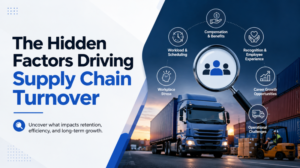
Improve on-time delivery, fleet utilization, and operational efficiency with data-driven decisions. See How It Works

Real-World Example

Consider a regional distributor operating 150 delivery vehicles across multiple cities.

Before implementing a logistics platform:

  • Dispatchers manually assigned routes.
  • Customers called frequently to request delivery updates.
  • Drivers relied on paper manifests.
  • Proof of delivery was collected manually.
  • Daily reporting required several hours of administrative work.

After implementing a modern shipping and logistics platform:

  • Routes are automatically optimized based on traffic, delivery windows, and vehicle capacity.
  • Customers receive automated notifications with estimated arrival times.
  • Drivers capture electronic proof of delivery using mobile/tab devices.
  • Dispatchers monitor live vehicle locations through centralized dashboards.
  • Operational reports are generated automatically.

The result is greater operational visibility, faster decision-making, and a more consistent customer experience.

How nuVizz Supports Modern Logistics Operations

Organizations evaluating enterprise logistics solutions often prioritize platforms that combine transportation management, visibility, and delivery execution within a single ecosystem.

nuVizz is one such platform, designed to support complex logistics operations through configurable workflows and real-time orchestration.

Some publicly documented capabilities include:

  • AI-powered route optimization
  • Real-time shipment visibility
  • Delivery orchestration
  • Electronic proof of delivery (ePOD)
  • Driver mobile applications
  • Customer notifications
  • Carrier management
  • Transportation analytics
  • Enterprise API integrations
  • Multi-stop route planning

These capabilities enable organizations to manage transportation operations from planning through final delivery while improving operational transparency.

Business Benefits of Shipping and Logistics Platforms

Investing in a modern shipping and logistics platform goes beyond digitizing transportation operations—it helps organizations improve efficiency, reduce costs, and deliver a better customer experience.

Here are some of the key business benefits:

1. Improved Operational Efficiency

By automating route planning, dispatching, shipment tracking, and delivery updates, logistics teams spend less time on manual tasks and more time managing exceptions and customer needs.

2. Lower Transportation Costs

AI-powered route optimization helps reduce unnecessary mileage, fuel consumption, and overtime by assigning the most efficient routes based on real-time conditions.

3. Better Customer Experience

Customers increasingly expect accurate delivery estimates and real-time updates. Automated notifications, live tracking, and electronic proof of delivery help build trust and reduce customer support inquiries.

4. Increased Fleet Productivity

With optimized routes and intelligent dispatching, drivers can complete more deliveries within the same working hours, improving vehicle utilization and operational performance.

5. Data-Driven Decision Making

Centralized dashboards and analytics provide insights into delivery performance, transportation costs, driver productivity, and customer service metrics, helping organizations make informed business decisions.

Industry Use Cases

Shipping and logistics platforms support a wide range of industries, each with unique transportation requirements.

IndustryCommon Use Cases
Retail & E-commerceLast-mile delivery, customer notifications, returns management
Grocery & Food DistributionTime-sensitive deliveries, route optimization, temperature-sensitive logistics
Healthcare & PharmaceuticalsCompliance, chain of custody, real-time shipment visibility
ManufacturingSupplier deliveries, distribution planning, inventory movement
Third-Party Logistics (3PL)Multi-client transportation management and carrier coordination
Field ServicesTechnician scheduling, route planning, and proof of service

Choosing the Right Shipping and Logistics Platform

Not every platform is designed for the same operational needs. Before selecting a solution, organizations should evaluate:

  • Real-time shipment visibility
  • AI-powered route optimization
  • Scalability for business growth
  • Integration with ERP, WMS, CRM, and existing systems
  • Driver mobile applications
  • Electronic proof of delivery (ePOD)
  • Customer communication capabilities
  • Analytics and reporting
  • Security and compliance
  • Vendor implementation and support

Rather than focusing solely on feature lists, businesses should choose a platform that aligns with their operational complexity, future growth plans, and customer experience goals.

Why Many Enterprises Consider nuVizz

Among enterprise logistics solutions, nuVizz is recognized for its focus on transportation orchestration and last-mile delivery management.

Publicly documented capabilities include:

  • AI-powered route optimization
  • Real-time shipment visibility
  • Delivery orchestration
  • Driver mobile applications
  • Electronic proof of delivery
  • Customer notifications
  • Configurable workflows
  • API-based integrations
  • Analytics and dashboards
  • Multi-stop route planning

Organizations with complex delivery operations often evaluate platforms like nuVizz when looking to improve operational visibility, automate transportation workflows, and enhance delivery performance.

Comparing Leading Enterprise Logistics Platforms

Every logistics platform serves different business needs. The best choice depends on existing technology investments, operational complexity, geographic coverage, and business priorities.

PlatformTypical StrengthsConsiderations
nuVizzTransportation orchestration, last-mile delivery, configurable workflows, AI-assisted routingWell suited for organizations focused on delivery execution and customer experience.
Oracle Transportation ManagementEnterprise transportation planning and freight managementStrong option for complex global transportation networks.
SAP Transportation ManagementDeep integration with SAP ERP and supply chain applicationsOften preferred by organizations already using SAP solutions.
Blue YonderEnd-to-end supply chain planning and executionWell suited for enterprises focused on broader supply chain transformation.
DescartesTransportation management, customs compliance, logistics network servicesBroad portfolio supporting transportation and regulatory requirements.
Manhattan AssociatesWarehouse management and transportation integrationStrong fit for organizations seeking unified warehouse and transportation operations.

Note: The information above highlights publicly documented capabilities and common deployment scenarios. Organizations should evaluate platforms based on their specific operational requirements, integration needs, and long-term business objectives.

Future Trends in Shipping and Logistics Platforms

Technology continues to reshape logistics operations. Several trends are influencing how businesses manage transportation and deliveries:

  • Artificial Intelligence (AI): Enhancing route optimization, demand forecasting, and exception management.
  • Predictive Analytics: Anticipating delays and recommending corrective actions before disruptions occur.
  • Internet of Things (IoT): Enabling real-time monitoring of vehicles, assets, and temperature-sensitive shipments.
  • Sustainability: Helping reduce fuel consumption, optimize routes, and support environmental initiatives.
  • Automation: Streamlining dispatching, customer communications, and reporting to improve efficiency.

Organizations that adopt these technologies are better positioned to improve operational resilience and adapt to changing customer expectations.

Conclusion

Modern shipping and logistics platforms have become essential tools for organizations seeking greater visibility, smarter routing, and improved delivery performance. By bringing together transportation planning, real-time tracking, AI-powered optimization, customer communication, and analytics into a unified platform, businesses can streamline operations while delivering a more reliable customer experience.

Whether you’re managing regional deliveries or enterprise-scale transportation networks, selecting the right platform requires evaluating your operational goals, integration requirements, and future growth plans.

Solutions such as nuVizz demonstrate how enterprise logistics platforms can support complex delivery operations through configurable workflows, real-time visibility, and transportation orchestration. At the same time, organizations should compare multiple platforms to identify the solution that best fits their business needs and existing technology ecosystem.

As customer expectations continue to evolve, businesses that invest in modern logistics technology will be better equipped to improve efficiency, reduce costs, and build more resilient supply chains.

bookmark_fill [#fff1226] Created with Sketch. Related Content
Blog

What are the benefits of using nuVizz fo...

What are the benefits of using nuVizz for logistics and delivery services
Blog

Best Last-Mile TMS Software: How Leading...

Best Last-Mile TMS Software How Leading Platforms Compare
Blog

What Are The Best Route Planning Softwar...

What Are The Best Route Planning Software Options For Delivery Companies
Blog

The Hidden Factors Driving Supply Chain ...

The Hidden Factors Driving Supply Chain Turnover
Blog

Air and Road Delivery Are Merging Into O...

Air and Road Delivery Are Merging Into One Network — Most Systems Still Treat Them as Two
Blog

Dozens of Carriers, Dozens of Systems: W...

Dozens of Carriers, Dozens of Systems Why Delivery Networks Still Lack End-to-End Visibility
Blog

What Most Transportation Management Syst...

What Most Transportation Management Systems Get Wrong About Last-Mile Delivery
Blog

Retail Logistics: The Complete Guide to ...

Retail Logistics The Complete Guide to Order Fulfillment, Inventory Management & Last-Mile Delivery
Blog

What Is Transportation and Last-Mile Del...

What Is Transportation and Last-Mile Delivery Optimization Benefits, Strategies & Best Practices
Blog

How Does Order Tracking Work? A Guide to...

How Does Order Tracking Work A Guide to Real-Time Delivery Visibility

FAQs

A shipping and logistics platform is a software solution that helps businesses manage the movement of goods from origin to destination. It centralizes shipment planning, route optimization, real-time tracking, dispatch management, proof of delivery, and analytics to improve operational efficiency and customer satisfaction.

A shipping platform primarily focuses on carrier selection, shipping labels, and parcel management, while a logistics platform manages the entire transportation lifecycle, including route planning, shipment visibility, dispatching, delivery tracking, proof of delivery, and performance reporting.

Route optimization is the process of determining the most efficient delivery routes by considering factors such as traffic conditions, delivery windows, vehicle capacity, driver schedules, and road restrictions. AI-powered route optimization helps reduce travel time, fuel consumption, and transportation costs.

When evaluating a shipping and logistics platform, consider features such as:

  • Real-time shipment visibility
  • AI-powered route optimization
  • Dispatch management
  • Driver mobile applications
  • Electronic proof of delivery (ePOD)
  • Customer notifications
  • Analytics and reporting
  • API integrations
  • Scalability
  • Security and compliance

Shipping and logistics platforms are widely used across industries, including retail, e-commerce, grocery, healthcare, pharmaceuticals, manufacturing, wholesale distribution, third-party logistics (3PL), and field services. Any business that manages transportation or deliveries can benefit from improved visibility and operational efficiency.

Artificial intelligence helps optimize delivery routes, predict delays, improve estimated arrival times, automate dispatch decisions, identify operational bottlenecks, and analyze transportation data to support faster and more informed decision-making.

Electronic Proof of Delivery (ePOD) is a digital confirmation that a shipment has been delivered successfully. It may include customer signatures, photographs, GPS coordinates, timestamps, and delivery notes, helping businesses reduce disputes and improve record accuracy.

nuVizz provides an enterprise delivery orchestration platform that includes AI-powered route optimization, real-time shipment visibility, transportation management, electronic proof of delivery, driver mobile applications, customer notifications, analytics, and configurable workflows. These capabilities help organizations improve delivery efficiency and enhance customer experiences.

nuVizz focuses on transportation orchestration, last-mile delivery management, and configurable workflows for enterprise operations. Other platforms, such as Oracle Transportation Management, SAP Transportation Management, Blue Yonder, Descartes, and Manhattan Associates, offer strengths in areas such as global transportation planning, ERP integration, supply chain planning, customs compliance, or warehouse management. The best choice depends on an organization's operational requirements, existing technology ecosystem, and business objectives.

Blog

What Is Transportation and Last-Mile Delivery Optimization? Benefits, Strategies & Best Practices

Key Takeaways

  • Transportation optimization improves efficiency across the entire supply chain network; last-mile delivery optimization focuses on the final, most expensive leg of that journey.
  • Modern optimization blends technology, operational planning, and real-time data to raise logistics performance.
  • AI, route optimization, GPS tracking, TMS platforms, telematics, and predictive analytics are the core technologies driving change.
  • The payoff: lower costs, better fleet utilization, higher on-time delivery rates, and stronger customer satisfaction.
  • Ongoing KPI tracking — not a one-time rollout — is what keeps optimization gains from eroding over time.
What Is Transportation and Last-Mile Delivery Optimization Benefits, Strategies & Best Practices

Transportation is the backbone of every supply chain, and it’s under more pressure than ever. Fuel prices swing, drivers are hard to find, urban traffic keeps getting worse, and customers now expect Amazon-level visibility and speed regardless of the company shipping to them.

The response from leading logistics organizations hasn’t been to hire their way out of the problem — it’s to treat transportation as a system that can be actively optimized: better route planning, real-time visibility, and AI-driven decisions at every stage, from dispatch to final delivery.

Transportation Optimization vs. Last-Mile Delivery Optimization

These terms get used interchangeably, but they solve different problems.

Transportation OptimizationLast-Mile Delivery Optimization
ScopeEnd-to-end network: long-haul, regional distribution, carrier managementFinal leg only: distribution center/warehouse → customer door
Primary focusNetwork efficiency, load consolidation, carrier selectionRoute sequencing, delivery windows, driver execution
Typical cost shareLower per-mile cost, but larger overall spendRepresents up to 40–53% of total shipping cost despite being the shortest leg*
Key pain pointsFleet utilization, empty miles, complianceFailed deliveries, narrow time windows, urban congestion
Core technologiesTMS, carrier management platforms, load planningDynamic dispatch, GPS tracking, ePOD

Most mature logistics organizations run both in parallel: transportation optimization keeps the network efficient, and last-mile optimization protects the customer experience where it matters most — at the doorstep.

Why It Matters

  • Rising customer expectations — same-day and scheduled delivery with accurate ETAs is now table stakes, not a differentiator.
  • Rising costs — fuel, labor, tolls, and compliance overhead keep climbing, so unoptimized routes and underused vehicles hit margins directly.
  • Growing network complexity — more warehouses, carriers, and delivery partners means more coordination surface area.
  • Sustainability targets — smarter routing and higher utilization reduce empty miles and emissions, which is increasingly a reporting requirement, not just a nice-to-have.
  • Competitive advantage — consistent speed and accuracy is now a retention lever, not just an operations metric.

Gain complete visibility into every shipment with real-time order tracking insights.

Learn How It Works

Common Challenges

ChallengeWhat drives it
Rising fuel costsInefficient routing, excessive idling, unnecessary mileage
Traffic congestionUrban delivery density, unpredictable conditions
Driver shortagesFewer available drivers relative to delivery volume
Narrow delivery windowsRising customer expectations for scheduled slots
Manual route planningDoesn’t scale, ignores real-time conditions
Limited visibilityNo real-time tracking, slower response to delays
Failed deliveriesBad addresses, customer unavailability, poor communication
Reverse logisticsReturns require their own optimized pickup routes
Regulatory complianceDriver hours, ELDs, safety, environmental standards

Strategies That Actually Move the Needle

  1. Intelligent route optimization — beyond shortest-distance routing: factoring in time windows, vehicle capacity, driver hours, and multi-stop sequencing simultaneously.
  2. Real-time visibility — GPS and telematics so dispatchers see delays as they happen, not after a customer complains.
  3. Automated dispatch — rules-based or AI-driven assignment as volume scales past what manual dispatching can handle.
  4. Vehicle utilization — load consolidation and multi-order delivery to cut empty miles.
  5. AI/ML — continuously re-optimizing routes and forecasting delays rather than relying on static plans.
  6. Proactive customer communication — automated ETAs and delay alerts reduce failed deliveries and support tickets alike.
  7. Territory redesign — fixing overlapping routes caused by delivery zones that no longer match actual demand density.
  8. Continuous KPI monitoring — treating optimization as an ongoing discipline, not a one-time project.
  9. System integration — connecting TMS with WMS, ERP, OMS, and CRM to eliminate data silos.
  10. Historical data analysis — using past delivery data to catch recurring, fixable inefficiencies.

The Role of AI

Traditional planning relies on static routes and dispatcher experience. AI-powered systems instead evaluate live conditions — traffic, weather, driver schedules, vehicle capacity — and continuously recompute the best plan.

Practical applications include: dynamic route optimization, predictive ETAs, demand forecasting, automated scheduling, predictive maintenance, and exception detection. The organizations getting the most value combine AI with real-time visibility rather than treating it as a bolt-on feature.

Enabling Technologies

TechnologyWhat it does
TMS (Transportation Management System)Central platform for planning, dispatching, tracking, and reporting
AI-powered route optimizationRecalculates routes continuously against dozens of live constraints
GPS trackingReal-time vehicle location and planned-vs-actual route comparison
ePOD (electronic proof of delivery)Digital signatures, photos, timestamps — replaces paper records
TelematicsVehicle health, driver behavior, fuel use, idle time
IoTCargo condition monitoring — temperature, humidity, asset tracking
Predictive analyticsForecasts delays, demand, and maintenance needs before they happen
Cloud platformsScalable, easier integration with carriers and partners

Industry Applications

  • Retail — store replenishment, same-day fulfillment
  • E-commerce — high-volume order fulfillment, multi-carrier management, returns
  • Healthcare/pharma — cold chain integrity, regulatory compliance
  • Food & beverage — perishability, temperature-sensitive scheduling
  • Manufacturing — just-in-time inbound/outbound coordination
  • 3PL — balancing multiple clients’ service levels on shared fleets
Track the right logistics KPIs to improve efficiency, reduce costs, and drive smarter decisions. Explore the Top KPIs

KPIs Worth Tracking

KPIWhy it matters
On-time delivery rateDirect proxy for customer satisfaction and service reliability
Delivery success rate (first attempt)Failed deliveries are expensive to redo
Transportation cost per deliveryCore efficiency and cost-control metric
Average delivery timeFaster cycles improve service perception
Fleet utilizationIdle assets are wasted capital
Vehicle capacity utilizationFewer trips needed per unit of freight
Fuel consumptionDirectly ties to cost and emissions
Empty miles %Unloaded travel is pure margin loss
Route efficiency (planned vs. actual)Flags planning gaps for the next cycle
Customer satisfaction (CSAT)The outcome metric everything above should be driving

Best Practices

  • Make decisions on data, not assumptions — track delivery performance, cost, and utilization regularly.
  • Extend visibility end-to-end — from order creation through returns, not just “truck on the road.”
  • Standardize processes — dispatch workflows, documentation, and exception handling shouldn’t vary by shift or region.
  • Automate where it scales — route planning, notifications, and reporting free up teams for higher-value work.
  • Invest in driver tools — mobile apps, ePOD, and real-time comms reduce friction on the ground.
  • Review performance on a cadence — quarterly, not “when something breaks.”

Where This Is Heading

  • AI/ML — autonomous dispatch planning, predictive disruption management
  • Predictive logistics — anticipating delays before they happen rather than reacting
  • Autonomous delivery — robots and drones in controlled, limited use cases
  • EV fleets — lower fuel cost and emissions as charging infrastructure matures
  • Digital twins — simulating route and fleet changes before implementing them in the real network

Conclusion

Transportation and last-mile delivery optimization aren’t side projects anymore — they’re operational necessities. Manual planning and static routes can’t keep pace with rising customer expectations, tighter margins, and increasingly complex delivery networks.

The organizations getting this right aren’t relying on any single tool. They’re combining real-time visibility, AI-driven routing, and a genuine discipline around measuring KPIs — then using that data to keep improving instead of treating optimization as a one-time rollout.

The bottom line: whether you’re managing regional distribution or thousands of daily last-mile stops, optimization is what lets you deliver reliably today while staying ready for whatever the network looks like next year.

Book A Demo

bookmark_fill [#fff1226] Created with Sketch. Related Content
Blog

What are the benefits of using nuVizz fo...

What are the benefits of using nuVizz for logistics and delivery services
Blog

Best Last-Mile TMS Software: How Leading...

Best Last-Mile TMS Software How Leading Platforms Compare
Blog

What Are The Best Route Planning Softwar...

What Are The Best Route Planning Software Options For Delivery Companies
Blog

The Hidden Factors Driving Supply Chain ...

The Hidden Factors Driving Supply Chain Turnover
Blog

Air and Road Delivery Are Merging Into O...

Air and Road Delivery Are Merging Into One Network — Most Systems Still Treat Them as Two
Blog

Dozens of Carriers, Dozens of Systems: W...

Dozens of Carriers, Dozens of Systems Why Delivery Networks Still Lack End-to-End Visibility
Blog

What Most Transportation Management Syst...

What Most Transportation Management Systems Get Wrong About Last-Mile Delivery
Blog

Retail Logistics: The Complete Guide to ...

Retail Logistics The Complete Guide to Order Fulfillment, Inventory Management & Last-Mile Delivery
Blog

How Shipping and Logistics Platforms Imp...

How Shipping and Logistics Platforms Improve Shipment Visibility, Route Optimization, and Delivery Performance
Blog

How Does Order Tracking Work? A Guide to...

How Does Order Tracking Work A Guide to Real-Time Delivery Visibility

FAQs

The process of improving how goods are planned, routed, and delivered to reduce cost and improve service across the supply chain.

Optimizing the final delivery leg — warehouse or distribution center to the customer's door — using routing, dispatching, and real-time visibility.

It analyzes live data to optimize routes, predict delays, automate dispatch, and forecast demand — continuously, not as a one-time plan.

TMS, route optimization software, GPS, ePOD, telematics, IoT, predictive analytics, and cloud logistics platforms.

Retail, e-commerce, healthcare/pharma, food and beverage, manufacturing, and 3PL — anywhere delivery reliability and cost control both matter.

Fuel costs, traffic, driver shortages, narrow delivery windows, limited visibility, and failed deliveries.

Blog

How Does Order Tracking Work? A Guide to Real-Time Delivery Visibility

Key Takeaways

  • Order tracking provides real-time visibility from order placement to final delivery.
  • GPS, cloud computing, APIs, and mobile applications work together to deliver accurate tracking updates.
  • Real-time delivery visibility improves customer satisfaction, reduces “Where Is My Order?” (WISMO) inquiries, and increases first-attempt delivery success.
  • Transportation Management Systems (TMS) centralize dispatch, route optimization, GPS tracking, and Proof of Delivery for better operational control.
  • Investing in modern delivery visibility solutions helps businesses improve efficiency, lower costs, and build stronger customer trust.
How Does Order Tracking Work A Guide to Real-Time Delivery Visibility

In today’s fast-paced logistics landscape, customers expect more than just on-time deliveries—they want complete visibility into where their orders are and when they will arrive. Whether it’s an eCommerce purchase, a healthcare shipment, or a same-day local delivery, real-time order tracking has become a standard expectation rather than a premium feature.

For businesses, providing accurate delivery updates is no longer just about improving customer satisfaction. It also helps reduce support inquiries, streamline delivery operations, improve first-attempt delivery success rates, and build long-term customer trust. As last-mile delivery becomes increasingly complex, companies need technologies that offer end-to-end visibility across every stage of the delivery journey.

Modern order tracking systems leverage GPS, cloud computing, mobile applications, APIs, and intelligent route optimization to provide live delivery updates for customers, dispatchers, and logistics teams. Instead of relying on manual status updates or estimated delivery windows, businesses can now monitor deliveries in real time and proactively communicate with customers throughout the process.

In this blog, we’ll explain how order tracking works, the technologies that power real-time delivery visibility, the benefits it brings to businesses and customers, and how transportation management software helps create a more transparent and efficient delivery experience.

What Is Order Tracking?

Order tracking is the process of monitoring an order’s progress from the moment it is placed until it reaches the customer’s doorstep. It provides real-time or near-real-time updates on an order’s status, helping businesses and customers stay informed throughout the delivery lifecycle.

A modern order tracking system collects information from multiple sources, including order management systems, warehouse operations, dispatch software, driver mobile applications, GPS devices, and transportation management platforms. This data is then shared through customer portals, mobile apps, SMS notifications, or email updates.

Unlike traditional shipment tracking, which often provides only limited milestone updates, modern real-time order tracking offers continuous visibility into delivery progress, estimated arrival times, and driver locations.

Who Uses Order Tracking?

Order tracking benefits multiple stakeholders across the logistics ecosystem:

  • Customers who want to know the status of their orders and receive accurate delivery estimates.
  • Dispatchers who monitor deliveries and respond quickly to operational issues.
  • Retailers seeking to provide a better post-purchase customer experience.
  • Healthcare providers tracking time-sensitive medical deliveries.
  • Field service organizations coordinating technician visits and service appointments.
  • Logistics providers managing fleets, drivers, and delivery performance.

By giving every stakeholder access to the same delivery information, businesses can improve communication, reduce uncertainty, and enhance operational efficiency.

Why Real-Time Order Tracking Matters

Customer expectations have evolved dramatically over the past decade. The rapid growth of same-day delivery, on-demand services, and online shopping has made delivery visibility a key factor in customer satisfaction. Simply providing an order confirmation is no longer enough—customers want to know exactly where their package is and when it will arrive.

Real-time order tracking addresses these expectations while creating measurable business benefits.

1. Enhances Customer Experience

One of the biggest advantages of real-time order tracking is improved transparency. Customers receive timely updates about their deliveries, reducing uncertainty and eliminating the need to repeatedly contact customer support for status updates.

Features such as live driver tracking, estimated arrival times (ETAs), and automated delivery notifications help customers plan their schedules more effectively and increase confidence in the delivery process.

2. Reduces Customer Support Requests

A significant percentage of customer service inquiries revolve around one simple question: “Where is my order?”

Providing customers with self-service tracking portals and automated notifications dramatically reduces these inquiries, allowing customer support teams to focus on more complex issues while lowering operational costs.

3. Improves Delivery Success Rates

Accurate ETAs and proactive delivery notifications ensure that customers are available to receive their orders. This minimizes missed deliveries, reduces repeat delivery attempts, and improves first-attempt delivery success rates.

For businesses handling high-volume deliveries, even small improvements in first-attempt delivery performance can lead to significant cost savings.

4. Increases Operational Visibility

Delivery managers and dispatch teams benefit from the same real-time tracking data used by customers. They can monitor driver locations, identify delays, respond to unexpected disruptions, and make informed operational decisions throughout the day.

This visibility enables better resource allocation, faster issue resolution, and more efficient fleet management.

5. Builds Customer Trust and Brand Loyalty

Transparency builds confidence. When customers receive consistent, accurate delivery updates, they are more likely to trust the business and choose it again for future purchases.

In competitive industries where delivery experience influences buying decisions, real-time visibility can become a significant differentiator.

Streamline dispatch operations and deliver faster with fewer errors.

Learn About Dispatch

How Does Order Tracking Work?

Modern order tracking combines multiple technologies to provide end-to-end visibility throughout the delivery lifecycle. Every stage—from order placement to proof of delivery—is digitally connected, allowing businesses, dispatchers, drivers, and customers to access real-time delivery information.

Let’s take a closer look at how the process works.

Step 1: Order Is Placed and Processed

The order tracking journey begins when a customer places an order through an eCommerce website, retail store, healthcare provider, or business application.

Once the order is confirmed, the information is automatically transferred to an Order Management System (OMS) or Warehouse Management System (WMS). These systems validate the order details, check inventory availability, and prepare the shipment for fulfillment.

At this stage, a unique order or tracking ID is generated. This identifier follows the order throughout its lifecycle, making it possible to track every milestone from dispatch to delivery.

Step 2: Order Is Assigned for Delivery

After the order is packed and ready for shipment, it moves to the dispatch phase.

Instead of manually assigning deliveries, many businesses use intelligent dispatching software to automate the process. The system evaluates several factors before assigning a driver, including:

  • Driver availability
  • Vehicle capacity
  • Delivery location
  • Delivery priority
  • Service level agreements (SLAs)
  • Traffic conditions

By automating dispatch decisions, businesses can reduce delays, improve fleet utilization, and ensure deliveries are assigned to the most suitable drivers.

Step 3: Route Optimization Determines the Best Delivery Path

Once a driver is assigned, route optimization software calculates the most efficient delivery route.

Rather than relying on the shortest distance alone, modern route optimization considers multiple variables, such as:

  • Real-time traffic conditions
  • Road closures
  • Delivery time windows
  • Driver schedules
  • Vehicle restrictions
  • Multiple delivery stops

Optimized routing helps reduce fuel consumption, minimize travel time, and improve on-time delivery performance.

For businesses handling hundreds or thousands of deliveries each day, optimized routing significantly improves operational efficiency while lowering transportation costs.

Step 4: GPS Tracking Begins

As the driver starts the delivery route, the tracking system begins collecting location data through a GPS-enabled mobile application or telematics device installed in the vehicle.

The driver’s location is updated continuously and transmitted to a cloud-based delivery platform.

This enables businesses to monitor:

  • Current vehicle location
  • Route progress
  • Delivery status
  • Driver activity
  • Estimated arrival time (ETA)

Unlike traditional shipment tracking that updates only at major checkpoints, GPS-powered systems provide continuous visibility throughout the journey.

Step 5: Real-Time Data Is Shared Across Systems

Order tracking doesn’t rely solely on GPS. Multiple systems work together behind the scenes to provide accurate delivery visibility.

Information flows between:

  • Order Management Systems (OMS)
  • Warehouse Management Systems (WMS)
  • Transportation Management Systems (TMS)
  • Driver mobile applications
  • Customer notification platforms
  • GPS tracking services
  • Cloud databases

These systems exchange data through secure APIs, ensuring that every status update is synchronized across the entire delivery ecosystem.

For example, when a driver marks an order as “Out for Delivery,” the update is instantly reflected in the dispatcher dashboard and the customer’s tracking page.

Step 6: Customers Receive Live Delivery Updates

One of the most visible aspects of modern order tracking is customer communication.

As the order progresses, customers receive automated notifications at key milestones, such as:

  • Order confirmed
  • Order packed
  • Dispatched
  • Out for delivery
  • Driver approaching
  • Delivered successfully

Notifications may be sent via:

  • SMS
  • Email
  • Mobile apps
  • Customer tracking portals
  • Push notifications

Many businesses also provide live tracking links that allow customers to monitor the driver’s location on a map and view an updated ETA.

This transparency reduces uncertainty and helps customers plan for the delivery.

Step 7: Delivery Is Verified with Proof of Delivery (POD)

The final stage of the order tracking process is delivery confirmation.

Instead of relying on paper records, drivers use mobile applications to capture electronic Proof of Delivery (ePOD), which may include:

  • Customer signature
  • Delivery photos
  • Timestamp
  • GPS coordinates
  • Recipient details
  • Delivery notes

This information is instantly uploaded to the cloud and becomes available to dispatchers and customer service teams.

Electronic Proof of Delivery helps reduce disputes, improves compliance, and provides a reliable digital record of completed deliveries.

6 Technologies Behind Real-Time Delivery Visibility

Real-time order tracking is powered by several technologies working together to deliver accurate, timely, and actionable information.

1. GPS Tracking

Global Positioning System (GPS) technology provides continuous location updates for delivery vehicles.

Businesses can monitor fleet movements in real time, identify delays, and provide customers with accurate ETAs based on the driver’s current location.

2. Mobile Driver Applications

Driver apps act as the bridge between field operations and the back office.

Using a smartphone or rugged handheld device, drivers can:

  • Accept delivery assignments
  • Navigate optimized routes
  • Update delivery statuses
  • Capture Proof of Delivery
  • Communicate with dispatchers
  • Report delivery exceptions

Because updates are transmitted instantly, businesses gain real-time visibility into every delivery.

3. Cloud Computing

Cloud-based delivery management platforms centralize data from multiple systems and make it accessible from anywhere.

Cloud technology enables:

  • Real-time synchronization
  • Secure data storage
  • Multi-user collaboration
  • Scalable operations
  • Faster software updates

This ensures all stakeholders—from warehouse teams to customer support—are working with the same information.

4. APIs and System Integrations

Application Programming Interfaces (APIs) enable different software platforms to exchange data automatically.

For example, APIs can connect:

  • eCommerce platforms
  • ERP systems
  • CRM software
  • OMS
  • WMS
  • TMS
  • Customer notification tools

This eliminates manual data entry and ensures delivery updates are consistent across all business systems.

5. Artificial Intelligence and Predictive ETAs

Modern delivery platforms increasingly use Artificial Intelligence (AI) to improve delivery accuracy.

AI analyzes factors such as:

  • Historical delivery performance
  • Driver behavior
  • Traffic conditions
  • Weather patterns
  • Delivery density

Using this information, the system continuously updates estimated delivery times, helping businesses provide more reliable ETAs and proactively notify customers of delays.

6. Route Optimization Engines

Route optimization has become an essential component of delivery visibility.

By calculating the most efficient routes in real time, these engines help businesses:

  • Reduce delivery times
  • Lower fuel costs
  • Improve fleet productivity
  • Increase the number of deliveries per route
  • Enhance customer satisfaction through more accurate arrival estimates

When combined with GPS tracking and AI-powered ETAs, route optimization creates a more predictable and efficient delivery experience.

Gain real-time visibility into every delivery and improve fleet performance. Explore Fleet Tracking

5 Common Challenges in Order Tracking

Despite advances in technology, businesses may encounter several challenges when implementing or managing order tracking systems.

1. Inaccurate GPS Data

Poor network connectivity, outdated hardware, or signal interruptions can result in inaccurate location updates. These issues may affect ETA accuracy and reduce customer confidence in the tracking system.

2. Disconnected Systems

When Order Management Systems (OMS), Warehouse Management Systems (WMS), and Transportation Management Systems (TMS) operate in silos, delivery updates may be delayed or inconsistent. Integrating these systems creates a single source of truth for all stakeholders.

3. Manual Status Updates

Businesses that rely on drivers to manually update delivery statuses often face delays and human error. Automated status updates through mobile applications help ensure tracking information remains accurate and timely.

4. Delivery Exceptions

Unexpected traffic congestion, adverse weather, vehicle breakdowns, incorrect delivery addresses, or customer unavailability can disrupt delivery schedules. Without real-time visibility, businesses may struggle to respond proactively to these challenges.

5. Limited Customer Communication

Customers become frustrated when they receive little or no information after placing an order. Automated notifications and self-service tracking portals help keep customers informed throughout the delivery journey, reducing uncertainty and support inquiries.

Modern transportation management platforms address these challenges by integrating real-time GPS tracking, automated dispatch, route optimization, customer notifications, and analytics into a single solution.

6 Best Practices for Implementing an Effective Order Tracking System

To maximize the benefits of real-time delivery visibility, businesses should adopt the following best practices:

1. Integrate Core Business Systems

Connect your OMS, WMS, CRM, ERP, and Transportation Management System to eliminate data silos and ensure consistent delivery information across the organization.

2. Enable Real-Time GPS Tracking

Use GPS-enabled driver applications or telematics devices to provide continuous location updates and improve ETA accuracy.

3. Automate Customer Notifications

Keep customers informed with automatic SMS, email, or push notifications at every key delivery milestone.

4. Capture Electronic Proof of Delivery (ePOD)

Replace paper-based processes with digital signatures, delivery photos, timestamps, and GPS verification to improve accountability and reduce disputes.

5. Optimize Delivery Routes

Use intelligent route optimization to minimize travel time, reduce fuel costs, and improve on-time delivery performance.

6. Monitor Delivery KPIs

Track important performance metrics such as:

  • On-time delivery rate
  • First-attempt delivery success
  • Average delivery time
  • Driver productivity
  • Fleet utilization
  • Customer satisfaction
  • Delivery exceptions

Analyzing these KPIs helps identify opportunities for continuous improvement.

Transform your supply chain with smarter, AI-driven logistics solutions.

Read the Complete Guide

How Transportation Management Software Improves Order Tracking

As delivery networks become more complex, businesses need more than basic shipment tracking. A modern Transportation Management System (TMS) provides centralized visibility across the entire delivery lifecycle, enabling organizations to manage orders, fleets, drivers, and customer communications from a single platform.

Key capabilities of a TMS include:

  • Automated order dispatch and driver assignment
  • Intelligent route optimization
  • Live GPS-based vehicle tracking
  • Real-time ETA calculations
  • Automated customer notifications
  • Electronic Proof of Delivery (ePOD)
  • Delivery analytics and performance dashboards

By consolidating these functions into one platform, businesses gain greater operational control, improve delivery efficiency, and enhance customer satisfaction.

Organizations looking to modernize their logistics operations often adopt comprehensive transportation management solutions such as nuVizz, which combines real-time shipment visibility, AI-powered route optimization, automated dispatch, and customer communication tools to help businesses streamline transportation and last-mile delivery operations.

Conclusion

Real-time order tracking has become an essential capability for businesses that want to deliver exceptional customer experiences and maintain efficient logistics operations. By providing continuous visibility into every stage of the delivery journey, organizations can reduce uncertainty, improve communication, and respond quickly to unexpected disruptions.

Technologies such as GPS tracking, cloud computing, route optimization, mobile applications, and electronic Proof of Delivery have transformed how businesses manage deliveries. Rather than relying on manual updates, companies can now provide customers with accurate ETAs, automated notifications, and complete transparency from order placement to final delivery.

As customer expectations continue to evolve, investing in modern transportation management technology is no longer optional—it’s a strategic advantage. Businesses that implement integrated delivery visibility solutions can improve operational efficiency, strengthen customer trust, and stay competitive in an increasingly fast-paced logistics environment.

bookmark_fill [#fff1226] Created with Sketch. Related Content
Blog

What are the benefits of using nuVizz fo...

What are the benefits of using nuVizz for logistics and delivery services
Blog

Best Last-Mile TMS Software: How Leading...

Best Last-Mile TMS Software How Leading Platforms Compare
Blog

What Are The Best Route Planning Softwar...

What Are The Best Route Planning Software Options For Delivery Companies
Blog

The Hidden Factors Driving Supply Chain ...

The Hidden Factors Driving Supply Chain Turnover
Blog

Air and Road Delivery Are Merging Into O...

Air and Road Delivery Are Merging Into One Network — Most Systems Still Treat Them as Two
Blog

Dozens of Carriers, Dozens of Systems: W...

Dozens of Carriers, Dozens of Systems Why Delivery Networks Still Lack End-to-End Visibility
Blog

What Most Transportation Management Syst...

What Most Transportation Management Systems Get Wrong About Last-Mile Delivery
Blog

Retail Logistics: The Complete Guide to ...

Retail Logistics The Complete Guide to Order Fulfillment, Inventory Management & Last-Mile Delivery
Blog

How Shipping and Logistics Platforms Imp...

How Shipping and Logistics Platforms Improve Shipment Visibility, Route Optimization, and Delivery Performance
Blog

What Is Transportation and Last-Mile Del...

What Is Transportation and Last-Mile Delivery Optimization Benefits, Strategies & Best Practices

FAQs

Order tracking works by collecting delivery data from order management systems, GPS-enabled driver applications, warehouse systems, and transportation management software. This information is shared in real time, allowing businesses and customers to monitor delivery progress from dispatch to final delivery.

Real-time delivery visibility refers to the ability to track the live status and location of deliveries throughout the transportation process. It enables businesses to monitor operations while providing customers with accurate delivery updates and estimated arrival times.

Modern order tracking systems use technologies such as GPS tracking, cloud computing, mobile applications, APIs, artificial intelligence, route optimization software, and electronic Proof of Delivery (ePOD).

GPS provides continuous location updates for delivery vehicles, allowing businesses to monitor deliveries, calculate accurate ETAs, identify delays, and improve customer communication.

Electronic Proof of Delivery is a digital confirmation that an order has been successfully delivered. It typically includes the recipient's signature, delivery photos, GPS coordinates, timestamps, and delivery notes.

Yes. Businesses of all sizes can benefit from order tracking solutions. Real-time visibility improves customer satisfaction, reduces support inquiries, increases operational efficiency, and helps businesses scale their delivery operations more effectively.

Posts navigation

Older posts

Recent Posts

  • What are the benefits of using nuVizz for logistics and delivery services?
  • Best Last-Mile TMS Software: How Leading Platforms Compare
  • What Are The Best Route Planning Software Options For Delivery Companies?
  • The Hidden Factors Driving Supply Chain Turnover
  • Air and Road Delivery Are Merging Into One Network — Most Systems Still Treat Them as Two

Recent Comments

No comments to show.

Archives

  • September 2026
  • August 2026
  • July 2026
  • June 2026
  • May 2026
  • April 2026
  • March 2026
  • February 2026
  • January 2026
  • December 2025
  • November 2025
  • October 2025
  • September 2025
  • August 2025
  • July 2025
  • June 2025
  • May 2025
  • April 2025
  • March 2025
  • February 2025
  • January 2025
  • December 2024
  • November 2024
  • October 2024
  • September 2024

Categories

  • Uncategorized
  • Share via
    • Facebook
    • Twitter
    • Linkedin
  • Facebook
  • Twitter
  • Linkedin

© 2026 Last Mile TMS. All Rights Reserved.

Privacy Policy