LMD Logo
LMD Logo
LMD Logo
  • Benefits of Last Mile TMS
  • Features of Last Mile TMS
  • Blogs

Month: November 2025

Blog

How Route Optimization Improves Multi-Stop Deliveries
How Route Optimization Improves Multi-Stop Deliveries

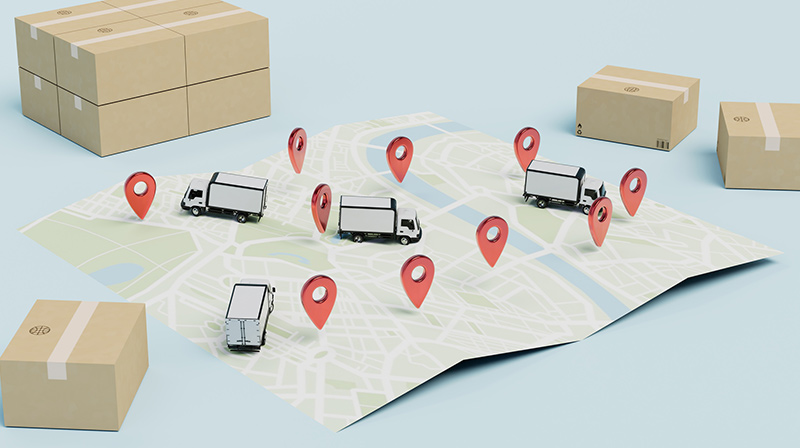
Efficient routing and dispatch planning have become mission-critical for logistics providers, distributors, 3PLs, and retailers. With last-mile delivery volumes surging—fueled by eCommerce growth, rapid urbanization, and increasing demand for same-day and next-day delivery—operations teams are under pressure to manage more stops, tighter delivery windows, and rising transportation costs. Manual planning or outdated route scheduling tools simply can’t keep up with the complexity of modern last-mile networks.

This is where a Last Mile TMS (Transportation Management System) becomes a game-changer. It brings routing, planning, dispatch management, real-time visibility, and customer communication into a single integrated platform. By combining AI, automation, and advanced route optimization, a Last Mile TMS helps companies improve delivery accuracy, reduce operating expenses, and create predictable, scalable workflows—whether managing a small regional fleet or a nationwide operation.

The following sections break down exactly how a Last Mile TMS transforms routing and dispatch planning, and why logistics organizations are rapidly adopting this technology to stay competitive, efficient, and customer-centric.

Automate Route Planning With AI & Real-Time Data

Traditional route planning depends heavily on static maps, spreadsheets, and manual decision-making. This often results in suboptimal routes, higher fuel usage, missed delivery windows, and planning delays—especially when delivery volumes fluctuate or unexpected disruptions occur.

A Last Mile TMS replaces this outdated approach with AI-driven route optimization that continuously analyzes live data to generate the most efficient delivery paths. Instead of planning based on estimates, the system calculates optimal routes using real-world variables to ensure the fastest and most cost-effective execution.

A modern Last Mile TMS uses advanced algorithms and real-time traffic intelligence to:

  • Recommend the best delivery sequence for every driver, based on location density, service times, order priorities, and delivery windows.
  • Incorporate live traffic, weather updates, and road restrictions, ensuring routes stay efficient even in dynamic environments.
  • Automatically re-optimize routes when conditions change, such as sudden congestion, road closures, last-minute orders, or customer rescheduling.
  • Reduce total distance traveled and driving time, directly lowering fuel consumption and mileage-related fleet expenses.
  • Improve on-time delivery performance, resulting in higher customer satisfaction and more predictable SLAs.

Impact on Operations

In high-density regions real-time, AI-powered recalculations dramatically minimize delays caused by congestion, construction zones, weather disruptions, and peak-hour traffic. Logistics providers gain the agility to maintain delivery consistency even in the most complex urban environments.

Running a small delivery business and want to cut miles and time on every route? This article shows how.

Explore Route Optimization Tools

Optimizes Dispatch Allocation for Maximum Productivity

Manual dispatching can quickly become inefficient—especially when coordinating multiple drivers, diverse order types, varying delivery windows, and fluctuating daily demand. Dispatchers often spend hours matching drivers to routes, correcting overlaps, or reallocating loads when conditions change. These inefficiencies directly impact fleet productivity and increase operational costs.

A Last Mile TMS brings intelligence and automation into this process, ensuring every route is assigned to the right driver with minimal manual intervention.

A Last Mile TMS makes dispatch smarter by:

  • Automatically assigning the best driver to each route, based on proximity, skillset, delivery requirements, and past performance.
  • Balancing load capacity, vehicle type, and service-level commitments, ensuring specialized orders—like oversized items, white-glove service, or temperature-controlled deliveries—go to the right vehicles.
  • Eliminating route overlaps and unnecessary trips, preventing two drivers from visiting the same area or making conflicting stops.
  • Maximizing the number of successful stops per route, improving both route density and overall delivery throughput.

Result

The outcome is increased driver productivity, fewer empty miles, optimized fleet utilization, and a measurable reduction in operating costs. Dispatch teams can handle more deliveries with the same resources, while maintaining service quality.

Enhances Real-Time Visibility & Predictability

One of the most persistent challenges in last-mile logistics is the lack of real-time visibility—both for internal operations teams and for end customers expecting accurate delivery information. Without live tracking and proactive alerts, dispatchers struggle to identify issues early, and customers often experience uncertainty about delivery timing, leading to frustration and increased support calls.

A Last Mile TMS solves this by offering comprehensive, real-time operational visibility across every driver, vehicle, and delivery route.

A Last Mile TMS provides:

  • Real-time driver and vehicle tracking, allowing dispatchers to monitor movement, speed, and route adherence at every moment.
  • Live route progress updates, showing completed stops, upcoming stops, delays, and any deviations from the planned route.
  • Dynamic ETA calculations, automatically adjusted based on live traffic, weather conditions, and driver behavior.
  • Instant alerts for delays, exceptions, failed deliveries, or missed stops, giving teams the opportunity to react before issues escalate.
  • Digital Proof of Delivery (POD) with photos, customer signatures, barcodes, or geotagged timestamps for complete delivery verification and compliance.

Why This Matters 

This level of visibility dramatically improves predictability, reduces “Where is my order?” inquiries, and empowers logistics teams to resolve problems faster. In busy metropolitan areas and high-density delivery zones, real-time insights also help maintain tighter SLAs and minimize customer dissatisfaction—directly impacting brand reputation and repeat business.

Reduces Delivery Costs Across the Board

Rising fuel prices, ongoing driver shortages, increasing wage pressures, and heightened customer expectations have made cost control one of the biggest challenges in last-mile logistics. Companies can no longer afford inefficient routing, empty miles, or failed delivery attempts—every mile and minute now has a direct impact on profitability.

A Last Mile TMS delivers significant cost reductions by optimizing every part of the delivery workflow, from planning to execution.

A Last Mile TMS helps reduce costs through:

  • Reduced total travel distance, thanks to AI-powered route optimization that eliminates unnecessary detours and backtracking.
  • Improved route density, ensuring more stops per route and maximizing each vehicle’s delivery potential.
  • Fewer failed or missed deliveries, enabled by real-time communication, accurate ETAs, and proactive exception handling.
  • Lower fuel consumption, driven by shorter routes, less idling, and fewer congestion delays.
  • Optimized driver schedules, reducing overtime costs and improving labor planning accuracy.
  • Better asset utilization, ensuring every vehicle and driver in the fleet is used at optimal capacity.

The Impact

Most logistics companies—especially those operating in urban hubs see 10–30% cost savings within the first few months of adopting a modern route optimization platform. These savings compound over time as operations become more predictable, efficient, and data-driven.

Improves Customer Experience Through Accurate ETAs

Customer expectations in the last-mile space have shifted dramatically. Whether it’s a residential eCommerce delivery or a business receiving critical inventory, customers now want precise, transparent, real-time information about their orders. Uncertain delivery windows or outdated tracking increases frustration, missed handoffs, and support escalations.

A Last Mile TMS helps companies deliver a superior customer experience by providing accurate, automated, and continuously updated delivery insights.

A Last Mile TMS enhances customer experience with:

  • Highly accurate, AI-powered ETAs, updated in real time based on traffic, driver progress, and route changes.
  • Automated SMS and email notifications, keeping customers informed about order dispatch, upcoming delivery windows, and arrival alerts.
  • Self-service tracking portals, allowing customers to check delivery status without calling support.
  • Live updates throughout the delivery journey, including “driver en route,” “stops away,” and “delivered with proof.”

End Result

With clearer expectations and more transparency, companies experience fewer customer support calls, reduced failed delivery attempts, and higher customer satisfaction scores. For brands competing on delivery experience, a Last Mile TMS becomes a key differentiator in building trust and encouraging repeat business.

Enables Scalable Multi-Stop & High-Density Routing

Across the retailers, distributors, healthcare providers, and 3PLs handle increasingly complex multi-stop delivery routes. High-density areas, strict delivery windows, and specialized delivery requirements make manual planning almost impossible to scale. As delivery volumes grow, so does the challenge of efficiently managing routes that include dozens—or even hundreds—of stops per driver.

A Last Mile TMS is designed to optimize and scale these multi-stop operations with sophisticated algorithms that account for real-world constraints and resource availability.

A Last Mile TMS supports:

  • High-density urban routes, ensuring drivers make more stops in less time while navigating traffic-heavy areas.
  • Advanced multi-stop sequencing, using AI to find the most efficient order of deliveries and minimize total drive time.
  • Route consolidation, combining orders across multiple customers or zones to maximize route density and reduce fleet costs.
  • Multi-driver and multi-depot planning, essential for enterprises with distributed networks or regional hubs.
  • Complex delivery constraints, such as strict time windows, temperature-controlled cargo, white-glove services, access restrictions, or high-priority orders.

Why This Matters

These capabilities make operations far more scalable—whether during peak retail seasons (holiday surge, back-to-school, Black Friday), sudden demand spikes, or daily operational fluctuations. Logistics teams gain the flexibility to grow without adding proportional labor, vehicles, or planning hours.

Struggling with delays and missed windows? Real-time route planning keeps things on track. See Real-Time Delivery Solutions

Streamlines Communication Between Drivers, Dispatchers & Customers

Miscommunication is one of the biggest hidden costs in last-mile operations. When drivers, dispatchers, and customers rely on phone calls, fragmented apps, or manual updates, it often results in missed instructions, late deliveries, incorrect drop-offs, and unnecessary reattempts. For operations with high delivery volumes, this lack of synchronized communication quickly leads to inefficiency and customer dissatisfaction.

A Last Mile TMS eliminates these issues by bringing all communication channels into one seamless platform.

A Last Mile TMS centralizes communication by:

  • Providing in-app driver messaging, allowing dispatchers to share updates, instructions, or route changes instantly.
  • Automating customer notifications, so receivers know when their order is shipped, out for delivery, or arriving soon.
  • Offering dispatcher dashboards, giving a complete view of driver status, delivery progress, and exceptions in real time.
  • Recording and storing delivery instructions, ensuring drivers always have access to gate codes, contact details, special handling notes, and access restrictions.
  • Reducing back-and-forth phone calls, as all updates and alerts flow directly through the platform.

Result

This integrated communication flow leads to smoother operations, fewer misunderstandings, higher first-attempt delivery success, and improved delivery accuracy. For logistics providers, it means more predictable workflows and a better customer experience across every route.

Why Companies Are Moving Toward AI-Powered Last Mile TMS Platforms

Across the location, logistics providers, retailers, distributors, and 3PLs are rapidly shifting toward AI-powered Last Mile TMS platforms. The pressure to deliver faster, cheaper, and more reliably has never been higher—driven by rising eCommerce volumes, changing customer expectations, and increasing operational constraints. Traditional dispatching tools, manual processes, and legacy routing systems are no longer enough to stay competitive.

The market is prioritizing:

  • Faster delivery promises, including same-day and next-day SLAs that require precise planning and real-time adjustments.
  • Lower cost per delivery, as rising fuel, labor, and insurance costs squeeze margins.
  • High-volume urban drops, especially in dense metros, where route optimization is essential.
  • End-to-end real-time visibility, demanded by both B2C and B2B customers who expect live tracking and accurate ETAs.
  • Driver shortage management, pushing companies to maximize productivity from existing workforce and assets.
  • Digital compliance and Proof of Delivery, needed for audits, dispute resolution, and operational transparency.

A modern, AI-enabled Last Mile TMS addresses all of these priorities by combining automation, optimization, and real-time intelligence into one unified platform.

The Bottom Line

For logistics teams, an AI-powered Last Mile TMS is no longer just a technology upgrade—it’s a strategic investment. It enables faster deliveries, tighter cost control, higher fleet productivity, and a dramatically better customer experience. As companies plan for 2025 and beyond, adopting a modern TMS has become essential for staying competitive in a rapidly evolving delivery landscape.

About nuVizz

nuVizz is a leading AI-powered Last Mile Delivery & Transportation Management (TMS) platform designed to help enterprises streamline routing, dispatching, visibility, and end-to-end delivery execution. Built for the complexities of logistics, nuVizz equips organizations with advanced optimization tools that reduce costs, eliminate inefficiencies, and deliver consistently superior customer experiences.

With its intelligent route optimization engine and dynamic dispatch logic, nuVizz allows logistics providers, retailers, distributors, healthcare networks, and 3PLs to scale operations across high-density urban areas, regional territories, or nationwide delivery networks. The platform is built to adapt to real-world challenges—traffic fluctuations, capacity variations, delivery windows, driver shortages, and peak-season surges.

Key capabilities of the nuVizz platform include:

  • AI-driven dynamic route optimization, enabling faster, smarter, and more cost-effective route creation.
  • Multi-stop and multi-driver route planning, ideal for high-volume delivery operations.
  • Real-time visibility & live ETAs, improving predictability, SLA adherence, and customer transparency.
  • Mobile driver app with POD capture, supporting photos, signatures, barcodes, and geolocation compliance.
  • Automated dispatch workflows, reducing manual effort and improving fleet utilization.
  • Advanced analytics and dashboards, helping operations teams reduce costs, monitor performance, and make data-driven decisions.

By combining automation, intelligence, and operational visibility, nuVizz empowers organizations to elevate their last-mile delivery performance and stay competitive in an increasingly demanding logistics market.

Conclusion

A Last Mile TMS is no longer a “nice-to-have” — it has become a core operational requirement for logistics teams that want to cut costs, improve routing accuracy, streamline dispatch planning, and meet today’s demanding delivery expectations. With delivery volumes rising and competition intensifying across the industry, companies that rely on manual planning or legacy tools risk falling behind in both efficiency and customer satisfaction.

Modern Last Mile TMS platforms powered by AI, automation, and real-time visibility give logistics organizations the intelligence and agility needed to succeed in fast-moving last-mile environments. They optimize every step of delivery execution — from generating efficient multi-stop routes to keeping customers informed with accurate ETAs.

Solutions like nuVizz last mile TMS take this transformation even further by offering end-to-end capabilities built specifically for the complexities of delivery networks. Whether it’s reducing empty miles, improving on-time performance, or scaling high-density routes during peak seasons, a platform like nuVizz gives logistics providers the competitive edge they need for 2025 and beyond.

By adopting a modern Last Mile TMS, businesses position themselves for greater productivity, lower operational costs, improved customer experience, and long-term growth in an increasingly demanding and dynamic market.
bookmark_fill [#fff1226] Created with Sketch. Related Content
Blog

What are the benefits of using nuVizz fo...

What are the benefits of using nuVizz for logistics and delivery services
Blog

Best Last-Mile TMS Software: How Leading...

Best Last-Mile TMS Software How Leading Platforms Compare
Blog

What Are The Best Route Planning Softwar...

What Are The Best Route Planning Software Options For Delivery Companies
Blog

The Hidden Factors Driving Supply Chain ...

The Hidden Factors Driving Supply Chain Turnover
Blog

Air and Road Delivery Are Merging Into O...

Air and Road Delivery Are Merging Into One Network — Most Systems Still Treat Them as Two
Blog

Dozens of Carriers, Dozens of Systems: W...

Dozens of Carriers, Dozens of Systems Why Delivery Networks Still Lack End-to-End Visibility
Blog

What Most Transportation Management Syst...

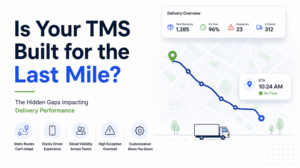
What Most Transportation Management Systems Get Wrong About Last-Mile Delivery
Blog

Retail Logistics: The Complete Guide to ...

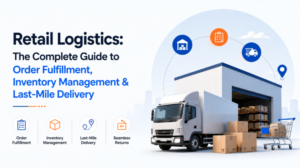
Retail Logistics The Complete Guide to Order Fulfillment, Inventory Management & Last-Mile Delivery
Blog

How Shipping and Logistics Platforms Imp...

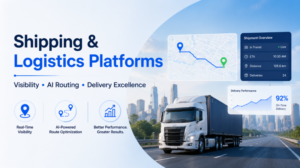
How Shipping and Logistics Platforms Improve Shipment Visibility, Route Optimization, and Delivery Performance
Blog

What Is Transportation and Last-Mile Del...

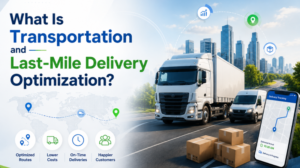
What Is Transportation and Last-Mile Delivery Optimization Benefits, Strategies & Best Practices

FAQs

It optimizes routing, reduces fuel costs, improves dispatch efficiency, and provides real-time visibility to enhance delivery performance across U.S. cities and states.

Yes, modern TMS platforms use AI and traffic data to manage multi-stop routes in congested cities like New York, Chicago, or Los Angeles.

By shortening routes, increasing route density, minimizing failed deliveries, and improving vehicle utilization.

Absolutely — it provides live GPS tracking, ETAs, exception alerts, and POD capture for full delivery transparency.

Retailers, distributors, 3PLs, courier services, healthcare logistics providers, and food/furniture delivery companies.
Blog

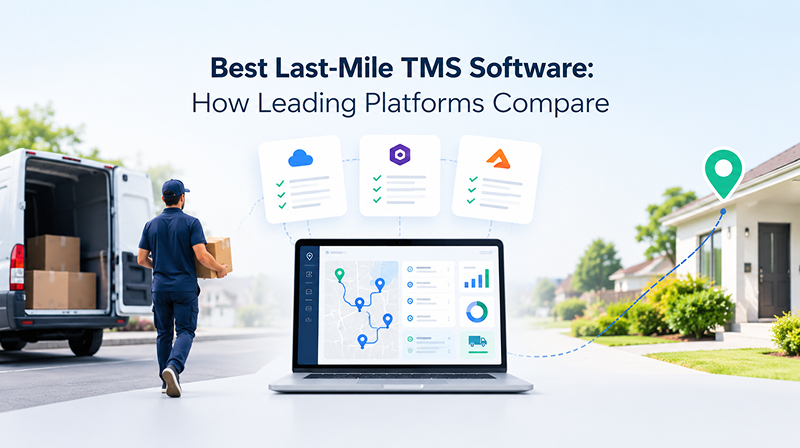
Best Last-Mile TMS Software: How Leading Platforms Compare

Key Takeaways

  • Last-Mile TMS software helps businesses plan, execute, track, and optimize last-mile transportation.
  • Enterprise TMS platforms go beyond route planning to manage carriers, fleets, facilities, drivers, and delivery workflows.
  • Modern Last-Mile TMS uses intelligent optimization, real-time visibility, predictive insights, and automation to improve operations.
  • Mid-level platforms can support growing fleets, while enterprises often require deeper multi-carrier and multi-facility orchestration.
  • nuVizz provides enterprise transportation orchestration across planning, execution, visibility, reverse logistics, settlement, and integrations.
  • Choosing the right Last-Mile TMS depends on network complexity, integration needs, scalability, automation, and end-to-end transportation capabilities.
Best Last-Mile TMS Software How Leading Platforms Compare

Last-mile delivery has become one of the most complex and cost-intensive areas of modern logistics. Rising delivery volumes, tighter customer expectations, multiple carriers, and increasingly complex transportation networks are pushing businesses beyond basic route planning and delivery tracking.

This is where Last-Mile Transportation Management System (TMS) software becomes critical. Modern platforms can connect carriers, fleets, facilities, drivers, and enterprise systems while using intelligent optimization, real-time visibility, and automation to improve transportation performance.

Among these solutions, nuVizz takes an enterprise-focused approach to last-mile transportation management. Rather than operating as a standalone delivery or route-planning tool, nuVizz provides a transportation orchestration layer that helps enterprises manage complex multi-carrier, multi-facility, and multi-leg delivery networks from a unified platform.

In this blog, we compare the capabilities of different types of Last-Mile TMS platforms and explore why nuVizz is positioned for enterprises looking to move from fragmented delivery operations to intelligent transportation orchestration.

What Is Last-Mile TMS Software?

A Last-Mile Transportation Management System (TMS) is software designed to plan, coordinate, execute, and monitor the final stage of transportation—from a distribution center, terminal, or facility to the delivery destination.

Unlike basic delivery management tools that primarily focus on dispatching and tracking, a modern Last-Mile TMS can connect multiple parts of the transportation operation through a single platform.

What Can a Last-Mile TMS Manage?

A capable Last-Mile TMS can help businesses manage:

  • Route Planning & Optimization – Build efficient routes based on delivery windows, vehicle capacity, driver availability, traffic, and other constraints.
  • Dispatch & Driver Management – Assign deliveries, manage drivers, and adjust daily operations as conditions change.
  • Multi-Carrier Operations – Coordinate private fleets, 3PLs, regional carriers, and other delivery partners.
  • Real-Time Visibility – Track orders, vehicles, shipments, and delivery progress across the network.
  • Exception Management – Identify delays, missed stops, route disruptions, and other issues and enable faster corrective action.
  • Proof of Delivery – Capture digital signatures, photos, timestamps, scans, and other delivery evidence.
  • Facility & Cross-Dock Coordination – Connect transportation execution with terminals, hubs, and distribution facilities.
  • Reverse Logistics – Manage returns, pickups, reusable assets, and other reverse-flow operations.
  • Settlement & Billing – Automate carrier payments, freight billing, accessorials, and reconciliation.
  • Enterprise Integration – Connect transportation operations with ERP, WMS, order management, and legacy systems.

Why the Difference Matters

For a small delivery operation, a route planner or driver-tracking application may be enough. However, enterprise transportation networks require much more than route optimization.

They need a platform capable of coordinating carriers, fleets, facilities, drivers, shipments, exceptions, and financial workflows across the entire delivery network.

This is where an enterprise-focused platform such as nuVizz moves beyond traditional last-mile delivery software toward end-to-end transportation orchestration.

Planning routes manually and losing time to inefficient deliveries?

Explore Smarter Route Planning

Why Businesses Need a Modern Last-Mile TMS

Last-mile operations become difficult to manage when delivery volume, carriers, facilities, and customer expectations grow. Spreadsheets, disconnected systems, and manual dispatching can quickly create operational gaps.

A modern Last-Mile TMS helps enterprises address these challenges through a more connected and automated approach.

Common Last-Mile Challenges

  • Rising Transportation Costs – Inefficient routes, excess driver hours, empty miles, and manual processes can increase the cost of every delivery.
  • Fragmented Carrier Networks – Managing private fleets, 3PLs, regional carriers, and other partners across separate systems makes network-wide coordination difficult.
  • Limited Real-Time Visibility – Without live operational data, teams may discover delays or delivery issues only after they affect customers.
  • Manual Dispatch Decisions – Changing orders, traffic, vehicle availability, and delivery constraints can overwhelm dispatch teams when decisions are handled manually.
  • Delivery Exceptions – Failed deliveries, route disruptions, loading errors, and missed time windows require quick action to protect service levels.
  • Disconnected Transportation Workflows – When planning, execution, proof of delivery, returns, billing, and settlement operate independently, teams spend more time moving data between systems.

What a Modern TMS Changes

A modern Last-Mile TMS brings these processes together so enterprises can:

  • Plan smarter with intelligent routing and optimization.
  • Execute faster through automated dispatch and mobile driver workflows.
  • Respond proactively to delays and operational exceptions.
  • Improve visibility across carriers, facilities, shipments, and deliveries.
  • Automate workflows from delivery execution through ePOD, returns, billing, and settlement.
  • Scale operations without adding the same level of manual coordination.

For enterprises, the objective is no longer simply to find the shortest route. It is to orchestrate the entire last-mile transportation network around cost, capacity, service levels, and operational constraints.

Key Features to Look for in Last-Mile TMS Software

Not every last-mile platform offers the same level of functionality. Enterprises should evaluate a TMS based on how well it can handle operational complexity, network scale, automation, and future growth.

1. Intelligent Route Optimization

The platform should optimize routes using real-world constraints such as:

  • Delivery time windows
  • Vehicle capacity
  • Driver availability
  • Traffic and road conditions
  • Driver hours-of-service
  • Service priorities

2. Dynamic Dispatch & Route Adjustments

Plans can change throughout the day. A modern TMS should automatically respond to:

  • New or canceled orders
  • Traffic disruptions
  • Vehicle breakdowns
  • Driver availability changes
  • Delivery delays

3. Multi-Carrier & Network Orchestration

For enterprises, managing multiple transportation partners from one environment is critical.

Look for support for:

  • Private fleets
  • 3PL carriers
  • Regional carriers
  • LTL providers
  • Other delivery partners

4. Real-Time Visibility & Predictive ETAs

Teams should have a live view of delivery operations, supported by accurate ETAs and proactive alerts when shipments are at risk.

5. Mobile Driver Execution & ePOD

Driver applications should support real-time execution, including:

  • Shipment and barcode scanning
  • Digital proof of delivery
  • Photos and signatures
  • Delivery timestamps
  • Exception capture
  • Offline execution

6. Facility & Cross-Dock Management

For complex networks, transportation software should connect delivery execution with distribution centers, terminals, hubs, and cross-docks to reduce loading errors and improve shipment flow.

7. Reverse Logistics & Settlement Automation

Advanced TMS platforms should also support the workflows after and around delivery, including:

  • Returns and pickups
  • Returnable asset tracking
  • Carrier settlement
  • Freight billing
  • Accessorial charges
  • Reconciliation and auditing

8. Enterprise Integration & Scalability

Finally, the platform should integrate with existing ERP, WMS, order management, and legacy systems rather than requiring businesses to replace their technology stack.

The strongest Last-Mile TMS platforms bring these capabilities together, turning disconnected delivery activities into a unified, intelligent transportation operation.

High employee turnover can quietly drive up your supply chain costs. Uncover the Hidden Factors

How Leading Last-Mile TMS Platforms Compare

Last-mile TMS platforms vary significantly in depth and complexity. A solution that works well for a small delivery operation may not be enough for an enterprise managing multiple carriers, facilities, business lines, and delivery networks.

Rather than comparing individual software brands, it is more useful to look at the different levels of platform capability.

1. Basic Delivery Management Platforms

Best suited for: Small fleets and straightforward local delivery operations.

Typical capabilities include:

  • Driver assignment
  • Basic dispatch
  • Delivery tracking
  • Customer notifications
  • Digital proof of delivery
  • Basic reporting

These platforms can be effective when delivery operations are relatively simple, but may become limiting as fleet size, carrier relationships, and operational complexity increase.

2. Route Optimization Platforms

Best suited for: Businesses primarily looking to improve route efficiency.

Common capabilities include:

  • Multi-stop route planning
  • Stop sequencing
  • Driver assignment
  • Basic ETA calculations
  • Route adjustments

They can help reduce unnecessary miles and improve daily planning, but route optimization represents only one part of transportation management.

3. Mid-Level Last-Mile Platforms

Best suited for: Growing fleets and regional delivery operations.

These platforms typically combine:

  • Route optimization
  • Dispatch management
  • Driver applications
  • Real-time tracking
  • ePOD
  • Basic analytics
  • Customer visibility

They offer broader functionality than basic delivery tools, but enterprises may require deeper capabilities across multi-carrier orchestration, facilities, reverse logistics, integrations, and financial workflows.

4. Enterprise Last-Mile TMS: nuVizz

Best suited for: Enterprises managing complex, multi-carrier and multi-facility transportation networks.

nuVizz extends beyond delivery execution by connecting:

  • Carriers and 3PLs
  • Private and regional fleets
  • Multiple terminals and facilities
  • Drivers and field operations
  • Cross-docks and hubs
  • Forward and reverse logistics
  • ERP and WMS systems
  • Billing and settlement workflows

The key difference is orchestration. Instead of managing individual delivery activities in isolation, nuVizz provides a unified environment for coordinating the broader transportation network, with real-time visibility and intelligent decision-making across the operation.

For enterprises, this creates a path from fragmented last-mile execution to connected transportation orchestration.

Why nuVizz Stands Out as an Enterprise Last-Mile TMS

For enterprises, choosing a Last-Mile TMS is not simply about finding the fastest route. The platform must coordinate people, carriers, facilities, shipments, technology, and financial workflows across a constantly changing transportation network.

This is where nuVizz takes a broader approach.

1. One Platform for Complex Transportation Networks

nuVizz acts as a transportation orchestration layer across an enterprise’s existing technology environment, helping connect:

  • ERP and WMS systems
  • Private fleets
  • 3PL and regional carriers
  • Multiple facilities and terminals
  • Drivers and field operations
  • Customers and delivery networks

This allows enterprises to modernize transportation operations without necessarily replacing their existing core systems.

2. Intelligent Network Orchestration

Instead of treating each carrier, facility, or fleet as a separate operation, nuVizz provides a unified view of the transportation network.

Its network-oriented architecture supports:

  • Many-to-many relationships between shippers, facilities, carriers, and clients
  • Centralized operating rules and service requirements
  • Carrier-level operational autonomy
  • Network-wide visibility and coordination

3. Dynamic Optimization Beyond Route Planning

nuVizz can evaluate changing operational conditions—including order volumes, vehicle capacity, delivery windows, driver availability, terminal constraints, and transportation disruptions—to support better daily execution.

This shifts optimization from a static route-planning exercise to continuous transportation decision-making.

4. Connected Facility and Cross-Dock Operations

nuVizz extends transportation visibility into terminals, hubs, and cross-docks.

Physical shipment and handling-unit scans can be validated against digital route information, helping identify loading or routing discrepancies before vehicles leave the facility.

5. Advanced Driver & Field Execution

The nuVizz mobile experience connects drivers directly to transportation workflows, supporting:

  • Shipment and barcode scanning
  • Handling-unit and SKU validation
  • Real-time delivery updates
  • Electronic Proof of Delivery (ePOD)
  • Exception capture
  • Offline execution

6. Automated Settlement and Reverse Logistics

The platform also extends beyond delivery completion by connecting transportation execution with:

  • Carrier and driver settlement
  • Freight billing
  • Accessorial reconciliation
  • Freight auditing
  • Returns and reverse logistics
  • Returnable asset tracking

7. Built for Enterprise Requirements

With capabilities spanning network orchestration, optimization, field execution, visibility, reverse logistics, settlement, and enterprise integration, nuVizz is designed to address transportation complexity at scale.

The result is a Last-Mile TMS that goes beyond managing individual deliveries to orchestrating the broader transportation network end to end.

Struggling to scale complex multi-terminal parts deliveries without disruptions?

Explore Scalable Delivery Workflows

nuVizz vs. Mid-Level Last-Mile Platforms

The right Last-Mile TMS depends on the complexity of the operation. Mid-level platforms can be effective for growing delivery businesses, while enterprises often need deeper orchestration across their transportation ecosystem.

CapabilityMid-Level Last-Mile PlatformnuVizz Enterprise Last-Mile TMS
Route Optimization✓Advanced
Dynamic Dispatch✓✓
Driver Mobile Applications✓✓
Real-Time Visibility✓Network-Wide
Multi-Carrier ManagementBasic to ModerateAdvanced
Multi-Facility OperationsLimited✓
Cross-Dock & Terminal CoordinationLimited✓
Enterprise ERP/WMS IntegrationVaries✓
Reverse LogisticsVaries✓
ePOD & Field Validation✓Advanced
Exception ManagementBasic to AdvancedIntelligent & Proactive
Carrier Settlement & Freight AuditingLimited✓
Transportation Network OrchestrationLimited✓
Enterprise ScalabilityVariesBuilt for Enterprise Networks

The Key Difference

Mid-level platforms can provide the essential tools needed to plan, dispatch, track, and complete deliveries.

nuVizz takes a broader approach by connecting these activities across the transportation network.

Mid-Level Platform:

Plan → Dispatch → Deliver → Track

nuVizz:

Plan → Orchestrate → Execute → Monitor → Optimize → Settle → Return

This broader scope makes nuVizz particularly relevant for enterprises where transportation involves multiple carriers, facilities, fleets, delivery models, and interconnected workflows.

When Should an Enterprise Consider nuVizz?

nuVizz can be a strong fit when an organization needs to:

  • Manage multiple transportation partners through one platform
  • Coordinate complex multi-facility operations
  • Connect last-mile execution with ERP and WMS systems
  • Improve visibility across a distributed transportation network
  • Automate repetitive transportation workflows
  • Manage forward and reverse logistics together
  • Connect delivery execution with settlement and billing
  • Scale operations without adding layers of manual coordination

For enterprises evaluating Last-Mile TMS software, the key question is not simply “Can this platform optimize my routes?” but “Can it orchestrate my transportation network?”

That distinction is where an enterprise platform such as nuVizz stands apart.

How to Choose the Right Last-Mile TMS

The best Last-Mile TMS is not necessarily the platform with the longest feature list. It is the one that fits the scale, complexity, and growth requirements of the transportation operation.

Before selecting a platform, enterprises should evaluate:

1. Operational Complexity

Consider how many:

  • Carriers and delivery partners you manage
  • Facilities and terminals you operate
  • Vehicles and drivers you coordinate
  • Delivery locations and orders you handle

The more complex the network, the greater the need for transportation orchestration.

2. Integration Requirements

The TMS should work with your existing technology ecosystem, including:

  • ERP
  • WMS
  • Order management systems
  • Legacy applications
  • Carrier systems

Avoid creating another disconnected operational silo.

3. Automation & Intelligence

Look beyond basic route optimization. Evaluate whether the platform can automate:

  • Dispatch decisions
  • Route adjustments
  • Exception handling
  • ETA predictions
  • Delivery workflows
  • Settlement and reconciliation

4. Scalability

A platform should support your current operation while being capable of handling future growth across fleets, carriers, facilities, geographies, and delivery volumes.

5. End-to-End Coverage

Finally, evaluate whether the TMS can manage the complete transportation lifecycle—from planning and execution to visibility, ePOD, returns, settlement, and reporting.

For organizations with straightforward delivery requirements, a mid-level platform may be sufficient. For enterprises managing complex transportation ecosystems, a platform such as nuVizz provides the broader capabilities needed to move from individual delivery management to end-to-end transportation orchestration.

Looking to optimize vehicle routes and reduce delivery costs? Explore Top Route Planning Tools

The Future of Last-Mile TMS Software

Last-mile transportation is moving from reactive delivery management toward predictive and increasingly automated operations. As networks become more complex, TMS platforms will need to do more than plan routes and track vehicles.

Key Trends Shaping the Future

  • AI-Powered Decision-Making – AI will increasingly help analyze transportation data, identify risks, and recommend or automate operational decisions.
  • Predictive Exception Management – Instead of reacting after a delivery is delayed, platforms will increasingly identify potential SLA risks and enable teams to act earlier.
  • Continuous Route & Network Optimization – Routes will become dynamic plans that can adapt to changing orders, traffic, capacity, driver availability, and network conditions.
  • Greater Transportation Automation – Repetitive dispatch, monitoring, exception, and administrative workflows will increasingly move from manual processes to automated workflows.
  • Connected Logistics Networks – Enterprises will increasingly need a single digital environment connecting carriers, fleets, facilities, drivers, customers, and enterprise systems.
  • Unified Forward and Reverse Logistics – Delivery, returns, pickups, and asset recovery will increasingly be managed as connected transportation workflows rather than separate processes.

Where nuVizz Fits

This shift favors platforms that can combine AI, real-time data, transportation orchestration, and workflow automation rather than simply providing isolated delivery tools.

With its network-oriented architecture and capabilities spanning planning, execution, visibility, optimization, settlement, and reverse logistics, nuVizz is positioned to support enterprises moving toward more intelligent and connected last-mile transportation operations.

Conclusion

Choosing the right Last-Mile TMS depends on the complexity of your transportation operation.

Basic delivery tools and mid-level platforms can work well for straightforward fleet and route management. However, enterprises managing multiple carriers, facilities, fleets, delivery networks, and transportation workflows need a broader approach.

nuVizz brings these capabilities together through an enterprise-focused transportation orchestration platform, connecting planning, optimization, field execution, real-time visibility, facility operations, reverse logistics, settlement, and enterprise systems.

For organizations looking to move beyond fragmented delivery management and build a more connected, intelligent, and scalable last-mile operation, nuVizz provides the foundation to orchestrate transportation end to end.

Ready to Transform Your Last-Mile Operations?

See how nuVizz can help your organization optimize and orchestrate its last-mile transportation network. Request a demo today.

Book Demo | Contact nuVizz

bookmark_fill [#fff1226] Created with Sketch. Related Content
Blog

What are the benefits of using nuVizz fo...

What are the benefits of using nuVizz for logistics and delivery services
Blog

What Are The Best Route Planning Softwar...

What Are The Best Route Planning Software Options For Delivery Companies
Blog

The Hidden Factors Driving Supply Chain ...

The Hidden Factors Driving Supply Chain Turnover
Blog

Air and Road Delivery Are Merging Into O...

Air and Road Delivery Are Merging Into One Network — Most Systems Still Treat Them as Two
Blog

Dozens of Carriers, Dozens of Systems: W...

Dozens of Carriers, Dozens of Systems Why Delivery Networks Still Lack End-to-End Visibility
Blog

What Most Transportation Management Syst...

What Most Transportation Management Systems Get Wrong About Last-Mile Delivery
Blog

Retail Logistics: The Complete Guide to ...

Retail Logistics The Complete Guide to Order Fulfillment, Inventory Management & Last-Mile Delivery
Blog

How Shipping and Logistics Platforms Imp...

How Shipping and Logistics Platforms Improve Shipment Visibility, Route Optimization, and Delivery Performance
Blog

What Is Transportation and Last-Mile Del...

What Is Transportation and Last-Mile Delivery Optimization Benefits, Strategies & Best Practices
Blog

How Does Order Tracking Work? A Guide to...

How Does Order Tracking Work A Guide to Real-Time Delivery Visibility

FAQs

A Last-Mile Transportation Management System (TMS) is software that helps businesses plan, execute, monitor, and optimize deliveries from facilities or terminals to the final destination. Modern Last-Mile TMS platforms can also manage carriers, drivers, facilities, exceptions, returns, and transportation workflows.

Key capabilities include intelligent route optimization, dynamic dispatch, real-time visibility, multi-carrier management, predictive ETAs, mobile driver execution, ePOD, exception management, reverse logistics, enterprise integrations, and automated settlement.

Route optimization software primarily focuses on creating efficient delivery routes and sequencing stops. A Last-Mile TMS provides a broader set of capabilities covering transportation planning, dispatch, execution, visibility, carrier management, exceptions, and other operational workflows.

Yes. Enterprise-focused Last-Mile TMS platforms are designed to manage complex transportation networks involving multiple carriers, fleets, facilities, delivery locations, and operational workflows. They can also integrate with existing ERP, WMS, and other enterprise systems.

nuVizz takes an enterprise transportation orchestration approach rather than focusing only on route planning or delivery tracking. It connects carriers, private fleets, facilities, drivers, field execution, reverse logistics, and financial workflows through a unified platform.

Yes. Enterprise Last-Mile TMS platforms can integrate with existing ERP, WMS, order management, and legacy systems. This allows businesses to modernize transportation operations while continuing to use their existing technology infrastructure.

Blog

The Hidden Factors Driving Supply Chain Turnover

Key Takeaways

  • Supply chain turnover is often driven by hidden operational inefficiencies, including poor planning, limited visibility, disconnected systems, and reactive execution.
  • Limited supply chain visibility can amplify disruptions by delaying the identification and resolution of shipment, delivery, and transportation exceptions.
  • Manual route planning and dispatch can limit scalability, increase operational workload, and contribute to inefficient transportation utilization.
  • Supply chain orchestration connects planning, optimization, dispatch, execution, and real-time visibility, helping organizations respond more effectively to changing conditions.
  • nuVizz helps enterprises optimize delivery and transportation operations through route optimization, intelligent dispatch, real-time visibility, exception management, delivery execution, and customer communication.
The Hidden Factors Driving Supply Chain Turnover

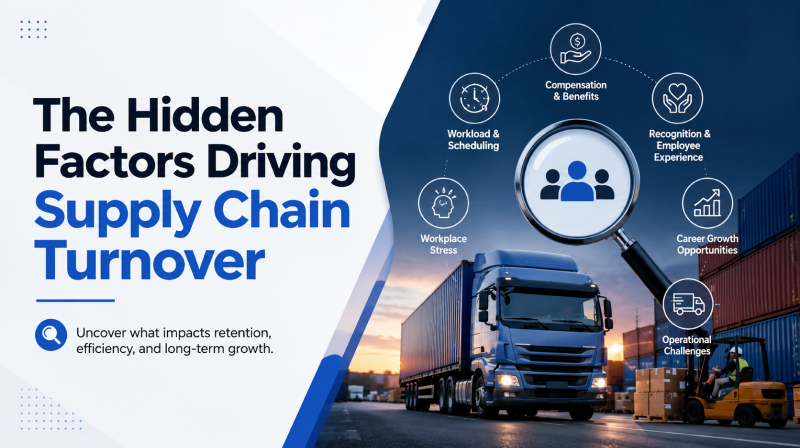
Supply chain turnover is rarely caused by one obvious problem.

Rising transportation costs, labor shortages, supplier changes, demand volatility, and customer expectations often get the attention. But beneath these visible challenges are operational issues that can quietly create instability across the supply chain.

Poor planning. Limited visibility. Disconnected systems. Inefficient routes. Manual dispatch. Delayed exception management. Inconsistent delivery execution.

Individually, these problems may seem manageable. Collectively, they can create a supply chain that spends more time reacting than optimizing.

That is why understanding the hidden operational factors driving supply chain turnover matters.

The organizations that address these underlying issues can build supply chains that are more connected, predictable, responsive, and easier to scale.

What Is Driving Supply Chain Turnover?

Supply chain turnover can take many forms.

It may appear as frequent changes in carriers or suppliers, inconsistent transportation capacity, fluctuating fulfillment performance, customer churn, operational disruption, or continually changing delivery resources.

Not all turnover can be eliminated. Market conditions will always change.

The bigger concern is avoidable operational instability.

When supply chain processes depend heavily on manual coordination, disconnected data, and reactive decisions, even a relatively small disruption can create problems across multiple stages of the network.

For example:

A delayed vehicle → missed delivery window → customer complaint → additional coordination → higher operating cost → lower network efficiency.

When similar events happen repeatedly, they become more than isolated exceptions. They become structural problems.

1. Poor Planning Creates Problems Before Execution Begins

Many supply chain challenges start before a shipment ever moves.

Planning teams have to balance demand, inventory, delivery windows, vehicle capacity, transportation resources, geographic constraints, and customer requirements.

As networks become more complex, planning these variables manually becomes increasingly difficult.

A plan that looks efficient in the morning can become inefficient by afternoon because of changing demand, traffic, vehicle availability, new orders, cancellations, or unexpected delays.

This is why modern supply chain planning needs to move beyond static schedules.

Dynamic planning and optimisation can help organizations continuously evaluate changing conditions and make better decisions before those changes cascade through the network.

2. Visibility Gaps Make Small Problems Bigger

A supply chain cannot respond effectively to an event it cannot see.

Without real-time visibility, teams may not know:

  • Where a shipment is
  • Whether a vehicle is running late
  • Which deliveries are at risk
  • Whether a route is being followed
  • Where capacity is being underutilized
  • Which customer commitments may be affected
  • Where an exception originated

This often forces operations teams to rely on phone calls, emails, spreadsheets, and manual status updates.

The result is a delayed response.

Visibility is therefore not simply a tracking capability. It is the foundation for better decision-making.

Modern delivery orchestration platforms can provide network-wide visibility across fleets, carriers, agents, shipments, and delivery touchpoints, helping organizations move from fragmented information toward a more complete operational picture. nuVizz, for example, positions real-time delivery visibility as a core part of its transportation and delivery orchestration platform.

3. Disconnected Systems Increase Coordination Overhead

A typical supply chain may involve order management systems, ERP platforms, warehouse systems, transportation management systems, fleet applications, carrier systems, customer communication tools, and other technologies.

The technology itself is not necessarily the problem.

The challenge is what happens when these systems do not work together effectively.

Teams may have to move information manually between applications or use multiple screens to understand what is happening.

That creates coordination overhead.

It can also lead to:

  • Duplicate data
  • Delayed updates
  • Inconsistent information
  • Manual reconciliation
  • Slower decision-making
  • Poor exception visibility

This is where supply chain orchestration becomes important.

Instead of optimizing one isolated activity, orchestration connects planning, execution, visibility, and response across the delivery lifecycle.

Unify air and road delivery into one connected network.

See How It Works

4. Manual Route Planning Does Not Scale With Complexity

Route planning is another hidden source of supply chain inefficiency.

For a small operation with a limited number of deliveries, manual planning may be sufficient.

But enterprise delivery networks can involve hundreds or thousands of orders, multiple vehicles, different customer time windows, capacity constraints, geographic territories, and changing conditions.

The number of variables quickly becomes difficult for humans to process consistently.

Route optimization can evaluate these variables much faster and identify more efficient delivery sequences.

More importantly, dynamic route optimization can respond when conditions change.

A route should not necessarily remain fixed simply because it was optimized earlier in the day.

Modern delivery operations increasingly need routing systems that can react to real-world execution.

nuVizz’s public platform information highlights advanced route optimization alongside mobile dispatch, real-time tracking, cascading ETAs, KPI dashboards, and customer communication—illustrating how routing becomes more valuable when connected to execution and visibility rather than operating as a standalone planning tool.

5. Manual Dispatch Creates an Operational Bottleneck

Dispatch is where plans become actions.

When dispatchers have to manually assign vehicles, drivers, and shipments while simultaneously monitoring exceptions, their workload can grow rapidly as the operation scales.

This creates a difficult situation.

The more complex the network becomes, the more human intervention is required.

But increasing headcount is not always the best answer.

Automation can take over repetitive decisions while allowing operations teams to remain in control of more important exceptions and business decisions.

nuVizz addresses this area through its delivery orchestration capabilities and RoboDispatch, which publicly describes AI-based driver assignment and automated dispatch capabilities designed to help organizations manage delivery resources more efficiently.

6. Poor Exception Management Creates a Chain Reaction

Disruptions are inevitable.

Vehicles break down. Traffic changes. Customers are unavailable. Orders change. Deliveries get delayed. Capacity becomes unavailable.

The problem is not the existence of exceptions.

The problem is how long it takes to detect, understand, and respond to them.

A traditional process might look like this:

Exception occurs → customer calls → dispatcher investigates → team contacts driver → new decision is made → customer is updated.

By the time the process is complete, the disruption may already have affected multiple deliveries.

A more connected operation can identify exceptions earlier, prioritize them, and trigger the appropriate response.

That is one reason exception management is becoming a core capability of modern transportation management and delivery orchestration platforms.

7. Inaccurate ETAs Damage Customer Trust

Customers do not necessarily expect every delivery to be perfectly predictable.

They do expect accurate information.

A customer who receives an accurate ETA can plan around a delivery.

A customer who receives an inaccurate ETA may spend hours waiting, call customer service, or lose confidence in the company.

This makes delivery visibility and ETA accuracy more than operational metrics.

They are part of the customer experience.

Technologies such as real-time tracking, predictive ETAs, automated notifications, and delivery status updates can help organizations provide customers with more timely and useful information.

nuVizz includes real-time tracking, cascading ETAs, customer communication, and delivery visibility within its delivery orchestration capabilities.

8. Poor Vehicle and Capacity Utilization Raises Costs

Supply chain turnover can also be influenced by inefficient resource utilization.

Consider what happens when vehicles regularly operate below capacity or travel unnecessary miles.

The organization may need more vehicles, more drivers, or more transportation capacity to handle the same volume.

At the same time, inefficient routes can increase fuel consumption and operating costs.

This makes vehicle utilization, load planning, route efficiency, and miles driven important supply chain metrics.

nuVizz publicly highlights route optimization and delivery planning capabilities designed to improve asset utilization, reduce miles, and improve delivery efficiency. Its published customer metrics also reference improvements in asset utilization and reductions in manual labor and miles driven.

Actual results, of course, depend on the network, operating model, and implementation.

9. Fragmented Delivery Execution Creates Hidden Costs

A supply chain does not end when a route is planned.

The real test happens during execution.

Drivers need the right information. Dispatchers need visibility. Customers need updates. Operations teams need proof of delivery. Finance teams need accurate billing and settlement information.

If each activity operates independently, organizations can end up with multiple disconnected workflows.

This creates hidden costs through:

  • Manual data entry
  • Repeated communication
  • Paper-based processes
  • Delayed proof of delivery
  • Billing discrepancies
  • Customer service inquiries
  • Manual reconciliation

A connected delivery platform can bring these processes into a more unified workflow.

nuVizz’s publicly described capabilities include delivery execution, electronic proof of delivery, document management, billing and settlement, real-time tracking, and network-wide visibility.

10. Reactive Supply Chains Struggle to Scale

Perhaps the biggest hidden factor is the operating model itself.

A reactive supply chain constantly responds to problems.

A proactive supply chain continuously monitors conditions, identifies risks, optimizes decisions, and adapts execution.

The difference can be represented simply:

Reactive model

Problem → Manual investigation → Decision → Action

Proactive model

Data → Visibility → Prediction → Optimization → Action

This is the shift from managing individual transportation activities to orchestrating the delivery network.

Bring fragmented carriers and systems into one connected view. Get End-to-End Visibility

Why Supply Chain Orchestration Matters

Supply chain visibility tells you what is happening.

Optimization helps determine what should happen.

Execution makes the decision happen.

Orchestration connects all three.

This distinction is particularly important in last-mile and transportation operations, where conditions can change rapidly.

For example:

A vehicle becomes delayed.

A visibility system identifies the problem.

A routing engine evaluates alternative options.

An orchestration platform can coordinate the resulting change across dispatch, drivers, customers, and other stakeholders.

That creates a closed operational loop rather than another disconnected software workflow.

Where nuVizz Fits

This is the operational gap nuVizz is designed to address.

nuVizz positions itself as a delivery and transportation orchestration SaaS platform, with capabilities spanning route optimization, dispatch, real-time visibility, delivery execution, customer communication, proof of delivery, analytics, and transportation management.

Rather than treating route optimization, tracking, dispatch, and delivery execution as separate problems, the platform brings these capabilities together around the delivery lifecycle.

For organizations managing complex delivery networks, that approach can help connect:

Plan → Optimize → Dispatch → Execute → Track → Respond → Measure

This connected model is particularly relevant for enterprises operating across fleets, carriers, agents, multiple facilities, and complex delivery networks.

nuVizz also describes its platform as supporting multiple supply chain environments, including manufacturers, distributors, retailers, carriers and 3PLs, as well as industries such as automotive parts, food distribution, pharmaceuticals, furniture, and retail.

How Supply Chain Leaders Can Reduce Operational Turnover

Technology is only one part of the solution.

Organizations should first identify where operational instability originates.

Start by asking:

1. Are planning decisions based on real-time information?

If planners are working with outdated information, optimization decisions may already be obsolete when execution begins.

2. Can teams see the entire delivery network?

Visibility should extend beyond individual shipments to fleets, carriers, facilities, routes, and delivery events.

3. How much manual intervention is required?

High levels of manual coordination can indicate opportunities for automation.

4. How quickly are exceptions detected?

The earlier an organization identifies a disruption, the more options it has to respond.

5. Are transportation resources being fully utilized?

Look beyond transportation spend and analyze vehicle utilization, miles driven, capacity, route efficiency, and delivery density.

6. Can planning and execution communicate with each other?

Optimization becomes significantly more valuable when the plan can adapt to what is actually happening in the field.

Turn smarter routing into better driver retention and lower turnover.

Explore Dynamic Routing

The Future of Supply Chain Management Is More Connected

The future of supply chain management is not simply about adding more software.

It is about connecting the right data, decisions, people, and processes.

Organizations need to move beyond isolated systems that solve individual problems and toward platforms that can coordinate the entire delivery lifecycle.

That means combining:

  • Real-time supply chain visibility
  • AI-powered route optimization
  • Intelligent dispatch
  • Dynamic delivery planning
  • Predictive ETAs
  • Exception management
  • Digital proof of delivery
  • Customer communication
  • Operational analytics

The objective is simple:

Make the supply chain easier to see, easier to manage, and easier to adapt.

Conclusion

Supply chain turnover is often driven by hidden operational inefficiencies such as poor planning, limited visibility, disconnected systems, and reactive execution. Addressing these gaps requires a connected approach to transportation and delivery management. With delivery orchestration capabilities spanning route optimization, dispatch, real-time visibility, and execution, nuVizz helps enterprises build more connected, agile, and predictable delivery operations.

Book A Demo | Contact nuVizz

bookmark_fill [#fff1226] Created with Sketch. Related Content
Blog

What are the benefits of using nuVizz fo...

What are the benefits of using nuVizz for logistics and delivery services
Blog

Best Last-Mile TMS Software: How Leading...

Best Last-Mile TMS Software How Leading Platforms Compare
Blog

What Are The Best Route Planning Softwar...

What Are The Best Route Planning Software Options For Delivery Companies
Blog

Air and Road Delivery Are Merging Into O...

Air and Road Delivery Are Merging Into One Network — Most Systems Still Treat Them as Two
Blog

Dozens of Carriers, Dozens of Systems: W...

Dozens of Carriers, Dozens of Systems Why Delivery Networks Still Lack End-to-End Visibility
Blog

What Most Transportation Management Syst...

What Most Transportation Management Systems Get Wrong About Last-Mile Delivery
Blog

Retail Logistics: The Complete Guide to ...

Retail Logistics The Complete Guide to Order Fulfillment, Inventory Management & Last-Mile Delivery
Blog

How Shipping and Logistics Platforms Imp...

How Shipping and Logistics Platforms Improve Shipment Visibility, Route Optimization, and Delivery Performance
Blog

What Is Transportation and Last-Mile Del...

What Is Transportation and Last-Mile Delivery Optimization Benefits, Strategies & Best Practices
Blog

How Does Order Tracking Work? A Guide to...

How Does Order Tracking Work A Guide to Real-Time Delivery Visibility

FAQs

The main factors driving supply chain turnover include poor supply chain planning, limited visibility, disconnected systems, inefficient route planning, manual dispatch, weak exception management, and poor transportation utilization. These operational inefficiencies can increase costs, create delays, and make supply chains less predictable.

Poor supply chain visibility makes it difficult to identify shipment delays, delivery exceptions, capacity issues, and other disruptions in real time. Without timely information, teams often rely on manual coordination, which can increase operational costs and create recurring inefficiencies across the supply chain.

Route optimization can reduce supply chain inefficiencies by identifying more efficient delivery sequences based on factors such as vehicle capacity, delivery windows, locations, and changing operational conditions. Dynamic route optimization can also help organizations respond when conditions change during execution.

Supply chain orchestration connects planning, optimization, dispatch, delivery execution, real-time visibility, and exception management into a coordinated workflow. It helps organizations move from reactive decision-making toward a more connected and responsive supply chain operation.

nuVizz helps enterprises improve delivery and transportation operations through capabilities such as route optimization, intelligent dispatch, real-time visibility, delivery execution, exception management, predictive ETAs, and customer communication. By connecting these processes, nuVizz helps organizations build more connected and predictable delivery operations.

Blog

Air and Road Delivery Are Merging Into One Network — Most Systems Still Treat Them as Two

Key Takeaways

  • Air and road logistics increasingly operate as one physical network, but disconnected systems create visibility and coordination gaps.
  • Multimodal logistics visibility connects shipment data, handoffs, ETAs, and operational events across air and road transportation.
  • A unified shipment identity keeps air, road, and last-mile movements connected throughout the delivery journey.
  • Predictive ETAs and exception intelligence help enterprises identify disruptions before they impact delivery SLAs.
  • At enterprise scale, integrated air-road orchestration can coordinate thousands of vehicles, facilities, shipments, carriers, and time-critical handoffs.
  • nuVizz enables enterprises to connect multimodal transportation visibility, orchestration, dispatch, and last-mile execution through a unified platform.
Air and Road Delivery Are Merging Into One Network — Most Systems Still Treat Them as Two

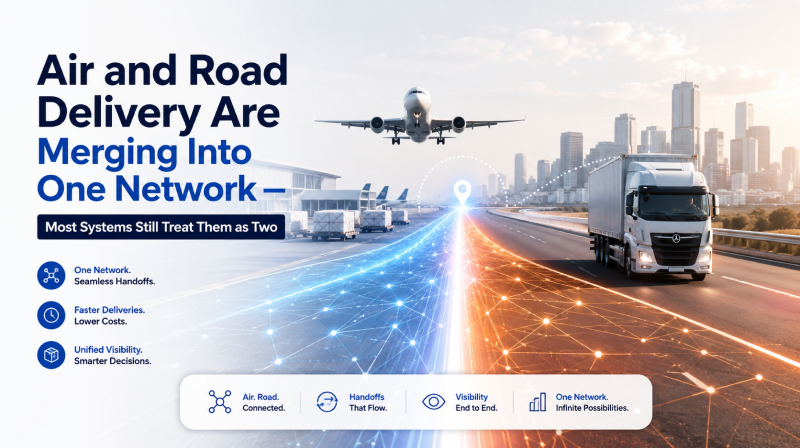
Modern supply chains rarely move shipments through a single transportation mode.

A time-critical shipment may leave a local distribution center on a road vehicle, move through a regional hub, travel by air, transfer through another facility, and finally reach the customer through a road-based last-mile delivery vehicle.

Physically, that is one continuous shipment journey.

Digitally, however, many enterprises still manage those movements through separate transportation systems, carrier portals, tracking platforms, warehouse systems, and dispatch workflows.

That disconnect creates what can be called the multimodal execution gap: the difference between what is happening to a shipment in the physical network and what an enterprise can actually see, predict, and act on digitally.

The result is more than a visibility problem.

When air and road transportation operate as disconnected networks, delays become harder to predict, handoffs become harder to manage, ETAs become less reliable, and downstream teams often discover a problem only after it has already affected the customer.

The physical transportation network is already multimodal. The digital execution layer needs to become multimodal too.

For enterprise logistics organizations, the next step is not simply adding another tracking dashboard.

It is creating one operational view of the shipment journey across air, road, hubs, terminals, carriers, and last-mile operations.

What Is Multimodal Logistics Visibility?

Multimodal logistics visibility is the ability to track and understand a shipment continuously as it moves across multiple transportation modes—including air, road, linehaul, and last-mile delivery—through a connected operational view.

Instead of treating each transportation leg as an independent journey, multimodal visibility connects the events, identifiers, ETAs, and exceptions associated with the complete shipment.

Consider a shipment moving through this network:

Distribution Center → Road Transport → Air Terminal → Air Network → Regional Hub → Road Transport → Customer

A traditional approach may provide separate tracking for each stage.

A multimodal approach connects those stages into one continuous shipment journey.

This distinction becomes increasingly important as enterprises work with multiple carriers, private fleets, 3PLs, transportation modes, distribution facilities, and last-mile networks.

Get one clear view across carriers, systems, and every delivery stage.

Explore End-to-End Visibility

Why Air and Road Logistics Can No Longer Be Managed in Isolation

Transportation networks have become increasingly interconnected.

A single shipment may involve:

  • Private road fleets
  • Regional and local delivery carriers
  • Long-haul road networks
  • Air cargo or parcel networks
  • Cross-docks and distribution centers
  • Third-party logistics providers
  • Last-mile delivery operations

Each participant may generate its own tracking events, shipment identifiers, ETAs, and operational data.

The shipment, however, does not care which system owns each transportation leg.

If an aircraft arrives late, the downstream road operation still has to deal with the consequences.

If a cross-dock processes a shipment late, the final-mile route may need to change.

If congestion delays a road vehicle, the customer still experiences one delivery journey—not three separate transportation legs.

This creates a fundamental enterprise requirement:

Transportation systems need to understand the entire shipment journey, not just the individual transportation leg.

The challenge is therefore shifting from transportation tracking to transportation orchestration.

Where Siloed Air and Road Systems Break Down

When air and road operations run on disconnected platforms, organizations often rely on people to connect the dots.

A dispatcher, planner, or control-tower analyst may have to compare flight information, carrier updates, warehouse events, and road dispatch schedules to determine whether a shipment is still on track.

At enterprise scale, that approach becomes increasingly difficult to sustain.

Three failure points appear repeatedly.

1. Handoffs Create Visibility Blind Spots

Transportation handoffs are among the most vulnerable points in the shipment journey.

Consider a shipment moving from a regional road facility to an air terminal.

The road system may show that the shipment departed.

The air carrier may not yet show it as received.

The warehouse system may record a different event such as arrived at dock or processed at terminal.

Physically, the shipment is progressing.

Digitally, the organization may see several disconnected events with no clear representation of the shipment’s current state.

The shipment keeps moving, but the digital record can lose continuity.

This is where multimodal shipment visibility becomes critical.

A unified platform should connect events across transportation modes and facilities so that the shipment remains visible throughout the handoff.

2. Different Systems Speak Different Operational Languages

Another challenge is inconsistent milestone data.

One carrier may report:

  • Departed facility
  • In transit
  • Arrived at terminal
  • Out for delivery

Another may use:

  • Tendered
  • Accepted
  • Flight arrived
  • Received at station

A third-party logistics provider may use an entirely different event structure.

Without a common data model, these events remain difficult to correlate.

Enterprise logistics teams therefore need more than data aggregation.

They need event normalization—the ability to translate different carrier, mode, and facility events into a common operational language.

This creates a consistent view of:

  • Where the shipment is
  • What has already happened
  • What should happen next
  • Whether the shipment is still on schedule
  • Whether downstream operations are at risk

3. Small Delays Can Become Large Operational Problems

A delay on one transportation leg does not necessarily remain isolated to that leg.

Imagine a shipment scheduled to arrive at an air terminal at 8:00 AM.

The flight arrives 20 minutes late.

If the downstream road operation does not receive that update quickly, the vehicle assigned to the next leg may still operate according to the original plan.

The result could be:

Air delay → missed transfer → road vehicle waiting → route disruption → missed delivery window → failed delivery attempt

The initial disruption was small.

The operational impact was not.

This is why enterprise transportation visibility needs to move beyond historical tracking toward predictive and cascading ETA management.

Siloed Transportation vs. Unified Multimodal Visibility

CapabilitySiloed Air + Road SystemsUnified Multimodal Platform
Shipment identityMultiple identifiers across carriers and modesOne continuous shipment identity
Handoff visibilityManual reconciliation between systemsConnected events across every transfer
ETA managementLeg-by-leg estimatesPredictive ETA across the complete journey
Delay responseReactive after disruption occursException detection before downstream impact
Event dataCarrier-specific terminologyNormalized operational events
Road coordinationPlanners manually monitor upstream eventsRoad operations receive relevant updates automatically
Customer visibilityDifferent tracking experiences by carrierConsistent shipment journey
Exception managementHuman monitoring and escalationAutomated, prioritized exceptions

The fundamental difference is simple:

Siloed systems track transportation legs. Unified orchestration manages the shipment journey.

What Does Unified Multimodal Logistics Visibility Require?

Closing the multimodal execution gap is not simply a matter of connecting more APIs or adding another tracking dashboard.

For enterprise organizations, a unified multimodal visibility and orchestration layer needs several capabilities working together.

1. Cross-Dock and Terminal Visibility

Cross-docks, terminals, hubs, and transfer facilities are critical execution points.

They determine whether a shipment moves from one transportation leg to the next as planned.

A unified system should capture operational events such as:

  • Arrival
  • Check-in
  • Scan
  • Dock assignment
  • Loading
  • Unloading
  • Transfer
  • Departure

These events provide the operational context needed to maintain shipment visibility across handoffs.

Instead of allowing the shipment record to become fragmented at every transfer point, the system maintains continuity across the network.

The terminal should be treated as an execution checkpoint—not simply another location in a tracking timeline.

2. Predictive and Cascading ETAs

Traditional tracking often answers:

Where is the shipment now?

Enterprise logistics teams increasingly need to answer:

When will it arrive at the next operational checkpoint, and what does that mean for everything downstream?

That requires ETAs to continuously incorporate changes from multiple sources, including:

  • Flight arrival information
  • Road transportation status
  • Traffic and congestion
  • Facility processing times
  • Delivery schedules
  • Historical operational patterns
  • Current exceptions

If an upstream transportation leg changes, the downstream ETA should change accordingly.

More importantly, the operational plan should be able to respond.

For example:

Flight delay → revised terminal ETA → updated transfer expectation → revised delivery ETA → road route or resource adjustment

This is where visibility begins to evolve into transportation orchestration.

Move beyond basic TMS capabilities and take control of complex last-mile delivery. Optimize Last-Mile Operations

3. One Shipment Identity Across Transportation Modes

A shipment may have different identifiers as it moves through different carriers and transportation modes.

The air carrier may use one tracking number.

The road carrier may use another.

The warehouse may use an internal shipment or order identifier.

Without connecting these identifiers, enterprises can end up managing multiple digital records for what is physically one shipment.

A unified multimodal platform should create a common shipment identity and map the relevant identifiers to it.

This allows operational teams to see the complete journey rather than searching across multiple systems to reconstruct it.

A unified shipment identity connects the different tracking numbers, carrier events, and operational milestones associated with one physical shipment.

4. Exception Intelligence

Enterprise control towers cannot realistically monitor every shipment manually.

The objective should not be to create more alerts.

It should be to identify the exceptions that require action.

Examples include:

  • An upstream flight is delayed.
  • A shipment is unlikely to make its planned road transfer.
  • A delivery window is at risk.
  • A facility has not processed a shipment within the expected time.
  • A required milestone has not occurred.
  • A downstream road route needs to be reconsidered.
  • A temperature or other shipment condition crosses an operational threshold.

This moves logistics teams from:

Monitoring everything

to:

Managing what matters.

That distinction becomes increasingly important as transportation networks scale across thousands of shipments, facilities, carriers, and vehicles.

From Visibility to Orchestration: The Enterprise Shift

Visibility alone does not necessarily improve execution.

Knowing that a shipment is delayed is useful.

Knowing what that delay will affect and what action should happen next is far more valuable.

This is the difference between a visibility platform and an orchestration capability.

A mature multimodal logistics architecture connects four layers.

1. Data

Collect transportation and operational events from carriers, fleets, facilities, terminals, and other systems.

2. Normalization

Convert different carrier and mode-specific events into a common operational model.

3. Intelligence

Use current conditions and operational data to identify risks, predict ETAs, and detect exceptions.

4. Orchestration

Translate those insights into operational actions across transportation, facilities, dispatch, and customer-facing workflows.

This creates a continuous operating loop:

Sense → Understand → Predict → Act

That is the foundation of a connected transportation network.

Case in Point: How an Integrated Air-Road Network Operates at Enterprise Scale

The complexity of multimodal logistics becomes much clearer when viewed through the lens of a large-scale medical logistics network.

Consider one of the nation’s largest diagnostics providers, operating a transportation network that supports 1 in 3 adults and approximately half of all hospitals and physicians in the United States.

At this scale, transportation is not simply about moving shipments from point A to point B.

It requires continuous coordination across facilities, road vehicles, air networks, hubs, drivers, and time-critical delivery windows.

The operational footprint includes:

  • 2,250+ physical locations nationwide
  • 75,000+ daily time-critical pickups
  • 4,500+ road vehicles
  • 17 dedicated cargo aircraft
  • 50+ million critical shipments transported and processed annually

Why Integration Matters at This Scale

When thousands of time- and temperature-sensitive specimens move through road courier networks, regional hubs, dedicated air transportation, and destination laboratories, every handoff becomes an operational checkpoint.

A delay at one point in the network can affect downstream transportation, laboratory schedules, delivery commitments, and ultimately the customer experience.

Managing air and road as separate transportation environments makes it difficult to understand those dependencies in real time.

A unified execution layer changes that model.

By connecting the multimodal network through a single digital shipment identity, the organization can maintain continuity across transportation legs while providing operational teams with a common view of the shipment journey.

The technology can support capabilities such as:

  • Continuous chain-of-custody visibility across road and air movements
  • Automated dock and facility check-ins at major hubs
  • Real-time shipment and milestone tracking
  • Exception intelligence across transportation legs
  • Connected shipment identities across carriers and modes
  • Downstream visibility when an upstream transportation event changes

The result is a transportation network where an event in one part of the network can be understood in the context of what happens next.

For example:

Road pickup → Regional hub → Air movement → Destination hub → Road delivery → Laboratory

Instead of managing each stage as an isolated workflow, the entire journey can be monitored as one connected operational process.

Bring fragmented logistics systems together without slowing down your operations.

Simplify Logistics Integration

How nuVizz Enables Multimodal Transportation Orchestration

This type of enterprise execution is where nuVizz’s transportation orchestration technology comes into play.

nuVizz provides a connected platform for coordinating transportation, shipment visibility, dispatch, routing, and last-mile execution across complex logistics networks.

Rather than forcing enterprises to replace every system already operating in their network, the platform can connect operational data across carriers, fleets, facilities, transportation modes, and downstream delivery operations.

That creates a common execution layer where teams can move from simply seeing transportation events to understanding their downstream impact and taking action.

Visibility tells you what happened. Orchestration connects that event to what should happen next.

For enterprise organizations managing high-volume, time-critical, and multimodal transportation networks, that distinction can become critical to maintaining service levels as network complexity increases.

Want to See How It Works?

See how nuVizz can connect multimodal transportation, shipment visibility, dispatch, and last-mile execution through a unified orchestration platform.

[BOOK A DEMO]

What Are the Benefits of Unified Air-Road Visibility?

When air and road operations are managed as one connected network, the benefits extend beyond shipment tracking.

Enterprise ImpactOperational Benefit
Labor utilizationHubs, terminals, and delivery teams can better prepare for actual inbound volumes and arrival times.
Vehicle utilizationRoad resources can be aligned more closely with changing shipment availability.
Delivery performanceTeams can identify at-risk shipments earlier and take corrective action before delivery commitments are missed.
Exception managementPlanners focus on meaningful disruptions instead of manually monitoring every shipment.
Customer experienceCustomers receive a more consistent view of shipment progress regardless of transportation mode.
Network efficiencyOrganizations can identify recurring bottlenecks across transportation legs and transfer points.
Operational scalabilityA common orchestration layer reduces dependence on manual reconciliation as shipment volumes and carrier relationships grow.

The biggest opportunity is not simply reducing the time spent tracking shipments.

It is reducing the amount of reactive work created by disconnected systems.

Why Multimodal Visibility Matters for Enterprise Logistics Networks

For a small transportation operation, manually reconciling a few shipments may be manageable.

For an enterprise network involving multiple transportation modes, carriers, facilities, and thousands of daily shipments, manual coordination becomes a scalability constraint.

Enterprise logistics leaders increasingly need systems that can:

  • Connect air and road transportation
  • Normalize data from different carriers
  • Maintain shipment identity across the journey
  • Predict downstream impacts
  • Prioritize exceptions
  • Coordinate operational responses
  • Provide consistent shipment visibility
  • Integrate with existing TMS, WMS, ERP, and carrier systems

The goal is not necessarily to replace every system already operating in the network.

Instead, an orchestration layer can connect those systems and create a common operational view across the transportation ecosystem.

This approach allows enterprises to preserve existing investments while improving how transportation data and decisions flow across the network.

Turn backroom bottlenecks into faster, more efficient store operations. Optimize Store Operations

The Enterprise Multimodal Architecture

A connected multimodal logistics network brings together data from carriers, fleets, facilities, terminals, and transportation systems into a common operational view.

The first requirement is connected transportation data.

Carrier, fleet, facility, and shipment events need to be captured across air, road, and last-mile operations.

That data then needs to be normalized so different carriers and systems can be understood through a consistent shipment and event model.

This allows an enterprise to maintain one connected view of a shipment even when it moves between different transportation providers and modes.

From there, multimodal visibility and predictive intelligence provide context around what is happening and what is likely to happen next.

Changes in flight arrivals, road transportation, facility processing, or delivery schedules can be evaluated together rather than in isolation.

The final layer is transportation orchestration—connecting those insights to operational decisions across road transportation, air networks, facilities, dispatch, and last-mile execution.

This creates a more responsive transportation network.

A flight delay can influence a downstream road ETA.

A facility delay can affect dispatch planning.

A missed milestone can trigger an operational exception.

A shipment moving across multiple carriers can remain connected through one digital journey.

For enterprise logistics organizations, the value is not simply having more transportation data.

It is creating the operational context needed to turn that data into timely decisions and actions.

Conclusion: The Future of Air and Road Logistics Is One Network

Air and road logistics already operate as one physical network.

The challenge is connecting them digitally.

For enterprise logistics teams, multimodal visibility is no longer just about tracking shipments. It is about connecting shipment events, ETAs, exceptions, and operational decisions across the entire journey.

Visibility tells you where a shipment is. Orchestration helps you decide what happens next.

As transportation networks become more complex, enterprises need a unified execution layer that connects air, road, facilities, carriers, and last-mile operations.

See how nuVizz connects multimodal transportation visibility and orchestration from a single operational platform.

BOOK A DEMO | Contact Us

bookmark_fill [#fff1226] Created with Sketch. Related Content
Blog

What are the benefits of using nuVizz fo...

What are the benefits of using nuVizz for logistics and delivery services
Blog

Best Last-Mile TMS Software: How Leading...

Best Last-Mile TMS Software How Leading Platforms Compare
Blog

What Are The Best Route Planning Softwar...

What Are The Best Route Planning Software Options For Delivery Companies
Blog

The Hidden Factors Driving Supply Chain ...

The Hidden Factors Driving Supply Chain Turnover
Blog

Dozens of Carriers, Dozens of Systems: W...

Dozens of Carriers, Dozens of Systems Why Delivery Networks Still Lack End-to-End Visibility
Blog

What Most Transportation Management Syst...

What Most Transportation Management Systems Get Wrong About Last-Mile Delivery
Blog

Retail Logistics: The Complete Guide to ...

Retail Logistics The Complete Guide to Order Fulfillment, Inventory Management & Last-Mile Delivery
Blog

How Shipping and Logistics Platforms Imp...

How Shipping and Logistics Platforms Improve Shipment Visibility, Route Optimization, and Delivery Performance
Blog

What Is Transportation and Last-Mile Del...

What Is Transportation and Last-Mile Delivery Optimization Benefits, Strategies & Best Practices
Blog

How Does Order Tracking Work? A Guide to...

How Does Order Tracking Work A Guide to Real-Time Delivery Visibility

FAQs

Multimodal logistics visibility is the ability to track and understand a shipment continuously as it moves across multiple transportation modes, including air, road, linehaul, and last-mile delivery, through a connected operational view. It connects shipment events, identifiers, ETAs, and exceptions across the complete transportation journey.

Air and road shipments lose visibility primarily because carriers, facilities, and transportation modes often operate on separate systems with different shipment identifiers and event definitions. Without a common data model, information can become fragmented when a shipment moves between carriers, terminals, cross-docks, and transportation modes.

An air delay can change when a shipment reaches a terminal or distribution facility, which can affect downstream road transportation, routing, labor, and delivery schedules. Without connected visibility, road operations may continue planning against outdated arrival assumptions.

Shipment visibility shows what is happening to a shipment. Transportation orchestration determines what should happen next. Visibility provides the operational information needed to understand shipment status. Orchestration connects that information to predictions, exceptions, decisions, and downstream actions.

Yes. A multimodal orchestration layer can integrate with existing TMS, WMS, ERP, carrier, fleet, and operational systems rather than requiring every transportation process to be replaced. For enterprise organizations, this approach can create a common operational view while preserving existing technology investments.

Recent Posts

  • What are the benefits of using nuVizz for logistics and delivery services?
  • Best Last-Mile TMS Software: How Leading Platforms Compare
  • What Are The Best Route Planning Software Options For Delivery Companies?
  • The Hidden Factors Driving Supply Chain Turnover
  • Air and Road Delivery Are Merging Into One Network — Most Systems Still Treat Them as Two

Recent Comments

No comments to show.

Archives

  • September 2026
  • August 2026
  • July 2026
  • June 2026
  • May 2026
  • April 2026
  • March 2026
  • February 2026
  • January 2026
  • December 2025
  • November 2025
  • October 2025
  • September 2025
  • August 2025
  • July 2025
  • June 2025
  • May 2025
  • April 2025
  • March 2025
  • February 2025
  • January 2025
  • December 2024
  • November 2024
  • October 2024
  • September 2024

Categories

  • Uncategorized
  • Share via
    • Facebook
    • Twitter
    • Linkedin
  • Facebook
  • Twitter
  • Linkedin

© 2026 Last Mile TMS. All Rights Reserved.

Privacy Policy