Blog
How Does Order Tracking Work? A Guide to Real-Time Delivery Visibility
Key Takeaways
- Order tracking provides real-time visibility from order placement to final delivery.
- GPS, cloud computing, APIs, and mobile applications work together to deliver accurate tracking updates.
- Real-time delivery visibility improves customer satisfaction, reduces “Where Is My Order?” (WISMO) inquiries, and increases first-attempt delivery success.
- Transportation Management Systems (TMS) centralize dispatch, route optimization, GPS tracking, and Proof of Delivery for better operational control.
- Investing in modern delivery visibility solutions helps businesses improve efficiency, lower costs, and build stronger customer trust.
In today’s fast-paced logistics landscape, customers expect more than just on-time deliveries—they want complete visibility into where their orders are and when they will arrive. Whether it’s an eCommerce purchase, a healthcare shipment, or a same-day local delivery, real-time order tracking has become a standard expectation rather than a premium feature.
For businesses, providing accurate delivery updates is no longer just about improving customer satisfaction. It also helps reduce support inquiries, streamline delivery operations, improve first-attempt delivery success rates, and build long-term customer trust. As last-mile delivery becomes increasingly complex, companies need technologies that offer end-to-end visibility across every stage of the delivery journey.
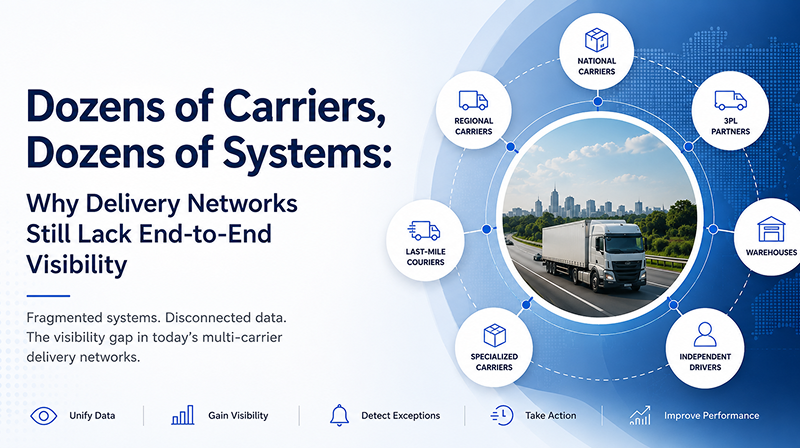
Modern order tracking systems leverage GPS, cloud computing, mobile applications, APIs, and intelligent route optimization to provide live delivery updates for customers, dispatchers, and logistics teams. Instead of relying on manual status updates or estimated delivery windows, businesses can now monitor deliveries in real time and proactively communicate with customers throughout the process.
In this blog, we’ll explain how order tracking works, the technologies that power real-time delivery visibility, the benefits it brings to businesses and customers, and how transportation management software helps create a more transparent and efficient delivery experience.
What Is Order Tracking?
Order tracking is the process of monitoring an order’s progress from the moment it is placed until it reaches the customer’s doorstep. It provides real-time or near-real-time updates on an order’s status, helping businesses and customers stay informed throughout the delivery lifecycle.
A modern order tracking system collects information from multiple sources, including order management systems, warehouse operations, dispatch software, driver mobile applications, GPS devices, and transportation management platforms. This data is then shared through customer portals, mobile apps, SMS notifications, or email updates.
Unlike traditional shipment tracking, which often provides only limited milestone updates, modern real-time order tracking offers continuous visibility into delivery progress, estimated arrival times, and driver locations.
Who Uses Order Tracking?
Order tracking benefits multiple stakeholders across the logistics ecosystem:
- Customers who want to know the status of their orders and receive accurate delivery estimates.
- Dispatchers who monitor deliveries and respond quickly to operational issues.
- Retailers seeking to provide a better post-purchase customer experience.
- Healthcare providers tracking time-sensitive medical deliveries.
- Field service organizations coordinating technician visits and service appointments.
- Logistics providers managing fleets, drivers, and delivery performance.
By giving every stakeholder access to the same delivery information, businesses can improve communication, reduce uncertainty, and enhance operational efficiency.
Why Real-Time Order Tracking Matters
Customer expectations have evolved dramatically over the past decade. The rapid growth of same-day delivery, on-demand services, and online shopping has made delivery visibility a key factor in customer satisfaction. Simply providing an order confirmation is no longer enough—customers want to know exactly where their package is and when it will arrive.
Real-time order tracking addresses these expectations while creating measurable business benefits.
1. Enhances Customer Experience
One of the biggest advantages of real-time order tracking is improved transparency. Customers receive timely updates about their deliveries, reducing uncertainty and eliminating the need to repeatedly contact customer support for status updates.
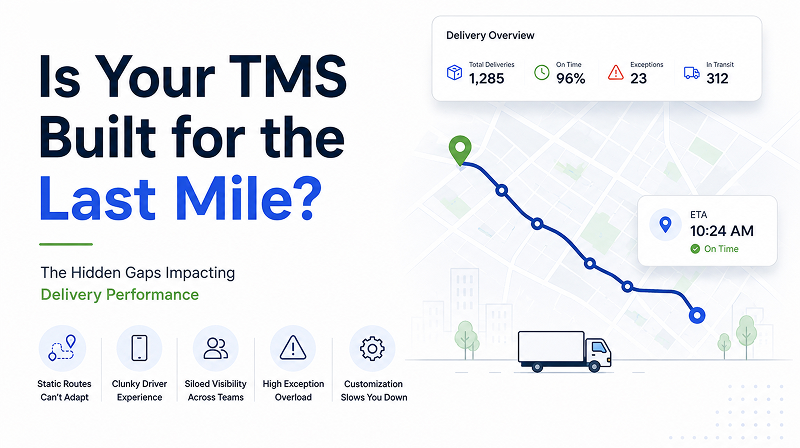
Features such as live driver tracking, estimated arrival times (ETAs), and automated delivery notifications help customers plan their schedules more effectively and increase confidence in the delivery process.
2. Reduces Customer Support Requests
A significant percentage of customer service inquiries revolve around one simple question: “Where is my order?”
Providing customers with self-service tracking portals and automated notifications dramatically reduces these inquiries, allowing customer support teams to focus on more complex issues while lowering operational costs.
3. Improves Delivery Success Rates
Accurate ETAs and proactive delivery notifications ensure that customers are available to receive their orders. This minimizes missed deliveries, reduces repeat delivery attempts, and improves first-attempt delivery success rates.
For businesses handling high-volume deliveries, even small improvements in first-attempt delivery performance can lead to significant cost savings.
4. Increases Operational Visibility
Delivery managers and dispatch teams benefit from the same real-time tracking data used by customers. They can monitor driver locations, identify delays, respond to unexpected disruptions, and make informed operational decisions throughout the day.
This visibility enables better resource allocation, faster issue resolution, and more efficient fleet management.
5. Builds Customer Trust and Brand Loyalty
Transparency builds confidence. When customers receive consistent, accurate delivery updates, they are more likely to trust the business and choose it again for future purchases.
In competitive industries where delivery experience influences buying decisions, real-time visibility can become a significant differentiator.
Streamline dispatch operations and deliver faster with fewer errors.
Learn About DispatchHow Does Order Tracking Work?
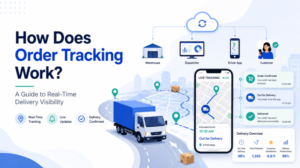
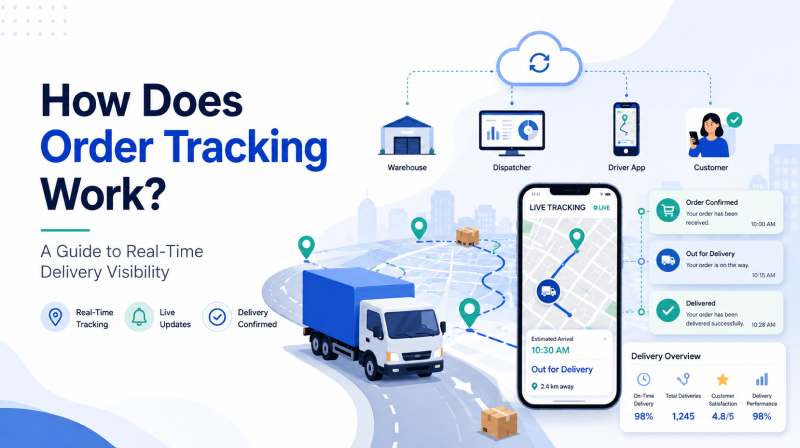
Modern order tracking combines multiple technologies to provide end-to-end visibility throughout the delivery lifecycle. Every stage—from order placement to proof of delivery—is digitally connected, allowing businesses, dispatchers, drivers, and customers to access real-time delivery information.
Let’s take a closer look at how the process works.
Step 1: Order Is Placed and Processed
The order tracking journey begins when a customer places an order through an eCommerce website, retail store, healthcare provider, or business application.
Once the order is confirmed, the information is automatically transferred to an Order Management System (OMS) or Warehouse Management System (WMS). These systems validate the order details, check inventory availability, and prepare the shipment for fulfillment.
At this stage, a unique order or tracking ID is generated. This identifier follows the order throughout its lifecycle, making it possible to track every milestone from dispatch to delivery.
Step 2: Order Is Assigned for Delivery
After the order is packed and ready for shipment, it moves to the dispatch phase.
Instead of manually assigning deliveries, many businesses use intelligent dispatching software to automate the process. The system evaluates several factors before assigning a driver, including:
- Driver availability
- Vehicle capacity
- Delivery location
- Delivery priority
- Service level agreements (SLAs)
- Traffic conditions
By automating dispatch decisions, businesses can reduce delays, improve fleet utilization, and ensure deliveries are assigned to the most suitable drivers.
Step 3: Route Optimization Determines the Best Delivery Path
Once a driver is assigned, route optimization software calculates the most efficient delivery route.
Rather than relying on the shortest distance alone, modern route optimization considers multiple variables, such as:
- Real-time traffic conditions
- Road closures
- Delivery time windows
- Driver schedules
- Vehicle restrictions
- Multiple delivery stops
Optimized routing helps reduce fuel consumption, minimize travel time, and improve on-time delivery performance.
For businesses handling hundreds or thousands of deliveries each day, optimized routing significantly improves operational efficiency while lowering transportation costs.
Step 4: GPS Tracking Begins
As the driver starts the delivery route, the tracking system begins collecting location data through a GPS-enabled mobile application or telematics device installed in the vehicle.
The driver’s location is updated continuously and transmitted to a cloud-based delivery platform.
This enables businesses to monitor:
- Current vehicle location
- Route progress
- Delivery status
- Driver activity
- Estimated arrival time (ETA)
Unlike traditional shipment tracking that updates only at major checkpoints, GPS-powered systems provide continuous visibility throughout the journey.
Step 5: Real-Time Data Is Shared Across Systems
Order tracking doesn’t rely solely on GPS. Multiple systems work together behind the scenes to provide accurate delivery visibility.
Information flows between:
- Order Management Systems (OMS)
- Warehouse Management Systems (WMS)
- Transportation Management Systems (TMS)
- Driver mobile applications
- Customer notification platforms
- GPS tracking services
- Cloud databases
These systems exchange data through secure APIs, ensuring that every status update is synchronized across the entire delivery ecosystem.
For example, when a driver marks an order as “Out for Delivery,” the update is instantly reflected in the dispatcher dashboard and the customer’s tracking page.
Step 6: Customers Receive Live Delivery Updates
One of the most visible aspects of modern order tracking is customer communication.
As the order progresses, customers receive automated notifications at key milestones, such as:
- Order confirmed
- Order packed
- Dispatched
- Out for delivery
- Driver approaching
- Delivered successfully
Notifications may be sent via:
- SMS
- Mobile apps
- Customer tracking portals
- Push notifications
Many businesses also provide live tracking links that allow customers to monitor the driver’s location on a map and view an updated ETA.
This transparency reduces uncertainty and helps customers plan for the delivery.
Step 7: Delivery Is Verified with Proof of Delivery (POD)
The final stage of the order tracking process is delivery confirmation.
Instead of relying on paper records, drivers use mobile applications to capture electronic Proof of Delivery (ePOD), which may include:
- Customer signature
- Delivery photos
- Timestamp
- GPS coordinates
- Recipient details
- Delivery notes
This information is instantly uploaded to the cloud and becomes available to dispatchers and customer service teams.
Electronic Proof of Delivery helps reduce disputes, improves compliance, and provides a reliable digital record of completed deliveries.
6 Technologies Behind Real-Time Delivery Visibility
Real-time order tracking is powered by several technologies working together to deliver accurate, timely, and actionable information.
1. GPS Tracking
Global Positioning System (GPS) technology provides continuous location updates for delivery vehicles.
Businesses can monitor fleet movements in real time, identify delays, and provide customers with accurate ETAs based on the driver’s current location.
2. Mobile Driver Applications
Driver apps act as the bridge between field operations and the back office.
Using a smartphone or rugged handheld device, drivers can:
- Accept delivery assignments
- Navigate optimized routes
- Update delivery statuses
- Capture Proof of Delivery
- Communicate with dispatchers
- Report delivery exceptions
Because updates are transmitted instantly, businesses gain real-time visibility into every delivery.
3. Cloud Computing
Cloud-based delivery management platforms centralize data from multiple systems and make it accessible from anywhere.
Cloud technology enables:
- Real-time synchronization
- Secure data storage
- Multi-user collaboration
- Scalable operations
- Faster software updates
This ensures all stakeholders—from warehouse teams to customer support—are working with the same information.
4. APIs and System Integrations
Application Programming Interfaces (APIs) enable different software platforms to exchange data automatically.
For example, APIs can connect:
- eCommerce platforms
- ERP systems
- CRM software
- OMS
- WMS
- TMS
- Customer notification tools
This eliminates manual data entry and ensures delivery updates are consistent across all business systems.
5. Artificial Intelligence and Predictive ETAs
Modern delivery platforms increasingly use Artificial Intelligence (AI) to improve delivery accuracy.
AI analyzes factors such as:
- Historical delivery performance
- Driver behavior
- Traffic conditions
- Weather patterns
- Delivery density
Using this information, the system continuously updates estimated delivery times, helping businesses provide more reliable ETAs and proactively notify customers of delays.
6. Route Optimization Engines
Route optimization has become an essential component of delivery visibility.
By calculating the most efficient routes in real time, these engines help businesses:
- Reduce delivery times
- Lower fuel costs
- Improve fleet productivity
- Increase the number of deliveries per route
- Enhance customer satisfaction through more accurate arrival estimates
When combined with GPS tracking and AI-powered ETAs, route optimization creates a more predictable and efficient delivery experience.
Gain real-time visibility into every delivery and improve fleet performance. Explore Fleet Tracking5 Common Challenges in Order Tracking
Despite advances in technology, businesses may encounter several challenges when implementing or managing order tracking systems.
1. Inaccurate GPS Data
Poor network connectivity, outdated hardware, or signal interruptions can result in inaccurate location updates. These issues may affect ETA accuracy and reduce customer confidence in the tracking system.
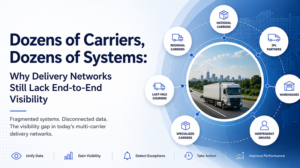
2. Disconnected Systems
When Order Management Systems (OMS), Warehouse Management Systems (WMS), and Transportation Management Systems (TMS) operate in silos, delivery updates may be delayed or inconsistent. Integrating these systems creates a single source of truth for all stakeholders.
3. Manual Status Updates
Businesses that rely on drivers to manually update delivery statuses often face delays and human error. Automated status updates through mobile applications help ensure tracking information remains accurate and timely.
4. Delivery Exceptions
Unexpected traffic congestion, adverse weather, vehicle breakdowns, incorrect delivery addresses, or customer unavailability can disrupt delivery schedules. Without real-time visibility, businesses may struggle to respond proactively to these challenges.
5. Limited Customer Communication
Customers become frustrated when they receive little or no information after placing an order. Automated notifications and self-service tracking portals help keep customers informed throughout the delivery journey, reducing uncertainty and support inquiries.
Modern transportation management platforms address these challenges by integrating real-time GPS tracking, automated dispatch, route optimization, customer notifications, and analytics into a single solution.
6 Best Practices for Implementing an Effective Order Tracking System
To maximize the benefits of real-time delivery visibility, businesses should adopt the following best practices:
1. Integrate Core Business Systems
Connect your OMS, WMS, CRM, ERP, and Transportation Management System to eliminate data silos and ensure consistent delivery information across the organization.
2. Enable Real-Time GPS Tracking
Use GPS-enabled driver applications or telematics devices to provide continuous location updates and improve ETA accuracy.
3. Automate Customer Notifications
Keep customers informed with automatic SMS, email, or push notifications at every key delivery milestone.
4. Capture Electronic Proof of Delivery (ePOD)
Replace paper-based processes with digital signatures, delivery photos, timestamps, and GPS verification to improve accountability and reduce disputes.
5. Optimize Delivery Routes
Use intelligent route optimization to minimize travel time, reduce fuel costs, and improve on-time delivery performance.
6. Monitor Delivery KPIs
Track important performance metrics such as:
- On-time delivery rate
- First-attempt delivery success
- Average delivery time
- Driver productivity
- Fleet utilization
- Customer satisfaction
- Delivery exceptions
Analyzing these KPIs helps identify opportunities for continuous improvement.
Transform your supply chain with smarter, AI-driven logistics solutions.
Read the Complete GuideHow Transportation Management Software Improves Order Tracking
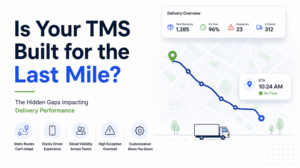
As delivery networks become more complex, businesses need more than basic shipment tracking. A modern Transportation Management System (TMS) provides centralized visibility across the entire delivery lifecycle, enabling organizations to manage orders, fleets, drivers, and customer communications from a single platform.
Key capabilities of a TMS include:
- Automated order dispatch and driver assignment
- Intelligent route optimization
- Live GPS-based vehicle tracking
- Real-time ETA calculations
- Automated customer notifications
- Electronic Proof of Delivery (ePOD)
- Delivery analytics and performance dashboards
By consolidating these functions into one platform, businesses gain greater operational control, improve delivery efficiency, and enhance customer satisfaction.
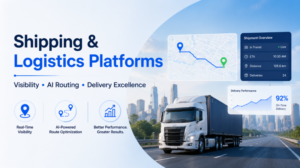
Organizations looking to modernize their logistics operations often adopt comprehensive transportation management solutions such as nuVizz, which combines real-time shipment visibility, AI-powered route optimization, automated dispatch, and customer communication tools to help businesses streamline transportation and last-mile delivery operations.
Conclusion
Real-time order tracking has become an essential capability for businesses that want to deliver exceptional customer experiences and maintain efficient logistics operations. By providing continuous visibility into every stage of the delivery journey, organizations can reduce uncertainty, improve communication, and respond quickly to unexpected disruptions.
Technologies such as GPS tracking, cloud computing, route optimization, mobile applications, and electronic Proof of Delivery have transformed how businesses manage deliveries. Rather than relying on manual updates, companies can now provide customers with accurate ETAs, automated notifications, and complete transparency from order placement to final delivery.
As customer expectations continue to evolve, investing in modern transportation management technology is no longer optional—it’s a strategic advantage. Businesses that implement integrated delivery visibility solutions can improve operational efficiency, strengthen customer trust, and stay competitive in an increasingly fast-paced logistics environment.
FAQs
Order tracking works by collecting delivery data from order management systems, GPS-enabled driver applications, warehouse systems, and transportation management software. This information is shared in real time, allowing businesses and customers to monitor delivery progress from dispatch to final delivery.
Real-time delivery visibility refers to the ability to track the live status and location of deliveries throughout the transportation process. It enables businesses to monitor operations while providing customers with accurate delivery updates and estimated arrival times.
Modern order tracking systems use technologies such as GPS tracking, cloud computing, mobile applications, APIs, artificial intelligence, route optimization software, and electronic Proof of Delivery (ePOD).
GPS provides continuous location updates for delivery vehicles, allowing businesses to monitor deliveries, calculate accurate ETAs, identify delays, and improve customer communication.
Electronic Proof of Delivery is a digital confirmation that an order has been successfully delivered. It typically includes the recipient's signature, delivery photos, GPS coordinates, timestamps, and delivery notes.
Yes. Businesses of all sizes can benefit from order tracking solutions. Real-time visibility improves customer satisfaction, reduces support inquiries, increases operational efficiency, and helps businesses scale their delivery operations more effectively.