Blog
Retail Logistics: The Complete Guide to Order Fulfillment, Inventory Management & Last-Mile Delivery
Key Takeaways
- Retail logistics encompasses the entire order journey—from inventory management and order fulfillment to transportation, last-mile delivery, and returns.
- Efficient fulfillment and optimized last-mile delivery help retailers reduce costs, improve delivery speed, and enhance customer satisfaction.
- AI-powered logistics technologies, including route optimization, intelligent dispatch, and real-time tracking, enable faster and more efficient delivery operations.
- Tracking key logistics KPIs such as on-time delivery, order accuracy, fulfillment cycle time, and cost per delivery helps retailers continuously improve performance.
- An integrated retail logistics platform connects inventory, warehouses, fulfillment, and delivery operations to improve visibility, scalability, and customer experience.
Table of Contents
Every online purchase sets off a complex logistics process behind the scenes. From the moment a customer places an order to the package arriving at their doorstep, multiple teams, systems, and transportation networks work together to ensure the right product reaches the right customer at the right time.
For today’s retailers, logistics is no longer just an operational function—it’s a competitive advantage. Customers expect fast shipping, real-time order tracking, flexible delivery options, and hassle-free returns. At the same time, retailers must balance rising transportation costs, inventory accuracy, labor shortages, and increasing delivery expectations while maintaining profitability.
Retail logistics encompasses every stage of this journey, including inventory management, warehousing, order fulfillment, transportation, and last-mile delivery. Organizations that optimize these processes can reduce operational costs, improve delivery performance, and build long-term customer loyalty.
This blog explains how retail logistics works, the technologies driving modern fulfillment operations, common challenges retailers face, and best practices for building a scalable and customer-centric logistics network.
What Is Retail Logistics?
Retail logistics is the process of planning, managing, and optimizing the movement of products from suppliers to customers. It includes inventory management, warehouse operations, order fulfillment, transportation, delivery, and returns management.
Unlike traditional wholesale distribution, where products are shipped in bulk to retail stores, modern retail logistics focuses on fulfilling thousands—or even millions—of individual customer orders across multiple sales channels.
A typical retail logistics process includes:
- Inventory planning
- Warehouse management
- Order processing
- Picking and packing
- Carrier selection
- Transportation management
- Last-mile delivery
- Customer notifications
- Returns and reverse logistics
For eCommerce retailers, logistics extends beyond simply shipping products. It also involves providing customers with accurate delivery estimates, real-time shipment visibility, convenient delivery options, and efficient returns processing.
As customer expectations continue to evolve, retail logistics has become one of the most important drivers of customer experience, operational efficiency, and business growth.
Why Retail Logistics Matters
Retail logistics directly impacts nearly every aspect of a retailer’s business.
Poor logistics performance often results in delayed deliveries, inventory shortages, canceled orders, and increased operational costs. These issues not only reduce profitability but also damage customer trust and brand reputation.
Conversely, an efficient logistics operation helps retailers:
- Deliver orders faster
- Improve inventory accuracy
- Reduce transportation expenses
- Increase warehouse productivity
- Minimize delivery failures
- Improve customer satisfaction
- Support business growth across multiple sales channels
For enterprise retailers managing thousands of daily orders, even small improvements in fulfillment speed or delivery efficiency can translate into significant annual cost savings.
As same-day and next-day delivery become increasingly common, logistics has shifted from being a support function to becoming a strategic differentiator.
Looking to boost delivery performance with AI-powered routing and real-time tracking?
See How It WorksHow Retail Logistics Works: End-to-End Workflow
Retail logistics consists of several interconnected stages that work together to move products efficiently through the supply chain.
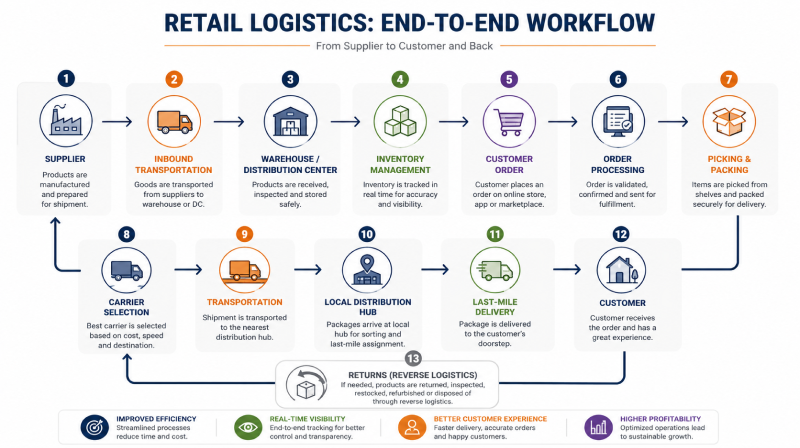
Each stage depends on accurate data and seamless coordination. A delay or error at any point—whether inaccurate inventory counts, warehouse bottlenecks, or inefficient route planning—can impact the overall customer experience.
Modern retailers rely on integrated logistics technologies such as Warehouse Management Systems (WMS), Transportation Management Systems (TMS), Order Management Systems (OMS), and delivery management platforms to synchronize these operations in real time.
Understanding the Order Fulfillment Process
Order fulfillment begins the moment a customer places an order and ends when the shipment is handed over to a delivery carrier.
Although the process appears simple from a customer’s perspective, multiple operational steps occur behind the scenes.
1. Order Processing
Once an order is received, the retailer’s order management system validates payment, verifies inventory availability, and allocates stock from the most appropriate fulfillment location.
Retailers operating multiple warehouses often fulfill orders from the nearest location to reduce shipping costs and improve delivery speed.
Accurate inventory synchronization across warehouses, retail stores, and online marketplaces helps prevent overselling and stock discrepancies.
2. Inventory Allocation
The system reserves inventory specifically for that customer order.
Modern retailers increasingly use intelligent inventory allocation to determine the optimal fulfillment location based on factors such as:
- Customer location
- Inventory availability
- Shipping cost
- Delivery commitments
- Warehouse workload
This approach improves both operational efficiency and customer satisfaction.
3. Picking
Warehouse associates receive digital picking instructions generated by the Warehouse Management System.
Depending on order volume, warehouses may use several picking methods, including:
- Single-order picking
- Batch picking
- Zone picking
- Wave picking
High-performing fulfillment centers also organize products using slotting strategies, placing frequently ordered items closer to packing stations to reduce travel time and increase productivity.
Automation technologies such as barcode scanning, mobile devices, and wearable picking solutions further improve picking accuracy while minimizing human error.
4. Packing
After picking, products move to packing stations where they are inspected, securely packaged, and labeled for shipment.
Efficient packing operations focus on:
- Selecting the right packaging size
- Protecting fragile items
- Minimizing packaging waste
- Reducing shipping costs through dimensional optimization
Many retailers also include branded packaging, promotional inserts, or return labels to enhance the post-purchase customer experience.
5. Carrier Selection and Shipping
Once packed, shipments are assigned to the most suitable carrier.
Rather than relying on a single logistics provider, many retailers adopt a multi-carrier shipping strategy that automatically selects carriers based on factors such as:
- Delivery destination
- Transit time
- Shipping rates
- Service reliability
- Package dimensions
- Customer delivery preferences
Automated carrier selection helps retailers balance cost and service quality while reducing manual decision-making.
Delivery management platforms like nuVizz further streamline this process by integrating order management, route optimization, dispatch automation, and real-time shipment visibility into a single platform. This enables retailers to manage deliveries across both private fleets and third-party carriers while improving delivery performance and operational efficiency.
Warehousing and Inventory Management
A warehouse is more than a storage facility—it’s the operational hub where inventory is received, organized, picked, packed, and prepared for shipment. Efficient warehouse operations directly influence fulfillment speed, order accuracy, and overall logistics costs.
As retailers expand their product catalogs and sales channels, maintaining accurate inventory visibility becomes increasingly challenging. Without real-time inventory data, businesses risk stockouts, overselling, delayed shipments, and dissatisfied customers.
Modern retailers rely on Warehouse Management Systems (WMS) to optimize warehouse operations by:
- Tracking inventory in real time
- Managing stock locations
- Automating receiving and put-away processes
- Improving picking accuracy
- Reducing manual errors
- Increasing warehouse productivity
When integrated with Order Management Systems (OMS) and Transportation Management Systems (TMS), warehouse operations become part of a connected logistics ecosystem that supports faster and more accurate order fulfillment.
Centralized vs. Distributed Warehousing
One of the most important strategic decisions retailers make is determining where inventory should be stored.
Centralized Warehousing
A centralized warehouse model stores inventory in one or a few large facilities.
Advantages
- Easier inventory management
- Lower facility operating costs
- Simplified replenishment
- Better inventory utilization
Challenges
- Longer delivery distances
- Higher transportation costs
- Slower delivery to distant customers
This approach works well for retailers with predictable demand or nationwide shipping requirements.
Distributed Warehousing
Distributed warehousing places inventory across multiple regional fulfillment centers closer to customers.
Advantages
- Faster delivery times
- Lower last-mile transportation costs
- Better customer experience
- Reduced shipping distances
Challenges
- More complex inventory planning
- Higher operational complexity
- Increased coordination across locations
Many enterprise retailers adopt distributed fulfillment networks to support same-day or next-day delivery while maintaining service levels across multiple regions.
Turn every delivery into a competitive advantage with intelligent transportation and last-mile optimization. Discover Best PracticesOmnichannel Retail Logistics
Today’s customers expect a consistent shopping experience regardless of whether they purchase online, through a mobile app, via a marketplace, or inside a physical store.
This is where omnichannel retail logistics becomes essential.
Unlike traditional fulfillment models, omnichannel logistics coordinates inventory, fulfillment, and delivery across every sales channel from a unified platform.
Common omnichannel fulfillment strategies include:
- Ship-from-store
- Buy Online, Pick Up In Store (BOPIS)
- Buy Online, Return In Store (BORIS)
- Curbside pickup
- Endless aisle fulfillment
- Marketplace fulfillment
These capabilities require accurate inventory visibility across stores, warehouses, and distribution centers.
Without centralized inventory management, retailers may fulfill orders from the wrong location, incur unnecessary shipping costs, or miss delivery commitments.
Integrated logistics platforms help retailers dynamically determine the most efficient fulfillment location based on inventory availability, customer proximity, shipping costs, and delivery timelines.
Reverse Logistics and Returns Management
Returns have become an expected part of online shopping. While customers appreciate flexible return policies, managing returns efficiently remains one of the biggest operational challenges for retailers.
Reverse logistics refers to the process of moving products from customers back to warehouses, stores, or manufacturers for inspection, restocking, refurbishment, recycling, or disposal.
A typical reverse logistics workflow includes:
- Customer initiates a return request.
- Return authorization is approved.
- Shipping labels are generated.
- Product is collected or dropped off.
- Returned items are inspected.
- Products are restocked, repaired, recycled, or discarded.
- Refunds or replacements are processed.
Poorly managed returns increase labor costs, inventory inaccuracies, and customer dissatisfaction.
Modern logistics platforms streamline reverse logistics by automating return workflows, providing shipment visibility, and updating inventory records in real time.
Last-Mile Delivery: The Most Critical Stage of Retail Logistics
The final stage of retail logistics is also the most expensive and customer-facing.
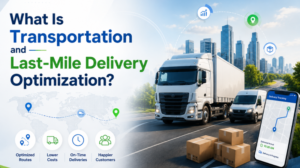
Last-mile delivery refers to transporting products from a fulfillment center, local warehouse, or distribution hub to the customer’s doorstep.
Although it’s called the “last mile,” the actual distance may range from a few blocks to several hundred miles depending on the delivery network.
Industry studies consistently show that last-mile delivery represents the largest portion of total delivery costs because each shipment requires individualized routing, scheduling, and customer interactions.
For retailers, improving last-mile performance has a direct impact on customer satisfaction, delivery costs, and brand reputation.
Gain a single, real-time view of every shipment to improve delivery performance and customer satisfaction.
Learn About Delivery Visibility5 Common Last-Mile Delivery Challenges
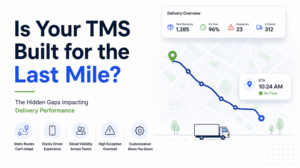
Last-mile delivery is often the most complex and costly stage of retail logistics. As customer expectations for faster, more flexible deliveries continue to rise, retailers face increasing pressure to balance speed, cost, and service quality. From rising transportation expenses to urban congestion and failed delivery attempts, overcoming these challenges is essential for improving operational efficiency and delivering a seamless customer experience.
1. Rising Delivery Costs
Fuel prices, labor expenses, vehicle maintenance, and growing customer expectations continue to increase delivery costs.
Retailers must optimize delivery routes and vehicle utilization to maintain profitability without compromising service quality.
2. Increasing Customer Expectations
Consumers increasingly expect:
- Same-day delivery
- Next-day shipping
- Accurate delivery windows
- Real-time shipment tracking
- Flexible delivery options
Meeting these expectations consistently requires advanced planning, automation, and real-time operational visibility.
3. Traffic and Route Complexity
Urban congestion, road closures, weather disruptions, and changing traffic conditions make delivery planning increasingly difficult.
Static delivery routes created hours before dispatch often become inefficient as conditions change throughout the day.
Dynamic routing technologies continuously adjust delivery sequences based on live traffic, driver locations, and new delivery requests.
4. Failed Delivery Attempts
Incorrect addresses, unavailable recipients, apartment access restrictions, and missed delivery windows all contribute to failed deliveries.
Each failed attempt increases transportation costs while negatively affecting customer satisfaction.
Providing customers with delivery notifications, estimated arrival times, and real-time driver tracking significantly improves first-attempt delivery success.
5. Fleet Visibility
Without real-time visibility, dispatchers struggle to monitor delivery progress, respond to delays, or reassign drivers when unexpected events occur.
GPS tracking, live driver updates, and centralized dashboards allow logistics teams to proactively manage delivery operations rather than reacting after problems occur.
4 Technologies Transforming Last-Mile Delivery
Technology has become the foundation of modern retail logistics.
Instead of relying on manual planning and disconnected systems, retailers increasingly adopt integrated logistics platforms that automate decision-making throughout the delivery lifecycle.
1. Route Optimization
Route optimization software calculates the most efficient delivery sequence based on:
- Traffic conditions
- Delivery time windows
- Vehicle capacity
- Driver schedules
- Customer locations
- Road restrictions
Optimized routing reduces mileage, fuel consumption, and delivery times while enabling drivers to complete more stops per day.
2. Dynamic Dispatch
Traditional dispatching often relies on manually assigning deliveries at the start of the day.
Dynamic dispatch continuously evaluates new orders, driver availability, and changing road conditions to automatically assign deliveries to the most appropriate driver.
This improves fleet utilization and enables retailers to respond quickly to same-day orders and unexpected disruptions.
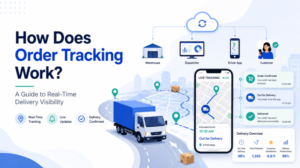
3. Real-Time Delivery Tracking
Customers increasingly expect visibility throughout the delivery journey.
Real-time tracking provides:
- Live vehicle locations
- Estimated arrival times (ETAs)
- Delivery progress updates
- Automated customer notifications
- Delivery status alerts
Improved visibility reduces customer support inquiries while building trust through transparency.
4. Electronic Proof of Delivery (ePOD)
Digital proof of delivery replaces traditional paper documentation with electronic confirmation.
Drivers can capture:
- Digital signatures
- Delivery photos
- GPS coordinates
- Time stamps
- Delivery notes
Electronic proof of delivery helps resolve disputes, improves compliance, and creates a reliable audit trail for every completed delivery.
How AI Is Transforming Retail Logistics
Artificial Intelligence (AI) is reshaping how retailers manage logistics by enabling faster, data-driven decisions across fulfillment and delivery operations.
Rather than replacing logistics teams, AI enhances decision-making by analyzing large volumes of operational data in real time.
Some of the most impactful AI applications in retail logistics include:
1. Intelligent Route Optimization
AI evaluates traffic conditions, weather, delivery windows, vehicle capacity, and historical delivery patterns to generate more efficient routes that reduce travel time and fuel costs.
2. Predictive Demand Forecasting
Machine learning models analyze historical sales trends, seasonal demand, promotions, and regional buying patterns to help retailers position inventory closer to future demand.
This reduces stockouts while minimizing excess inventory.
3. Smart Dispatch
AI-powered dispatch systems automatically assign deliveries based on driver proximity, vehicle capacity, service levels, and delivery priorities.
This reduces manual planning while improving fleet utilization.
4. Predictive Delivery ETAs
Instead of relying on static estimates, AI continuously updates estimated arrival times using live traffic conditions and driver progress, keeping customers informed throughout the delivery journey.
5. Delivery Exception Management
AI can identify deliveries at risk of delay before they become customer issues.
Operations teams receive proactive alerts, allowing them to reroute drivers, communicate with customers, or adjust schedules before service levels are impacted.
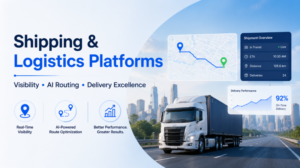
Retailers managing high delivery volumes increasingly rely on integrated delivery management platforms such as nuVizz to combine route optimization, dispatch automation, real-time tracking, proof of delivery, and delivery analytics into a single operational platform. By connecting warehouse operations with transportation and last-mile execution, retailers gain end-to-end visibility that improves efficiency, reduces costs, and enhances the customer experience.
Key Retail Logistics KPIs Every Retailer Should Track
Measuring logistics performance is essential for identifying inefficiencies, improving customer satisfaction, and controlling operational costs. The following key performance indicators (KPIs) provide valuable insights into the health of your retail logistics operations.
| KPI | What It Measures | Why It Matters |
| On-Time Delivery Rate | Percentage of orders delivered within the promised delivery window | Directly impacts customer satisfaction and brand trust |
| Order Accuracy Rate | Percentage of orders delivered without errors | Reduces returns, refunds, and customer complaints |
| Fulfillment Cycle Time | Time from order placement to shipment | Supports faster delivery promises and operational efficiency |
| Cost per Delivery | Total delivery cost divided by completed deliveries | Helps control transportation and last-mile expenses |
| First-Attempt Delivery Rate | Percentage of deliveries completed on the first attempt | Reduces failed delivery costs and improves customer experience |
| Inventory Accuracy | Difference between physical inventory and system records | Prevents stockouts, overselling, and fulfillment delays |
| Return Rate | Percentage of products returned by customers | Identifies potential product, fulfillment, or delivery issues |
Rather than monitoring these metrics individually, leading retailers use integrated analytics dashboards to identify trends, benchmark performance, and continuously optimize logistics operations.
How to Choose the Right Retail Logistics Software
As retail operations grow, spreadsheets and disconnected systems become difficult to manage. Investing in the right logistics software helps retailers automate workflows, improve visibility, and scale efficiently.
When evaluating a retail logistics platform, consider the following capabilities:
1. End-to-End Visibility
The platform should provide a unified view of inventory, orders, deliveries, and returns across warehouses, stores, and transportation partners.
2. Intelligent Route Optimization
Look for software that dynamically plans delivery routes based on traffic conditions, delivery windows, vehicle capacity, and customer locations.
3. Automated Dispatch Management
Automated dispatch reduces manual planning by assigning deliveries to the most suitable drivers while adapting to real-time operational changes.
4. Real-Time Delivery Tracking
Customers and operations teams should be able to monitor deliveries with live tracking, proactive notifications, and continuously updated estimated arrival times.
5. Multi-Carrier Support
Retailers working with multiple delivery providers benefit from a platform that supports carrier selection, shipment tracking, and performance monitoring from a single interface.
6. Proof of Delivery
Electronic proof of delivery (ePOD), including digital signatures, delivery photos, GPS verification, and timestamps, helps reduce disputes while improving accountability.
7. Analytics and Reporting
Built-in dashboards should provide actionable insights into delivery performance, driver productivity, fulfillment efficiency, and logistics costs to support continuous improvement.
Selecting a scalable platform that integrates with your existing Order Management System (OMS), Warehouse Management System (WMS), ERP, CRM, and eCommerce platforms creates a connected logistics ecosystem capable of supporting future business growth.
Struggling with high return volumes and inefficient reverse logistics operations? Discover Smarter Returns6 Best Practices for Building an Efficient Retail Logistics Operation
Successful retailers continuously optimize their logistics operations to improve customer service while reducing costs.
Consider these proven best practices:
1. Maintain Real-Time Inventory Visibility
Accurate inventory data enables better fulfillment decisions, minimizes stock discrepancies, and prevents overselling across multiple sales channels.
2. Optimize Warehouse Operations
Improving warehouse layouts, adopting barcode scanning, and implementing standardized picking processes can significantly reduce fulfillment times and increase order accuracy.
3. Automate Repetitive Tasks
Automation reduces manual effort across inventory allocation, dispatch planning, shipment tracking, and customer notifications, allowing teams to focus on exception management.
4. Improve Last-Mile Efficiency
Route optimization, dynamic dispatch, and delivery tracking help reduce fuel consumption, increase driver productivity, and improve on-time delivery performance.
5. Use Data to Drive Decisions
Regularly monitoring logistics KPIs helps identify operational bottlenecks, improve forecasting, and support informed decision-making.
6. Build a Scalable Technology Stack
Retail logistics software should support increasing order volumes, additional fulfillment locations, and evolving customer expectations without requiring significant process changes.
5 Future Trends Shaping Retail Logistics
Retail logistics continues to evolve as customer expectations, technology, and supply chain strategies advance.
Several trends are expected to shape the future of retail logistics:
1. AI-Powered Decision Making
Artificial intelligence will continue improving route planning, inventory forecasting, delivery scheduling, and exception management through predictive analytics and automation.
2. Hyperlocal Fulfillment
Retailers are increasingly positioning inventory closer to customers using micro-fulfillment centers and local distribution hubs to support same-day delivery.
3. Sustainability Initiatives
Businesses are adopting electric delivery vehicles, optimized delivery routes, recyclable packaging, and carbon reduction strategies to meet sustainability goals while lowering operating costs.
4. Predictive Customer Communication
Rather than simply notifying customers after delays occur, retailers are increasingly using predictive systems to identify potential disruptions and communicate proactively.
5. Connected Logistics Ecosystems
Future retail logistics operations will rely on seamless integration between OMS, WMS, ERP, TMS, delivery management platforms, IoT devices, and AI-powered analytics, providing end-to-end visibility across the supply chain.
Organizations that invest in scalable, connected logistics technologies today will be better positioned to adapt to changing customer expectations and market demands.
Conclusion
Retail logistics has become a strategic driver of customer satisfaction, operational efficiency, and long-term business growth. From inventory planning and warehouse operations to order fulfillment and last-mile delivery, every stage of the logistics journey influences the customer experience and the retailer’s bottom line.
As delivery expectations continue to rise, retailers need more than efficient transportation—they need connected, data-driven logistics operations that provide real-time visibility, intelligent automation, and the flexibility to scale.
Modern retail logistics platforms bring together inventory management, order fulfillment, route optimization, dispatch management, delivery tracking, and analytics into a unified ecosystem. This enables retailers to reduce operational costs, improve delivery performance, and deliver a consistent customer experience across every sales channel.
For retailers managing private fleets, third-party carriers, or complex omnichannel fulfillment networks, nuVizz helps streamline last-mile delivery with AI-powered route optimization, real-time shipment visibility, automated dispatch, and proof of delivery—helping organizations improve efficiency while delivering exceptional customer experiences.
Optimize Your Retail Logistics with nuVizz. Request a Demo
FAQs
Retail logistics is the process of managing the movement of products from suppliers to customers. It includes inventory management, warehousing, order fulfillment, transportation, last-mile delivery, and reverse logistics to ensure products are delivered efficiently and on time.
Supply chain management covers the entire lifecycle of a product—from sourcing raw materials to manufacturing and distribution. Retail logistics focuses specifically on storing, fulfilling, transporting, and delivering finished products to customers.
Last-mile delivery is the final stage of the delivery process and often the most expensive. It has a significant impact on customer satisfaction because it determines whether orders arrive on time, accurately, and within the promised delivery window.
Retailers commonly use several integrated systems, including:
- Order Management Systems (OMS)
- Warehouse Management Systems (WMS)
- Transportation Management Systems (TMS)
- Route Optimization Software
- Delivery Management Platforms
- Fleet Management Software
- Electronic Proof of Delivery (ePOD) solutions
AI helps retailers optimize delivery routes, forecast demand, automate dispatch, predict delivery times, identify potential delays, and improve inventory planning. These capabilities reduce operational costs while improving delivery reliability and customer satisfaction.
Common challenges include:
- Rising transportation costs
- Inventory inaccuracies
- Labor shortages
- Last-mile delivery complexity
- Failed delivery attempts
- Omnichannel fulfillment
- Managing product returns
- Meeting increasing customer delivery expectations
Key logistics metrics include:
- On-Time Delivery Rate
- Order Accuracy Rate
- Cost per Delivery
- Fulfillment Cycle Time
- Inventory Accuracy
- First-Attempt Delivery Rate
- Return Rate
Retailers can reduce logistics costs by optimizing delivery routes, improving warehouse efficiency, maintaining accurate inventory, automating dispatch, consolidating deliveries, reducing failed delivery attempts, and using integrated logistics software to improve operational visibility.