Blog
What Are The Best Route Planning Software Options For Delivery Companies?
Key Takeaways
- The best route planning software depends on fleet size, delivery volume, and operational complexity.
- Advanced route planners consider more than distance, including vehicle capacity, delivery windows, driver availability, and priorities.
- Dynamic route optimization helps businesses respond to new orders, delays, and other changes during the delivery day.
- Smaller fleets may only need dedicated routing software, while complex operations may benefit from a broader last-mile TMS.
- nuVizz is a strong option for delivery companies that need route optimization connected with dispatch, delivery execution, and real-time visibility.
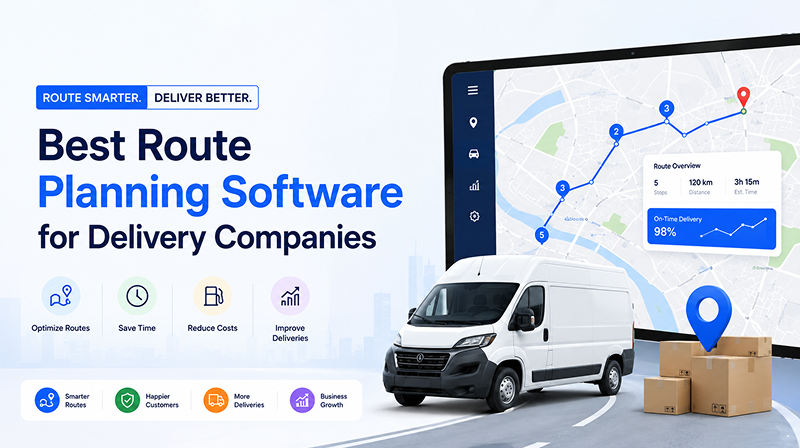
Table of Contents
For delivery companies, efficient route planning can directly influence delivery costs, driver productivity, customer experience, and fleet utilization.
Planning a handful of stops manually may be manageable. But as order volumes increase, dispatchers often have to consider vehicle capacity, delivery time windows, driver availability, traffic, service times, and last-minute changes at the same time.
This is where route planning software for delivery companies becomes valuable.
Modern route planning solutions can automate delivery sequencing, optimize routes based on operational constraints, and help dispatch teams respond when conditions change.
But what is the best route planning software?
There isn’t one solution that is right for every delivery business. A small fleet with straightforward routes may need a simple route planner, while a larger operation may need route optimization integrated with dispatch, delivery execution, and real-time visibility.
This blog explains the main options and what delivery companies should consider when selecting a solution.
What Is Route Planning Software?
Route planning software helps delivery businesses determine which vehicles should visit which customers and in what sequence.
Instead of manually organizing stops using spreadsheets, maps, or static route plans, the software evaluates delivery information and creates routes based on defined business rules.
Depending on the platform, route planning can consider:
- Number and location of delivery stops
- Vehicle capacity
- Driver availability
- Delivery time windows
- Pickup and delivery requirements
- Traffic and travel time
- Service time at each stop
- Vehicle restrictions
- Delivery priorities
The goal isn’t simply to find the shortest route. An effective system should create a route that is efficient and operationally feasible.
Reduce the hidden causes of supply chain turnover with smarter, more connected logistics operations.
Explore Smarter LogisticsWhat Should Delivery Companies Look for in Route Planning Software?
The right feature set depends on the complexity of your delivery operation. However, several capabilities are particularly important.
1. Multi-Stop Route Optimization
A delivery route may include dozens or hundreds of stops. Good route planning software should be able to determine an efficient sequence while considering operational constraints.
For example, assigning nearby customers to the same driver might reduce distance, but the route may still fail if the vehicle doesn’t have enough capacity or the driver cannot meet the customers’ delivery windows.
This is why modern route optimization needs to consider multiple variables simultaneously.
2. Vehicle Capacity and Constraints
Routes need to work in the real world.
A vehicle may have sufficient driving time but not enough space for all assigned orders. Different vehicles may also have different capacities or restrictions.
A capable route planner should account for these factors when creating delivery routes.
This is particularly useful for distributors, retailers, food and grocery businesses, pharmaceutical companies, and other operations where vehicle capacity affects planning.
3. Delivery Time Windows
Some customers require deliveries within specific time periods.
For example, a business may need to deliver to one customer between 9 AM and 11 AM while another accepts deliveries only in the afternoon.
Route planning software can use these time windows when sequencing stops, helping businesses reduce missed appointments, waiting time, and unnecessary re-routing.
4. Dynamic Route Optimization
A route created once may not remain optimal throughout the day.
New orders can arrive. Drivers can encounter delays. Vehicles can become unavailable. Customers can change delivery requirements.
Dynamic route optimization allows the system to reconsider routes when conditions change instead of requiring dispatchers to manually rebuild the entire plan.
This is especially useful for same-day, on-demand, and high-volume delivery operations.
5. Dispatch and Real-Time Visibility
Route planning shouldn’t end once routes are created.
Dispatchers need to know whether drivers are following the plan, which deliveries have been completed, and where exceptions are occurring.
Connecting route planning with:
- Dispatch
- Driver applications
- GPS tracking
- Delivery status
- Proof of delivery
- Customer notifications
This creates a more complete delivery workflow.
What Are the Best Route Planning Software Options?
Rather than saying that one software is universally the “best,” delivery companies should choose a solution based on their operational requirements.
Option 1: Dedicated Route Planning Software
Dedicated route planners focus primarily on creating and optimizing delivery routes.
They can be a good choice for smaller delivery businesses that already have separate systems for order management, tracking, proof of delivery, and other workflows.
Best suited for:
- Small and mid-sized fleets
- Straightforward delivery operations
- Businesses primarily looking for route optimization
- Companies with existing delivery management systems
The main advantage is simplicity. If routing is your only major requirement, you may not need a complete transportation platform.
Option 2: Fleet and Delivery Management Platforms
The next category combines route planning with features such as driver management, GPS tracking, dispatch, and delivery execution.
These platforms are useful when businesses want to connect route planning with what happens in the field.
Best suited for:
- Growing delivery businesses
- Fleets with multiple drivers
- Businesses needing driver tracking
- Companies looking for routing plus delivery execution
Option 3: Last-Mile Transportation Management Platforms
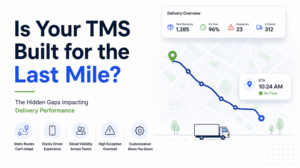
For larger or more complex delivery networks, a last-mile transportation management system (TMS) can provide a broader solution.
Instead of treating route planning as a standalone function, a last-mile TMS can connect:
Orders → Planning → Routing → Dispatch → Delivery → Tracking → Proof of Delivery → Analytics
This approach can be useful for organizations managing multiple facilities, large fleets, third-party carriers, complex delivery rules, or high delivery volumes.
This is also where nuVizz can be a strong fit.
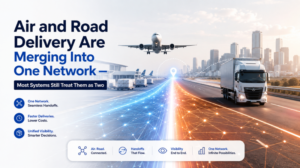
Connect air and road operations in one unified network for faster, more flexible delivery orchestration. Unify Your Delivery NetworkWhy nuVizz Is a Strong Route Planning Option
nuVizz combines route optimization with broader last-mile transportation and delivery management capabilities.
nuVizz routing capabilities support different delivery scenarios, including static and recurring routes, hub-and-spoke operations, multi-pickup and multi-drop deliveries, dynamic optimization, and real-time routing.
This makes it particularly relevant for businesses where routing is only one part of a larger delivery operation.
1. AI-Powered Route Optimization
nuVizz uses AI and optimization technologies to help businesses create delivery plans based on operational requirements rather than simply calculating the shortest geographical path.
The platform can consider factors such as vehicle capacity, delivery requirements, resource availability, and route constraints.
This can help businesses create more practical routes while improving resource utilization.
2. Dynamic and Real-Time Routing
One of the biggest advantages of advanced route planning is the ability to adapt when circumstances change.
nuVizz supports dynamic and real-time route optimization, allowing businesses to adjust delivery plans based on changing operational conditions.
For example, if a new delivery is added or a driver becomes unavailable, the system can help determine how the remaining delivery workload should be handled.
3. Route Planning Connected to Dispatch
nuVizz doesn’t treat route planning as an isolated activity.
The optimized plan can be connected with dispatch and driver execution, helping operations teams move from planning to actual delivery execution within the same broader platform.
This reduces the gap between planning what should happen and managing what is actually happening.
4. Real-Time Delivery Visibility
For larger delivery operations, knowing the planned route isn’t enough.
Operations teams also need visibility into actual delivery progress.
nuVizz provides capabilities around delivery tracking, execution, proof of delivery, and visibility, allowing businesses to monitor performance beyond the initial route plan.
Which Route Planning Software Is Right for Your Business?
The right solution depends largely on the complexity of your operation.
A dedicated route planner may be enough if:
- You operate a small fleet.
- Your routes are relatively predictable.
- You mainly need stop sequencing.
- You already have systems for tracking and delivery execution.
Consider an advanced delivery platform if:
- Your delivery volume is growing.
- You manage many drivers or vehicles.
- Deliveries have strict time windows.
- Vehicle capacity affects route decisions.
- Routes frequently change.
- Dispatchers spend significant time planning manually.
- You need real-time delivery visibility.
Consider a last-mile TMS such as nuVizz if:
Your business needs route optimization as part of a larger transportation workflow.
This can be particularly relevant for organizations managing multiple locations, complex delivery networks, different vehicle types, internal fleets, or third-party carriers.
Questions to Ask Before Choosing Route Planning Software
Before purchasing a route planning solution, ask vendors:
Routing
- Can it optimize multi-stop routes?
- Does it consider vehicle capacity?
- Can it handle delivery time windows?
- Can it support recurring routes?
Real-Time Operations
- Can routes be re-optimized during the day?
- Can new orders be added after routes are dispatched?
- Can dispatchers manually adjust optimized routes?
Delivery Execution
- Does it include a driver application?
- Can drivers capture proof of delivery?
- Can dispatchers track active routes?
Scalability
- Can it support multiple depots?
- Can it work with third-party carriers?
- Can it integrate with ERP, WMS, OMS, or TMS systems?
These questions help businesses evaluate software based on their actual requirements rather than simply comparing feature lists.
Conclusion
The best route planning software is one that goes beyond finding the shortest route and helps businesses manage real-world delivery requirements.
While simple fleets may only need basic route planning, growing and complex delivery operations benefit from dynamic optimization, capacity planning, dispatch, and real-time visibility.
nuVizz is a strong fit for these operations, combining route optimization with broader last-mile delivery management capabilities.
FAQs
There is no single best solution for every delivery company. The right choice depends on fleet size, delivery volume, operational complexity, and the level of automation required. For simple operations, a dedicated route planner may be sufficient. For complex delivery networks, a broader platform such as nuVizz can combine route optimization with dispatch, delivery execution, and visibility.
It can be worthwhile when dispatchers spend substantial time creating routes manually or when deliveries involve multiple stops, time windows, or changing orders. However, small businesses should choose a solution that matches their actual needs rather than paying for unnecessary enterprise functionality.
Route planning determines how deliveries should be organized and scheduled. Route optimization evaluates possible routes against factors such as distance, time, capacity, and delivery constraints to identify a more efficient plan.
Yes. Advanced route planning platforms can dynamically adjust routes when conditions change, such as new orders, driver delays, vehicle availability, or delivery exceptions.
It can help reduce costs by minimizing unnecessary mileage, improving vehicle utilization, reducing manual planning effort, and helping businesses manage more deliveries with available resources. Actual savings depend on the company's delivery density, fleet, existing processes, and implementation.