Blog
Next-Gen eCommerce Last Mile Delivery: Strategies That Work

Table of Contents
The last mile—the final leg of product delivery from a warehouse to the customer—is often the most challenging and expensive part of the eCommerce supply chain. Studies show that last mile delivery accounts for up to 53% of total shipping costs, making efficiency a top priority for online retailers.
Today’s consumers expect fast, predictable, and flexible delivery options, while businesses grapple with traffic congestion, high fuel costs, and route inefficiencies. To stay competitive, eCommerce companies must adopt next-gen last mile delivery strategies powered by technology, data-driven insights, and innovative logistics planning.
This blog dives deep into proven strategies that streamline last mile delivery, reduce operational costs, and enhance customer satisfaction, helping businesses thrive in a competitive landscape.
1. Leverage Advanced Route Optimization Software
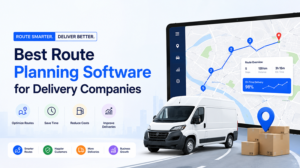
Efficient routing is the backbone of effective last mile delivery. Traditional routing methods often rely on fixed schedules and static routes, leading to inefficiencies, missed deliveries, and higher fuel consumption. Enter routing optimization software—a game-changer for modern logistics.
Key Benefits:
- Faster Deliveries: Dynamic route planning software calculates the quickest routes, accounting for traffic, weather, and delivery windows.
- Reduced Operational Costs: Optimized routes lower fuel expenses and improve fleet utilization.
- Multi-Stop Efficiency: For high-density deliveries, routing software identifies the most efficient sequence of stops.
For example, companies using dynamic route planning software have reported a 15–25% reduction in delivery times and a significant drop in fuel costs. By integrating such solutions into a TMS platform, businesses can automate route optimization and reduce manual planning errors.
2. Invest in a Robust Last Mile Delivery Platform
A centralized last mile delivery platform allows eCommerce businesses to manage operations efficiently from a single dashboard. These platforms combine delivery route planning software, real-time tracking, and analytics to provide end-to-end visibility.
Essential Features:
- Real-Time Tracking: Monitor driver location, delivery progress, and order status.
- Customer Notifications: Automated updates improve transparency and reduce support inquiries.
- Seamless Integration: Connect with eCommerce platforms, ERP systems, and TMS solutions.
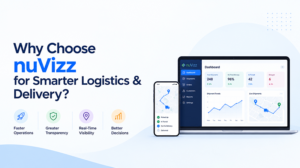
Platforms like nuVizz offer comprehensive last mile TMS solutions, helping businesses improve route planning, dispatch efficiency, and delivery visibility—all critical for scaling operations without compromising customer satisfaction.
By consolidating tools into one platform, businesses gain operational agility and the ability to respond to disruptions proactively.
Manual warehouse work costing you time & errors?
Explore AI & Robotics Today3. Embrace Real-Time Visibility Software
In eCommerce, transparency isn’t optional—it’s expected. Consumers increasingly demand real-time delivery updates and accurate ETAs. Last mile visibility software bridges this gap, providing both businesses and customers with actionable insights.
Advantages of Real-Time Visibility:
- Predictive Delivery Windows: Anticipate delays and manage expectations.
- Proactive Problem Solving: Address missed deliveries or traffic disruptions before they escalate.
- Enhanced Customer Experience: Reduce anxiety with live tracking and notifications.
Integrating visibility software with a last mile TMS platform ensures that delivery teams can dynamically adjust routes, communicate efficiently, and maintain high service standards. This integration also enables businesses to monitor KPIs such as on-time delivery rates, route adherence, and driver performance.
4. Adopt Smart Delivery Strategies
Next-gen last mile delivery is not only about software—it’s about strategy. Innovative delivery models help businesses meet evolving customer expectations while controlling costs.
Time-Slot Deliveries
Allow customers to choose specific delivery windows. This reduces failed deliveries and improves customer satisfaction, especially during peak periods.
Crowdsourced or Gig-Economy Drivers
Flexible staffing models help manage demand spikes without overloading your permanent fleet. These drivers can be dynamically assigned via a dispatch routing software, optimizing routes and reducing idle time.
Click-and-Collect or Locker Solutions
Offering flexible pickup points allows businesses to consolidate deliveries, save on last mile costs, and provide convenience to urban customers.
Benefits:
- Reduced delivery failures
- Lower operational costs
- Enhanced customer convenience
Combining these strategies with delivery route planning software ensures efficiency without compromising customer experience.
5. Use Data-Driven Insights for Continuous Improvement
The modern eCommerce landscape demands constant optimization. Leveraging data analytics in last mile operations provides actionable insights that drive performance improvements.
How Analytics Help:
- Identify Bottlenecks: Pinpoint recurring delays, inefficient routes, or high-cost delivery zones.
- Optimize Fleet Utilization: Allocate vehicles and drivers based on demand patterns.
- Improve Customer Experience: Analyze delivery times, preferences, and satisfaction metrics.
Integrating analytics with TMS optimization tools allows businesses to adjust routes dynamically, forecast demand accurately, and continuously enhance delivery processes. For example, companies implementing data-driven last mile route optimization have reported up to 20% cost savings while improving on-time delivery rates.
Competitors are already optimizing deliveries. Catch Up Before It’s Too Late6. Integrate Automation for Scaling Operations
Automation is a cornerstone of next-gen last mile delivery. From automatic dispatching to predictive routing, technology reduces manual intervention, errors, and delays.
Key Automation Areas:
- Route Scheduling Software: Automatically generate optimized delivery routes based on real-time constraints.
- Automated Customer Notifications: Keep buyers informed with minimal human effort.
- Fleet Management Tools: Track vehicle health, driver performance, and compliance efficiently.
By combining automation with a robust last mile TMS platform, businesses can scale operations rapidly while maintaining efficiency and accuracy.
Conclusion
The future of eCommerce depends on smart, efficient, and technology-driven last mile delivery strategies. Businesses that invest in advanced routing software, real-time visibility platforms, and data-driven logistics strategies gain a competitive edge by reducing costs, improving operational efficiency, and delighting customers.
Solutions like nuVizz exemplify how a comprehensive last mile TMS platform can transform logistics operations, integrating route optimization, real-time tracking, and analytics into a seamless system. By adopting these next-gen strategies, eCommerce businesses can not only meet customer expectations but also future-proof their last mile operations.
FAQs
Last mile delivery refers to the final step in the shipping process, where goods are transported from a local distribution center to the customer's doorstep. This stage is crucial as it directly impacts customer satisfaction and delivery costs.
Last mile delivery can account for up to 53% of total shipping costs due to factors like fuel expenses, labor, vehicle maintenance, and the complexity of urban logistics.
Route optimization software analyzes real-time data to determine the most efficient delivery paths, reducing fuel consumption, delivery times, and operational costs. This leads to improved customer satisfaction and lower expenses.
nuVizz offers a comprehensive last mile TMS platform that integrates route optimization, real-time tracking, and analytics, providing businesses with end-to-end visibility and control over their delivery operations.
Future trends include the adoption of electric vehicles for sustainability, the use of AI for predictive analytics, and the expansion of autonomous delivery methods to enhance efficiency and reduce costs.