Blog
Achieving Real-Time Visibility and Control with Last Mile TMS
Table of Contents
Today’s customers want quick updates about their deliveries. Businesses need to be flexible to handle last-minute changes. Achieving real-time visibility and control over last-mile delivery operations is the game-changer every business needs.
A strong Last Mile Transportation Management System (TMS) helps companies track deliveries in real-time. It also optimizes routes and ensures smooth customer experiences. Let’s look at how Last Mile TMS helps businesses tackle logistics challenges. This system allows them to succeed in a competitive market.
The Importance of Real-Time Visibility in Last-Mile Delivery
Real-time visibility means knowing exactly where a package is at any given moment. Connecting the dots between dispatchers, drivers, and customers through real-time tracking systems and automated updates is essential.
In last-mile delivery, this transparency is critical because:
Customers want instant updates:
Studies show that 90% of customers track their orders online after making a purchase.
Operational efficiency matters:
Without visibility, businesses risk delays, misplaced shipments, or higher operational costs.
Brand reputation is at stake:
A lack of delivery transparency can damage customer trust.
For instance, imagine a food delivery service promising fresh meals but failing to notify customers about delays. Such situations highlight why real-time delivery tracking is essential for customer satisfaction and operational success.
Common Challenges in Achieving Visibility and Control
Getting real-time visibility and control over last-mile delivery operations is important, but it has its own challenges. Let’s delve deeper into the key hurdles businesses face:
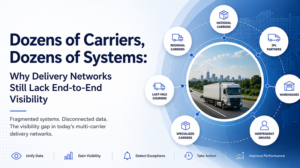
1. Fragmented Systems
Many businesses still operate with disconnected tools and systems that do not work together. These systems might include:
Manual record-keeping:
Delivery updates and statuses are tracked in spreadsheets or standalone tools, prone to errors and inefficiencies.
Non-integrated software:
Separate platforms for warehouse management, driver tracking, and customer communication hinder seamless data flow.
Also read: Choosing the Right Last-Mile TMS: A Buyer’s Guide
Without integration, important information remains isolated. This makes it hard for logistics teams to see the whole delivery process. For example, delays noticed by the driver may not appear in the system right away. This can result in a lack of useful insights.
Impact:
- Inefficient workflows and redundant processes.
- Delayed identification of delivery issues.
- Inability to provide accurate updates to customers or stakeholders.
2. Unpredictable Delays
Uncertainty is a constant challenge in last-mile delivery, caused by factors like:
Traffic jams:
Unexpected congestion can disrupt even the most well-planned routes.
Adverse weather conditions:
Heavy rain, snow, or storms slow down deliveries and make certain routes inaccessible.
Last-minute changes:
Sudden changes in delivery addresses or customer availability create logistical headaches.
Even with a good delivery plan, these disruptions can disrupt operations. This can lead to late deliveries or incomplete orders.
Impact:
- Reduced efficiency because of route deviations.
- Increased operational costs from delays and rerouting.
- Failure to meet service-level agreements (SLAs), resulting in penalties or customer dissatisfaction.
3. Customer Dissatisfaction
Today’s customers expect transparency throughout the delivery process. When businesses fail to provide real-time updates, customers often feel ignored or undervalued. Common pain points include:
Lack of communication:
Customers are left guessing when their package will arrive.
Unforeseen delays:
Without notifications, delays lead to frustration and reduced trust.
Inaccurate delivery windows:
Promising a specific delivery time but failing to meet it negatively impacts customer perception.
Dissatisfied customers are more likely to leave negative reviews, request refunds, or choose competitors who offer better transparency.
Impact:
- Loss of customer loyalty and revenue.
- Damage to the brand’s reputation in the market.
- Higher customer support workload to handle complaints and inquiries.
Also read: How Last-Mile TMS Enhances Delivery Efficiency for the Healthcare Industry
Why Last Mile TMS Is the Solution
These challenges highlight why businesses need a comprehensive solution like a Last Mile TMS. Last Mile TMS solves problems caused by scattered systems. It centralizes data, automates updates, and offers real-time visibility. This helps reduce delays and keeps customers informed at every step.
How Last Mile TMS Enables Real-Time Visibility and Control
A modern Last Mile TMS bridges the gap between businesses and their delivery operations. Here’s how:
1. Real-Time Driver Tracking
Using GPS-enabled devices, Last Mile TMS provides minute-by-minute updates on driver locations. This ensures dispatchers know the exact status of each delivery.
2. Dynamic Route Optimization
Last Mile TMS uses AI and machine learning to suggest the fastest and most cost-efficient delivery routes. When unforeseen disruptions occur, it recalculates routes in real time.
3. Customer Communication
Automated notifications—via SMS, emails, or apps—keep customers informed about delivery times, delays, and completed deliveries.
4. Exception Management
Last Mile TMS identifies potential delivery issues (e.g., missed time windows) early, enabling businesses to take corrective actions promptly.
With features like these, a Last Mile TMS transforms logistics operations, enhancing both efficiency and reliability.
Benefits of Real-Time Visibility and Control
Implementing a Last Mile TMS delivers tangible benefits:
Improved Efficiency:
Reduce fuel costs and delivery times with optimized routing.
Higher Customer Satisfaction:
Transparent updates foster trust and loyalty.
Cost Savings:
Avoid penalties or refunds due to missed SLAs.
Brand Differentiation:
Stand out in a crowded market by offering superior delivery experiences.
A business with real-time visibility can use data analytics to predict demand patterns. This helps them plan better and improve future operations.
Also read: How To Use Effective Transport Management In Logistics For Cost Efficiency
Case Study: Transforming Deliveries with Last Mile TMS
Take the example of a retail company struggling with delayed deliveries and rising operational costs. After integrating a Last Mile TMS, the company achieved:
- 25% faster deliveries due to dynamic routing.
- 40% reduction in customer complaints by providing real-time updates.
- Significant cost savings through optimized resource allocation.
This transformation highlights the power of real-time visibility and control in last-mile delivery operations.
Future Trends in Real-Time Visibility and Last Mile TMS
The logistics industry is evolving, and businesses need to stay ahead. Emerging technologies like AI-powered predictive analytics, blockchain, and autonomous delivery vehicles are shaping the future of last-mile delivery.
Investing in a scalable Last Mile TMS now helps businesses prepare for new innovations. This ensures they stay competitive in a fast-changing market.
In a world where customers expect more, having real-time visibility and control is essential. It is no longer optional. A good Last Mile TMS makes operations easier. It also builds trust, cuts costs, and helps businesses stand out from competitors.
Are you ready to enhance your delivery operations with a Last Mile TMS? Contact us today. Start gaining real-time visibility and control.