LMD Logo
LMD Logo
LMD Logo
  • Benefits of Last Mile TMS
  • Features of Last Mile TMS
  • Blogs

Month: November 2026

Blog

Route Optimization Software Buyer’s Guide 

Key Takeaways

  • Route optimization software assigns stops to vehicles in the best sequence, balancing cost, time windows and capacity.
  • Must-have features include dynamic re-routing, a driver app, ePOD, live tracking and customer notifications.
  • The right platform manages both private fleets and third-party carriers in one place.
  • Strong ERP, WMS and order system integrations are essential for accurate routes.
  • Test vendors with your own data and run a pilot before full rollout.
  • nuVizz, a 2026 Nucleus Research TMS Value Matrix Accelerator, covers routing to proof of delivery on one platform.
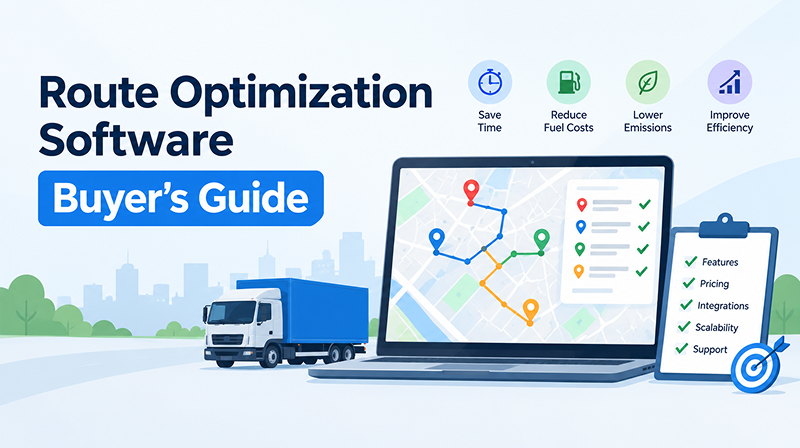
Route Optimization Software Buyer’s Guide

The best route optimization software for a growing delivery operation plans routes around real-world constraints, re-optimizes in real time when plans change, gives drivers a simple mobile app, captures electronic proof of delivery, and connects to your ERP, WMS and order systems. It should also manage your private fleet and third-party carriers in one place. nuVizz is built to do all of this on a single cloud platform.

Delivery networks are under more pressure than ever. Customers expect narrow delivery windows and live tracking. Fuel, labor and vehicle costs keep rising. And a single missed appointment can cost a sale, a patient’s treatment or a production line’s uptime.

Spreadsheets and static routing tools can’t keep up. That’s why route optimization software has become a core investment for shippers, distributors and retailers. But not all platforms are equal. Some only draw lines on a map. Others run your entire last-mile operation.

This buyer’s blog explains what route optimization software does, the features that matter most, the questions to ask vendors, and how nuVizz helps enterprises plan smarter routes and deliver on time.

What Is Route Optimization Software?

Route optimization software is a logistics tool that automatically builds the most efficient delivery and pickup routes for a fleet. It weighs every stop against real constraints, such as delivery time windows, vehicle capacity, driver hours, traffic, service time and customer priority.

It is different from basic route planning. A route planner finds a path between points. A route optimization engine decides which vehicle takes which orders, in what sequence, at what time, at the lowest total cost, while still meeting every service commitment.

Modern platforms go further. They include dispatch, live tracking, a driver app, proof of delivery and customer notifications. In other words, they cover the full last-mile lifecycle from order to doorstep.

Signs Your Business Needs Route Optimization Software

If any of these sound familiar, your current routing process is likely costing you money:

  • Dispatchers spend hours building routes by hand or in spreadsheets every day.
  • Late or missed deliveries are common, especially when orders or traffic change mid-day.
  • Trucks leave half empty while others are overloaded.
  • Customers call to ask “Where is my order?” because they have no live ETA.
  • Proof of delivery is on paper, which slows billing and makes disputes hard to settle.
  • You use multiple carriers and can’t see their performance in one view.
  • Growth means hiring more planners, not running a smarter network.

The right platform turns each of these pain points into a measurable gain.

Compare the top delivery management tools and find the right fit for your business.

Explore the Top 7 Tools

Must-Have Features to Look For

Use this checklist when you compare vendors. Each item shows why it matters and how nuVizz handles it.

FeatureWhy it mattersHow nuVizz delivers it
Constraint-based optimizationRoutes must respect time windows, capacity, vehicle type, driver skills and hours of servicenuVizz builds routes around business rules you define, from appointment windows to equipment needs
Dynamic re-routingOrders, cancellations and traffic change all dayRoutes can be re-optimized in real time, so dispatchers adjust plans without starting over
Multi-stop and multi-depot planningComplex networks run from several warehouses or storesPlans span multiple hubs, stops and delivery types in one view
Driver mobile appDrivers need clear turn-by-turn stops and easy updatesThe nuVizz driver app guides each stop and syncs status back to dispatch
Electronic proof of delivery (ePOD)Speeds billing and resolves disputesCapture signatures, photos, barcode scans and notes at the door
Real-time visibilityDispatch and customer service need live statusLive tracking of every vehicle, route and order on a single dashboard
Customer notificationsCuts “where is my order” callsAutomated ETA alerts and live tracking links keep customers informed
Carrier and fleet managementMost shippers mix private fleets and 3PLsManage your own fleet and contract carriers on one platform
IntegrationsRouting is only as good as its order dataConnects with ERP, WMS, OMS and e-commerce systems
Analytics and reportingYou can’t improve what you don’t measureDashboards on on-time performance, utilization, cost and driver performance

Tip: Ask every vendor to demo these features with your own order data, not a canned sample.

How nuVizz Route Optimization Works

nuVizz route optimization software is part of a cloud-based last-mile and transportation platform. Instead of a stand-alone routing tool, it connects planning, execution and visibility in one workflow:

  1. Orders flow in automatically from your ERP, WMS, order management or e-commerce systems.
  2. The engine builds optimized routes based on stops, time windows, vehicle capacity, driver availability and your business rules.
  3. Dispatchers review and fine-tune plans on a visual map, then assign routes to drivers or carriers.
  4. Drivers execute with the mobile app, following stop sequences and updating status at each delivery.
  5. Routes adjust in real time when new orders, cancellations or delays come up.
  6. Proof of delivery is captured digitally and shared with billing and customer service instantly.
  7. Customers get live updates, from scheduling to ETA alerts to delivery confirmation.
  8. Analytics close the loop, showing where to improve the next day’s plan.

The new nuVizz Modern workspace brings these steps together in a cleaner, faster interface, so planners and dispatchers spend less time clicking and more time managing exceptions.

Business Benefits and KPIs to Track

Route optimization software pays off across cost, service and productivity. With nuVizz, teams typically focus on these gains:

  • Lower transportation costs through fewer miles, less fuel and better vehicle use.
  • Higher on-time delivery by planning around real time windows and re-routing when plans change.
  • More stops per route without adding drivers or trucks.
  • Faster planning that turns hours of manual work into minutes.
  • Better customer experience with accurate ETAs and proactive alerts.
  • Faster billing and fewer disputes thanks to digital proof of delivery.
  • One view of all carriers, so you can compare performance fairly.

To measure success, track these KPIs before and after rollout:

  • On-time delivery rate: the share of deliveries completed within the promised window.
  • Cost per stop: the total cost of running routes, spread across completed stops.
  • Stops per route: how many deliveries each route completes in a day.
  • Vehicle utilization: how fully each vehicle’s capacity and time are used.
  • First-attempt delivery success: deliveries completed on the first try, without a return trip.
  • Planning time: how long it takes to build and release the day’s routes.
Manage store replenishment and home deliveries seamlessly with one unified fleet. Optimize Your Delivery Network

Industries and Customers nuVizz Serves

Route optimization needs vary by industry. nuVizz is designed for complex, high-stakes deliveries where timing, compliance and customer experience all matter.

Healthcare

Time-sensitive deliveries of medical supplies and equipment, with tight windows and full chain-of-custody records.

Pharma

Scheduled pharmacy and distributor routes where accuracy, traceability and proof of delivery are critical.

Automotive

Parts distribution to dealers and repair shops, often with multiple runs per day and hot-shot orders.

Retail

Store replenishment and home delivery, including large and bulky items that need appointments and two-person crews.

Wholesale distribution

Multi-depot networks serving many B2B customers with recurring and on-demand orders.

nuVizz Customer Success Stories

Organizations across diverse sectors rely on nuVizz to streamline their logistics, enhance fleet efficiency, and improve customer satisfaction. Below are key examples highlighting how companies have successfully leveraged nuVizz to transform their last-mile operations and achieve measurable performance gains.

HTM Courier Services (prescription home delivery)

After integrating nuVizz to ingest pharmacy orders and auto-assign optimized routes, HTM cut route planning time by 75%, from 3 hours to under 1 hour a day. Route efficiency rose 30%, and the business doubled in under 4 months without adding operations staff.

Global pharmaceutical distributor

Serving 180,000+ pharmacies, hospitals and clinics through 25+ DCs and 200+ carrier hubs, the distributor reached about 99.5% delivery accuracy across 6M+ orders and reduced customer service inquiries by 70%.

Metropolitan Warehouse & Delivery (white-glove e-commerce)

With automated routing, live ETAs and ePOD across 40 terminals and 300+ daily drivers, Metropolitan achieved 99.95% delivery ETA accuracy and cut its billing cycle by 5+ days.

National automotive parts carrier

By moving multi-OEM dispatch and routing onto one nuVizz platform, the carrier improved on-time delivery while reducing empty miles and cost per stop.

Leading U.S. specialty retailer

nuVizz now runs store deliveries across 100+ cross-dock hubs and 1,800+ stores, reducing missed delivery windows and speeding billing with ePOD and real-time ETAs.

Questions to Ask Route Optimization Vendors

Before you sign, get clear answers to these questions:

  • Can the engine handle all of our constraints, including time windows, vehicle types, driver skills and hours of service?
  • How fast can it re-optimize routes when orders change during the day?
  • Does it manage both our private fleet and third-party carriers?
  • Which ERP, WMS and order systems does it integrate with, and how long does integration take?
  • What does the driver app look like, and does it work offline?
  • How is proof of delivery captured and shared?
  • What customer notifications are included out of the box?
  • What reports and dashboards come standard?
  • How long is a typical implementation, and what support is included?
  • Can you share references from companies in our industry?

A Simple Step-by-Step Evaluation Process

  1. Map your current state. Document routes, volumes, constraints and today’s KPIs.
  2. Define must-haves vs. nice-to-haves. Use the feature checklist above.
  3. Shortlist three to five vendors. Look at industry fit, analyst recognition and customer reviews on sites like G2 and Capterra.
  4. Run demos with your own data. Compare route quality, ease of use and real-time changes.
  5. Run a pilot. Test one region or depot and measure results against your baseline.
  6. Review total cost of ownership. Include licensing, integration, training and support.
  7. Plan the rollout. Phase it by region or business unit to reduce risk.

Discover what the 2026 TMS Technology Value Matrix reveals about smarter last-mile orchestration.

Explore the 2026 TMS Matrix

Why Enterprises Choose nuVizz

nuVizz was named an Accelerator in the 2026 Nucleus Research TMS Value Matrix, recognizing the value it delivers to customers. Read the Nucleus Research report.

Here’s what sets nuVizz apart:

One platform, end to end

Order management, route optimization, dispatch, tracking, ePOD and analytics work together, so there’s no patchwork of tools.

Built for complex deliveries

From appointment-based home delivery to multi-depot B2B routes, nuVizz handles real-world constraints.

Private fleet plus carriers

Plan and track your own trucks and third-party carriers side by side.

Real-time control

Dynamic re-routing and live visibility help teams act on problems before customers notice.

Customer-first experience

Scheduling, ETA alerts and tracking links make every delivery feel premium.

Enterprise-ready integrations

Cloud-based and designed to connect with the systems you already run.

Conclusion

Choosing route optimization software is not just about drawing better routes. It’s about running a delivery operation that is faster, leaner and more reliable for every customer. Focus on constraint handling, real-time re-routing, driver and customer experience, carrier management and integrations, then test vendors with your own data.

nuVizz brings all of these capabilities together in one enterprise platform trusted across healthcare, pharma, automotive, retail and distribution.

Ready to see it in action? Explore nuVizz route optimization or request a demo to see how your routes could look tomorrow.

bookmark_fill [#fff1226] Created with Sketch. Related Content
Blog

7 Best Delivery Management Softwares: Fe...

Blog

Which Platform Provides Real-Time Update...

Which Platform Provides Real-Time Updates On Last Mile Departure
Blog

What Are The Best Apps For Courier Dispa...

What Are The Best Apps For Courier Dispatch Management
Blog

Which Logistics Platforms Are Most Popul...

Which Logistics Platforms Are Most Popular Among Large Freight Companies
Blog

Ecommerce Delivery Software: How to Choo...

Ecommerce Delivery Software How to Choose the Right Platform
Blog

What Are The Best Tools To Monitor Shipm...

What Are The Best Tools To Monitor Shipment Deliveries?
Blog

What are the benefits of using nuVizz fo...

What are the benefits of using nuVizz for logistics and delivery services
Blog

Best Last-Mile TMS Software: How Leading...

Best Last-Mile TMS Software How Leading Platforms Compare
Blog

What Are The Best Route Planning Softwar...

What Are The Best Route Planning Software Options For Delivery Companies
Blog

The Hidden Factors Driving Supply Chain ...

The Hidden Factors Driving Supply Chain Turnover

FAQs

The best option handles complex constraints, re-routes in real time, manages both private fleets and carriers, and integrates with ERP and WMS systems. nuVizz offers all of these on one cloud platform and was named an Accelerator in the 2026 Nucleus Research TMS Value Matrix.

Route planning finds a path between stops. Route optimization decides which vehicle serves which stops, in what order and at what time, to meet service commitments at the lowest cost.

Yes. Platforms with dynamic routing, like nuVizz, can insert new orders and re-optimize live routes during the day.

It depends on your integrations and network size. Many companies start with a pilot in one region, then expand in phases.

Some tools only support private fleets. nuVizz lets you plan, assign and track both your own fleet and contract carriers in one place.

Common gains include higher on-time delivery, lower cost per stop, more stops per route, better vehicle utilization and faster planning.

Blog

Which Platform Provides Real-Time Updates On Last Mile Departure?

Key Takeaways

  • Departure is the real turning point in last-mile delivery: the moment a vehicle leaves the dock decides ETA accuracy, dock labor use and detention costs.
  • Most platforms see departure too late: visibility networks rely on periodic GPS pings, and route planning tools rely on manual driver check-ins.
  • nuVizz captures departure automatically: geofences plus nuStockIt and nuDeliverIt barcode scan-out log the exact departure time and verify what was loaded, with no driver input.
  • One departure event updates every stop: nuVizz’s AI routing engine recalculates downstream ETAs instantly and sends customers SMS alerts with live tracking links, cutting WISMO calls.
  • Time becomes cost in real time: nuVizz evaluates detention, dwell and service-time billing rules as departure happens, giving shippers and carriers one shared record and fewer billing disputes.
  • One view across every fleet: nuVizz unifies internal fleets, white-glove technicians and 3PL carriers through Events APIs and telematics, serving healthcare, pharma, automotive and retail.
Which Platform Provides Real-Time Updates On Last Mile Departure

Ask any enterprise shipper or carrier what they want from transportation management software, and “real-time visibility” will land near the top of the list. Yet in day-to-day operations, many platforms only start showing meaningful data once a truck is already on the highway, or worse, once it has reached its final stop.

By then, the most important moment has already passed.

The real turning point in last-mile delivery happens earlier: at departure. That is the moment cross-dock staging wraps up, packages are scanned onto the vehicle, and the truck crosses the boundary of the hub. What happens in those few minutes decides whether the day’s ETAs hold, whether dock crews stand idle, and whether detention charges quietly start to build.

So which platform actually provides real-time updates at last-mile departure? In this blog, we break down how the main categories of logistics technology handle departure tracking, what separates passive tracking from true execution visibility, and why nuVizz has become a leading choice for enterprises that need departure-level control.

Which Platform Provides Real-Time Last-Mile Departure Updates?

nuVizz is one of the few last-mile TMS platforms built to capture departure as a live execution event. It combines automated geofencing, package-level barcode scan-out, AI-driven cascading ETAs and real-time cost calculation, so shippers, carriers and customers get accurate updates the moment a vehicle leaves the dock, not minutes or hours later.

Key points:

  • Visibility platforms track trucks well on the road but often miss dock-level events.
  • Route planning tools usually depend on drivers to log departure by hand.
  • Integrated last-mile TMS platforms like nuVizz turn departure into an automatic trigger for ETAs, alerts and billing.

What Is Last-Mile Departure Visibility?

Last-mile departure visibility is the ability to capture, in real time, the exact moment a delivery vehicle finishes loading and leaves a distribution center, cross-dock or retail hub, along with proof of what is on board. It goes beyond a dot on a map. True departure visibility answers three questions instantly: Did the vehicle leave? When exactly did it leave? And was everything that should be on it actually loaded?

Why the Departure Moment Matters So Much

Departure is where planning turns into execution. Every downstream outcome depends on it:

ETA accuracy

A route plan assumes a departure time. If the truck leaves 15 minutes late, every stop after it can shift, and customers receive delivery windows that are already wrong.

Dock labor efficiency

When departures are not recorded in real time, supervisors cannot see which bays are free. Crews wait, and the next load is staged late.

Detention and accessorial costs

Excess dwell at the dock often turns into detention charges. If no one captures accurate timestamps, those costs surface weeks later during invoice audits, when they are hard to dispute.

Customer experience and WISMO calls

“Where is my order?” calls spike when customers get no update or a wrong one. A precise departure event is the trigger for timely, trustworthy notifications.

In short, if departure data is late or inaccurate, everything built on top of it is too.

Simplify deliveries and streamline your courier dispatch operations with the right app.

Explore Dispatch Management Apps

Why Most Platforms Miss the Departure Moment

If departure is so important, why do so many systems struggle to capture it? The answer lies in how they collect data.

They rely on periodic GPS pings

Many tools learn about a vehicle’s location from telematics or ELD devices that report every few minutes. That works well across a long-haul lane, but it is too coarse for a dock. A ping can arrive several minutes after the truck has left, or it can show the vehicle “near” the hub without confirming it has departed.

They depend on manual driver input

Other systems ask the driver to tap “Depart” in an app. Under time pressure, drivers forget, tap early, or tap late. The result is a departure log that looks precise but is not.

They don’t see inside the building

Loading confirmation, package scans and bay assignments live in warehouse or yard systems. If the visibility layer is not connected to those workflows, it cannot verify what was loaded, only that a vehicle is moving.

They treat departure as a status, not a trigger

Even when a departure is recorded, many platforms simply update a field. Nothing downstream changes automatically: ETAs are not recalculated, customers are not notified, and costs are not evaluated.

Closing these gaps requires a platform that connects the dock, the driver and the back office in a single execution workflow.

The Last-Mile Departure Technology Landscape

Several types of platforms claim to cover last-mile operations, but they approach departure tracking from very different angles.

1. Pure Visibility Platforms

Carrier visibility networks such as FourKites and project44 are strong at aggregating tracking data and carrier telematics across large, multi-carrier networks. Their core value is broad, network-wide awareness of freight in motion. However, because they rely heavily on periodic GPS pings from third-party ELDs, they can miss fine-grained events inside the dock or cross-dock, such as exact scan-out timestamps or package-level loading confirmation.

Best for: long-haul and multi-modal network visibility.

2. Point-Solution Route Planning Software

Route optimization tools are designed to tell drivers where to go and in what order. They can produce efficient routes, but many lack dynamic execution workflows. Departure status in these systems often depends on a driver checking in manually, which leads to delayed or inaccurate departure logs.

Best for: planning efficient routes when execution tracking is handled elsewhere.

3. Enterprise Last-Mile TMS Platforms

Integrated, end-to-end last-mile TMS platforms connect warehouse staging, mobile driver execution, automated geofencing and multi-carrier orchestration in one system. This is where departure stops being a passive map dot and becomes a live execution trigger that drives ETAs, customer alerts and billing.

Best for: enterprises that need control, proof and financial accuracy from the dock to the doorstep. nuVizz sits firmly in this category.

Ensure safe, timely, and traceable blood and specimen deliveries with smarter healthcare logistics. Explore Tracking Best Practices

How nuVizz Delivers Real-Time Updates at Last-Mile Departure

Among enterprise last-mile platforms, nuVizz stands out for its focus on departure-stage execution. Instead of treating departure as an approximate timestamp, nuVizz builds automated triggers directly into the workflow, so the event is captured, verified and acted on the instant it happens. nuVizz was also named an Accelerator in the 2026 Nucleus Research TMS Value Matrix, recognizing the value enterprises get from the platform.

Here is how it works.

1. Automated Geofences and Mobile Loading Verification

nuVizz places virtual geofences around distribution centers, cross-docks and retail hubs. These geofences work alongside the nuStockIt and nuVizz mobile apps used by warehouse staff and drivers.

At the bay, each package is scanned and loading is confirmed in the app. When the vehicle crosses the geofence perimeter, nuVizz logs the exact departure timestamp automatically. The driver does not need to tap anything.

The result is a departure record that is both precise and verified: you know when the truck left and what was on it, with a chain-of-custody trail down to the package level.

2. Cascading ETAs and Dynamic Route Optimization

A 15-minute delay at the hub can ripple through an entire day’s route. nuVizz handles this the moment departure is recorded.

Its AI-driven routing engine immediately recalculates downstream delivery windows based on the actual departure time. Updated predictive ETAs then cascade across every stop in the sequence. Dispatchers see the revised plan right away, and end customers receive proactive SMS alerts with live tracking links.

This turns departure into the starting gun for accurate customer communication, which helps reduce WISMO calls and missed delivery windows.

3. Real-Time Cost Calculation: Time Becomes Cost

One of nuVizz’s strongest differentiators is how it converts execution timestamps into financial intelligence.

Most organizations reconstruct detention charges, excess dock dwell and accessorial fees weeks later, during invoice auditing. nuVizz evaluates service-time expectations and customer billing rules on the spot, as departure occurs.

Because shippers and carriers share a single, verifiable record of event timestamps from the very first moment, billing disputes shrink and margins become easier to protect.

4. Unified Fleet and 3PL Orchestration

Few enterprises run a single type of fleet. Many combine dedicated internal fleets, white-glove delivery and installation technicians, and third-party carrier networks.

nuVizz unifies departure data from all of them through Events APIs and telematics integrations. Dispatchers get a single “digital twin” view across every terminal and carrier partner at once, instead of jumping between portals to piece together who has left and who has not.

Comparison: How Platforms Handle Last-Mile Departure

The table below summarizes how the three main approaches compare on the capabilities that matter most at departure.

CapabilityBasic GPS Tracking AppsCarrier AggregatorsnuVizz Last-Mile TMS
Departure triggerManual driver check-inPeriodic GPS pingAutomated geofence + mobile scan-out
Package-level verification✕✕✓ Chain-of-custody barcode scans
Dynamic cascading ETAs✕Partial✓ AI/ML auto-sequence recalculation
On-the-spot settlement✕✕✓ Real-time detention and service-time billing
Cross-dock / hub syncLimitedBroad network only✓ Detailed hub-and-spoke tracking
Customer notifications at departureRareVaries✓ Automated SMS with live tracking link

The pattern is clear: basic apps and aggregators tell you a vehicle is moving, while nuVizz tells you it left, when, with what, and what that means for every stop and invoice that follows.

Where Real-Time Departure Visibility Matters Most

Departure accuracy pays off across every industry, but it is especially critical where timing, compliance and customer trust are on the line.

Healthcare

Hospitals and clinics depend on time-sensitive deliveries of medical supplies and equipment. With nuVizz, a verified departure scan confirms the right items left on the right vehicle, and receiving teams get accurate arrival windows.

Pharma

Pharmaceutical shipments demand strict chain of custody. Package-level scan-out at the dock creates an auditable record from the moment product leaves the facility, supporting compliance and reducing the risk of loss or mis-delivery.

Automotive

Parts distributors serve dealerships and repair shops that cannot afford idle bays. Cascading ETAs from the moment of departure help service teams plan their day around when parts will actually arrive.

Retail

For store replenishment and home delivery, a late departure can affect hundreds of customers at once. nuVizz recalculates every downstream window instantly and sends proactive updates, protecting customer experience during peak seasons.

Optimize every stage of delivery to reduce costs, delays, and inefficiencies across your logistics network.

Explore Delivery Optimization

How to Evaluate a Last-Mile Departure Visibility Platform

If you are comparing platforms, use these questions to separate real departure visibility from marketing claims:

  1. How is departure detected? Automated geofencing combined with scan-out is far more reliable than manual check-ins or GPS pings alone.
  2. Can it verify what was loaded? Look for package-level barcode scanning at the bay, not just vehicle-level status.
  3. What happens automatically after departure? ETAs, dispatcher views and customer notifications should all update without human intervention.
  4. Does it connect time to cost? The platform should evaluate detention, dwell and service-time rules as events happen, not weeks later.
  5. Can it handle mixed fleets? Your own trucks, technicians and 3PL carriers should all appear in one view.
  6. How open is the integration layer? Events APIs and telematics integrations make it easier to connect your WMS, ERP and carrier systems.

nuVizz is designed to answer “yes” to every one of these questions.

Conclusion 

Many logistics applications promise “real-time updates,” but true last-mile departure tracking takes more than a moving dot on a map. It means capturing the event right at the dock, verifying package scans, and pushing updated timelines to drivers, dispatchers and customers the instant a vehicle leaves.

Pure visibility networks and route planning tools each play a valuable role, yet they were not built to treat departure as an execution trigger. Integrated last-mile TMS platforms were, and nuVizz leads that category with automated geofencing, chain-of-custody scanning, cascading AI-driven ETAs, on-the-spot cost calculation and unified fleet and 3PL orchestration.

For enterprise shippers and carriers that want to reduce WISMO calls, eliminate billing disputes and protect margins during high-volume periods, nuVizz offers one of the most complete, automated and financially integrated last-mile departure solutions on the market.

Ready to see departure visibility in action? Request a nuVizz demo to learn how your team can capture every departure, in real time, from the very first scan.

bookmark_fill [#fff1226] Created with Sketch. Related Content
Blog

Route Optimization Software Buyer’s Guid...

Route Optimization Software Buyer’s Guide
Blog

7 Best Delivery Management Softwares: Fe...

Blog

What Are The Best Apps For Courier Dispa...

What Are The Best Apps For Courier Dispatch Management
Blog

Which Logistics Platforms Are Most Popul...

Which Logistics Platforms Are Most Popular Among Large Freight Companies
Blog

Ecommerce Delivery Software: How to Choo...

Ecommerce Delivery Software How to Choose the Right Platform
Blog

What Are The Best Tools To Monitor Shipm...

What Are The Best Tools To Monitor Shipment Deliveries?
Blog

What are the benefits of using nuVizz fo...

What are the benefits of using nuVizz for logistics and delivery services
Blog

Best Last-Mile TMS Software: How Leading...

Best Last-Mile TMS Software How Leading Platforms Compare
Blog

What Are The Best Route Planning Softwar...

What Are The Best Route Planning Software Options For Delivery Companies
Blog

The Hidden Factors Driving Supply Chain ...

The Hidden Factors Driving Supply Chain Turnover

FAQs

nuVizz provides real-time last-mile departure updates by combining automated geofences, mobile barcode scan-out and AI-driven ETA recalculation. The departure timestamp is logged automatically when the vehicle leaves the hub, and updates flow instantly to dispatchers and customers.

Last-mile visibility usually means seeing where a vehicle is during transit. Departure tracking focuses on the exact moment and conditions under which the vehicle leaves the dock, including what was loaded. Departure tracking is the foundation that makes in-transit visibility accurate.

GPS pings from ELDs or telematics devices often arrive every few minutes. That delay, plus the lack of loading data, means a ping cannot confirm exactly when a truck left or what it carried.

When departure is captured instantly, ETAs can be recalculated and sent to customers right away. Customers who receive accurate, proactive updates are far less likely to call asking where their order is.

Yes. nuVizz evaluates service-time and billing rules as departure happens, creating a shared, verifiable timestamp record for shippers and carriers. That makes detention and accessorial charges easier to validate and harder to dispute.

Yes. nuVizz unifies internal fleets, white-glove technicians and third-party carrier networks through Events APIs and telematics integrations, giving dispatchers one view across all partners.

Recent Posts

  • Route Optimization Software Buyer’s Guide 
  • 7 Best Delivery Management Softwares: Features, Pros, Cons & Comparison
  • Which Platform Provides Real-Time Updates On Last Mile Departure?
  • What Are The Best Apps For Courier Dispatch Management?
  • Which Logistics Platforms Are Most Popular Among Large Freight Companies?

Recent Comments

No comments to show.

Archives

  • November 2026
  • October 2026
  • September 2026
  • August 2026
  • July 2026
  • June 2026
  • May 2026
  • April 2026
  • March 2026
  • February 2026
  • January 2026
  • December 2025
  • November 2025
  • October 2025
  • September 2025
  • August 2025
  • July 2025
  • June 2025
  • May 2025
  • April 2025
  • March 2025
  • February 2025
  • January 2025
  • December 2024
  • November 2024
  • October 2024
  • September 2024

Categories

  • Uncategorized
  • Share via
    • Facebook
    • Twitter
    • Linkedin
  • Facebook
  • Twitter
  • Linkedin

© 2026 Last Mile TMS. All Rights Reserved.

Privacy Policy