Blog
How Shipping and Logistics Platforms Improve Shipment Visibility, Route Optimization, and Delivery Performance
Key Takeaways
- Why shipping and logistics platforms are becoming essential for modern supply chains
- How real-time shipment visibility helps reduce delays and improve customer satisfaction
- The role of AI-powered route optimization in lowering costs and boosting on-time deliveries
- Key features to look for when evaluating enterprise logistics platforms
- How leading solutions like nuVizz support smarter, scalable delivery operations
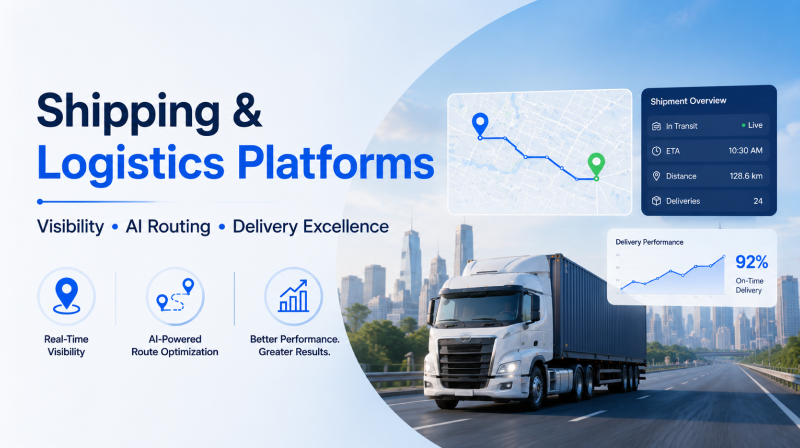
Table of Contents
The logistics industry has undergone a dramatic transformation over the past decade. Customers now expect real-time shipment updates, accurate delivery estimates, and faster order fulfillment regardless of whether they are purchasing consumer goods, medical supplies, industrial equipment, or groceries. At the same time, businesses face increasing pressure to reduce transportation costs, improve fleet utilization, and deliver exceptional customer experiences.
Managing these expectations with spreadsheets, phone calls, and disconnected software is becoming increasingly difficult. As supply chains grow more complex and delivery volumes increase, organizations need a centralized platform that provides end-to-end visibility, intelligent route planning, automated workflows, and actionable insights.
This is where shipping and logistics platforms play a vital role.
A modern shipping and logistics platform helps businesses coordinate shipments, optimize delivery routes, monitor fleet performance, automate dispatch operations, and keep customers informed throughout the delivery journey. Instead of managing logistics through multiple disconnected systems, organizations can oversee transportation operations from a single platform.
Solutions such as nuVizz have expanded this concept further by combining AI-powered route optimization, real-time shipment visibility, delivery orchestration, proof of delivery, customer notifications, and enterprise integrations into one configurable platform. This enables organizations to manage complex delivery networks more efficiently while improving customer satisfaction and operational performance.
Whether you’re managing local deliveries or coordinating nationwide transportation, selecting the right logistics platform can significantly impact delivery speed, operational efficiency, and long-term business growth.
In this blog, you’ll learn:
- What a shipping and logistics platform is
- How shipment visibility improves operations
- The role of AI-powered route optimization
- How logistics platforms enhance delivery performance
- Key features to look for
- Benefits across different industries
- How enterprise platforms like nuVizz compare with other leading solutions
- Best practices for choosing the right platform
A shipping and logistics platform is a software solution that helps businesses plan, execute, monitor, and optimize transportation and delivery operations. It centralizes shipment tracking, route optimization, dispatch management, proof of delivery, customer communication, and analytics into a single platform. By providing real-time visibility and AI-driven decision-making, these platforms help organizations reduce transportation costs, improve on-time deliveries, increase fleet efficiency, and deliver better customer experiences.
What Is a Shipping and Logistics Platform?
A shipping and logistics platform is a centralized software solution that enables organizations to manage the movement of goods from origin to destination. It connects transportation planning, shipment execution, fleet management, driver communication, customer updates, and performance analytics within a unified system.
Unlike standalone tools that handle only one aspect of logistics, such as route planning or shipment tracking, a modern logistics platform integrates multiple operational functions into a single environment. This reduces manual work, minimizes errors, and improves coordination across teams.
For example, when a customer places an order, the platform can automatically:
- Assign the shipment to the most suitable vehicle or carrier
- Generate the most efficient delivery route
- Monitor shipment progress in real time
- Send automated delivery notifications
- Capture digital proof of delivery
- Update operational dashboards with delivery status and performance metrics
This end-to-end approach enables businesses to streamline logistics operations while improving visibility for dispatchers, drivers, customer service teams, and end customers.
Shipping Platform vs. Logistics Platform
Although these terms are often used interchangeably, there are subtle differences:
| Shipping Platform | Logistics Platform |
| Primarily focuses on shipping labels, carrier selection, and parcel management | Covers the entire transportation lifecycle, including planning, routing, dispatch, tracking, delivery, and analytics |
| Often used for parcel shipping | Suitable for enterprise transportation operations |
| Limited operational visibility | End-to-end operational visibility |
| Basic shipment management | Advanced orchestration and optimization capabilities |
For organizations managing large fleets, multiple distribution centers, or complex delivery networks, a comprehensive logistics platform typically offers greater operational value than a shipping-only solution.
Why Traditional Logistics Systems Are No Longer Enough
Many organizations still rely on spreadsheets, emails, phone calls, and legacy software to manage transportation operations. While these methods may work for smaller operations, they often become inefficient as delivery volumes grow.
Common challenges include:
1. Limited Shipment Visibility
Without real-time tracking, dispatchers and customers have limited insight into shipment locations or estimated arrival times. This can lead to increased customer inquiries and reduced confidence in delivery operations.
2. Manual Route Planning
Planning routes manually takes time and may not account for live traffic, delivery priorities, vehicle capacities, or changing conditions. As a result, businesses may experience longer travel times and higher fuel consumption.
3. Communication Gaps
When drivers, dispatchers, warehouses, and customers rely on separate communication channels, important updates can be delayed or missed, leading to operational inefficiencies.
4. Inconsistent Customer Experience
Customers increasingly expect proactive delivery updates, accurate ETAs, and proof of delivery. Manual processes make it difficult to consistently meet these expectations.
5. Limited Data for Decision-Making
Without centralized reporting, organizations may struggle to measure key performance indicators such as on-time delivery rates, fleet utilization, route efficiency, or delivery costs.
As logistics operations become more complex, these challenges can affect profitability, customer satisfaction, and scalability.
Turn fragmented logistics data into real-time supply chain intelligence.
See the Platform8 Core Components of a Modern Shipping and Logistics Platform
Modern logistics platforms combine multiple capabilities into one integrated solution.
1. Transportation Management
Transportation management enables organizations to plan, execute, and monitor shipments across various carriers, fleets, and delivery networks. It provides centralized control over transportation operations while improving efficiency and reducing costs.
2. Real-Time Shipment Visibility
Real-time visibility allows businesses to monitor shipments throughout the delivery journey.
Key capabilities include:
- Live GPS tracking
- Estimated arrival times (ETAs)
- Delay alerts
- Exception management
- Customer shipment tracking portals
Platforms like nuVizz support end-to-end shipment visibility by providing real-time tracking and configurable customer notifications, helping businesses improve transparency and customer communication.
3. AI-Powered Route Optimization
Modern route optimization goes beyond selecting the shortest path. Advanced algorithms evaluate multiple factors simultaneously, including:
- Traffic conditions
- Delivery time windows
- Vehicle capacity
- Driver schedules
- Road restrictions
- Stop priorities
- Fuel efficiency
By continuously optimizing routes, businesses can reduce travel distances, improve on-time delivery performance, and make better use of fleet resources.
4. Dispatch Management
Dispatch management automates the assignment of drivers and vehicles based on operational requirements.
Benefits include:
- Faster scheduling
- Better resource allocation
- Reduced manual effort
- Improved dispatcher productivity
Automated dispatching also enables businesses to respond more quickly to unexpected changes such as urgent deliveries or vehicle breakdowns.
5. Driver Mobile Applications
Mobile applications keep drivers connected throughout the delivery process.
Typical capabilities include:
- Route navigation
- Delivery schedules
- Customer information
- Digital signatures
- Barcode scanning
- Photo capture
- Status updates
- Proof of delivery
These features improve communication between drivers and dispatch teams while reducing paperwork and manual data entry.
6. Proof of Delivery (POD)
Digital proof of delivery confirms that shipments have been successfully completed.
Electronic POD may include:
- Customer signatures
- Delivery photos
- GPS location
- Date and time stamps
- Notes on delivery conditions
Digital records help reduce disputes and improve customer confidence.
7. Customer Communication
Modern logistics platforms automate customer engagement through:
- Delivery confirmations
- Estimated arrival notifications
- Delay alerts
- Completed delivery notifications
- Self-service tracking portals
Proactive communication helps reduce “Where is my order?” (WISMO) inquiries while improving the overall customer experience.
8. Analytics and Reporting
Operational dashboards provide visibility into logistics performance by tracking metrics such as:
- On-time delivery rates
- Fleet utilization
- Delivery costs
- Route efficiency
- Driver productivity
- Failed deliveries
- Customer satisfaction
These insights enable organizations to identify trends, optimize operations, and make data-driven decisions.
Why Enterprise Organizations Need an Integrated Platform
As organizations expand into multiple regions, manage larger fleets, or serve diverse customer segments, disconnected logistics tools often create operational silos. An integrated shipping and logistics platform brings together planning, execution, tracking, and analytics into a single ecosystem, enabling teams to collaborate more effectively and respond quickly to changing conditions.
For enterprises, this integration supports greater scalability, operational consistency, and visibility across the entire delivery network.
Transform delivery operations with smarter routing and real-time optimization. Get StartedHow Real-Time Shipment Visibility Transforms Logistics Operations
Shipment visibility has become one of the most important capabilities in modern logistics. Businesses no longer want to know where a shipment was a few hours ago—they need to know where it is right now, whether it is on schedule, and if any disruptions require immediate action.
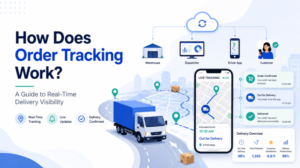
A shipping and logistics platform provides real-time visibility by collecting data from GPS-enabled vehicles, driver mobile applications, IoT devices, telematics systems, and carrier integrations. This information is displayed through centralized dashboards, allowing dispatchers, customer service teams, and operations managers to monitor every shipment from pickup to final delivery.
Instead of reacting to delivery issues after they occur, businesses can proactively identify delays, reroute vehicles, and keep customers informed.
Benefits of Real-Time Shipment Visibility
Real-time visibility helps organizations:
- Track shipments throughout the delivery lifecycle
- Monitor vehicle locations with GPS
- Receive automatic delay and exception alerts
- Improve estimated arrival time (ETA) accuracy
- Reduce “Where is my order?” (WISMO) inquiries
- Enhance customer communication
- Improve dispatcher decision-making
- Increase accountability across transportation operations
For enterprises managing hundreds or thousands of daily deliveries, these capabilities improve operational control while creating a better customer experience.
What Is End-to-End Shipment Visibility?
End-to-end shipment visibility means tracking a shipment across every stage of its journey rather than monitoring only the final delivery.
This typically includes:
| Shipment Stage | Visibility Provided |
| Order Created | Shipment scheduled |
| Warehouse Processing | Picking and packing status |
| Dispatch | Driver assignment |
| In Transit | Live GPS location |
| Delivery Attempts | Success or exception status |
| Proof of Delivery | Signature, photo, timestamp |
| Completed Delivery | Customer confirmation |
Instead of relying on separate systems for each stage, modern logistics platforms consolidate this information into a single interface.
Why Visibility Matters More Than Ever
Customer expectations have changed significantly.
Today’s customers expect:
- Live tracking
- Accurate ETAs
- Delivery notifications
- Fast issue resolution
- Digital proof of delivery
Businesses that cannot provide this level of transparency may experience:
- Increased support calls
- Lower customer satisfaction
- Reduced trust
- Missed delivery commitments
- Higher operational costs
Visibility is no longer a competitive advantage—it’s becoming a standard expectation.
The Role of AI in Shipment Visibility
Artificial intelligence enhances shipment visibility by analyzing operational data in real time.
Rather than simply displaying vehicle locations, AI can help businesses:
- Predict late deliveries
- Recommend alternative routes
- Detect unusual delivery patterns
- Identify recurring bottlenecks
- Forecast estimated arrival times more accurately
- Prioritize high-risk shipments
As more logistics platforms incorporate AI capabilities, businesses can shift from reactive problem-solving to proactive decision-making.
How Route Optimization Improves Delivery Performance
One of the biggest drivers of transportation costs is inefficient routing.
Without optimization, drivers may travel unnecessary miles, experience avoidable delays, or spend excessive time planning delivery sequences.
Modern shipping and logistics platforms use route optimization algorithms to determine the most efficient delivery plan based on multiple operational constraints.
Unlike traditional route planning, AI-powered optimization evaluates hundreds or even thousands of possible route combinations within seconds.
What Is Route Optimization?
Route optimization is the process of determining the most efficient path for one or multiple vehicles while considering operational constraints such as:
- Delivery time windows
- Driver schedules
- Vehicle capacities
- Traffic conditions
- Road restrictions
- Customer priorities
- Service times
- Fuel efficiency
- Multiple depots
- Pickup and delivery combinations
The objective isn’t always the shortest distance—it’s the most efficient route that balances time, cost, and service quality.
Looking to reduce transportation costs while improving last-mile efficiency?
Discover the SolutionBenefits of AI-Powered Route Optimization
Organizations implementing route optimization software often experience improvements in several operational areas.
1. Reduced Fuel Consumption
Optimized routes minimise unnecessary travel distances, reducing fuel usage and vehicle wear.
2. Improved On-Time Delivery
By considering traffic patterns and delivery windows, businesses can increase delivery reliability.
3. Higher Driver Productivity:
Drivers spend less time navigating inefficient routes and more time completing deliveries.
4. Better Fleet Utilization
Vehicles can handle more deliveries within the same operating hours.
5. Faster Dispatch Planning
Instead of manually planning routes, dispatchers can generate optimized schedules in minutes.
6. Lower Transportation Costs
Reduced mileage, fewer overtime hours, and improved asset utilization contribute to lower operating expenses.
Dynamic Routing vs Static Routing
Traditional route planning creates fixed routes before drivers leave the depot.
Modern logistics platforms use dynamic routing, which continuously adjusts routes based on changing conditions.
| Static Routing | Dynamic Routing |
| Fixed routes | Continuously optimized |
| No traffic updates | Real-time traffic adjustments |
| Manual changes | Automated recommendations |
| Limited flexibility | High adaptability |
| Suitable for simple operations | Ideal for complex delivery networks |
Dynamic routing is particularly valuable for same-day delivery, field service operations, grocery distribution, and last-mile logistics.
Delivery Performance: Measuring What Matters
Improving delivery performance requires more than simply completing deliveries on time.
Successful logistics organizations monitor multiple performance indicators to understand operational efficiency.
Common Delivery KPIs
1. On-Time Delivery Rate
Measures the percentage of deliveries completed within the promised delivery window.
Higher on-time delivery rates typically improve customer satisfaction.
2. First Attempt Delivery Success
Tracks how many deliveries are successfully completed during the first delivery attempt.
Reducing repeat deliveries lowers transportation costs and improves fleet efficiency.
3. Average Delivery Time
Measures the time required to complete deliveries from dispatch to customer handoff.
4. Cost Per Delivery
Calculates transportation expenses divided by completed deliveries.
Organizations often use this KPI to identify cost-saving opportunities.
5. Fleet Utilization
Evaluates how effectively vehicles are being used.
Poor utilization may indicate inefficient planning or underused assets.
6. Driver Productivity
Measures deliveries completed per driver, route completion time, and service efficiency.
7. Customer Satisfaction
Delivery quality increasingly influences customer loyalty.
Organizations often measure satisfaction using:
- Customer feedback
- Delivery ratings
- Net Promoter Score (NPS)
- Complaint rates
How Shipping and Logistics Platforms Improve These KPIs
Modern logistics platforms automate many operational processes that directly influence delivery performance.
These include:
- Automated dispatching
- Route optimization
- GPS tracking
- Driver communication
- Proof of delivery
- Exception management
- Predictive ETAs
- Customer notifications
- Operational analytics
Together, these capabilities help reduce delays while improving visibility across the delivery lifecycle.
Improve on-time delivery, fleet utilization, and operational efficiency with data-driven decisions. See How It WorksReal-World Example
Consider a regional distributor operating 150 delivery vehicles across multiple cities.
Before implementing a logistics platform:
- Dispatchers manually assigned routes.
- Customers called frequently to request delivery updates.
- Drivers relied on paper manifests.
- Proof of delivery was collected manually.
- Daily reporting required several hours of administrative work.
After implementing a modern shipping and logistics platform:
- Routes are automatically optimized based on traffic, delivery windows, and vehicle capacity.
- Customers receive automated notifications with estimated arrival times.
- Drivers capture electronic proof of delivery using mobile/tab devices.
- Dispatchers monitor live vehicle locations through centralized dashboards.
- Operational reports are generated automatically.
The result is greater operational visibility, faster decision-making, and a more consistent customer experience.
How nuVizz Supports Modern Logistics Operations
Organizations evaluating enterprise logistics solutions often prioritize platforms that combine transportation management, visibility, and delivery execution within a single ecosystem.
nuVizz is one such platform, designed to support complex logistics operations through configurable workflows and real-time orchestration.
Some publicly documented capabilities include:
- AI-powered route optimization
- Real-time shipment visibility
- Delivery orchestration
- Electronic proof of delivery (ePOD)
- Driver mobile applications
- Customer notifications
- Carrier management
- Transportation analytics
- Enterprise API integrations
- Multi-stop route planning
These capabilities enable organizations to manage transportation operations from planning through final delivery while improving operational transparency.
Business Benefits of Shipping and Logistics Platforms
Investing in a modern shipping and logistics platform goes beyond digitizing transportation operations—it helps organizations improve efficiency, reduce costs, and deliver a better customer experience.
Here are some of the key business benefits:
1. Improved Operational Efficiency
By automating route planning, dispatching, shipment tracking, and delivery updates, logistics teams spend less time on manual tasks and more time managing exceptions and customer needs.
2. Lower Transportation Costs
AI-powered route optimization helps reduce unnecessary mileage, fuel consumption, and overtime by assigning the most efficient routes based on real-time conditions.
3. Better Customer Experience
Customers increasingly expect accurate delivery estimates and real-time updates. Automated notifications, live tracking, and electronic proof of delivery help build trust and reduce customer support inquiries.
4. Increased Fleet Productivity
With optimized routes and intelligent dispatching, drivers can complete more deliveries within the same working hours, improving vehicle utilization and operational performance.
5. Data-Driven Decision Making
Centralized dashboards and analytics provide insights into delivery performance, transportation costs, driver productivity, and customer service metrics, helping organizations make informed business decisions.
Industry Use Cases
Shipping and logistics platforms support a wide range of industries, each with unique transportation requirements.
| Industry | Common Use Cases |
| Retail & E-commerce | Last-mile delivery, customer notifications, returns management |
| Grocery & Food Distribution | Time-sensitive deliveries, route optimization, temperature-sensitive logistics |
| Healthcare & Pharmaceuticals | Compliance, chain of custody, real-time shipment visibility |
| Manufacturing | Supplier deliveries, distribution planning, inventory movement |
| Third-Party Logistics (3PL) | Multi-client transportation management and carrier coordination |
| Field Services | Technician scheduling, route planning, and proof of service |
Choosing the Right Shipping and Logistics Platform
Not every platform is designed for the same operational needs. Before selecting a solution, organizations should evaluate:
- Real-time shipment visibility
- AI-powered route optimization
- Scalability for business growth
- Integration with ERP, WMS, CRM, and existing systems
- Driver mobile applications
- Electronic proof of delivery (ePOD)
- Customer communication capabilities
- Analytics and reporting
- Security and compliance
- Vendor implementation and support
Rather than focusing solely on feature lists, businesses should choose a platform that aligns with their operational complexity, future growth plans, and customer experience goals.
Why Many Enterprises Consider nuVizz
Among enterprise logistics solutions, nuVizz is recognized for its focus on transportation orchestration and last-mile delivery management.
Publicly documented capabilities include:
- AI-powered route optimization
- Real-time shipment visibility
- Delivery orchestration
- Driver mobile applications
- Electronic proof of delivery
- Customer notifications
- Configurable workflows
- API-based integrations
- Analytics and dashboards
- Multi-stop route planning
Organizations with complex delivery operations often evaluate platforms like nuVizz when looking to improve operational visibility, automate transportation workflows, and enhance delivery performance.
Comparing Leading Enterprise Logistics Platforms
Every logistics platform serves different business needs. The best choice depends on existing technology investments, operational complexity, geographic coverage, and business priorities.
| Platform | Typical Strengths | Considerations |
| nuVizz | Transportation orchestration, last-mile delivery, configurable workflows, AI-assisted routing | Well suited for organizations focused on delivery execution and customer experience. |
| Oracle Transportation Management | Enterprise transportation planning and freight management | Strong option for complex global transportation networks. |
| SAP Transportation Management | Deep integration with SAP ERP and supply chain applications | Often preferred by organizations already using SAP solutions. |
| Blue Yonder | End-to-end supply chain planning and execution | Well suited for enterprises focused on broader supply chain transformation. |
| Descartes | Transportation management, customs compliance, logistics network services | Broad portfolio supporting transportation and regulatory requirements. |
| Manhattan Associates | Warehouse management and transportation integration | Strong fit for organizations seeking unified warehouse and transportation operations. |
Note: The information above highlights publicly documented capabilities and common deployment scenarios. Organizations should evaluate platforms based on their specific operational requirements, integration needs, and long-term business objectives.
Future Trends in Shipping and Logistics Platforms
Technology continues to reshape logistics operations. Several trends are influencing how businesses manage transportation and deliveries:
- Artificial Intelligence (AI): Enhancing route optimization, demand forecasting, and exception management.
- Predictive Analytics: Anticipating delays and recommending corrective actions before disruptions occur.
- Internet of Things (IoT): Enabling real-time monitoring of vehicles, assets, and temperature-sensitive shipments.
- Sustainability: Helping reduce fuel consumption, optimize routes, and support environmental initiatives.
- Automation: Streamlining dispatching, customer communications, and reporting to improve efficiency.
Organizations that adopt these technologies are better positioned to improve operational resilience and adapt to changing customer expectations.
Conclusion
Modern shipping and logistics platforms have become essential tools for organizations seeking greater visibility, smarter routing, and improved delivery performance. By bringing together transportation planning, real-time tracking, AI-powered optimization, customer communication, and analytics into a unified platform, businesses can streamline operations while delivering a more reliable customer experience.
Whether you’re managing regional deliveries or enterprise-scale transportation networks, selecting the right platform requires evaluating your operational goals, integration requirements, and future growth plans.
Solutions such as nuVizz demonstrate how enterprise logistics platforms can support complex delivery operations through configurable workflows, real-time visibility, and transportation orchestration. At the same time, organizations should compare multiple platforms to identify the solution that best fits their business needs and existing technology ecosystem.
As customer expectations continue to evolve, businesses that invest in modern logistics technology will be better equipped to improve efficiency, reduce costs, and build more resilient supply chains.
FAQs
A shipping and logistics platform is a software solution that helps businesses manage the movement of goods from origin to destination. It centralizes shipment planning, route optimization, real-time tracking, dispatch management, proof of delivery, and analytics to improve operational efficiency and customer satisfaction.
A shipping platform primarily focuses on carrier selection, shipping labels, and parcel management, while a logistics platform manages the entire transportation lifecycle, including route planning, shipment visibility, dispatching, delivery tracking, proof of delivery, and performance reporting.
Route optimization is the process of determining the most efficient delivery routes by considering factors such as traffic conditions, delivery windows, vehicle capacity, driver schedules, and road restrictions. AI-powered route optimization helps reduce travel time, fuel consumption, and transportation costs.
When evaluating a shipping and logistics platform, consider features such as:
- Real-time shipment visibility
- AI-powered route optimization
- Dispatch management
- Driver mobile applications
- Electronic proof of delivery (ePOD)
- Customer notifications
- Analytics and reporting
- API integrations
- Scalability
- Security and compliance
Shipping and logistics platforms are widely used across industries, including retail, e-commerce, grocery, healthcare, pharmaceuticals, manufacturing, wholesale distribution, third-party logistics (3PL), and field services. Any business that manages transportation or deliveries can benefit from improved visibility and operational efficiency.
Artificial intelligence helps optimize delivery routes, predict delays, improve estimated arrival times, automate dispatch decisions, identify operational bottlenecks, and analyze transportation data to support faster and more informed decision-making.
Electronic Proof of Delivery (ePOD) is a digital confirmation that a shipment has been delivered successfully. It may include customer signatures, photographs, GPS coordinates, timestamps, and delivery notes, helping businesses reduce disputes and improve record accuracy.
nuVizz provides an enterprise delivery orchestration platform that includes AI-powered route optimization, real-time shipment visibility, transportation management, electronic proof of delivery, driver mobile applications, customer notifications, analytics, and configurable workflows. These capabilities help organizations improve delivery efficiency and enhance customer experiences.
nuVizz focuses on transportation orchestration, last-mile delivery management, and configurable workflows for enterprise operations. Other platforms, such as Oracle Transportation Management, SAP Transportation Management, Blue Yonder, Descartes, and Manhattan Associates, offer strengths in areas such as global transportation planning, ERP integration, supply chain planning, customs compliance, or warehouse management. The best choice depends on an organization's operational requirements, existing technology ecosystem, and business objectives.