Blog
Top 5 Last Mile Delivery Challenges
Table of Contents
The final leg of the delivery journey—known as last mile delivery—is the most complex, costly, and customer-facing stage in the entire logistics chain. As e-commerce accelerates and customer expectations rise for same-day and next-day delivery, logistics companies are under growing pressure to optimize the last mile.
According to multiple studies, last mile delivery accounts for over 50% of total logistics costs, and this number continues to climb with urban congestion, fuel price volatility, and higher delivery volumes. To remain competitive, companies must overcome persistent challenges using smart, scalable solutions.
Top 5 last mile delivery challenges
In this blog, we explore the top 5 last mile delivery challenges and offer practical, tech-enabled strategies to solve them.
1. Soaring Last Mile Delivery Costs
Rising delivery expectations are clashing with tight profit margins. The cost of reaching the end customer is higher than ever, especially in urban environments where delivery density is low, fuel prices fluctuate, and inefficiencies pile up.
The Challenge
Delivery in the final mile is resource-heavy. From driver wages and fuel consumption to vehicle maintenance and multiple delivery attempts, the cost of completing a delivery can quickly add up. For businesses without intelligent planning tools, inefficiencies become costly bottlenecks.
Key cost drivers:
● Inefficient routing
● Low drop density (fewer deliveries per trip)
● Idle time in traffic
● Failed or missed deliveries
● Manual dispatch and planning processes
The Solution
To tackle rising costs, companies must automate and optimize their last mile processes using a Last Mile TMS (Transportation Management System). Features such as:
● AI-based route optimization
● Dynamic re-routing based on traffic and weather
● Driver performance analytics
● Automated dispatching and smart scheduling
Can reduce fuel usage, increase delivery density, and improve vehicle utilization.
Curious how big data is transforming last-mile logistics? Discover how data analytics can enhance delivery efficiency and reduce costs in our latest blog. Read the Blog
2. Lack of Real-Time Visibility
Customers today want to know exactly where their order is—and when it will arrive. But traditional logistics operations offer limited insights once the delivery leaves the warehouse, creating a frustrating information gap.
The Challenge
One of the most common customer complaints is not knowing where their package is or when it will arrive. Traditional logistics systems offer limited visibility once the product leaves the warehouse. This creates communication gaps, uncertainty, and trust issues.
The Solution
An advanced Last Mile TMS ensures complete real-time visibility for both customers and logistics teams through:
● Live GPS tracking of delivery vehicles
● Real-time ETA notifications via SMS, email, or mobile app
● Interactive delivery maps for end-users
● Control tower dashboards for managers to track all movement in real time
Providing live status updates reduces customer service calls and enhances the delivery experience, ultimately improving brand loyalty.
Facing delivery challenges in rural areas? Explore how technology is transforming last-mile logistics in remote regions. Read the Blog
3. Failed Deliveries and Inaccurate Time Windows
Nothing frustrates customers more than a missed delivery. Whether it’s due to an incorrect address, poor communication, or unavailable recipients, failed delivery attempts not only increase costs but damage brand reputation.
The Challenge
When deliveries fail—because the recipient isn’t home, the address is wrong, or delivery windows are missed—it leads to higher costs, rescheduling headaches, and customer dissatisfaction.
Common causes include:
● Inflexible delivery windows
● Poor address validation
● No customer communication
● Traffic-related delays
The Solution
Mitigate failed delivery attempts with proactive tools:
● Smart scheduling interfaces that allow customers to select time windows
● Real-time notifications and rescheduling options
● Address validation and geocoding features
● Driver-customer calling or chat support
Looking to make your deliveries greener? Discover how electric vehicles and smart routing can reduce emissions and optimize your last-mile logistics. 👉 Read the Blog
4. Inefficient Route Planning
Manual or outdated route planning methods simply can’t keep up with modern demands. They lead to longer delivery times, missed time windows, higher fuel consumption, and ultimately dissatisfied customers.
The Challenge
Outdated, manual route planning methods are unable to respond to real-time changes in delivery conditions. As a result, delivery drivers may follow suboptimal routes, miss drop-offs, or waste time stuck in traffic.
Symptoms of inefficient routing:
● High fuel usage
● Increased delivery times
● Fewer deliveries per route
● Driver fatigue and turnover
The Solution
Use AI-powered route planning software to:
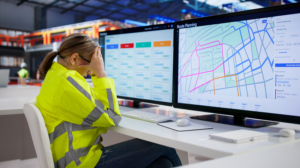
● Create optimized, multi-stop delivery routes in seconds
● Account for traffic, weather, roadblocks, vehicle types, and load constraints
● Dynamically reassign or reroute deliveries on the fly
● Provide drivers with navigation and route guidance via mobile apps
Looking to enhance your fleet’s efficiency? Discover how advanced fleet routing software can reduce delivery delays by up to 30% and optimize your logistics operations. Read the Blog
5. Scaling During Peak Periods
Can your delivery operations handle the holiday rush? Many logistics providers struggle to scale during seasonal peaks or sudden surges in demand, leading to backlogs, delays, and lost revenue opportunities.
The Challenge
Holidays, flash sales, and seasonal events lead to spikes in delivery volume. Businesses not equipped to scale quickly during these periods face:
● Delivery backlogs
● Customer complaints
● Overworked drivers
● Service failures
The Solution
A cloud-based, scalable Last Mile TMS provides the agility required to meet peak demands:
● Auto-assign deliveries to backup or temporary drivers
● Intelligent load balancing across hubs and regions
● Real-time analytics to monitor performance bottlenecks
● Elastic infrastructure that grows with demand
Solving All 5 Challenges with a Single Platform
What if you could tackle all these challenges through one centralized solution?
That’s the promise of a modern Last Mile TMS platform. It offers:
● Complete control and automation of delivery operations
● Intelligent route optimization and real-time visibility
● Scalable infrastructure for any demand
● Insights and analytics for continuous improvement
Solutions like nuVizz’s Last Mile TMS integrate seamlessly with your existing systems, offering everything you need to transform delivery from a problem into a profit center.
Final Thoughts
The challenges of last mile delivery are real—but they’re not insurmountable. By adopting the right technology, businesses can overcome inefficiencies, reduce costs, improve customer satisfaction, and achieve long-term scalability.
Want to experience the benefits of a smart Last Mile TMS firsthand?
Book a free demo with nuVizz today and see how we’re helping logistics leaders transform the way they deliver.

Last mile delivery refers to the final step of the delivery process when a product is transported from a distribution center to the end customer. It is important because it directly affects customer satisfaction, delivery speed, and operational costs.
Last mile delivery is expensive due to multiple factors like fuel costs, driver wages, traffic delays, failed delivery attempts, and inefficient route planning. It also involves high resource allocation for short-distance, low-volume deliveries.
Businesses can reduce last mile delivery costs by using route optimization software, automating dispatching, increasing delivery density, using real-time visibility tools, and adopting a robust Last Mile TMS platform.
Real-time tracking improves last mile delivery by providing live updates to customers, enabling proactive issue resolution, reducing failed deliveries, and improving overall transparency and customer trust.
A Last Mile Transportation Management System (TMS) is software designed to optimize the planning, execution, and tracking of last mile deliveries. It improves efficiency, reduces costs, enhances visibility, and ensures timely deliveries.