Blog
Best Route Planner For Multiple Stops
Key Takeaways
- Optimize multiple-stop routes to reduce mileage, fuel costs, and delivery times.
- Manual route planning becomes inefficient as delivery volumes increase.
- Advanced route planners improve driver productivity and on-time performance.
- Real-time visibility and dynamic routing enhance last-mile delivery operations.
- Enterprise solutions like nuVizz help scale delivery operations with greater efficiency.
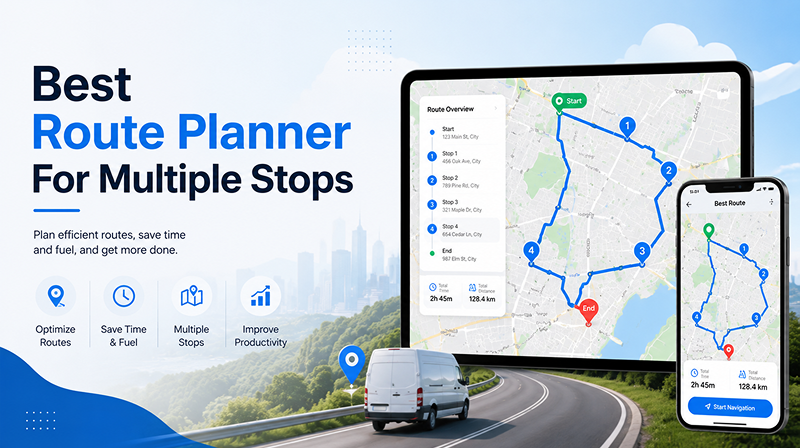
Table of Contents
Efficient route planning has become a critical component of modern logistics and delivery operations. Whether you’re managing local deliveries, field service appointments, retail distribution, or last-mile transportation, manually planning routes with multiple stops can quickly become time-consuming and costly.
As customer expectations for faster deliveries continue to rise, businesses need smarter ways to optimize routes, reduce mileage, improve driver productivity, and ensure on-time service. This is where a route planner for multiple stops becomes essential.
In this blog, we’ll explain how multi-stop route planners work, the benefits they provide, the key features to look for, and the best route planning solutions available in 2026.
What Is a Route Planner for Multiple Stops?
A route planner for multiple stops is software designed to calculate the most efficient sequence of stops along a delivery or service route. Instead of manually arranging destinations, the software automatically determines the optimal order based on factors such as:
- Distance between stops
- Estimated travel time
- Traffic conditions
- Delivery time windows
- Vehicle capacity
- Driver schedules
By analyzing multiple variables simultaneously, route optimization software helps businesses reduce unnecessary travel and maximize operational efficiency.
For organizations managing dozens, hundreds, or even thousands of deliveries daily, automated route planning is no longer a convenience—it’s a competitive necessity.
Why Manual Route Planning No Longer Works
Many businesses still rely on spreadsheets, static maps, or basic navigation apps to create delivery routes. While this approach may work for a small number of stops, it quickly becomes inefficient as operations grow.
1. Increased Fuel Costs
When routes are not optimized, drivers often travel extra miles unnecessarily. Longer routes lead to higher fuel consumption and increased transportation costs.
2. Lower Driver Productivity
Drivers spend more time on the road and less time completing deliveries. Inefficient routes can limit the number of stops completed during a shift.
3. Missed Delivery Windows
Customers increasingly expect accurate delivery estimates and on-time arrivals. Poor route planning can result in delays, missed appointments, and dissatisfied customers.
4. Operational Complexity
As delivery volumes increase, manually planning routes becomes increasingly difficult. Coordinators must account for changing schedules, traffic conditions, driver availability, and customer requirements.
5. Limited Visibility
Without route optimization technology, dispatchers often lack real-time visibility into driver progress and delivery status.
Compare the leading last-mile delivery solutions trusted by businesses to improve speed and visibility.
View the Rankings6 Benefits of Using a Multi-Stop Route Planner
Modern route planning software provides significant advantages for logistics providers, retailers, distributors, and field service organizations.
1. Reduced Transportation Costs
Optimized routes minimize unnecessary mileage and help organizations control fuel expenses, vehicle wear, and operating costs.
2. Improved Delivery Efficiency
Drivers can complete more stops within the same working hours by following optimized routes.
3. Better Customer Experience
Accurate arrival estimates, proactive delivery updates, and on-time service contribute to higher customer satisfaction and retention.
4. Enhanced Driver Performance
Drivers spend less time navigating complex routes and more time focusing on service quality and delivery execution.
5. Increased Scalability
Businesses can efficiently manage growing delivery volumes without significantly increasing planning resources.
6. Smarter Decision-Making
Advanced route planning platforms provide operational insights, performance metrics, and analytics that support continuous improvement.
8 Key Features to Look for in a Route Planner
Not all route planning tools offer the same capabilities. When evaluating solutions, businesses should prioritize features that align with their operational requirements.
1. Multi-Stop Route Optimization
The core functionality of any route planner is its ability to optimize routes with multiple destinations while minimizing distance and travel time.
2. Real-Time Traffic Intelligence
Traffic conditions can significantly impact delivery performance. Route planning software should continuously consider live traffic information and adjust routes when necessary.
3. Dynamic Route Adjustments
Operations rarely go exactly as planned. The ability to dynamically reroute drivers in response to delays, new orders, or disruptions is critical.
4. Delivery Time Window Management
Many businesses operate under strict customer delivery windows. Route planners should optimize routes while ensuring service commitments are met.
5. Driver Mobile Applications
Mobile applications enable drivers to access routes, navigate efficiently, update delivery status, and communicate with dispatchers in real time.
6. Fleet Visibility
Dispatch teams need visibility into vehicle locations, route progress, and delivery performance throughout the day.
7. Proof of Delivery
Electronic proof of delivery (ePOD), including signatures, photos, and delivery confirmations, helps improve accountability and customer confidence.
8. Route Analytics and Reporting
Performance reporting enables organizations to track route efficiency, delivery success rates, mileage, and operational trends.
Compare the leading transportation management systems shaping logistics operations in 2026. View the Best Platforms5 Best Route Planners for Multiple Stops in 2026
Several route planning solutions help businesses optimize routes and improve delivery operations. The right solution depends on the size and complexity of your operation.
1. nuVizz Route Optimization Platform
For organizations managing complex delivery networks, large fleets, and last-mile operations, nuVizz provides advanced route optimization and delivery management capabilities.
The platform combines intelligent route planning, dynamic dispatching, real-time visibility, customer communication, proof of delivery, and transportation management capabilities into a unified solution.
Key capabilities include:
- AI-powered route optimization
- Dynamic route planning
- Real-time fleet visibility
- Delivery tracking and notifications
- Electronic proof of delivery
- Driver performance monitoring
- Last-mile delivery orchestration
- Transportation management integration
Unlike basic route planning tools that focus solely on stop sequencing, nuVizz helps organizations optimize the entire delivery lifecycle.
Best for:
- Enterprise logistics providers
- Retail distribution networks
- Last-mile delivery operations
- Field service organizations
- High-volume delivery fleets
2. RouteXL
RouteXL is a popular route optimization tool that helps users create efficient routes with multiple stops. It is often used by small businesses and independent delivery operators seeking a simple route planning solution.
Best for:
- Small delivery operations
- Independent drivers
- Basic route optimization needs
3. MyRouteOnline
MyRouteOnline provides route planning and route optimization capabilities designed to simplify multi-stop route creation. The platform focuses on helping businesses improve route efficiency while reducing planning time.
Best for:
- Small and medium-sized businesses
- Delivery and service organizations
- Route scheduling needs
4. MapQuest Route Planner
MapQuest offers route planning capabilities for users seeking basic multi-stop route management. Its familiar mapping interface makes it accessible for organizations with straightforward routing requirements.
Best for:
- Basic route planning
- Small route networks
- Individual users
5. Routific
Routific specializes in route optimization for delivery businesses and offers tools designed to improve dispatching efficiency and route performance.
Best for:
- Delivery companies
- Local distribution operations
- Growing logistics businesses
Why Route Optimization Matters for Last-Mile Delivery
The last mile is often the most expensive and operationally challenging segment of the supply chain.
Factors such as traffic congestion, failed deliveries, changing customer expectations, and labor shortages place significant pressure on logistics operations.
Route optimization directly impacts:
- Delivery speed
- Fleet utilization
- Driver productivity
- Customer satisfaction
- Transportation costs
Businesses that leverage advanced route planning technology can improve operational efficiency while delivering a more reliable customer experience.
As delivery volumes continue to grow, route optimization will remain a critical capability for achieving scalable and profitable last-mile operations.
Delivery performance depends on more than just the last mile—understand all three stages of logistics.
Explore the Complete GuideHow to Choose the Right Route Planner
Selecting the best route planner for multiple stops depends on your business requirements.
1. For Small Businesses
Businesses with limited delivery volumes may benefit from simple route planning tools that provide basic route optimization functionality.
2. For Growing Operations
Organizations managing multiple drivers and increasing delivery complexity should look for solutions that offer route optimization, dispatching, and fleet visibility.
3. For Enterprise Logistics Teams
Large-scale delivery operations require advanced platforms that support:
- Dynamic routing
- Real-time visibility
- Customer communications
- Delivery tracking
- Proof of delivery
- Transportation management integration
- Scalability across regions and fleets
The right solution should not only optimize routes but also support broader delivery and logistics objectives.
Conclusion
As delivery operations become more complex, businesses can no longer rely on manual route planning methods. The ability to efficiently manage multiple stops, optimize delivery routes, and adapt to changing conditions is essential for maintaining service quality and controlling costs.
Whether you’re managing a small delivery fleet or a large-scale logistics network, investing in the right route planning solution can significantly improve operational performance.
For organizations seeking a comprehensive platform that goes beyond basic route planning, nuVizz combines route optimization, dispatch management, real-time visibility, proof of delivery, and last-mile delivery orchestration to help businesses build smarter, more efficient delivery operations.
Explore how nuVizz can transform your route planning and last-mile delivery strategy to drive greater efficiency, visibility, and customer satisfaction.
Ready to plan smarter routes? Book a demo and see nuVizz in action.
FAQs
The best route planner depends on your operational requirements. Small businesses may prefer simple routing tools, while enterprise organizations often require advanced route optimization platforms such as nuVizz that support large-scale delivery operations.
Google Maps allows users to add multiple stops to a route, but it does not provide advanced route optimization capabilities designed for complex delivery operations.
Route optimization software uses algorithms to determine the most efficient sequence of stops while considering variables such as distance, travel time, traffic, delivery windows, and vehicle constraints.
Route optimization helps businesses reduce transportation costs, improve driver productivity, increase delivery efficiency, and enhance customer satisfaction.
Multi-stop route planners are valuable for logistics providers, delivery companies, retailers, distributors, field service organizations, healthcare providers, and any business that manages mobile workforces.