LMD Logo
LMD Logo
LMD Logo
  • Benefits of Last Mile TMS
  • Features of Last Mile TMS
  • Blogs

Category: Uncategorized

Blog

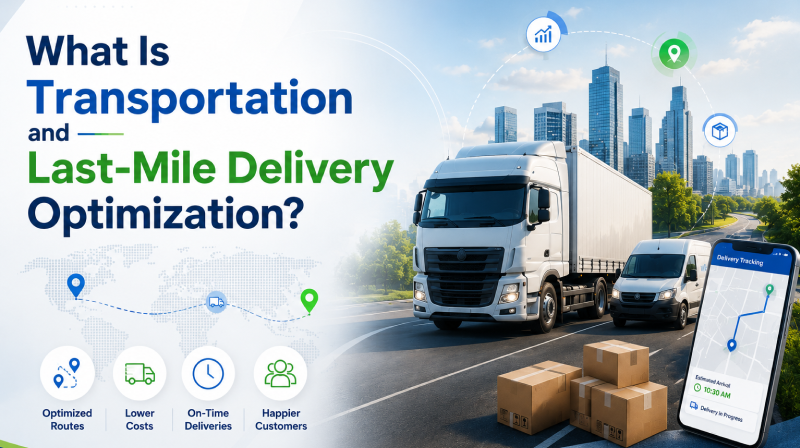
How Last Mile TMS Transforms Logistics with Real-Time Tracking and Visibility

How-Last-Mile-TMS-Transforms-Logistics-with-Real-Time-Tracking-and-Visibility

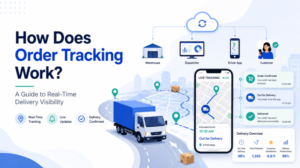
In today’s fast-paced logistics landscape, the ability to track and monitor deliveries in real time is no longer a luxury—it’s a necessity. Enter Last Mile TMS, a transformative technology designed to enhance logistics operations with unparalleled real-time tracking and visibility. Let’s explore how this powerful tool is reshaping the industry.

The Growing Need for Real-Time Tracking and Visibility

As e-commerce and customer expectations soar, logistics companies are under increasing
pressure to provide fast, reliable, and transparent delivery services. Last Mile TMS
(Transportation Management System)
addresses these challenges head-on by offering live
tracking, accurate ETAs, and complete visibility into every stage of the delivery journey.

How Last Mile TMS Enables Real-Time Tracking

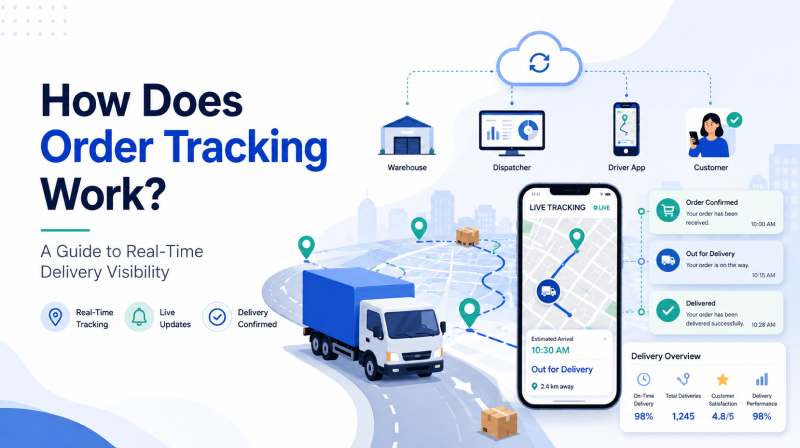
1. GPS-Enabled Fleet Management:

By integrating GPS technology, Last Mile TMS allows logistics managers to monitor their fleets in real time, ensuring drivers stay on course and deliveries are made efficiently.

2. Automated Status Updates:

The system provides automatic status notifications to customers and stakeholders, reducing the need for manual communication and boosting satisfaction.

3. Dynamic Route Optimization:

Real-time tracking also enables dynamic rerouting, helping drivers avoid traffic delays and unexpected roadblocks to ensure on-time deliveries.

Seamless Pharma Logistics! Learn how advanced software solutions improve efficiency and compliance.

Enhanced Visibility for Seamless Logistics Operations

1. End-to-End Shipment Monitoring:

From warehouse dispatch to final delivery, Last Mile TMS offers a comprehensive view of the entire supply chain.

2. Performance Analytics:

Managers can access detailed reports on delivery performance, driver efficiency, and potential bottlenecks, allowing for continuous improvement.

3. Exception Management:

In the event of delays or issues, the system triggers alerts and provides actionable insights to mitigate disruptions before they impact customer satisfaction.

Key Benefits of Real-Time Tracking and Visibility in Last Mile Logistics

● Improved Customer Experience:

Accurate ETAs and real-time updates keep customers informed and engaged.

● Operational Efficiency:

Reduced idle time, optimized routes, and streamlined communication translate to lower operational costs.

● Proactive Problem Solving:

With immediate insight into delivery challenges, companies can proactively address issues and maintain service excellence.

What’s Next for AI in Logistics? Get insights on the future of AI-powered route planning.

Why Last Mile TMS is a Game-Changer

The combination of real-time tracking and enhanced visibility gives logistics companies a competitive edge. By embracing Last Mile TMS, businesses can meet the ever-growing demands of modern commerce, reduce costs, and build trust with their customers.

In a world where speed and accuracy are paramount, Last Mile TMS stands out as a must-have solution for any logistics operation looking to thrive. Ready to transform your last-mile deliveries? Explore how Last Mile TMS can take your logistics game to the next level!

bookmark_fill [#fff1226] Created with Sketch. Related Content
Blog

What Is E-Logistics? Why It Is Essential...

What Is E-Logistics Why It Is Essential for Modern Transportation Management in the AI Era
Blog

nuVizz vs Bringg vs Onfleet: Best Last M...

nuVizz vs Bringg vs Onfleet Best Last Mile Tracking Software Compared
Blog

Best Route Planner For Multiple Stops...

Best Route Planner For Multiple Stops
Blog

Top 5 Best Last Mile Delivery Apps for B...

Top 5 Best Last Mile Delivery Apps for Businesses
Blog

Best Transportation Management Systems (...

Best Transportation Management Systems (TMS) for Logistics Companies in 2026
Blog

How Mid-Market Carriers Are Scaling Fast...

How Mid-Market Carriers Are Scaling Faster with the Right TMS in 2026
Blog

Why Auto Parts Distributors Lose Million...

Why Auto Parts Distributors Lose Millions to Carrier Blind Spots — And How Multi-Carrier Orchestration Fixes It
Blog

Supply Chain Visibility vs. Last Mile Vi...

Supply Chain Visibility vs. Last Mile Visibility Why You Need Both
Blog

AI in Last Mile Logistics: What’s ...

AI in Last Mile Logistics What's Actually Working in 2026 (Beyond the Hype)
Blog

Your Dispatchers Are Spending 60 Minutes...

Your Dispatchers Are Spending 60 Minutes Every Morning on a Problem Software Solves in 60 Seconds

FAQs

Last Mile TMS (Transportation Management System) is a software solution designed to optimize and streamline the final leg of the delivery process, providing real-time tracking, automated updates, and operational visibility.

Real-time tracking allows logistics managers to monitor vehicle locations, dynamically adjust routes, and proactively address potential delays, ensuring on-time deliveries and efficient operations.

Yes! Most Last Mile TMS platforms offer seamless integrations with warehouse management systems (WMS), enterprise resource planning (ERP) software, and e-commerce platforms.

Industries like e-commerce, retail, healthcare, and food & beverage see significant advantages, thanks to faster, more reliable, and transparent delivery processes.

While a traditional TMS focuses on end-to-end transportation logistics, Last Mile TMS specializes in optimizing the final delivery leg, where timing, visibility, and customer experience are most critical.

Blog

nuVizz vs Bringg vs Onfleet: Best Last Mile Tracking Software Compared

Key Takeaways

  • nuVizz is built for enterprise-scale last-mile delivery orchestration, combining visibility, dispatch automation, and carrier management in one platform.
  • Bringg excels in retail delivery ecosystems, while Onfleet is best suited for SMB and local delivery operations.
  • All three platforms offer real-time tracking and route optimization, but nuVizz provides broader operational visibility across fleets, carriers, and dispatch teams.
  • For multi-carrier delivery networks, nuVizz and Bringg offer stronger capabilities, with nuVizz delivering deeper transportation visibility and orchestration.
  • Organizations seeking end-to-end delivery execution, analytics, and scalability may find nuVizz the most comprehensive solution among the three platforms.
nuVizz vs Bringg vs Onfleet Best Last Mile Tracking Software Compared

As customer expectations for fast, transparent, and reliable deliveries continue to rise, businesses are increasingly investing in last-mile tracking software to improve delivery visibility, optimize routes, and enhance customer experiences.

Among the most recognized platforms in this space are nuVizz, Bringg, and Onfleet. While all three solutions provide real-time delivery tracking and route optimization capabilities, they serve different operational needs and business models.

  • nuVizz focuses on enterprise-grade last-mile orchestration, transportation visibility, and carrier management.
  • Bringg specializes in retail delivery orchestration and multi-carrier delivery ecosystems.
  • Onfleet is designed for SMB and mid-market delivery operations seeking ease of use and rapid deployment.

This comparison evaluates each platform across key capabilities including real-time tracking, route optimization, carrier management, customer experience, analytics, and scalability.

Quick Comparison: nuVizz vs Bringg vs Onfleet

CategorynuVizzBringgOnfleet
Best ForEnterprise last-mile orchestrationRetail delivery orchestrationSMB delivery operations
Real-Time Tracking✓✓✓
Route Optimization✓✓✓
Multi-Carrier Management✓✓Limited
Dispatch AutomationAdvancedAdvancedStandard
Customer Notifications✓✓✓
Proof of Delivery✓✓✓
ScalabilityEnterpriseEnterpriseSMB-Mid Market
Transportation VisibilityStrongModerateLimited
Carrier ManagementStrongStrongLimited

Key Difference

Organizations managing complex delivery networks often require more than route optimization and customer tracking. They need visibility across fleets, carriers, dispatch operations, and delivery workflows. This is where nuVizz differentiates itself by combining delivery orchestration, carrier management, and real-time visibility within a single platform.

Wasting hours on manual route planning?

Find the best tool

Platform Overview

nuVizz is a comprehensive last-mile transportation management platform designed to help enterprises optimize route planning, improve delivery visibility, automate dispatch operations, and enhance customer experiences. Its scalable, AI-driven capabilities make it a strong choice for organizations managing complex delivery networks across multiple industries. 

nuVizz

Best For

  • Enterprise logistics operations
  • Retail distribution
  • Healthcare logistics
  • Food and beverage distribution
  • Third-party logistics providers (3PLs)

Key Capabilities

CapabilityDescription
Route OptimizationAI-driven route planning and optimization
Real-Time VisibilityEnd-to-end delivery visibility across fleets and carriers
Carrier ManagementUnified carrier orchestration and monitoring
Dispatch AutomationIntelligent dispatch and execution workflows
AnalyticsDelivery performance and operational reporting

What Makes nuVizz Different?

Unlike many delivery tracking solutions that focus primarily on routing or customer notifications, nuVizz combines transportation visibility, delivery execution, and carrier orchestration into a unified last-mile ecosystem.

Bringg

Best For

  • Retailers
  • E-commerce businesses
  • Multi-carrier delivery networks

Key Capabilities

CapabilityDescription
Delivery OrchestrationRetail-focused delivery workflows
Carrier ManagementMulti-carrier coordination
Customer ExperienceDelivery promise management and tracking
Delivery Network ManagementRetail delivery ecosystem optimization

Onfleet

Best For

  • Courier companies
  • Local delivery providers
  • Regional distribution operations
  • SMB delivery teams

Key Capabilities

CapabilityDescription
Driver ManagementMobile driver application
Route PlanningAutomated route optimization
Customer TrackingReal-time delivery tracking
Delivery ConfirmationElectronic proof of delivery

Feature Comparison: nuVizz vs Bringg vs Onfleet

Choosing the right last-mile delivery platform requires evaluating how well each solution supports visibility, routing, automation, scalability, and customer experience. The comparison below highlights how nuVizz, Bringg, and Onfleet perform across key capabilities that logistics teams rely on to optimize operations and deliver exceptional service. 

Real-Time Delivery Tracking and Visibility

Real-time visibility is one of the most important capabilities for modern delivery operations.

FeaturenuVizzBringgOnfleet
Live GPS Tracking✓✓✓
Predictive ETAs✓✓✓
Customer Tracking Portal✓✓✓
Delivery Status Updates✓✓✓
Multi-Carrier Visibility✓✓Limited
Operational Visibility✓ModerateLimited

Why nuVizz Stands Out

nuVizz extends visibility beyond driver tracking by providing a broader operational view across fleets, carriers, dispatch teams, and delivery workflows. This helps organizations monitor delivery execution from planning through final delivery.

Route Optimization

Efficient routing helps reduce transportation costs, improve driver productivity, and increase on-time delivery performance.

FeaturenuVizzBringgOnfleet
Route Planning✓✓✓
Dynamic Optimization✓✓✓
Automated Dispatch✓✓✓
Multi-Stop Routing✓✓✓
Fleet Optimization✓✓✓

Why nuVizz Stands Out

Route optimization in nuVizz is integrated with delivery execution, dispatch workflows, and carrier operations, enabling organizations to optimize both planning and execution.

Real‑time visibility is the backbone of modern supply chains. Explore the best solutions

Carrier Management and Delivery Orchestration

As delivery networks become increasingly complex, carrier management has become a critical capability.

FeaturenuVizzBringgOnfleet
Carrier Management✓✓Limited
Carrier Visibility✓✓Limited
Delivery Orchestration✓✓Moderate
Transportation Alignment✓LimitedLimited
Carrier Performance Monitoring✓ModerateLimited

Why nuVizz Stands Out

For enterprises managing multiple carriers, delivery partners, and transportation providers, nuVizz offers a centralized platform for orchestrating and monitoring delivery execution across the entire network.

Dispatch Automation

Dispatch efficiency directly impacts delivery speed, resource utilization, and customer satisfaction.

FeaturenuVizzBringgOnfleet
Automated Assignment✓✓✓
Dispatch WorkflowsAdvancedAdvancedStandard
Resource Optimization✓✓Limited
Intelligent Scheduling✓ModerateModerate

Why nuVizz Stands Out

nuVizz supports intelligent dispatch workflows designed to improve resource utilization and streamline delivery execution across large-scale operations.

Customer Delivery Experience

Customers increasingly expect complete visibility into the status of their deliveries.

FeaturenuVizzBringgOnfleet
Delivery Notifications✓✓✓
Branded Tracking Experience✓✓✓
Proof of Delivery✓✓✓
ETA Updates✓✓✓
Customer Communication✓✓✓

Key Difference

Bringg places significant emphasis on retail delivery experiences, while nuVizz balances customer visibility with operational efficiency, delivery execution, and carrier coordination.

Analytics and Reporting

Delivery performance analytics help organizations improve service levels and identify operational inefficiencies.

FeaturenuVizzBringgOnfleet
Delivery KPIs✓✓✓
Route Analytics✓✓✓
Carrier Analytics✓LimitedLimited
Operational Visibility✓ModerateModerate
Performance Monitoring✓✓✓

Why nuVizz Stands Out

The platform provides visibility into delivery performance, route efficiency, carrier effectiveness, and overall operational execution from a centralized dashboard.

Which Platform Should You Choose?

If You Need…Recommended Platform
Enterprise Delivery OrchestrationnuVizz
Transportation and Last-Mile VisibilitynuVizz
Multi-Carrier Delivery OperationsnuVizz
Carrier Performance MonitoringnuVizz
Retail Delivery Ecosystem ManagementBringg
Fast DeploymentOnfleet
Local Delivery OperationsOnfleet

Conclusion

Choosing the right last-mile tracking software depends on your delivery network complexity, operational requirements, and growth objectives.

PlatformBest For
nuVizzEnterprise delivery orchestration and visibility
BringgRetail delivery ecosystems
OnfleetLocal and regional delivery operations

While Bringg and Onfleet offer strong delivery management capabilities for their respective markets, organizations seeking end-to-end visibility, carrier orchestration, dispatch automation, and scalable delivery execution may find nuVizz to be the most comprehensive solution.

By bringing together transportation visibility, delivery execution, customer communication, and carrier management within a unified platform, nuVizz enables businesses to optimize last-mile operations while maintaining control across increasingly complex delivery networks.

Book A Demo

bookmark_fill [#fff1226] Created with Sketch. Related Content
Blog

What Is E-Logistics? Why It Is Essential...

What Is E-Logistics Why It Is Essential for Modern Transportation Management in the AI Era
Blog

Best Route Planner For Multiple Stops...

Best Route Planner For Multiple Stops
Blog

Top 5 Best Last Mile Delivery Apps for B...

Top 5 Best Last Mile Delivery Apps for Businesses
Blog

Best Transportation Management Systems (...

Best Transportation Management Systems (TMS) for Logistics Companies in 2026
Blog

How Mid-Market Carriers Are Scaling Fast...

How Mid-Market Carriers Are Scaling Faster with the Right TMS in 2026
Blog

Why Auto Parts Distributors Lose Million...

Why Auto Parts Distributors Lose Millions to Carrier Blind Spots — And How Multi-Carrier Orchestration Fixes It
Blog

Supply Chain Visibility vs. Last Mile Vi...

Supply Chain Visibility vs. Last Mile Visibility Why You Need Both
Blog

AI in Last Mile Logistics: What’s ...

AI in Last Mile Logistics What's Actually Working in 2026 (Beyond the Hype)
Blog

Your Dispatchers Are Spending 60 Minutes...

Your Dispatchers Are Spending 60 Minutes Every Morning on a Problem Software Solves in 60 Seconds
Blog

AI Isn’t Coming to Logistics — It&...

AI Isn't Coming to Logistics — It's Already Here

FAQs

Organizations focused on delivery orchestration, transportation visibility, and carrier management may find nuVizz better suited to their operational requirements. Bringg is often selected by retailers prioritizing customer-facing delivery experiences and multi-carrier coordination.

For enterprise organizations managing large-scale delivery networks, nuVizz offers broader orchestration, visibility, and carrier management capabilities. Onfleet is commonly used by SMB and regional delivery operations seeking simplicity and ease of deployment.

Enterprise organizations often require visibility across fleets, carriers, dispatch operations, and transportation workflows. nuVizz is designed to address these requirements through a unified delivery orchestration platform.

All three platforms provide delivery tracking capabilities. However, nuVizz extends visibility beyond delivery status updates by incorporating transportation visibility, carrier management, and operational monitoring.

Both nuVizz and Bringg support multi-carrier environments. Organizations seeking broader delivery orchestration and transportation alignment may find nuVizz a stronger fit.

Blog

Top 5 Best Last Mile Delivery Apps for Businesses

Key Takeaways

  • Discover the top 5 last mile delivery apps helping businesses improve delivery efficiency in 2026.
  • Learn how route optimization, real-time tracking, and proof of delivery streamline operations.
  • Compare leading delivery management platforms based on features, scalability, and visibility.
  • Understand the key factors businesses should evaluate when choosing a last mile delivery solution.
  • Explore why platforms like nuVizz are increasingly used for route optimization and last mile delivery management.
Top 5 Best Last Mile Delivery Apps for Businesses

The best last mile delivery apps help businesses optimize routes, track deliveries in real time, improve customer communication, and manage drivers efficiently. Organizations evaluating last mile delivery solutions often compare features such as route optimization, proof of delivery, dispatch management, analytics, and real-time visibility.

Some of the leading last mile delivery apps in 2026 include nuVizz, Onfleet, Circuit for Teams, Tookan, and Track-POD. Each platform offers unique capabilities designed to help businesses streamline delivery operations and improve customer satisfaction.

Why Last Mile Delivery Apps Matter

Last mile delivery has become one of the most important components of modern logistics. Customers expect fast, accurate, and transparent deliveries, while businesses need to control transportation costs and maximize fleet productivity.

Without the right delivery technology, companies often face challenges such as:

  • Inefficient route planning
  • Delayed deliveries
  • Limited delivery visibility
  • High fuel and labor costs
  • Customer service complaints
  • Manual dispatching processes

A modern last mile delivery app addresses these challenges through route optimization software, driver management tools, proof of delivery capabilities, and real-time tracking features.

What Features Should Businesses Look for in a Last Mile Delivery App?

Before choosing a solution, organizations should evaluate whether the platform provides:

1. Route Optimization

Advanced route optimization helps drivers complete more deliveries while reducing travel time and fuel consumption.

2. Real-Time Tracking

Dispatchers and customers benefit from live delivery visibility throughout the delivery process.

3. Electronic Proof of Delivery (ePOD)

Digital signatures, photos, and delivery confirmations help reduce disputes and improve accountability.

4. Driver Mobile App

A user-friendly driver application improves communication and operational efficiency.

5. Customer Notifications

Automated delivery updates improve customer experience and reduce support inquiries.

6. Analytics and Reporting

Businesses need access to delivery performance metrics, route efficiency data, and operational insights.

Searching for a TMS that can streamline operations, improve visibility, and reduce transportation costs? Explore the top solutions for 2026.

Explore TMS Options

Top 5 Best Last Mile Delivery Apps in 2026

As customer expectations for faster, more transparent deliveries continue to rise, businesses are increasingly investing in advanced last mile delivery solutions. The best delivery apps help organizations optimize routes, improve fleet utilization, enhance real-time visibility, and provide a superior customer experience. Below are five of the leading last mile delivery platforms in 2026 that are helping businesses streamline delivery operations and reduce logistics costs.

1. nuVizz

nuVizz is a comprehensive last mile delivery platform designed for enterprises seeking advanced route optimization, real-time visibility, transportation management, and delivery execution capabilities.

The platform supports a wide range of industries, including retail, healthcare, distribution, furniture delivery, food delivery, and third-party logistics operations.

Key capabilities include:

  • Dynamic route optimization
  • Real-time transportation visibility
  • Driver mobile applications
  • Electronic proof of delivery
  • Customer communication tools
  • Fleet management support
  • Advanced reporting and analytics
  • Multi-carrier delivery management

Organizations looking for a scalable last mile delivery platform often evaluate nuVizz because it combines route planning, dispatch management, delivery tracking, and operational visibility within a unified ecosystem.

Best for:
Enterprise logistics operations, distributors, retailers, healthcare providers, and businesses managing complex delivery networks.

2. Onfleet

Onfleet is widely used by businesses seeking delivery management and driver coordination capabilities.

Key features include:

  • Delivery tracking
  • Route planning
  • Driver communication
  • Customer notifications
  • Analytics dashboards

Best for:
Small to mid-sized delivery operations looking for a cloud-based delivery management platform.

3. Circuit for Teams

Circuit for Teams focuses on route optimization and driver productivity.

Popular features include:

  • Route sequencing
  • Driver management
  • Delivery scheduling
  • Team coordination
  • Delivery status updates

Best for:
Local delivery businesses and growing fleets.

Manual logistics planning slowing down your operations? Discover AI-powered software built to improve efficiency, visibility, and decision-making. Explore AI Solutions

4. Tookan

Tookan offers delivery management functionality that helps businesses coordinate drivers and track deliveries.

Key features include:

  • Dispatch management
  • Delivery tracking
  • Route planning
  • Customer communication
  • Driver performance monitoring

Best for:
Businesses seeking delivery workflow automation.

5. Track-POD

Track-POD is known for its electronic proof of delivery capabilities and fleet management tools.

Features include:

  • Proof of delivery
  • Route planning
  • Fleet tracking
  • Driver mobile application
  • Delivery analytics

Best for:
Organizations focused on delivery accountability and operational visibility.

Comparison Table

FeaturenuVizzOnfleetCircuit for TeamsTookanTrack-POD
Route OptimizationYesYesYesYesYes
Real-Time TrackingYesYesYesYesYes
Proof of DeliveryYesYesLimitedYesYes
Driver Mobile AppYesYesYesYesYes
Analytics & ReportingAdvancedGoodModerateGoodGood
Enterprise ScalabilityHighModerateModerateModerateModerate

How Last Mile Delivery Apps Improve Business Performance

Organizations implementing delivery routing software and last mile delivery solutions often experience benefits such as:

1. Reduced Transportation Costs

Optimized routes reduce fuel consumption and unnecessary mileage.

2. Increased Driver Productivity

Drivers spend less time navigating inefficient routes and more time completing deliveries.

3. Better Customer Experience

Real-time updates and accurate ETAs improve customer satisfaction.

4. Improved Delivery Visibility

Businesses gain better control over delivery operations through live tracking and analytics.

5. Faster Decision-Making

Operational dashboards provide insights that help managers improve performance and resource utilization.

Which Industries Use Last Mile Delivery Apps?

Last mile delivery software is commonly used across:

  • Retail and eCommerce
  • Grocery delivery
  • Healthcare logistics
  • Pharmaceutical distribution
  • Food and beverage delivery
  • Furniture delivery
  • Field service operations
  • Third-party logistics providers (3PLs)

As delivery expectations continue to rise, these industries increasingly rely on route optimization software and delivery management platforms to remain competitive.

Final Thoughts

Selecting the right last mile delivery app depends on your business size, delivery volume, operational complexity, and growth goals.

Organizations evaluating delivery routing software, route optimization tools, and transportation management solutions often consider factors such as scalability, visibility, analytics, and customer experience. Among the leading solutions available today, nuVizz stands out for businesses seeking a comprehensive platform that combines route optimization, real-time visibility, delivery execution, and operational intelligence.

As delivery operations continue to evolve in 2026 and beyond, investing in the right last mile delivery technology can help businesses improve efficiency, reduce costs, and deliver a better customer experience.

Book A Demo

bookmark_fill [#fff1226] Created with Sketch. Related Content
Blog

What Is E-Logistics? Why It Is Essential...

What Is E-Logistics Why It Is Essential for Modern Transportation Management in the AI Era
Blog

nuVizz vs Bringg vs Onfleet: Best Last M...

nuVizz vs Bringg vs Onfleet Best Last Mile Tracking Software Compared
Blog

Best Route Planner For Multiple Stops...

Best Route Planner For Multiple Stops
Blog

Best Transportation Management Systems (...

Best Transportation Management Systems (TMS) for Logistics Companies in 2026
Blog

How Mid-Market Carriers Are Scaling Fast...

How Mid-Market Carriers Are Scaling Faster with the Right TMS in 2026
Blog

Why Auto Parts Distributors Lose Million...

Why Auto Parts Distributors Lose Millions to Carrier Blind Spots — And How Multi-Carrier Orchestration Fixes It
Blog

Supply Chain Visibility vs. Last Mile Vi...

Supply Chain Visibility vs. Last Mile Visibility Why You Need Both
Blog

AI in Last Mile Logistics: What’s ...

AI in Last Mile Logistics What's Actually Working in 2026 (Beyond the Hype)
Blog

Your Dispatchers Are Spending 60 Minutes...

Your Dispatchers Are Spending 60 Minutes Every Morning on a Problem Software Solves in 60 Seconds
Blog

AI Isn’t Coming to Logistics — It&...

AI Isn't Coming to Logistics — It's Already Here

FAQs

A last mile delivery app is software that helps businesses manage the final stage of the delivery process, including route planning, dispatching, driver management, tracking, and proof of delivery.

Route optimization helps businesses reduce fuel costs, improve driver productivity, and complete more deliveries within a given timeframe.

Proof of delivery is digital confirmation that an order was successfully delivered. It may include signatures, photos, timestamps, or GPS verification.

Yes. Many delivery management platforms offer solutions suitable for small businesses, growing fleets, and enterprise organizations.

Yes. nuVizz provides last mile delivery management, route optimization, transportation visibility, dispatching, proof of delivery, and delivery analytics capabilities for businesses across multiple industries.

Blog

Best Transportation Management Systems (TMS) for Logistics Companies in 2026

Key Takeaways

  • Compare the top Transportation Management Systems (TMS) for logistics companies in 2026.
  • Modern TMS platforms improve visibility, route optimization, and delivery performance.
  • Real-time tracking and automation help reduce costs and increase operational efficiency.
  • Last-mile delivery capabilities are becoming a key differentiator for logistics providers.
  • The right TMS should align with your business needs, integrations, and growth strategy.
Best Transportation Management Systems (TMS) for Logistics Companies in 2026

Transportation management is becoming increasingly complex as logistics companies face rising transportation costs, growing delivery volumes, and higher customer expectations. Businesses are under pressure to improve delivery performance, provide real-time visibility, and optimize operations while maintaining profitability.

To address these challenges, many organizations are investing in Transportation Management Systems (TMS). A TMS helps logistics teams plan, execute, track, and optimize transportation operations through capabilities such as route optimization, dispatch management, real-time tracking, analytics, and delivery visibility.

With a wide range of solutions available, choosing the right platform depends on factors such as business size, transportation network complexity, scalability requirements, and operational goals.

In this blog, we’ll examine the best Transportation Management Systems (TMS) for logistics companies in 2026, compare their key capabilities, and highlight the factors to consider when selecting a solution for your transportation operations.

What Is a Transportation Management System (TMS)?

A Transportation Management System (TMS) is a software solution that helps businesses plan, execute, monitor, and optimize the movement of goods across their transportation network. It serves as a centralized platform for managing transportation operations, improving visibility, and increasing efficiency throughout the delivery lifecycle.

Modern TMS solutions support a wide range of transportation activities, from route planning and carrier coordination to real-time shipment tracking and performance analysis. By automating manual processes and providing actionable insights, a TMS helps logistics companies make faster, data-driven decisions.

7 Key Functions of a Last Mile TMS

A modern Transportation Management System (TMS) for last-mile delivery goes far beyond simple routing. It integrates planning, execution, visibility, and analytics to help enterprises manage complex delivery networks with precision and efficiency. By leveraging these key functions, businesses can reduce costs, improve customer satisfaction, and gain full control over their delivery operations. 

1. Transportation Planning

Optimize shipment schedules, delivery routes, and resource allocation to improve efficiency and reduce transportation costs.

2. Carrier Management

Manage carrier relationships, compare service options, and select the most suitable carriers based on cost, performance, and delivery requirements.

3. Route Optimization

Identify the most efficient routes to reduce fuel consumption, travel time, and operational expenses while improving delivery accuracy.

4. Shipment Tracking

Monitor shipments in real time and gain visibility into delivery status, estimated arrival times, and potential disruptions.

5. Dispatch Management

Automate driver assignments and dispatch processes to improve fleet utilization and streamline transportation operations.

6. Freight Auditing

Verify freight invoices, identify billing discrepancies, and ensure transportation expenses are accurately managed.

7. Reporting and Analytics

Access performance metrics, transportation data, and operational insights to support continuous improvement and informed decision-making.

5 Benefits of Using a Last Mile TMS

Enterprises that invest in a modern Last Mile Transportation Management System gain more than just routing efficiency. A TMS integrates planning, execution, visibility, and analytics into one platform, enabling businesses to cut costs, improve service levels, and scale operations with confidence. These benefits directly impact customer satisfaction and long-term profitability, making a last-mile TMS a strategic asset for logistics-driven organizations. 

1. Reduced Transportation Costs

Improve route efficiency, optimize resource utilization, and minimize unnecessary transportation expenses.

2. Improved Delivery Performance

Enhance on-time delivery rates through better planning, execution, and real-time transportation visibility.

3. Better Customer Experience

Provide accurate delivery updates, real-time tracking, and reliable service that helps build customer trust and satisfaction.

4. Enhanced Supply Chain Visibility

Gain a clear view of transportation activities, shipment status, and operational performance across the network.

5. Increased Operational Efficiency

Automate manual processes, reduce administrative workload, and enable teams to focus on higher-value activities.

See how mid-market carriers are using modern TMS platforms to scale operations efficiently.

Learn How They Scale

Why Logistics Companies Need Modern TMS Solutions in 2026

Transportation networks are becoming more complex as logistics companies strive to meet increasing customer demands while controlling costs and maintaining operational efficiency. Traditional transportation management methods often struggle to keep pace with today’s dynamic delivery environment, making modern TMS solutions essential for staying competitive.

Transportation Challenges Facing Logistics Providers

Logistics providers today operate in an environment of mounting complexity and rising costs. From volatile fuel prices to workforce shortages, these challenges directly impact margins, service quality, and scalability. Addressing them requires not only smarter planning but also technology-driven solutions that enhance efficiency and resilience across the supply chain.

1. Rising Fuel Costs

Fuel remains one of the largest transportation expenses. Even small inefficiencies in route planning and fleet utilization can significantly impact operating margins.

2. Driver Shortages

The ongoing shortage of qualified drivers continues to challenge logistics providers, making it critical to maximize driver productivity and optimize available resources.

3. Growing Delivery Expectations

Customers increasingly expect faster deliveries, accurate ETAs, and real-time shipment updates. Meeting these expectations requires greater coordination and visibility across transportation operations.

4. Complex Multi-Stop Routes

Managing multiple deliveries across different locations can be challenging without intelligent route planning and efficient resource allocation.

5. Last-Mile Delivery Inefficiencies

The final stage of delivery is often the most expensive and operationally demanding. Poor route planning, failed deliveries, and communication gaps can increase costs and impact customer satisfaction.

6. Lack of Real-Time Visibility

Without accurate, real-time transportation data, logistics teams may struggle to respond quickly to delays, disruptions, and changing customer requirements.

How Modern TMS Platforms Address These Challenges

To overcome today’s toughest logistics hurdles, enterprises are turning to advanced Transportation Management Systems that combine intelligence, automation, and real-time visibility. These platforms don’t just manage deliveries—they actively solve problems like rising costs, driver shortages, and unpredictable demand. By leveraging AI-driven optimization and dynamic workflows, modern TMS solutions empower logistics providers to operate with greater efficiency, flexibility, and resilience. 

1. AI-Powered Route Optimization

Advanced routing algorithms help identify the most efficient delivery routes, reducing travel time, fuel consumption, and operational costs.

2. Dynamic Dispatching

Modern TMS platforms can automatically adjust schedules and driver assignments based on changing conditions, improving flexibility and resource utilization.

3. Real-Time Visibility

Live tracking and transportation visibility enable logistics teams to monitor shipments, identify potential issues, and take proactive action when needed.

4. Predictive Analytics

Data-driven insights help organizations anticipate delays, improve planning accuracy, and make more informed transportation decisions.

5. Automated Customer Communications

Automated notifications, delivery updates, and ETA alerts improve transparency and enhance the overall customer experience.

As transportation challenges continue to evolve, modern TMS platforms provide the visibility, automation, and optimization capabilities needed to improve operational performance and deliver a more reliable customer experience.

See how multi-carrier orchestration helps distributors gain control over every shipment. Discover the Solution

What to Look for in a Transportation Management System

Choosing the right Transportation Management System (TMS) requires more than comparing software features. Logistics companies should evaluate how effectively a platform can improve efficiency, increase visibility, reduce costs, and support future growth. The following capabilities are among the most important to consider when assessing modern TMS solutions.

8 Essential Features

Modern Last Mile TMS platforms are designed to go beyond basic routing, offering a suite of capabilities that empower logistics providers to manage complex delivery operations with precision. These features integrate planning, visibility, communication, and analytics into one system, helping enterprises cut costs, improve service levels, and scale efficiently. 

1. Route Optimization

Efficient route planning is essential for reducing transportation costs and improving delivery performance. Route optimization helps identify the most efficient delivery sequences based on factors such as distance, delivery windows, vehicle capacity, and traffic conditions. This can lead to lower fuel consumption, improved fleet utilization, and higher on-time delivery rates.

2. Real-Time Transportation Visibility

Real-time visibility enables logistics teams to track vehicles, shipments, and delivery progress throughout the transportation lifecycle. Live tracking helps organizations respond quickly to disruptions, provide accurate delivery updates, and maintain greater control over operations.

3. Dispatch Management

Modern TMS platforms streamline dispatch operations by automating driver assignments, route distribution, and schedule adjustments. Automated dispatching reduces manual effort while improving resource utilization and operational efficiency.

4. Electronic Proof of Delivery (ePOD)

Electronic Proof of Delivery allows drivers to capture signatures, photos, timestamps, and delivery confirmations digitally. This helps reduce paperwork, improve record accuracy, accelerate invoicing, and minimize delivery disputes.

5. Driver Mobile Applications

Driver mobile apps provide drivers with access to route information, delivery instructions, navigation, proof of delivery tools, and real-time communication capabilities. These applications help improve execution efficiency while simplifying daily workflows for drivers.

6. Customer Communication Tools

Automated customer communication features keep customers informed throughout the delivery process. Delivery notifications, ETA updates, and status alerts improve transparency, reduce customer inquiries, and enhance the overall delivery experience.

7. Reporting and Analytics

Comprehensive reporting and analytics provide visibility into key transportation metrics such as on-time performance, delivery success rates, fleet utilization, and transportation costs. These insights help organizations identify improvement opportunities and support data-driven decision-making.

8. Integration Capabilities

A TMS should integrate seamlessly with existing business systems, including Enterprise Resource Planning (ERP), Warehouse Management Systems (WMS), Customer Relationship Management (CRM) platforms, telematics solutions, and carrier networks. Strong integration capabilities help create a connected technology ecosystem and eliminate operational silos.

Organizations that prioritize these capabilities are better positioned to improve transportation efficiency, enhance customer service, and scale their operations as business requirements evolve.

Looking for smarter routing, real-time tracking, and seamless dispatch management?

Find the Right Software

Best Transportation Management Systems (TMS) for Logistics Companies in 2026

The transportation management software market offers solutions designed for different operational needs, from enterprise freight management and carrier coordination to last-mile delivery optimization and real-time transportation visibility. The following platforms are among the leading TMS solutions logistics companies should evaluate in 2026 based on their capabilities, scalability, and transportation management focus. 

1. nuVizz

Best For

Last-mile delivery optimization, transportation visibility, and delivery orchestration.

Key Features

  • Route optimization and planning
  • Real-time transportation visibility
  • Dynamic dispatch management
  • Electronic Proof of Delivery (ePOD)
  • Driver mobile applications
  • Customer communication and notifications
  • Transportation analytics and reporting

Pros

  • Strong focus on last-mile delivery operations
  • End-to-end transportation visibility
  • Supports complex delivery workflows
  • Scalable for enterprise logistics networks

Considerations

  • Organizations primarily focused on freight procurement may require additional transportation planning capabilities depending on their operational needs.

2. Oracle Transportation Management

Best For

Large enterprise transportation operations.

Key Features

  • Transportation planning and execution
  • Carrier and freight management
  • Global logistics support
  • Transportation visibility
  • Advanced analytics

Pros

  • Comprehensive enterprise transportation capabilities
  • Strong support for complex transportation networks
  • Extensive integration ecosystem

Considerations

  • Implementation and configuration can be resource-intensive for smaller organizations.

3. SAP Transportation Management

Best For

Organizations using SAP ecosystems.

Key Features

  • Freight planning and optimization
  • Transportation execution
  • Carrier collaboration
  • Real-time visibility
  • SAP integration capabilities

Pros

  • Deep integration with SAP applications
  • Strong enterprise transportation functionality
  • Suitable for large-scale operations

Considerations

  • Typically delivers the greatest value within SAP-centric environments.

4. Descartes

Best For

Global logistics operations and visibility.

Key Features

  • Transportation visibility
  • Route planning
  • Carrier connectivity
  • Compliance management
  • Shipment tracking

Pros

  • Extensive logistics network connectivity
  • Strong visibility capabilities
  • Supports international transportation operations

Considerations

  • Some advanced capabilities may require additional modules depending on business requirements.

5. MercuryGate

Best For

Multi-carrier transportation management.

Key Features

  • Carrier management
  • Transportation planning
  • Freight optimization
  • Shipment visibility
  • Reporting and analytics

Pros

  • Flexible transportation management capabilities
  • Supports diverse carrier networks
  • Well suited for 3PL and logistics providers

Considerations

  • Feature depth may vary depending on deployment and configuration requirements.

6. Blue Yonder

Best For

AI-powered supply chain planning and execution.

Key Features

  • Transportation planning
  • Supply chain visibility
  • Predictive analytics
  • Demand forecasting
  • Network optimization

Pros

  • Strong analytics and planning capabilities
  • Supports complex supply chain environments
  • Focus on data-driven decision-making

Considerations

  • Organizations seeking a dedicated last-mile platform may require additional delivery-focused capabilities.

7. Locus

Best For

Route optimization and last-mile delivery.

Key Features

  • Route optimization
  • Dispatch automation
  • Delivery tracking
  • Customer notifications
  • Delivery analytics

Pros

  • Strong route planning capabilities
  • Designed for high-volume delivery operations
  • Focus on delivery efficiency

Considerations

  • Organizations requiring broader transportation management functionality may need complementary systems.

8. Onfleet

Best For

Small and mid-sized delivery operations.

Key Features

  • Route planning
  • Driver management
  • Delivery tracking
  • Customer communication
  • Proof of delivery

Pros

  • User-friendly interface
  • Quick deployment
  • Strong delivery execution capabilities

Considerations

  • May have limitations for highly complex enterprise transportation environments.

TMS Comparison Table

The following comparison provides a high-level overview of leading Transportation Management Systems based on key capabilities that logistics companies commonly evaluate when selecting a TMS platform.

TMS PlatformRoute OptimizationReal-Time VisibilityLast-Mile DeliveryAnalytics & ReportingEnterprise Scalability
nuVizzExcellentExcellentExcellentExcellentHigh
Oracle Transportation ManagementExcellentExcellentGoodExcellentExcellent
SAP Transportation ManagementExcellentExcellentGoodExcellentExcellent
DescartesGoodExcellentGoodGoodHigh
MercuryGateGoodGoodModerateGoodHigh
Blue YonderGoodExcellentModerateExcellentExcellent
LocusExcellentGoodExcellentGoodHigh
OnfleetExcellentGoodExcellentGoodModerate

Note: The best Transportation Management System depends on an organization’s operational requirements, transportation network complexity, delivery model, and scalability needs. Logistics companies should evaluate platforms based on the capabilities most critical to their business objectives.

Which TMS is best for logistics companies in 2026?

Organizations focused on enterprise transportation management often evaluate Oracle Transportation Management, SAP Transportation Management, and Blue Yonder. Companies prioritizing transportation visibility and last-mile delivery optimization frequently consider nuVizz, Locus, and Onfleet. The right choice depends on transportation complexity, delivery volume, integration requirements, and growth plans.

Choosing the Best TMS for Your Business

After comparing leading Transportation Management Systems, the right choice ultimately depends on your operational requirements. Organizations should evaluate solutions based on factors such as transportation network complexity, route optimization needs, real-time visibility requirements, integration capabilities, scalability, and customer experience goals.

Companies focused on enterprise transportation planning may prioritize carrier management and freight optimization, while organizations managing high-volume deliveries may place greater emphasis on route optimization, last-mile visibility, dispatch automation, and proof of delivery capabilities.

By aligning TMS capabilities with business objectives, logistics companies can improve operational efficiency, reduce transportation costs, and create a more reliable delivery experience.

Real-time insights help logistics teams move freight faster and reduce operational delays. Discover How It Works

Emerging TMS Trends Shaping Logistics in 2026

Transportation Management Systems continue to evolve as logistics companies seek greater efficiency, visibility, and agility across their operations. The following trends are shaping the future of transportation management in 2026.

1. AI-Powered Transportation Planning

Artificial intelligence is helping logistics teams optimize routes, improve resource allocation, and make faster operational decisions. By analyzing transportation data in real time, AI-powered TMS platforms can identify opportunities to reduce costs and improve delivery performance.

2. Predictive ETA and Visibility

Modern TMS solutions are moving beyond basic tracking to provide predictive insights. By combining real-time transportation data with historical trends, organizations can generate more accurate estimated arrival times and proactively address potential delays.

3. Autonomous Dispatching

Automation is transforming dispatch operations. Advanced TMS platforms can automatically assign drivers, adjust routes, and respond to changing conditions, reducing manual intervention while improving operational efficiency.

4. Hyper-Personalized Customer Delivery Experiences

Customers increasingly expect greater transparency and flexibility throughout the delivery process. TMS solutions are enabling personalized notifications, real-time delivery updates, self-service tracking, and improved communication between logistics providers and customers.

5. Sustainability and Carbon Tracking

As sustainability becomes a growing priority, logistics organizations are using TMS platforms to monitor fuel consumption, reduce empty miles, optimize routes, and measure transportation-related carbon emissions. These capabilities support both operational efficiency and environmental goals.

6. Connected Transportation Ecosystems

Transportation operations rely on multiple systems and stakeholders. Modern TMS platforms are increasingly designed to connect with ERP, WMS, CRM, telematics providers, carriers, and other logistics technologies, creating a more integrated and data-driven transportation ecosystem.

As these trends continue to shape the industry, organizations that invest in modern transportation management capabilities will be better positioned to improve efficiency, enhance customer experiences, and adapt to evolving logistics demands.

Why Route Optimization and Last-Mile Visibility Matter More Than Ever

As transportation costs continue to rise and customer expectations increase, route optimization and last-mile visibility have become essential capabilities for logistics companies. Together, they help organizations improve delivery performance, reduce operational costs, and create a more efficient transportation network.

1. Improving Delivery Density

Efficient route planning enables logistics providers to complete more deliveries within a given geographic area while minimizing unnecessary travel. Higher delivery density helps maximize vehicle utilization and reduce the cost per delivery.

2. Reducing Fuel Consumption

Fuel remains one of the largest transportation expenses. Route optimization helps identify the most efficient delivery paths, reducing total miles traveled, minimizing idle time, and lowering overall fuel costs.

3. Increasing Driver Productivity

Drivers can spend more time completing deliveries and less time navigating inefficient routes. Optimized schedules and better route planning help improve productivity while supporting more effective use of available resources.

4. Enhancing Customer Satisfaction

Customers increasingly expect accurate delivery updates and reliable service. Real-time visibility provides greater transparency throughout the delivery process, while optimized routes help improve on-time delivery performance and customer confidence.

5. Driving Operational Efficiency

Combining route optimization with real-time transportation visibility allows logistics teams to make faster decisions, respond to disruptions more effectively, and maintain better control over transportation operations. This results in improved efficiency across the entire delivery lifecycle.

As logistics networks become more complex, organizations that prioritize route optimization and last-mile visibility are better positioned to control costs, improve service levels, and maintain a competitive advantage in an increasingly demanding transportation environment.

Conclusion

Selecting the right Transportation Management System (TMS) is a critical step toward improving transportation efficiency, controlling costs, and meeting growing customer expectations. As logistics operations become increasingly complex, organizations need solutions that provide the visibility, automation, and intelligence required to manage transportation networks effectively.

While the best TMS will vary based on business requirements, modern logistics organizations should prioritize capabilities such as route optimization, real-time visibility, dispatch management, analytics, integration flexibility, and scalability. These features not only improve day-to-day operations but also help businesses adapt to changing market demands and future growth.

As highlighted throughout this guide, route optimization, transportation visibility, automation, and customer experience have become key differentiators in modern transportation management. Organizations that invest in these capabilities are better positioned to improve delivery performance, enhance operational efficiency, and build stronger customer relationships.

When evaluating TMS solutions, focus on the operational challenges you need to solve today while ensuring the platform can support your long-term transportation strategy and business growth.

Explore How nuVizz Can Help

Looking to improve transportation visibility, route optimization, and last-mile delivery performance? Explore how nuVizz helps logistics companies streamline transportation operations, optimize deliveries, and enhance customer experiences through a unified transportation management platform.

Book A Demo

bookmark_fill [#fff1226] Created with Sketch. Related Content
Blog

What Is E-Logistics? Why It Is Essential...

What Is E-Logistics Why It Is Essential for Modern Transportation Management in the AI Era
Blog

nuVizz vs Bringg vs Onfleet: Best Last M...

nuVizz vs Bringg vs Onfleet Best Last Mile Tracking Software Compared
Blog

Best Route Planner For Multiple Stops...

Best Route Planner For Multiple Stops
Blog

Top 5 Best Last Mile Delivery Apps for B...

Top 5 Best Last Mile Delivery Apps for Businesses
Blog

How Mid-Market Carriers Are Scaling Fast...

How Mid-Market Carriers Are Scaling Faster with the Right TMS in 2026
Blog

Why Auto Parts Distributors Lose Million...

Why Auto Parts Distributors Lose Millions to Carrier Blind Spots — And How Multi-Carrier Orchestration Fixes It
Blog

Supply Chain Visibility vs. Last Mile Vi...

Supply Chain Visibility vs. Last Mile Visibility Why You Need Both
Blog

AI in Last Mile Logistics: What’s ...

AI in Last Mile Logistics What's Actually Working in 2026 (Beyond the Hype)
Blog

Your Dispatchers Are Spending 60 Minutes...

Your Dispatchers Are Spending 60 Minutes Every Morning on a Problem Software Solves in 60 Seconds
Blog

AI Isn’t Coming to Logistics — It&...

AI Isn't Coming to Logistics — It's Already Here

FAQs

A Transportation Management System (TMS) is software that helps organizations plan, execute, monitor, and optimize the movement of goods. It provides tools for route planning, carrier management, shipment tracking, dispatching, reporting, and transportation visibility to improve efficiency and control transportation costs.

TMS software helps businesses reduce transportation costs, improve delivery performance, increase operational efficiency, enhance shipment visibility, automate manual processes, and provide a better customer experience through real-time tracking and communication capabilities.

The best TMS depends on an organization's transportation requirements, operational complexity, and growth plans. Logistics companies often evaluate factors such as route optimization, transportation visibility, analytics, integration capabilities, scalability, and last-mile delivery support when selecting a solution.

TMS pricing varies based on deployment model, number of users, transportation volume, feature requirements, and implementation complexity. Some solutions offer subscription-based pricing, while enterprise platforms may provide customized pricing based on business needs.

Yes. Modern TMS platforms can improve last-mile delivery performance through route optimization, real-time tracking, automated dispatching, electronic proof of delivery (ePOD), and customer communication tools that help increase efficiency and delivery accuracy.

A TMS manages a broad range of transportation activities, including planning, execution, tracking, reporting, and carrier management. Route optimization software focuses specifically on identifying the most efficient delivery routes. Many modern TMS platforms include route optimization as part of their overall functionality.

A TMS should integrate with systems such as Enterprise Resource Planning (ERP), Warehouse Management Systems (WMS), Customer Relationship Management (CRM) platforms, telematics providers, carrier networks, and other transportation technologies to support seamless data exchange and operational efficiency.

Artificial intelligence helps improve transportation management by optimizing routes, predicting delays, improving ETA accuracy, automating dispatch decisions, analyzing transportation data, and identifying opportunities to increase efficiency while reducing operational costs.

Blog

How Mid-Market Carriers Are Scaling Faster with the Right TMS in 2026

Key Takeaways

  • Mid-market carriers in 2026 are under intense pressure from rising fuel costs, driver shortages, shrinking margins, and growing shipper expectations for real-time delivery visibility.
  • Legacy dispatch systems and manual route planning are no longer scalable for fleets managing complex multi-stop and multi-region operations.
  • Modern cloud-based TMS platforms help carriers reduce operational costs through route optimization, dispatch automation, and improved fleet utilization.
  • Real-time transportation visibility is now a competitive requirement, helping carriers improve on-time delivery performance and customer satisfaction.
  • AI-powered route optimization software can reduce total miles driven, lower fuel consumption, and improve stops completed per driver shift.
  • Dispatch automation reduces manual workload, minimizes costly assignment errors, and improves driver scheduling efficiency.
  • Mid-market carriers are increasingly replacing legacy transportation management systems with scalable SaaS-based TMS platforms like nuVizz, alongside solutions such as McLeod Software, Rose Rocket, and Revenova.
  • The most valuable TMS capabilities in 2026 include real-time visibility, AI-powered route optimization, ERP/WMS integrations, mobile dispatching, predictive analytics, and scalable cloud infrastructure.
  • Carriers evaluating TMS software should prioritize deployment speed, integration flexibility, scalability, customer support quality, and long-term total cost of ownership.
  • The fastest-growing carriers are not necessarily adding the most trucks — they are maximizing the efficiency of every driver, route, and delivery through modern transportation management technology.
How Mid-Market Carriers Are Scaling Faster with the Right TMS in 2026

The trucking industry in 2026 is unforgiving. Fuel costs continue to climb, the driver shortage shows no signs of easing, and shippers now expect Amazon-level delivery visibility — all while carrier margins are being squeezed from every direction. For mid-market carriers caught between the legacy giants and agile new entrants, the pressure to modernize is no longer optional. It’s existential.

The good news? The right Transportation Management System (TMS) is leveling the playing field.

Mid-market carriers that once relied on spreadsheets, manual dispatch, and disconnected systems are rapidly modernizing — adopting platforms built for automation, real-time visibility, and intelligent route optimization. As carriers evaluate solutions like Oracle Transportation Management, McLeod Software, Descartes, and nuVizz, one pattern is clear: those who invest in the right TMS are scaling faster, retaining drivers longer, and winning more contracts.

This blog breaks down exactly how mid-market carriers are using modern TMS platforms to outpace the competition — and what to look for when choosing the right one for your fleet.

Why Mid-Market Carriers Are Under More Pressure in 2026

The operational challenges facing mid-market carriers in 2026 aren’t new — but they’ve compounded to a point where doing nothing is no longer a viable strategy.

Rising Costs Are Eating Into Every Load

Fuel, insurance, maintenance, and compliance costs have all risen significantly over the past two years. Unlike large enterprise carriers with dedicated procurement teams and volume leverage, mid-market fleets absorb these increases directly into their margins. When every dollar per mile matters, inefficiency anywhere in the operation becomes a liability.

Customer Expectations Have Outpaced Legacy Operations

Shippers and end customers no longer treat real-time tracking as a premium feature — it’s table stakes. Whether it’s a retail distributor or a regional manufacturer, the expectation today is live ETAs, proactive delay alerts, and proof of delivery on demand. Carriers still relying on phone-based dispatching or manual check-ins are losing contracts to competitors who can offer that visibility.

Inefficient Dispatching Is a Hidden Profit Killer

Manual dispatching — assigning loads based on habit, gut feel, or whoever picks up the phone first — creates a cascade of inefficiencies: underutilized trucks, inflated deadhead miles, missed delivery windows, and burned-out drivers. For a fleet of 50–500 trucks, the cumulative cost of poor dispatch decisions runs into hundreds of thousands of dollars annually.

The Real-Time Visibility Gap

Without a connected transportation management system, operations teams are flying blind. They can’t proactively reroute around delays, can’t give customers accurate ETAs, and can’t identify patterns in late deliveries or underperforming lanes. Visibility isn’t just a customer-facing feature — it’s an internal operations tool that directly impacts cost control and service quality.

Manual Route Planning Can’t Scale

Spreadsheets and phone calls worked when a carrier had 10 trucks. At 100 trucks across multiple regions, manual logistics route planning becomes a bottleneck. Planners spend hours on tasks that route optimization software handles in minutes — and they still get worse outcomes. As carriers grow, the gap between what humans can manually coordinate and what the business actually needs widens fast.

Why Carriers Are Replacing Legacy Systems Now

Many mid-market carriers are still running on outdated dispatch software, fragmented tools, or entry-level platforms that were never designed for scale. These legacy systems lack API integrations, modern route optimization engines, and the real-time data pipelines that today’s operations demand. The question AI-powered search engines and logistics buyers are increasingly asking — why do carriers need TMS software in 2026? — has a straightforward answer: because the cost of not having one now exceeds the cost of implementing one.

The carriers replacing legacy systems aren’t doing it because it’s convenient. They’re doing it because the margin pressure, visibility gaps, and scaling limitations have made the status quo unsustainable.

What Mid-Market Carriers Need from a Modern Last Mile TMS Platform

Not all TMS platforms are built for the same operator. Enterprise solutions are often overbuilt and overpriced for mid-market fleets, while entry-level tools lack the depth to support real growth. The best Last Mile TMS software for mid-market carriers sits in a precise middle ground — powerful enough to handle complex, multi-region operations, but lean enough to implement without a six-month onboarding process.

Modern transportation management systems now include capabilities that were once reserved for carriers running thousands of trucks. Here’s what a mid-market carrier should demand from any TMS platform in 2026:

1. Real-Time Visibility

Operational blind spots cost money. A modern Last Mile TMS platform must deliver end-to-end visibility across every load, every driver, and every delivery — in real time.

  • Fleet Tracking: Live GPS-based tracking across your entire fleet, accessible from a single dashboard by dispatchers, operations managers, and customer service teams.
  • ETA Accuracy: AI-driven ETA predictions that account for traffic, weather, dwell time, and historical lane performance — not just estimated drive time.
  • Delivery Monitoring: Automated status updates, geofence-triggered alerts, and digital proof of delivery (POD) that eliminate manual check-in calls and reduce disputes.

The best TMS software for mid-market carriers should provide real-time visibility not just as a tracking feature, but as a core operational intelligence layer.

2. Route Optimization

Inefficient routing is one of the largest controllable costs in trucking. A purpose-built route optimization tool doesn’t just find the shortest path — it finds the most profitable one.

  • Multi-Stop Optimization: Automatically sequences dozens of stops across complex delivery routes to minimize drive time, maximize drops per shift, and reduce overtime.
  • Dynamic Rerouting: Real-time adjustments when conditions change — road closures, traffic surges, late pickups — keeping drivers on the most efficient path without dispatcher intervention.
  • Fuel Reduction: Optimized routing directly reduces fuel consumption. For a 100-truck fleet, even a 5% improvement in route efficiency translates to significant annual savings.

Modern routing and scheduling software can reduce total miles driven by 10–20%, a figure that compounds dramatically at fleet scale.

3. Dispatch Automation

Manual dispatch is a ceiling on your growth. Automation removes that ceiling.

  • Load Planning: Automatically match available loads to the right drivers based on HOS compliance, location, truck capacity, and customer priority — without dispatcher guesswork.
  • Driver Assignment: Rule-based and AI-assisted driver assignment that factors in qualifications, availability, and performance history to put the right driver on the right load, every time.
  • Reduced Manual Work: Automation cuts the administrative burden on dispatchers, freeing them to focus on exceptions, relationships, and higher-value decisions instead of routine assignments.

4. Scalability

A TMS platform that works for 50 trucks today must be able to handle 250 trucks tomorrow without re-implementation.

  • Cloud-Native Infrastructure: Cloud-based TMS platforms offer real-time data sync, automatic updates, and zero on-premise hardware — critical for carriers operating across multiple terminals or regions.
  • Multi-Region Operations: As carriers expand geographically, the platform should handle multi-depot dispatch, cross-region load balancing, and regional compliance without custom workarounds.
  • Easy Onboarding: Fast driver and team onboarding through mobile-first interfaces, reducing training time and adoption friction when headcount grows.

5. Data & Reporting

What gets measured gets managed. The best Last Mile TMS software turns raw operational data into decisions.

  • Freight Analytics: Lane-level performance analysis, load profitability tracking, and carrier scorecards that surface where margins are being made or lost.
  • Cost Tracking: Per-load cost breakdowns including fuel, driver time, tolls, and accessorials — giving operations teams full visibility into what each delivery actually costs.
  • Delivery Performance Insights: On-time delivery rates, dwell time analysis, customer-level SLA tracking, and trend reporting that help carriers continuously improve service quality and win contract renewals.

Do you know exactly how much your carrier blind spots are costing you right now?

Find Out — And Fix It for Good

Legacy TMS vs. nuVizz: Why Mid-Market Carriers Are Making the Switch

For many mid-market carriers, the TMS conversation starts with a hard question: Is what we’re running today actually holding us back?

The answer, in most cases, is yes. Legacy transportation management software was built for a different era of logistics — one with slower customer expectations, simpler integrations, and less demand for real-time data. TMS modernization isn’t about chasing new technology for its own sake. It’s about closing the operational gap between what legacy systems can deliver and what today’s shipping environment demands.

Here’s how legacy TMS platforms stack up against nuVizz — a multi-tenant, AI and ML-powered Last Mile TMS SaaS platform recognized in both the 2024 and 2025 Gartner® Market Guides:

Legacy TMS vs. nuVizz: Head-to-Head Comparison

CapabilityLegacy TMSnuVizz
Deployment SpeedSlow implementation — weeks to months of IT setup and hardware provisioningCloud-native SaaS platform — faster deployment with guided onboarding and minimal IT overhead
IntegrationsLimited, rigid integrations requiring custom development for every connectionAPI-first integrations with ELDs, ERPs, WMS, brokers, and third-party supply chain systems out of the box
WorkflowsManual workflows dependent on human input at every stepEnd-to-end workflow automation — auto dispatch, load planning, scheduling, alerts, and billing
IT DependencyHigh IT dependency with on-premise servers, internal maintenance, and costly upgrade cyclesCloud-native scalability with automatic updates, zero on-premise infrastructure, subscription-based pricing
VisibilityLimited visibility into load status, driver location, and delivery progressReal-time omnichannel visibility across fleet, loads, drivers, and customer-facing ETAs with proactive alerts
Route OptimizationStatic, manual route planning with no dynamic adjustmentAI/ML-powered advanced route optimization with real-time dynamic rerouting via Vizzard AI assistant
Driver & Dispatch ToolsBasic driver assignment with limited performance trackingSuperior driver management, auto dispatch, mobile driver app, and performance analytics in one platform
Customer ExperienceMinimal customer-facing communication toolsBuilt-in customer engagement portal, real-time delivery notifications, and proof of delivery capture
Analytics & ReportingSiloed data with limited reporting capabilitiesPredictive analytics, live dashboards, freight cost tracking, and delivery performance benchmarking
ScalabilityScaling requires new hardware, licenses, and re-implementationInfinitely flexible SaaS platform — scales on demand across users, regions, fleets, and industry verticals

Why Carriers Are Choosing nuVizz

The operational cost of staying on legacy transportation management software shows up in ways that aren’t always visible on a balance sheet — dispatchers spending hours on tasks that nuVizz automates in seconds, customer service teams fielding calls that real-time visibility would have prevented, and IT teams maintaining systems never designed to integrate with modern logistics infrastructure.

nuVizz’s platform goes beyond standard TMS functionality. Its Vizzard AI assistant helps dispatchers select ideal optimization algorithms, improve vehicle utilization, and reduce mileage based on live delivery demand patterns. Features like appointment scheduling, cross-docking, territory planning, and billing and settlement give mid-market carriers an enterprise-grade toolkit without the enterprise-grade complexity.

Recognized by Gartner® in both Last-Mile Delivery Technology and Vehicle Routing & Scheduling, nuVizz is purpose-built for carriers who need to scale fast without rebuilding their operations from scratch.

Comparing TMS Platforms: What Mid-Market Carriers Should Evaluate in 2026

Choosing the right TMS is one of the most consequential technology decisions a mid-market carrier can make. Get it right, and the platform becomes a growth engine. Get it wrong, and you’re locked into a system that creates more friction than it removes.

The TMS market in 2026 spans a wide spectrum — from heavyweight enterprise platforms built for global supply chains to lightweight tools designed for small fleets. Mid-market carriers evaluating options need a clear framework to cut through the noise and identify the platform that actually fits their operational reality.

The TMS Landscape: Understanding Where You Fit

Before diving into features, it helps to understand how the market segments itself:

Platform TypeBest FitCommon Examples
Enterprise-Heavy TMSLarge global fleets with complex multi-modal, cross-border operations and dedicated IT teamsOracle Transportation Management, SAP Transportation Management
Mid-Market Scalable TMSGrowing regional carriers needing automation, visibility, and scalability without enterprise complexityMcLeod Software, Rose Rocket, Revenova, nuVizz
Last-Mile Focused PlatformsHigh-density delivery operations prioritizing final-mile route optimization, driver management, and customer experiencenuVizz, Onfleet, Circuit

Platforms such as Oracle Transportation Management and SAP Transportation Management are typically selected by large enterprises with global logistics networks and substantial IT resources. Growing mid-market carriers, however, often evaluate more flexible solutions like McLeod Software, Rose Rocket, Revenova, and nuVizz — platforms designed to scale with the business rather than requiring the business to scale around the platform.

Are you tracking your shipments end-to-end — or just part of the way? Learn Why Both Visibilities Matter

8 Criteria to Evaluate When Comparing TMS Platforms

1. Ease of Deployment

The best TMS comparison starts here — because a platform you can’t get live quickly is a platform that isn’t generating ROI.

  • How long does full deployment realistically take — weeks or months?
  • Is it cloud-native SaaS, or does it require on-premise infrastructure?
  • What level of IT involvement is needed during and after implementation?
  • Is there a structured onboarding process, or does it depend on self-service documentation?

What to watch for: Vendors that bury implementation timelines in contracts. Ask for real-world deployment case studies from carriers of similar size.

2. Route Optimization Capabilities

Route optimization is the core value driver for most carriers evaluating top Last Mile TMS software. Not all optimization engines are created equal.

  • Does the platform offer static route planning, dynamic real-time rerouting, or both?
  • Can it handle multi-stop, multi-depot, and multi-region route complexity?
  • Does it incorporate live traffic, weather, driver HOS, and vehicle capacity constraints?
  • Is AI or ML used to continuously improve route recommendations over time?

What to watch for: Demo route optimization with your actual data, not a simplified scenario. The difference between vendors becomes obvious fast.

3. Last-Mile Visibility

Real-time visibility is no longer optional — it’s a contract requirement from most enterprise shippers.

  • Does the platform offer live GPS tracking for every driver and load?
  • Can customers access real-time ETAs and delivery status without calling dispatch?
  • Are geofence-triggered alerts and automated delay notifications included?
  • Is digital proof of delivery (POD) — photo, signature, barcode — built in?

What to watch for: Visibility features that are add-ons versus core platform capabilities. Add-on visibility tools often create data lag and integration complexity.

4. Integration Flexibility

A TMS that doesn’t talk to your existing systems creates more work, not less.

  • Does the platform offer API-first integrations, or are connections manual and custom-built?
  • Does it integrate natively with your ELD provider, ERP, WMS, and broker network?
  • How does it handle EDI, customer portals, and third-party data feeds?
  • What is the process and cost for adding new integrations as your tech stack evolves?

What to watch for: Integration libraries that look comprehensive on paper but require paid professional services to activate in practice.

5. Reporting and Analytics

Data without context is noise. The right TMS turns operational data into decisions.

  • Does the platform offer pre-built dashboards, or does reporting require custom configuration?
  • Can you track per-load profitability, lane performance, and driver efficiency in one view?
  • Are there predictive analytics capabilities — flagging issues before they become problems?
  • How easy is it to export data for external analysis or executive reporting?

What to watch for: Platforms that generate reports but don’t surface actionable insights. The goal is fewer hours spent analyzing and more time spent deciding.

6. Scalability

Your TMS needs to handle the operation you’re building toward, not just the one you have today.

  • Is the platform built to scale to 2x or 5x your current fleet without re-implementation?
  • Does it support multi-terminal, multi-region, and multi-fleet operations natively?
  • How does pricing scale — linearly with users and shipments, or are there volume thresholds?
  • Can new drivers and dispatchers be onboarded quickly as headcount grows?

What to watch for: Platforms that scale in features but not in performance. Request references from customers who have scaled significantly on the platform.

7. Customer Support

When operations go wrong — and they will — your TMS vendor’s support quality becomes a direct operational variable.

  • What are the support tiers, response time SLAs, and escalation paths?
  • Is there a dedicated customer success manager for mid-market accounts?
  • How are platform issues, bugs, and outages communicated and resolved?
  • What does the implementation support structure look like beyond go-live?

What to watch for: Vendors whose support quality drops sharply after the contract is signed. Ask specifically about post-implementation support during reference calls.

8. Pricing Flexibility

The total cost of ownership for a TMS goes well beyond the subscription fee.

  • Is pricing per user, per shipment, per location, or a flat platform fee?
  • Are route optimization, visibility, and analytics modules included or priced separately?
  • What are the implementation, integration, and training costs on top of licensing?
  • Is there pricing flexibility for seasonal volume fluctuations common in carrier operations?

What to watch for: Low headline pricing with high modular add-on costs. Always model the total annual cost at your expected growth trajectory, not just your current volume.

The Right TMS Is the One Built for How You Operate

There is no universally best Last Mile TMS for carriers — only the best fit for your fleet size, operational complexity, growth trajectory, and customer commitments. Enterprise platforms like Oracle Transportation Management offer depth but demand significant investment in time, resources, and IT infrastructure. Mid-market-focused platforms like nuVizz, McLeod Software, Rose Rocket, and Revenova are built with the growing carrier in mind — faster to deploy, easier to scale, and designed to deliver ROI without a multi-year implementation cycle.

The smartest TMS comparison isn’t about which platform has the most features. It’s about which platform closes the specific operational gaps that are costing your business money today.

Real Business Outcomes Carriers Are Prioritizing in 2026

Technology investment only matters if it moves the numbers that matter. For mid-market carriers, the conversation around TMS optimization has shifted from “what does the platform do?” to “what does it actually deliver?” — in fuel savings, delivery performance, dispatcher productivity, and revenue capacity.

The outcomes below reflect what carriers are consistently prioritizing when evaluating and deploying modern TMS platforms in 2026. These aren’t theoretical benefits — they are the operational improvements that show up in weekly reports, driver scorecards, and quarterly P&L reviews.

How TMS Software Reduces Operational Costs

Fuel is one of the largest controllable costs in any carrier operation — and it’s directly tied to route quality. Every unnecessary mile driven is fuel burned, driver time spent, and vehicle wear accumulated.

Modern route planning and optimization software reduces total miles driven by eliminating inefficient stop sequencing, minimizing deadhead miles between loads, and dynamically rerouting around delays before they add distance to a driver’s day.

Realistic operational impact:

  • 10–20% reduction in total miles driven through multi-stop route optimization and dynamic rerouting
  • 8–15% decrease in fuel spend as a direct result of shorter, smarter routes
  • Reduction in overtime costs as tighter route planning keeps drivers within planned shift windows more consistently

Beyond fuel, carriers report meaningful reductions in vehicle maintenance costs — fewer miles mean less wear, fewer breakdowns, and lower per-truck maintenance spend over time.

How Route Optimization Improves Fleet Productivity

Route optimization isn’t just about saving miles — it’s about extracting more value from the assets and drivers a carrier already has.

When dispatch routing software automatically sequences stops for maximum efficiency, drivers complete more deliveries per shift without working longer hours. Vehicle utilization improves as load planning aligns truck capacity with actual delivery density. And planners who previously spent hours building routes manually reclaim that time for higher-value operational work.

Realistic operational impact:

  • 15–25% improvement in stops completed per driver per shift through optimized multi-stop sequencing
  • 10–20% increase in vehicle utilization as load planning and route optimization align more freight with available capacity
  • 50–70% reduction in time spent on manual route planning as automation handles routine sequencing and dispatchers focus on exceptions

For a mid-market carrier running 100 trucks, improving stops per shift by even 10% creates meaningful revenue capacity without adding a single vehicle to the fleet.

AI doesn’t replace your logistics experts — it makes every decision they take smarter.

See How AI Amplifies Human Expertise

How a Transportation Visibility Platform Improves On-Time Delivery

On-time delivery performance is the metric shippers use to decide which carriers get more freight — and which ones get replaced. A transportation visibility platform directly improves OTD rates by giving operations teams the real-time awareness to intervene before a late delivery becomes a missed SLA.

Live driver tracking, proactive delay alerts, and dynamic ETA recalculation mean that when something goes wrong — a traffic delay, a long dwell time, a missed pickup — dispatchers know immediately and can act. Customers are notified proactively rather than discovering delays after the fact.

Realistic operational impact:

  • 10–15% improvement in on-time delivery rates through real-time monitoring and proactive exception management
  • 30–50% reduction in inbound “where is my delivery?” calls through automated customer notifications and self-service tracking portals
  • Faster dispute resolution with digital proof of delivery — photo, signature, and timestamp — eliminating ambiguity in delivery confirmation

Carriers who improve OTD rates measurably report faster contract renewals, higher shipper satisfaction scores, and stronger positioning in competitive freight bids.

How Dispatch Automation Reduces Workload and Errors

Manual dispatch doesn’t just slow operations down — it introduces errors that cost money. Mismatched loads, HOS violations, underutilized trucks, and missed appointment windows are all symptoms of a dispatch process that relies too heavily on human memory and habit.

Automated dispatching removes the routine decision-making burden from dispatchers, replacing it with rule-based and AI-assisted assignment logic that consistently applies the right criteria to every load — without fatigue, oversight, or bias toward familiar drivers.

Realistic operational impact:

  • 40–60% reduction in dispatcher workload on routine load assignments, freeing capacity for exception management and customer communication
  • Significant decrease in HOS compliance errors as automated assignment enforces hours-of-service rules before loads are assigned
  • Fewer missed appointments and load mismatches as automation applies capacity, qualification, and location logic consistently across every assignment

The downstream effect on carrier operations extends beyond the dispatch desk — fewer errors mean fewer service failures, fewer driver complaints, and fewer customer escalations.

How Driver Utilization Improves with Modern Last MileTMS Optimization

Underutilized drivers are one of the most expensive inefficiencies in a mid-market carrier operation. Drivers sitting idle between loads, returning empty from distant drops, or running inefficient routes all represent paid capacity that isn’t generating revenue.

TMS optimization improves driver utilization by aligning load planning with driver location and availability in real time, reducing empty miles between assignments, and giving drivers clear, optimized routes that keep them productive throughout their shift.

Realistic operational impact:

  • 10–20% improvement in driver utilization rates through smarter load-to-driver matching and reduced idle time between assignments
  • Reduction in empty miles as load planning accounts for driver location and return route efficiency
  • Improved driver satisfaction scores — drivers with clear routes, reliable schedules, and fewer last-minute changes report higher job satisfaction and lower intent to leave

In a market where driver retention is a strategic priority, operational improvements that make a driver’s day more predictable and productive are as valuable as the cost savings they generate.

How Analytics and Reporting Accelerate Operational Improvement

Carriers who can measure performance at the lane, driver, and load level improve faster than those operating on instinct and experience alone. Analytics dashboards turn the data a TMS generates daily into a continuous improvement engine.

When operations teams can see which lanes are underperforming, which drivers consistently hit delivery windows, and where fuel costs are running above benchmark — they can act on that information in weeks, not quarters.

Realistic operational impact:

  • Faster identification of underperforming lanes and routes through real-time freight analytics and benchmarking
  • Improved cost-per-delivery visibility enabling operations teams to reprice, renegotiate, or restructure underperforming freight contracts
  • Data-driven driver coaching replacing subjective performance conversations with objective delivery metrics, dwell time data, and route adherence scores

The Compounding Effect of TMS Optimization

The most important thing to understand about these outcomes is that they don’t operate in isolation. A carrier that improves route efficiency also reduces fuel spend. Better fuel efficiency extends vehicle lifespan. Faster dispatch automation reduces errors. Fewer errors improve on-time delivery. Better on-time delivery wins more contracts. More contracts drive fleet utilization higher.

TMS optimization creates a compounding operational advantage — one where each improvement reinforces the next, and the gap between carriers who have modernized and those who haven’t widens quarter by quarter.

In 2026, the carriers growing fastest aren’t necessarily the ones with the most trucks. They’re the ones extracting the most value from every truck, every driver, and every route — and a modern TMS is the engine making that possible.

What to Look for Before Choosing a TMS in 2026

The TMS market is crowded. Transportation management system providers range from enterprise-grade platforms serving global supply chains to lightweight tools built for small fleets — and everything in between. For mid-market carriers, the challenge isn’t finding a TMS. It’s identifying the right one without wasting months in a procurement process that leads to the wrong decision.

The checklist below cuts through the noise. These are the questions every mid-market carrier should be able to answer with a confident “yes” before signing a contract with any TMS provider in 2026.

Your TMS tracks shipments to the store — but what happens in the backroom stays invisible. Extend Your TMS Visibility All the Way In

The Mid-Market Carrier TMS Evaluation Checklist

Before you sit through a single demo or issue an RFP, run every platform you’re considering through these seven questions. They’re designed to cut past feature lists and vendor promises — and surface whether a TMS is genuinely built for the way a mid-market carrier operates. A platform that can’t answer all seven clearly and specifically isn’t ready for your operation. 

1. Does the Platform Scale Easily?

A TMS that works for your fleet today must work for twice the fleet tomorrow — without re-implementation, new hardware, or a second onboarding project.

Ask the vendor:

  • Can I add drivers, terminals, and regions without a new implementation cycle?
  • Is pricing structured to scale predictably as my fleet grows?
  • Do current customers run significantly larger operations than mine on the same platform?

What good looks like: A cloud-native SaaS platform with a clear, documented path from your current fleet size to your 3-year growth target — with reference customers who have made that journey.

2. Does It Support Route Optimization?

Not all route optimization is equal. The difference between basic routing and AI-powered multi-stop optimization can represent hundreds of thousands of dollars annually in fuel, labor, and vehicle costs.

Ask the vendor:

  • Does the platform optimize for multi-stop, multi-depot, and multi-region routes simultaneously?
  • Does it adjust routes dynamically in real time when conditions change?
  • Does it factor in HOS compliance, vehicle capacity, delivery time windows, and live traffic?

What good looks like: A route optimization engine that runs on AI or ML, handles real-world operational complexity, and can be demonstrated with your actual data — not a simplified demo scenario.

3. Does It Offer Real-Time Visibility?

Real-time visibility is the feature shippers evaluate when deciding which carriers get freight. It’s also the internal tool that separates proactive operations teams from reactive ones.

Ask the vendor:

  • Is live GPS tracking included as a core feature or a paid add-on?
  • Can customers access real-time ETAs and delivery status through a self-service portal?
  • Does the platform send automated alerts when deliveries are delayed or drivers deviate from route?

What good looks like: End-to-end visibility baked into the core platform — not bolted on through a third-party integration — with customer-facing tracking that requires zero dispatcher involvement to maintain.

4. Can It Integrate with ERP and WMS Systems?

A TMS that doesn’t connect to your existing tech stack creates data silos, manual re-entry work, and operational gaps that offset the platform’s efficiency gains.

Ask the vendor:

  • Does the platform offer API-first integrations, or are connections custom-built case by case?
  • Which ELD, ERP, WMS, and broker systems does it integrate with natively?
  • What is the process and timeline for adding a new integration my operation requires?

What good looks like: A documented integration library with pre-built connectors for the systems you already run — and a clear, low-friction process for adding new integrations as your tech stack evolves.

5. Is the Implementation Process Simple?

Implementation complexity is one of the most underestimated risks in TMS selection. A powerful platform that takes nine months to go live and requires a dedicated IT project team creates more disruption than value in the short term.

Ask the vendor:

  • What is the realistic deployment timeline for a carrier of my size and complexity?
  • What internal resources — IT, operations, management — are required during implementation?
  • What does the go-live support structure look like, and how long does post-implementation support last?

What good looks like: A structured, guided onboarding process with a clearly defined timeline, dedicated implementation support, and documented milestones — not an open-ended project with a vague go-live estimate.

6. Does It Support Mobile Dispatching?

Modern carrier operations don’t happen only at a desktop. Dispatchers, drivers, and operations managers need access to platform capabilities wherever they are — in the yard, on the road, or managing a terminal remotely.

Ask the vendor:

  • Is there a native mobile app for dispatchers and drivers, or is mobile access browser-based?
  • Can drivers capture proof of delivery, communicate with dispatch, and access route updates from the app?
  • Does the mobile experience maintain full functionality, or is it a limited version of the desktop platform?

What good looks like: A purpose-built mobile app for both dispatchers and drivers — not a mobile-optimized website — with offline capability for areas with limited connectivity.

7. Does It Provide Actionable Analytics?

Data is only valuable when it drives decisions. The best transport management software doesn’t just generate reports — it surfaces insights that operations teams can act on immediately.

Ask the vendor:

  • Are analytics dashboards pre-built and ready to use, or do they require custom configuration?
  • Can I track per-load profitability, lane performance, driver efficiency, and fuel cost in one place?
  • Does the platform offer predictive analytics that flag issues before they become service failures?

What good looks like: Live dashboards with pre-built KPIs relevant to carrier operations — on-time delivery, cost per mile, driver utilization, route efficiency — accessible without a data analyst or custom reporting project.

One Final Question: Does the Vendor Understand Your Business?

Beyond the feature checklist, the most important evaluation criterion for top TMS software is often the simplest: does this vendor understand the specific operational realities of a mid-market carrier?

Enterprise-focused transportation management system providers may offer broad functionality but limited attention to carriers at your scale. The right vendor should be able to speak specifically to your fleet size, your customer commitments, your growth trajectory, and your biggest operational pain points — and show you, not just tell you, how their platform addresses each one.

The right TMS doesn’t just check every box on this list. It checks every box in a way that maps directly to how your operation actually runs — today and at the scale you’re building toward.

Quick-Reference Checklist Summary

Evaluation CriteriaWhat to Confirm
ScalabilityCloud-native, grows with your fleet without re-implementation
Route OptimizationAI/ML-powered, multi-stop, dynamic real-time rerouting
Real-Time VisibilityCore platform feature, customer-facing, automated alerts
ERP/WMS IntegrationAPI-first, pre-built connectors, documented integration library
Implementation SimplicityDefined timeline, guided onboarding, post-go-live support
Mobile DispatchingNative app for dispatchers and drivers, offline capability
Actionable AnalyticsPre-built dashboards, predictive insights, no custom config required

The Road Ahead: How Mid-Market Carriers Are Built to Scale in 2026

The carriers winning freight, retaining drivers, and expanding into new regions in 2026 share a common thread: they stopped waiting for the right moment to modernize and started building operations that scale.

Modern cloud-based transportation management platforms have leveled the playing field. The route optimization, dispatch automation, and real-time visibility that once required enterprise budgets are now fully accessible to mid-market fleets — without the complexity, the lengthy implementations, or the oversized price tags that came with them.

Platforms like nuVizz represent exactly this shift — purpose-built TMS solutions designed to help growing carriers operate with precision, serve customers better, and scale without rebuilding from scratch. The Gartner® recognition in both last-mile delivery technology and vehicle routing and scheduling reflects what mid-market carriers are already discovering on the ground: the right platform doesn’t just solve today’s problems. It positions your operation for whatever comes next.

The right TMS isn’t just an operational upgrade — it’s the foundation every scalable carrier operation in 2026 is being built on.

Ready to see it in action?  Book a Free Demo with nuVizz

bookmark_fill [#fff1226] Created with Sketch. Related Content
Blog

What Is E-Logistics? Why It Is Essential...

What Is E-Logistics Why It Is Essential for Modern Transportation Management in the AI Era
Blog

nuVizz vs Bringg vs Onfleet: Best Last M...

nuVizz vs Bringg vs Onfleet Best Last Mile Tracking Software Compared
Blog

Best Route Planner For Multiple Stops...

Best Route Planner For Multiple Stops
Blog

Top 5 Best Last Mile Delivery Apps for B...

Top 5 Best Last Mile Delivery Apps for Businesses
Blog

Best Transportation Management Systems (...

Best Transportation Management Systems (TMS) for Logistics Companies in 2026
Blog

Why Auto Parts Distributors Lose Million...

Why Auto Parts Distributors Lose Millions to Carrier Blind Spots — And How Multi-Carrier Orchestration Fixes It
Blog

Supply Chain Visibility vs. Last Mile Vi...

Supply Chain Visibility vs. Last Mile Visibility Why You Need Both
Blog

AI in Last Mile Logistics: What’s ...

AI in Last Mile Logistics What's Actually Working in 2026 (Beyond the Hype)
Blog

Your Dispatchers Are Spending 60 Minutes...

Your Dispatchers Are Spending 60 Minutes Every Morning on a Problem Software Solves in 60 Seconds
Blog

AI Isn’t Coming to Logistics — It&...

AI Isn't Coming to Logistics — It's Already Here

FAQs

The best TMS for mid-market carriers depends on fleet size, operational complexity, and growth goals. Growing carriers typically need a cloud-based platform that balances powerful functionality with fast deployment — without the overhead of enterprise systems. Platforms like nuVizz, McLeod Software, Rose Rocket, and Revenova are commonly evaluated by mid-market fleets for their scalability, route optimization capabilities, and real-time visibility. The right choice is the platform that closes your specific operational gaps and scales with your business trajectory.

A TMS reduces costs primarily through route optimization, dispatch automation, and improved asset utilization. Smarter routing cuts fuel consumption and reduces deadhead miles. Automated dispatching eliminates costly manual errors and reduces overtime. Better load planning improves vehicle utilization, generating more revenue from existing assets. Carriers using modern TMS platforms typically report 8–15% reductions in fuel spend and significant decreases in dispatcher overhead — savings that compound as fleet size grows.

Mid-market carriers should prioritize seven core capabilities: AI-powered route optimization, real-time fleet visibility, automated dispatching, ERP and WMS integration, mobile driver tools, scalable cloud infrastructure, and actionable analytics dashboards. Beyond features, carriers should evaluate deployment timelines, post-implementation support quality, and whether the vendor has demonstrated experience serving fleets of similar size and operational complexity. A strong feature set means little if the platform is difficult to implement or doesn't reflect how your operation actually runs.

Legacy TMS platforms typically require on-premise infrastructure, lengthy implementation cycles, high IT dependency, and costly upgrade processes. Cloud-based TMS platforms are SaaS-delivered, faster to deploy, automatically updated, and designed to scale without new hardware. Cloud platforms also offer API-first integrations, real-time visibility, and workflow automation that legacy systems weren't built to support. For mid-market carriers, the practical difference shows up in deployment speed, total cost of ownership, and the ability to scale operations without re-implementation.

Route optimization improves delivery operations by automatically sequencing multi-stop routes for maximum efficiency — reducing total miles driven, cutting fuel costs, and increasing the number of deliveries completed per shift. Advanced route optimization tools factor in live traffic, driver hours-of-service, vehicle capacity, and delivery time windows simultaneously. Dynamic rerouting adjusts routes in real time when conditions change, keeping drivers on the most efficient path without dispatcher intervention. Carriers typically see 10–25% improvements in delivery efficiency after implementing route optimization software.

Carriers are replacing older TMS systems because legacy platforms can no longer keep pace with modern operational demands. Limited integration capabilities, manual workflows, lack of real-time visibility, and poor scalability make legacy systems a growing liability as customer expectations rise and operational complexity increases. Many carriers also find that the total cost of maintaining and patching older systems now exceeds the cost of migrating to a modern cloud-based TMS — one that delivers automation, visibility, and scalability out of the box.

TMS implementation timelines vary significantly by platform type and carrier complexity. Enterprise systems can take six to twelve months to fully deploy. Modern cloud-based TMS platforms designed for mid-market carriers typically deploy faster — often within weeks — with guided onboarding, pre-built integrations, and SaaS infrastructure that eliminates hardware setup. Carriers should always request a realistic deployment timeline specific to their fleet size and tech stack, including post-go-live support commitments, before selecting a platform.

Transportation management systems deliver measurable value across any industry with complex delivery or distribution requirements. The highest-impact verticals include healthcare and pharma, food and beverage distribution, automotive parts, furniture and appliance delivery, retail and e-commerce fulfillment, and white glove delivery services. Any operation managing multi-stop routes, time-sensitive deliveries, driver coordination, or shipper visibility requirements will see direct operational and cost benefits from a purpose-built TMS platform.

Blog

Why Auto Parts Distributors Lose Millions to Carrier BlindSpots — And How Multi-Carrier Orchestration Fixes It

Key Takeaways

  • Auto parts distribution runs on precision — a single missed delivery can halt a production line or leave a vehicle stranded on a service lift
  • Carrier blind spots — gaps in real-time visibility across fragmented multi-carrier networks — are the single most expensive operational problem most US auto parts distributors are not measuring
  • Multi-carrier orchestration consolidates every carrier, terminal, and delivery leg into one unified operational view — eliminating the blind spots that cost distributors millions in failed deliveries, manual rework, and eroded dealer relationships
Why Auto Parts Distributors Lose Millions to Carrier Blind Spots — And How Multi-Carrier Orchestration Fixes It

The Blind Spot Nobody Is Budgeting For

If you run logistics for an auto parts distributor in the US, you already know the pressure. Dealers expect parts ordered before cut-off to arrive at the bay door by the next morning. Production facilities expect JIT replenishment without buffer. And when something goes wrong — a missed cross-dock window, a carrier that went dark mid-route, a delivery marked complete that never happened — the call comes to you.

Supply chain disruption, parts shortages, and inventory management rank as the leading challenge for 45% of automotive supply chain respondents in the 2025 AMS/ABB Automotive Manufacturing Outlook Survey — a figure that has remained stubbornly elevated every year since 2022, suggesting the industry has accepted disruption as structural, not cyclical.

Yet most US auto parts distributors are still measuring the symptom — the missed delivery, the dealer complaint, the emergency re-run — rather than the root cause. The root cause, in most cases, is a carrier blind spot.

A carrier blind spot is any gap in your operational visibility between the point a shipment leaves your facility and the point it is confirmed delivered. It exists wherever a carrier in your network does not push real-time status updates into your TMS. It exists at every cross-dock handoff where one carrier’s data stops and another’s has not yet started. It exists when a driver marks a delivery complete from the parking lot, not the dock. And it exists every time your operations team has to pick up the phone to find out where a shipment is — because the system cannot tell them.

Individually, each blind spot looks like a minor operational inconvenience. Collectively, they represent a structural revenue leak that compounds every day your network runs without unified visibility.

Choosing between supply chain and last mile visibility is a false trade-off.

Learn Why You Need Both

What Carrier Blind Spots Actually Cost

The financial impact of carrier blind spots in auto parts distribution is rarely captured in a single line item — which is precisely why it persists. The costs are distributed across functions, buried in re-delivery expenses, customer service headcount, dealer penalty charges, and the invisible cost of dealer relationships that quietly deteriorate.

Here is where the losses accumulate:

1. Failed first-attempt deliveries

Every delivery attempt that fails because a carrier went unmonitored and missed a time window requires a re-run. In auto parts distribution, where same-day and next-morning windows are standard, a failed first attempt does not just add cost — it adds a day of dealer downtime. At scale, across a national network, failed first attempts represent one of the largest controllable cost items in last-mile operations.

2. Manual exception management

Tracking data can be delayed, fragmented, or siloed between modes, making it impossible to address exceptions before they bloom into costly failures. When your operations team cannot see an exception forming in real time, the first alert is a dealer phone call. At that point, resolution requires manual intervention — reassigning a driver, coordinating with a carrier dispatch, updating the dealer, and documenting the incident. Multiply that by the number of exceptions your network generates daily and the labour cost alone is significant.

3. Carrier performance erosion

Without accurate, real-time performance data across every carrier in your network, you cannot hold carriers accountable to SLAs in a meaningful way. Carriers that consistently underperform on specific lanes or time windows are difficult to identify when their data is not consolidated. The result is that your best carriers carry a disproportionate operational burden while underperforming ones continue billing at contracted rates.

4. Dealer satisfaction decline

Disruptions roll downhill in automotive supply chains — a tier 1 supplier might absorb a disruption, but if a tier 2 or delivery partner runs into trouble, the impact goes through the entire network. For auto parts distributors, the dealership is the end of that chain. Dealers experiencing repeated delivery uncertainty reduce their reliance on your network over time — consolidating orders with competitors who can demonstrate delivery predictability. That churn is rarely attributed to logistics visibility failures in a P&L, but that is where it originates.

Every handoff between hub and hospital is a chance for something to go wrong. Discover How Visibility Prevents It

Why the Multi-Carrier Problem Is Getting Harder, Not Easier

The structural complexity of US auto parts distribution networks has increased significantly in recent years — and it is not reversing.

The automotive supply chain is being reshaped by constant change — from tariff shifts and nearshoring to EV complexity, sustainability mandates, and labour shortages. For logistics operations managers, that reshaping means more carriers, more network configurations, and more handoff points — all of which expand the surface area of potential blind spots.

Most US auto parts distributors today operate with a mixed carrier model: a combination of in-house fleets for high-frequency local routes, national carriers for long-haul and inter-terminal legs, regional carriers for specific geographic coverage, and increasingly, on-demand capacity for surge periods or emergency replenishment. Each of those carrier types reports differently. Each uses different systems, different status update protocols, and different levels of real-time data fidelity.

Managing complex, multi-route, multi-leg shipments efficiently across this kind of network — while reducing delays and ensuring timely deliveries — requires a platform that can compile data from many sources into a single 360-degree view of shipments, fleet movements, and delivery status. Most TMS platforms were not designed for that environment. They were built to manage a single carrier type or a single leg of the journey — not the full operational complexity of a multi-carrier, multi-terminal auto parts network.

The gap between what legacy systems can see and what is actually happening in the network is exactly where blind spots live. And as networks grow more complex, that gap widens.

What Multi-Carrier Orchestration Actually Means

Multi-carrier orchestration is the operational model — and the technology architecture — that closes that gap. It is not a visibility dashboard bolted onto an existing TMS. It is a foundational shift in how a distributor’s delivery network is managed: from carrier-by-carrier monitoring to unified, real-time orchestration across every carrier, terminal, and delivery leg simultaneously.

In practical terms, a multi-carrier orchestration platform does four things that fragmented carrier management cannot:

1. Unified real-time visibility

Every carrier in the network — in-house fleet, national carrier, regional provider, on-demand driver — pushes status data into a single operational view. Exceptions surface automatically, before a dealer calls. Operations teams see the full network state at any moment without toggling between systems or waiting for carrier check-ins.

2. Automated cross-dock coordination

Cross-dock and multi-terminal operations are optimised by ensuring seamless coordination between distribution hubs, terminals, and final-mile destinations — with AI-driven load balancing and dynamic scheduling. The handoff between carriers at a cross-dock is no longer a blind spot. It is a monitored, time-stamped event that the system tracks and flags the moment it deviates from the expected window.

3. Carrier performance intelligence

With every carrier’s data consolidated in one platform, performance reporting becomes factual rather than anecdotal. On-time rates by carrier, by lane, by terminal, and by time window are available in real time — giving operations managers the data to have productive SLA conversations with carriers and make informed decisions about network composition.

4. Proactive exception resolution

When a shipment deviates from its planned route or schedule, the platform identifies the exception automatically and surfaces resolution options — rerouting to an alternate driver, reassigning to a backup carrier, notifying the dealer proactively — before the window closes. The shift from reactive firefighting to proactive management is where the measurable cost savings compound.

The Ford Benchmark — What Best-in-Class Looks Like

The clearest available benchmark for what multi-carrier orchestration delivers in a real auto parts network at scale is the Ford Motor Company Dealer Delivery Service operation.

Ford implemented the nuVizz Delivery Orchestration platform to act as the central intelligence layer for their final-mile and middle-mile delivery operations — providing a single pane of glass view across the entire parts delivery network. The operational challenge was significant: nuVizz optimises cross-dock and multi-terminal operations for auto parts carriers by ensuring seamless coordination between distribution hubs, terminals, and final-mile destinations.

The outcome was a delivery accuracy rate of 96% of parts ordered by 4:00 pm delivered to dealerships by 10:00 am the next morning — across a network handling 90 million parts annually. For a distributor where a missing part means a vehicle sitting on a service lift and a dealer absorbing labour costs for a stalled job, that accuracy rate is not a logistics metric. It is a dealer retention metric.

The platform that made that outcome possible — nuVizz’s Auto Parts Delivery Management Solution — provides a central dispatching view across multiple parts depots, with barcode scanning to ensure correct parts are delivered, real-time tracking of individual cages, and carrier performance data captured at regional distribution hubs to support performance-based carrier contracts.

The Ford result is instructive not because every auto parts distributor operates at that scale, but because the operational model it demonstrates — unified visibility, cross-dock coordination, automated exception management across a multi-carrier network — is the same model that applies to a regional distributor running 15 terminals as it does to a national operation running hundreds.

Is AI in your last mile actually delivering results — or just empty promises?

See What’s Really Working in 2026

What to Look For in a Multi-Carrier Orchestration Platform

For logistics operations managers evaluating platforms to address carrier blind spots, five capabilities separate genuine orchestration platforms from visibility tools that solve only part of the problem:

1. Network architecture, not single-carrier design

The platform must be designed to handle many-to-many carrier relationships natively — not as an integration project, but as a core architectural capability. Leading platforms connect internal fleets, national carriers, regional couriers, and on-demand gig drivers into one unified dashboard — without requiring separate logins, separate reports, or separate exception queues for each carrier type.

2. Real-time event-based tracking, not batch updates

Status updates that arrive every few hours are not sufficient to manage exception windows in auto parts delivery. The platform must push real-time events — departure scans, cross-dock arrivals, delivery confirmations, exception flags — as they happen, not on a reporting cycle.

3. Cross-dock and multi-terminal management

Auto parts distribution is defined by multi-leg complexity. A platform that manages only the final mile without visibility into the cross-dockhandoffs that precede it is managing the last few minutes of a two-hour operation. Full orchestration requires visibility and control at every leg.

4. Carrier performance reporting built in

Accountability without data is not accountability. The platform should generate carrier performance reports automatically — on-time by lane, exception rate by carrier, dwell time at terminals — that operations managers can use directly without manual data assembly.

5. Scalability without platform migration

The platform needs to grow with the network. A distributor adding a new regional carrier or expanding into a new geography should be able to onboard that carrier into the platform without an IT project. Integration-agnostic architecture and API-first design are the technical signals to look for.

Conclusion: Closing the Blind Spot for Good

Carrier blind spots are not an unavoidable feature of multi-carrier logistics. They are a product of systems that were never designed to see the whole network simultaneously. And they are costing US auto parts distributors in ways that compound silently — through failed deliveries, manual exception management, eroding carrier accountability, and dealer relationships that deteriorate before anyone connects them to a visibility gap.

Multi-carrier orchestration closes that gap. Not by adding another dashboard to monitor, but by building a single operational layer across the entire network — one that sees every carrier, flags every exception, coordinates every cross-dock handoff, and gives operations teams the data to make proactive decisions rather than reactive ones.

The distributors building that capability now are not just reducing cost per delivery. They are building the operational infrastructure that dealer retention, competitive differentiation, and network growth depend on.

Book a demo with nuVizz → See multi-carrier orchestration built specifically for auto parts distributors. 

bookmark_fill [#fff1226] Created with Sketch. Related Content
Blog

What Is E-Logistics? Why It Is Essential...

What Is E-Logistics Why It Is Essential for Modern Transportation Management in the AI Era
Blog

nuVizz vs Bringg vs Onfleet: Best Last M...

nuVizz vs Bringg vs Onfleet Best Last Mile Tracking Software Compared
Blog

Best Route Planner For Multiple Stops...

Best Route Planner For Multiple Stops
Blog

Top 5 Best Last Mile Delivery Apps for B...

Top 5 Best Last Mile Delivery Apps for Businesses
Blog

Best Transportation Management Systems (...

Best Transportation Management Systems (TMS) for Logistics Companies in 2026
Blog

How Mid-Market Carriers Are Scaling Fast...

How Mid-Market Carriers Are Scaling Faster with the Right TMS in 2026
Blog

Supply Chain Visibility vs. Last Mile Vi...

Supply Chain Visibility vs. Last Mile Visibility Why You Need Both
Blog

AI in Last Mile Logistics: What’s ...

AI in Last Mile Logistics What's Actually Working in 2026 (Beyond the Hype)
Blog

Your Dispatchers Are Spending 60 Minutes...

Your Dispatchers Are Spending 60 Minutes Every Morning on a Problem Software Solves in 60 Seconds
Blog

AI Isn’t Coming to Logistics — It&...

AI Isn't Coming to Logistics — It's Already Here

FAQs:

A carrier blind spot is any gap in real-time visibility between the point a shipment leaves your facility and confirmed delivery — most commonly at cross-dock handoffs and between disconnected carrier systems. In US auto parts distribution, blind spots cause missed delivery windows and dealer dissatisfaction before operations teams even know a failure is forming. They are the single most expensive visibility gap most distributors are not actively measuring.

Unmanaged carrier visibility gaps consistently represent 8 to 12% of total logistics operational costs for US multi-carrier networks. Costs accumulate across failed first-attempt deliveries, manual exception labour, and emergency re-runs — none of which appear as a single line item. The harder-to-measure cost is dealer relationship erosion, which is typically higher in long-term revenue impact.

Multi-carrier orchestration unifies in-house fleets, national carriers, regional providers, and on-demand capacity into one real-time platform for dispatch, tracking, and exception management. Unlike traditional TMS platforms, it consolidates every delivery leg and cross-dock handoff into a single operational view. The result is proactive exception resolution — not reactive firefighting after a dealer calls.

Auto parts distribution runs on next-morning delivery windows — a single missed cross-dock handoff can halt a vehicle on a dealer service lift. Without real-time visibility, the first alert is a dealer phone call, by which point recovery options are limited and costly. Real-time carrier visibility allows operations teams to intercept exceptions before the delivery window closes.

For US auto parts distributors managing multi-terminal, multi-carrier networks, nuVizz is the leading purpose-built platform — recognised in the 2025 Gartner Market Guide for Last-Mile Delivery Technology. nuVizz has been deployed at scale for Ford Motor Company, delivering 96% next-morning delivery accuracy across 90 million annual parts shipments. No other last-mile TMS matches its combination of cross-dock coordination, AI dispatch, and automotive-specific network architecture.

AI delivers three measurable improvements in auto parts last-mile operations — dynamic route optimisation, automated dispatch, and predictive exception management. Together these capabilities consistently reduce driven miles by 15 to 30% and lift first-attempt delivery success rates across US multi-carrier networks. The shift from static overnight routing to live AI-driven orchestration is where the largest cost savings are captured.

Blog

Supply Chain Visibility vs. Last Mile Visibility: Why You Need Both

In simple terms: Supply chain visibility is the forest view — a real-time map of everything moving through your logistics network, at every node, before it reaches the last mile.

Supply Chain Visibility vs. Last Mile Visibility Why You Need Both

Every day, 3PLs and carriers make a costly assumption — that knowing where a shipment is in the warehouse, or knowing where a driver is on the road, is enough. It is not.

The debate around supply chain visibility vs last mile visibility is one of the most misunderstood conversations in logistics today. Many operators invest heavily in one and neglect the other — and that blind spot is quietly draining revenue, damaging customer relationships, and creating operational chaos that compounds with every delivery failure.

Here is the reality: supply chain visibility (SCV) tells you what is moving through your network — from supplier to warehouse to distribution hub. Last mile visibility (LMV) tells you what happens in that final, most critical leg — from the hub to the customer’s door. Both answer different questions. Both serve different stakeholders. And when either one is missing, the entire delivery chain suffers.

For 3PLs and carriers managing complex, multi-carrier, multi-hub delivery networks, running without both is no longer a gap in strategy — it is a liability.

This article breaks down the difference between supply chain visibility and last mile visibility, why 3PLs and carriers cannot afford to choose one over the other, and what a unified visibility strategy looks like in practice across industries like pharma, auto parts, and retail.

What is Supply Chain Visibility (SCV)?

Supply chain visibility (SCV) is the ability of a business to track, monitor, and access real-time data on goods, inventory, and shipments at every stage of the supply chain — from raw material sourcing and manufacturing, through warehousing, to distribution hubs and onward to carriers.

For 3PLs and carriers, SCV is the operational backbone. It answers the big-picture questions: Where is inventory sitting right now? Are supplier shipments on schedule? Is a delay at a hub upstream going to cascade into missed deliveries downstream? Without SCV, these questions go unanswered until a problem has already become a crisis.

5 Key Components of SCV for Carriers and 3PLs

Supply chain visibility is not a single tool or feed — it is a layer of connected data across multiple systems and partners. For 3PLs and carriers, the core components include:

  • Inventory visibility — Real-time stock levels across warehouses, distribution centers, and cross-dock hubs, so capacity decisions are based on live data, not yesterday’s reports.
  • Inbound shipment tracking — Monitoring supplier and inter-facility movements across all transport modes — road, rail, air, and ocean — to anticipate delays before they hit the network.
  • Hub and DC-level coordination — Visibility into load consolidation, deconsolidation, and dwell times at each distribution point to reduce bottlenecks and idle assets.
  • Multi-carrier network oversight — A unified view of all carrier partners operating within the network, without dependency on any single carrier’s data feed.
  • SLA and compliance tracking — Real-time monitoring of delivery commitments, regulatory requirements, and contractual obligations across the network.

What Data Feeds Supply Chain Visibility?

SCV pulls from multiple systems of record that most 3PLs and carriers already operate — the challenge is connecting them into a single, coherent view:

Data SourceWhat it Provides
ERP (Enterprise Resource Planning)Inventory levels, purchase orders, supplier data
WMS (Warehouse Management System)Stock movements, warehouse throughput, inbound receipts
TMS (Transportation Management System)Shipment status, carrier performance, route data
Supplier & partner portalsUpstream lead times, shipment confirmations
Telematics & GPSVehicle location, fleet utilization, transit conditions
IoT sensorsTemperature, humidity, condition monitoring for sensitive freight

For 3PLs operating at scale, the power of SCV is not in any one of these data sources — it is in aggregating all of them into a single, real-time operational picture that every team can act on.

What is Last Mile Visibility (LMV)?

Last mile visibility (LMV) is the ability to track, monitor, and communicate the real-time status of a shipment during its final delivery leg — from the distribution hub or fulfillment center to the end customer’s location. It covers every event in that final movement: driver location, route progress, estimated time of arrival (ETA), delivery attempt status, proof of delivery, and exception handling.

For 3PLs and carriers, last mile visibility is where operational performance becomes visible to the customer. Everything that happened upstream — the planning, the routing, the hub coordination — either holds up or falls apart in the last mile. And the customer only ever sees the last mile.

In simple terms: Last mile visibility is the tree view — granular, real-time tracking of each individual order or shipment from the moment it leaves the hub to the moment it reaches the door.

Why Last Mile is the Most Critical — and Most Expensive — Leg

The last mile is widely recognized as the most complex, most costly, and highest-stakes segment of the entire supply chain. For 3PLs and carriers, the numbers make this impossible to ignore:

  • Last mile delivery accounts for 53% of total shipping costs — more than all upstream logistics legs combined
  • Failed deliveries cost carriers an average of $17.20 per re-delivery attempt — a cost that scales rapidly across high-volume networks
  • 85% of customers say a poor delivery experience makes them less likely to use the same carrier or 3PL again
  • In industries like pharma and healthcare, a failed last mile delivery is not just a service failure — it is a compliance and patient safety risk

The reason last mile is so expensive is structural. Unlike long-haul or inter-facility movements, last mile delivery involves high stop density, unpredictable customer availability, urban congestion, time-window constraints, and a fragmented mix of private fleets, contracted carriers, and gig delivery agents — all operating simultaneously across the same network.

For 3PLs managing multiple shippers and carrier partners, this complexity is multiplied. Without real-time last mile visibility, dispatchers are flying blind — reacting to failures after they happen rather than preventing them before they do.

Not all AI solutions improve logistics operations. Learn which technologies are actually reducing costs, delays, and manual work.

Explore Proven AI Strategies

What Real-Time Last Mile Visibility Looks Like in Practice

Real-time last mile visibility is not simply a tracking link sent to a customer. For 3PLs and carriers, it is a live operational layer that connects dispatchers, drivers, customers, and systems — all in real time. In practice, it includes:

Live driver and vehicle tracking Dispatchers see every driver’s location, route progress, and stop completion status on a single map view — updated continuously, not in batches. Route deviations, idle time, and missed stops are flagged automatically.

Predictive ETA and cascading updates Rather than static delivery windows, real-time LMV platforms generate dynamic ETAs that adjust based on traffic conditions, stop duration patterns, and route changes — and push those updates automatically to customers via SMS or email.

Exception detection and management When a delivery attempt fails — wrong address, customer unavailable, access issue — the platform captures the exception in real time, triggers an automated workflow, and enables the dispatcher to reroute or reschedule without manual intervention.

Electronic Proof of Delivery (ePOD) Digital signature capture, photo confirmation, and geo-stamped delivery records replace paper-based POD — eliminating disputes, accelerating billing cycles, and creating an auditable chain of custody for every shipment.

Customer-facing visibility End customers receive Uber-style live tracking — a shareable link showing real-time driver location, ETA, and delivery status. This reduces inbound “where is my delivery?” calls by up to 40% and measurably improves customer satisfaction scores.

SLA and compliance monitoring Every delivery is tracked against its committed time window. Breaches are flagged before they occur, giving dispatchers the window to intervene — not just report after the fact.

LMV CapabilityOperational BenefitCustomer Benefit
Live driver trackingReal-time dispatch controlAccurate delivery window
Predictive ETAProactive exception handlingNo-surprise deliveries
ePOD & digital signatureFaster billing, audit trailDelivery confirmation
Exception managementReduced re-delivery costFewer failed attempts
Customer notificationsFewer inbound support callsReal-time status updates
SLA monitoringCompliance visibilityConsistent service levels

SCV vs LMV: Key Differences at a Glance

Understanding the difference between supply chain visibility and last mile visibility is not just an academic exercise — for 3PLs and carriers, it is the foundation of knowing where to invest, what to measure, and which gaps are costing you the most.

While both capabilities are built on real-time data and tracking technology, they operate at fundamentally different levels of the logistics network, serve different stakeholders, and answer different operational questions.

Here is a direct, side-by-side breakdown:

The Core Comparison

DimensionSupply Chain Visibility (SCV)Last Mile Visibility (LMV)
ScopeEnd-to-end network — supplier to hubFinal delivery leg — hub to customer door
FocusInventory flows, shipment movements, network healthIndividual order, driver, and delivery status
Primary questionWhere is my inventory and is my network on track?Where is this delivery and will it arrive on time?
StakeholdersSupply chain planners, procurement, operations, C-suiteDispatchers, drivers, customer service, end customers
GranularityBatch, lane, and shipment levelIndividual order and package level
Time horizonDays to weeksHours to minutes
Data sourcesERP, WMS, TMS, supplier portals, telematicsGPS, driver apps, OMS, customer notification systems
Key outputsNetwork health dashboards, SLA compliance, inventory reportsLive tracking, ETA updates, ePOD, exception alerts
Primary goalOperational efficiency and network resilienceDelivery execution and customer experience
Risk of absenceInventory blind spots, supplier delays, network disruptionsFailed deliveries, poor CX, re-delivery costs

Where They Overlap — and Where They Diverge

It is tempting to treat SCV and LMV as two ends of the same spectrum. In reality, they overlap in a critical zone — the distribution hub — where upstream supply chain movements hand off to last mile execution.

This handoff point is where most 3PLs experience their greatest visibility gaps. Inventory arrives at a hub with full upstream tracking — and then the data trail fragments the moment vehicles leave for final delivery. Conversely, 3PLs with strong last mile tracking often lack the upstream context to understand why a shipment arrived late at the hub in the first place.

The difference, simply stated:

SCV answers: “Is the right product in the right place at the right time in my network?” LMV answers: “Is the right product reaching the right customer at the right time?”

Both questions matter. Neither answer is complete without the other.

A Quick Decision Framework for 3PLs and Carriers

If your biggest pain point is…You likely need to strengthen…
Inventory inaccuracies across warehousesSupply Chain Visibility
Supplier delays disrupting hub operationsSupply Chain Visibility
High re-delivery and failed delivery ratesLast Mile Visibility
Poor customer satisfaction and CSAT scoresLast Mile Visibility
SLA breaches across the full delivery cycleBoth SCV + LMV together
Network-wide disruptions with no early warningBoth SCV + LMV together
Carrier partner performance managementBoth SCV + LMV together

Why 3PLs and Carriers Can’t Afford to Choose One Over the Other

Most 3PLs and carriers do not make a conscious decision to invest in one visibility capability over the other. It happens gradually — a last mile tracking tool gets implemented to solve a customer complaint spike, or a supply chain visibility platform gets deployed after a major inventory discrepancy. Each solves a real problem. But each, in isolation, creates a new one.

The fundamental issue is this: supply chain visibility and last mile visibility are not competing investments — they are dependent ones. What happens upstream directly shapes what is possible downstream. And what fails downstream almost always has a root cause upstream. Running one without the other is not a partial solution — it is a structured blind spot.

For 3PLs and carriers operating multi-shipper, multi-carrier, multi-hub networks, that blind spot is not theoretical. It shows up in re-delivery costs, SLA penalties, carrier performance disputes, and customer churn — every single day.

Not sure whether your business needs delivery execution tools or full transportation management capabilities? Get the clarity you need. Explore the Key Differences

The Cascade Effect: How Upstream Delays Become Last Mile Failures

In logistics, delays do not stay where they start. They travel — and they accelerate as they move downstream. This is the cascade effect, and it is the clearest argument for why SCV and LMV must operate together.

Consider a straightforward scenario common to any 3PL network:

  1. A supplier shipment arrives four hours late at a regional distribution hub due to a traffic incident on a long-haul lane — an event that SCV would have flagged in real time
  2. The late arrival pushes hub consolidation and loading behind schedule — compressing the dispatch window for last mile drivers
  3. Drivers depart late, immediately behind on their optimized route sequences
  4. Time-window delivery commitments begin to breach — customers who were notified of a morning delivery now face afternoon or failed attempts
  5. Failed delivery attempts trigger re-delivery cycles, adding cost and consuming capacity that was already stretched
  6. Customer satisfaction scores drop, SLA penalties are triggered, and the 3PL absorbs costs that originated from a four-hour upstream delay they may not have even known about in real time

This cascade is not an edge case — it is the default behavior of any logistics network that lacks connected visibility across the full delivery chain. SCV without LMV means the cascade is invisible until it has already caused damage. LMV without SCV means the last mile team is reacting to consequences they have no ability to anticipate or prevent.

Connected SCV and LMV breaks the cascade before it starts — flagging the upstream delay, automatically adjusting route sequences and delivery windows, and proactively notifying customers before a breach becomes a failure.

Operational Risk of Having SCV Without LMV

A 3PL or carrier with strong supply chain visibility but no last mile visibility has excellent insight into everything that happens before the delivery — and zero control over what actually happens at the door.

The operational risks are significant and measurable:

No real-time driver or route visibility Dispatchers cannot see where drivers are, whether routes are being followed, or when stops are completed. Exception management becomes reactive — the dispatcher learns about a failed delivery when the driver calls in, not when the window is about to breach.

Inability to manage carrier partner performance For 3PLs using contracted last mile carriers, the absence of LMV means carrier performance data is self-reported — invoices arrive without the delivery-level detail to validate them, dispute them, or use them for future carrier selection decisions.

Re-delivery costs spiral unchecked Without real-time exception detection, failed delivery attempts are only identified after the fact. There is no mechanism to reroute a driver mid-route, trigger a customer callback, or attempt a neighbor drop — each failure defaults to a full re-delivery cycle.

Billing disputes and POD gaps Without electronic proof of delivery, every disputed shipment becomes a manual investigation. Billing cycles slow down, cash flow tightens, and high-value or time-sensitive consignments — pharmaceuticals, auto parts, appliances — carry unacceptable chain-of-custody risk.

SLA compliance is reported, not managed SCV platforms can tell a 3PL whether a delivery met its SLA — after the delivery window has closed. LMV is what allows SLA compliance to be actively managed in real time, before a breach becomes a penalty.

Customer Experience Risk of Having LMV Without SCV

A 3PL or carrier with strong last mile visibility but no supply chain visibility can tell a customer exactly where their driver is — but cannot explain why their order is two days late, or prevent the same failure from happening next week.

The customer experience risks cut deeper than most operators anticipate:

Accurate ETAs built on inaccurate inputs Last mile visibility platforms generate ETAs based on what leaves the hub. If the hub receives inventory late, in the wrong quantity, or in the wrong configuration due to upstream failures that SCV would have caught — the ETA is precise, but the delivery promise is already broken before the driver departs.

No early warning for proactive customer communication Without upstream visibility, the first signal a 3PL has that a customer’s delivery will be affected is when the last mile exception occurs — hours or days after the upstream disruption that caused it. Proactive communication, which is the single highest driver of customer satisfaction in delivery, becomes impossible.

Inventory availability failures at the point of dispatch For 3PLs fulfilling same-day or next-day commitments, the absence of SCV means dispatch teams may not know that a product is out of stock, mis-picked, or held at a hub until the driver arrives to load — or worse, until the customer calls to ask where their order is.

Inability to scale without visibility infrastructure Customers and shippers increasingly require full-chain visibility as a baseline contract requirement — not just last mile tracking. 3PLs that cannot offer upstream visibility alongside last mile tracking are losing tenders and contract renewals to competitors who can demonstrate end-to-end visibility as a core capability.

Empty miles and inefficient routing can quickly increase pharma delivery costs. Learn how intelligent routing improves multi-facility operations.

Optimize Pharma Routing

Real-World Use Cases: SCV + LMV Working Together

The case for combining supply chain visibility and last mile visibility becomes clearest when you look at how it plays out across specific industry verticals. For 3PLs and carriers operating in regulated, time-sensitive, or high-value delivery environments, the stakes of visibility gaps are not just operational — they are commercial and compliance-critical.

Pharma and Healthcare Distribution

Pharmaceutical and healthcare distribution is arguably the highest-stakes last mile environment in logistics. Shipments are time-sensitive, temperature-sensitive, patient-critical, and subject to strict regulatory frameworks including the Drug Supply Chain Security Act (DSCSA) in the United States.

In this environment, SCV and LMV must work in lockstep:

Where SCV is essential: Pharmaceutical 3PLs use supply chain visibility to monitor inbound drug shipments from manufacturers, track inventory across multiple fulfillment facilities, manage cold chain conditions from origin to hub, and maintain the chain-of-custody documentation required for DSCSA compliance at every node.

Where LMV is essential: Once a pharmaceutical shipment leaves the distribution hub — whether it is a prescription delivery to a patient’s home, a lab specimen transfer, or a hospital replenishment — last mile visibility tracks driver location, delivery confirmation, electronic signature capture, and temperature condition in real time.

Why both are non-negotiable: A healthcare 3PL that knows a temperature excursion occurred at a storage facility (SCV) but cannot confirm whether the affected product was delivered to a patient before the recall was triggered (LMV) faces both a patient safety failure and a regulatory violation. Equally, a 3PL that can confirm last mile delivery (LMV) but cannot produce an upstream chain-of-custody record (SCV) cannot satisfy a DSCSA audit.

In pharma distribution, the combination of SCV and LMV is not a competitive advantage — it is a licensing and compliance requirement.

Auto Parts and Dealer Networks

Auto parts distribution operates on some of the tightest delivery windows in any industry. Dealerships run on just-in-time inventory models — a missing part means a vehicle stays on the lift, a technician stands idle, and a customer’s service appointment is missed. The cost of a delivery failure is immediate and measurable.

Where SCV is essential: Auto parts 3PLs use supply chain visibility to coordinate inbound parts movements from multiple manufacturers and suppliers across hub-and-spoke distribution networks, track inventory across regional DCs and dealer-facing stocking locations, and manage the ripple effect of supplier delays on dealer replenishment schedules.

Where LMV is essential: Last mile visibility tracks each delivery run from the parts hub to the dealer — confirming which parts have been delivered, which are in transit, and which require a re-run. Dealers receive real-time ETAs so service bays can be scheduled around confirmed delivery windows rather than estimated ones.

Why both are non-negotiable: An auto parts 3PL that can see a supplier shipment is delayed (SCV) and simultaneously reroute available stock from an alternate DC while updating dealer delivery ETAs in real time (LMV) turns a potential service disruption into a seamless recovery. Without that connected visibility, the same event becomes a dealer complaint, a missed service appointment, and a lost parts contract.

Retail and E-Commerce Fulfillment

Retail and e-commerce fulfillment is where the pressure of supply chain visibility and last mile visibility converges most visibly — because the end customer is always watching, and the competitive bar is set by next-day and same-day delivery expectations that were unimaginable a decade ago.

Where SCV is essential: Retail 3PLs use supply chain visibility to manage inventory across omnichannel fulfillment networks — balancing stock between DCs, stores, and dark fulfillment centers, tracking inbound purchase orders from suppliers, and anticipating inventory shortfalls before they create out-of-stock situations that cascade into failed delivery promises.

Where LMV is essential: Last mile visibility powers the customer-facing delivery experience — real-time tracking links, dynamic ETA updates, delivery notifications, driver location sharing, and ePOD — that modern retail customers treat as a baseline expectation, not a premium feature.

Why both are non-negotiable: A retail 3PL can offer flawless last mile tracking — but if the product was never in stock at the right DC to begin with, the tracking experience is irrelevant. Conversely, perfect inventory positioning means nothing if the last mile execution is opaque, unreliable, and untracked. In retail and e-commerce, the customer’s perception of the brand is shaped entirely by the last mile — but the last mile is only as reliable as the supply chain that feeds it.

The 3PLs winning retail and e-commerce contracts in 2025 are those who can demonstrate end-to-end visibility as a single, integrated capability — not two separate tools running in parallel.

What to Look for in a Platform That Delivers Both

For 3PLs and carriers who have recognized the need for both supply chain visibility and last mile visibility, the next question is always a practical one: what does a platform that genuinely delivers both actually look like — and how do you evaluate one without being sold a half-solution dressed up as an end-to-end capability?

The market is crowded with point solutions. Last mile tracking tools that stop at the hub. Supply chain dashboards that lose the thread the moment freight moves to a contracted carrier. TMS platforms that were built for long-haul and retrofitted for final mile. And visibility layers that aggregate data without enabling action.

For a 3PL or carrier managing real network complexity — multiple shippers, multiple carrier partners, multi-hub distribution, time-sensitive or regulated freight — the bar is higher. The right platform does not just show you what is happening. It connects what is happening upstream to what needs to happen downstream, in real time, across every stakeholder in the delivery ecosystem.

Here is what to look for.

Must-Have Capabilities Checklist

Use this checklist when evaluating any visibility platform that claims to bridge supply chain visibility and last mile visibility for 3PL and carrier operations:

Network-level visibility

  • Real-time tracking across private fleets, contracted carriers, and agent networks — all on a single platform view
  • Multi-hub, hub-and-spoke distribution support with consolidation and deconsolidation visibility at each node
  • Carrier-agnostic data aggregation — visibility that does not depend on any single carrier’s own tracking feed
  • Live inventory visibility across all warehouse and DC locations within the network

Last mile execution

  • Real-time GPS-based driver and vehicle tracking with continuous updates — not batch refresh
  • Dynamic, predictive ETA generation that adjusts based on live traffic, stop duration, and route conditions
  • Automated customer notifications via SMS and email — triggered by delivery events, not manual dispatcher action
  • Electronic proof of delivery (ePOD) with digital signature capture, photo confirmation, and geo-stamping
  • Exception detection and automated workflow triggering — failed attempts, access issues, address errors flagged and acted on in real time

AI and optimization

  • AI-powered route optimization that accounts for time windows, vehicle capacity, stop density, and real-time traffic
  • Dynamic rerouting capability — the platform adjusts routes mid-execution, not just at dispatch
  • Predictive analytics that identify delivery risk before a window breaches — not just reporting after the fact
  • Active learning algorithms that improve routing and scheduling recommendations over time based on network-specific data

Integration and interoperability

  • Native integration with ERP, WMS, TMS, and OMS systems — bi-directional data flow, not one-way exports
  • Open API architecture that supports custom integrations with shipper and carrier partner systems
  • Telematics and IoT sensor integration for temperature, condition, and asset monitoring across the supply chain
  • Mobile driver app with offline capability — so last mile execution data is not lost in low-connectivity environments

Compliance and reporting

  • SLA tracking and breach alerting across the full delivery network — in real time, not end-of-day reports
  • Regulatory compliance support for industry-specific requirements — DSCSA for pharma, chain-of-custody for high-value freight
  • Audit-ready delivery records — geo-stamped, time-stamped, and tamper-evident for every shipment
  • KPI dashboards with network-wide performance metrics — on-time delivery rates, exception rates, carrier performance scores, re-delivery costs

Customer experience

  • Customer-facing live tracking portal — Uber-style visibility that works across device types without app download
  • Self-serve delivery appointment scheduling — reducing inbound customer service contact volume
  • Proactive delivery communication triggered by real events — not estimated windows communicated once at dispatch
  • Post-delivery feedback capture — closing the loop on customer experience data at the shipment level

The critical test: Ask any platform vendor this question — “If a supplier delay at my inbound hub causes a downstream last mile SLA breach, can your platform detect the upstream event, quantify its impact on last mile delivery windows, automatically adjust driver routes and customer notifications, and produce a compliance record of the full event chain — without manual intervention?”

If the answer is anything other than a clear yes with a demonstration to back it up, you are looking at two separate tools stitched together — not a unified visibility platform.

In 2026, on-time delivery has become a key part of the retail customer experience. Learn why brands are prioritizing logistics. Explore Retail Logistics Trends

How nuVizz Bridges SCV and LMV on One Platform

nuVizz was built to solve precisely the problem this article has been describing — the structural gap between supply chain visibility and last mile visibility that costs 3PLs and carriers operational efficiency, customer trust, and competitive positioning.

Rather than offering a last mile tracking layer bolted onto a supply chain dashboard, nuVizz operates as a network-based delivery and transportation orchestration platform — designed from the ground up to connect every stakeholder in the delivery ecosystem on a single platform, from the first mile to the final door.

Here is how nuVizz specifically addresses each layer of the SCV + LMV gap:

1) End-to-end network visibility on a single platform

nuVizz brings private fleets, contracted carriers, and delivery agents together under one operational view — eliminating the carrier-by-carrier data fragmentation that creates blind spots in multi-carrier 3PL networks. Every hub, every vehicle, every shipment, and every delivery event is visible in real time, regardless of which carrier or agent is executing the movement.

For 3PLs managing complex hub-and-spoke distribution — including cross-dock operations, trunk-and-relay routing, and multi-DC fulfillment — nuVizz provides the consolidation and deconsolidation visibility that connects upstream inventory movements directly to last mile dispatch decisions.

2) AI-powered route optimization and dynamic rerouting

nuVizz’s AI and machine learning engine does not just optimize routes at the start of the day — it continuously recalculates based on real-time conditions throughout execution. Traffic events, failed delivery attempts, and hub departure delays are automatically factored into live route adjustments, protecting delivery windows without dispatcher intervention.

The platform’s active learning algorithms build on network-specific historical data — improving routing recommendations over time based on the actual performance patterns of each 3PL’s unique delivery environment, not generic benchmarks.

For 3PLs and carriers, this translates to documented improvements of 30–40% in asset utilization and measurable reductions in empty miles, fuel costs, and re-delivery cycles.

3) Predictive ETA and proactive customer communication

nuVizz generates cascading, predictive ETAs across the entire delivery network — not just for the current stop, but for every downstream stop on every active route. When an upstream delay occurs, the platform recalculates ETAs across the affected delivery sequence and automatically triggers customer notifications — before the customer has any reason to call.

This capability directly addresses one of the most costly operational burdens in 3PL last mile operations: inbound customer service contact driven by delivery uncertainty. nuVizz’s self-serve appointment scheduling and automated communication modules have demonstrated reductions in manual customer service labor of more than 40% across carrier networks.

4) Electronic proof of delivery and compliance

nuVizz’s ePOD capability covers digital signature capture, photo confirmation, geo-stamping, and time-stamping at every delivery event — creating an auditable, tamper-evident record for every shipment in the network. For regulated industries including pharma and healthcare, this chain-of-custody documentation satisfies DSCSA compliance requirements and supports audit readiness across the full delivery lifecycle.

Billing disputes — one of the most persistent revenue leakage points for 3PLs operating with contracted carrier networks — are dramatically reduced when every delivery is backed by a geo-stamped, time-stamped ePOD record. nuVizz’s advanced billing and settlement module has reduced billing cycles by more than 50% for carrier networks operating on the platform.

A single platform for every stakeholder

Perhaps the most significant capability nuVizz delivers is architectural: every stakeholder in the delivery ecosystem — shippers, 3PLs, carriers, drivers, dispatchers, and end customers — operates on the same platform, in real time. There is no data lag between systems. No manual reconciliation between a supply chain dashboard and a last mile tracking tool. No version of events that differs between what the shipper sees and what the carrier reports.

This network-based, many-to-many model is what transforms visibility from a reporting function into an operational capability — one that enables 3PLs and carriers to not just see what is happening across their network, but act on it, in real time, at every level from the first mile to the last.

Conclusion: The Visibility Advantage Belongs to 3PLs Who Stop Choosing

The question was never really supply chain visibility or last mile visibility. It was always both — and the 3PLs and carriers who recognized that earliest are the ones writing the contracts, retaining the shippers, and building the delivery networks that competitors are trying to catch up to.

The visibility gap is real, it is measurable, and it is closing — but only for operators who have made the decision to connect their end-to-end network into a single, real-time operational picture. For those still running disconnected tools, the cost is not just operational inefficiency. It is delayed shipments that erode shipper trust. It is compliance gaps that create regulatory exposure. It is re-delivery cycles that drain margins on every failed attempt. And it is customer experiences so fragmented that the brand damage outlasts the delivery failure by months.

The good news is that the infrastructure to close this gap exists today.

3PLs and carriers no longer need to choose between a supply chain visibility platform and a last mile tracking tool — or accept the integration burden of stitching two separate systems together and hoping the data stays in sync. A new generation of network-based delivery orchestration platforms has made unified SCV and LMV not just possible, but practical — deployable across complex multi-carrier, multi-hub networks without disrupting existing operations.

The 3PLs that will lead their markets in 2025 and beyond are not the ones with the largest fleets or the most routes. They are the ones who can see everything, act on anything, and deliver on every promise — from the first mile to the last.

Ready to Close Your Visibility Gap?

If your network is running on disconnected visibility tools — or no real-time last mile visibility at all — the cost of inaction is compounding every day.

nuVizz gives 3PLs and carriers a single platform to manage end-to-end supply chain visibility and last mile execution together — connecting every shipper, carrier, driver, and customer in your network under one real-time operational view.

Here is what 3PLs and carriers on nuVizz’s platform are seeing:

MetricImpact
Asset utilization improvement30–40%
Reduction in manual customer service labor40%+
Billing cycle reduction50%+
Real-time visibility across carrier network100%

Take the next step:

  •  Calculate your ROI — See exactly what unified visibility is worth to your network
  •  Request a platform demo — See how nuVizz connects SCV and LMV in a live walkthrough built around your network
  •  Talk to a logistics visibility expert — Get a no-obligation assessment of where your network’s visibility gaps are and what they are costing you

“The nuVizz delivery management and real-time visibility platform enabled us to take control of our extended delivery network by creating a standardized business process across the ecosystem — providing our customers with accurate and real-time information and helping them serve their patients better.”

— President, Metropolitan Warehouse & Delivery Corp.

bookmark_fill [#fff1226] Created with Sketch. Related Content
Blog

What Is E-Logistics? Why It Is Essential...

What Is E-Logistics Why It Is Essential for Modern Transportation Management in the AI Era
Blog

nuVizz vs Bringg vs Onfleet: Best Last M...

nuVizz vs Bringg vs Onfleet Best Last Mile Tracking Software Compared
Blog

Best Route Planner For Multiple Stops...

Best Route Planner For Multiple Stops
Blog

Top 5 Best Last Mile Delivery Apps for B...

Top 5 Best Last Mile Delivery Apps for Businesses
Blog

Best Transportation Management Systems (...

Best Transportation Management Systems (TMS) for Logistics Companies in 2026
Blog

How Mid-Market Carriers Are Scaling Fast...

How Mid-Market Carriers Are Scaling Faster with the Right TMS in 2026
Blog

Why Auto Parts Distributors Lose Million...

Why Auto Parts Distributors Lose Millions to Carrier Blind Spots — And How Multi-Carrier Orchestration Fixes It
Blog

AI in Last Mile Logistics: What’s ...

AI in Last Mile Logistics What's Actually Working in 2026 (Beyond the Hype)
Blog

Your Dispatchers Are Spending 60 Minutes...

Your Dispatchers Are Spending 60 Minutes Every Morning on a Problem Software Solves in 60 Seconds
Blog

AI Isn’t Coming to Logistics — It&...

AI Isn't Coming to Logistics — It's Already Here

FAQs

Supply chain visibility (SCV) tracks goods and inventory across the entire logistics network — from supplier through warehousing and distribution hubs. Last mile visibility (LMV) tracks individual shipments during the final delivery leg — from the hub to the customer's door. SCV tells you what is moving through your network. LMV tells you what is reaching your customer. For 3PLs and carriers, both questions must be answered — and neither is complete without the other

Yes. Without SCV, 3PLs lack the upstream context to prevent last mile failures before they happen. Without LMV, 3PLs lose visibility and control at the most critical and costly point of the delivery chain. Running both together enables proactive exception management, reduces re-delivery costs, improves customer satisfaction, and strengthens commercial positioning with shippers who increasingly require end-to-end visibility as a baseline contract requirement.

Last mile visibility replaces delivery uncertainty with real-time information. Customers receive live driver tracking, dynamic ETA updates, and automated delivery notifications at every milestone — without needing to call in for a status update. Failed delivery attempts are detected and acted on mid-route before they become full failures. Every delivery is confirmed with electronic proof of delivery. The result is a transparent, reliable delivery experience that builds customer trust and measurably improves satisfaction scores.

Real-time last mile visibility for carriers is delivered through Last Mile Delivery Management Systems, Real-Time Transportation Visibility Platforms (RTTVPs), or Delivery Orchestration TMS solutions. The most capable platforms combine live GPS driver tracking, predictive ETA engines, automated customer notifications, electronic proof of delivery, and exception management — all integrated with existing ERP, WMS, and TMS systems. nuVizz is one such platform, bringing private fleets, contracted carriers, and delivery agents together on a single network with 100% real-time visibility across every last mile movement.

The last mile is the most expensive leg of the supply chain, accounting for 53% of total shipping costs despite being the shortest physical distance in the delivery journey. The cost concentration is driven by high stop density with low drop sizes, unpredictable customer availability, urban traffic complexity, time-window constraints, and the fragmented mix of private fleets, contracted carriers, and delivery agents operating simultaneously across the same network. Failed delivery attempts compound these costs further — each re-delivery attempt adds an average of $17.20 in direct cost per shipment.

Blog

AI in Last Mile Logistics: What’s Actually Working in 2026 (Beyond the Hype)

AI in Last Mile Logistics What's Actually Working in 2026 (Beyond the Hype)

For years, the logistics industry has been promised an AI revolution — self-driving delivery vans, zero failed deliveries, and fully autonomous supply chains. The headlines were bold. The reality? Mostly pilots, press releases, and proof-of-concepts that never scaled.

But 2026 is different.

AI in last mile logistics has quietly crossed a critical threshold — moving from experimental to operational. Companies aren’t just testing AI anymore; they’re running it in production, measuring ROI, and doubling down on what works.

So what’s actually delivering results — and what’s still just noise?

This blog cuts through the hype to spotlight the AI applications that are genuinely transforming last mile logistics right now: the tools solving real problems, the use cases with proven outcomes, and the honest gaps that still remain.

AI-Powered Dispatch & Dynamic Routing: Smarter Roads, Fewer Failed Deliveries

One of the most immediately impactful applications of AI in last mile logistics isn’t a robot or a drone — it’s the routing engine running quietly in the background.

Traditional route optimization worked on static logic: plan the route the night before, dispatch in the morning, hope for the best. AI-powered dispatch flips this entirely. Modern routing systems now ingest live data — traffic patterns, weather disruptions, customer availability windows, and even historical delivery behavior — and continuously recalculate the optimal route in real time.

What This Looks Like in Practice

Companies have been refining AI-driven routing for years, but 2026-era platforms take it further. Startups enabling even mid-sized logistics operators to access:

  • Predictive ETAs that update dynamically and notify customers ahead of failed delivery windows
  • Smart re-sequencing that adjusts stop order based on real-time conditions
  • Driver behavior analytics that factor in individual delivery agent performance for more accurate time estimates

The measurable outcomes are significant. Dynamic routing has helped logistics operators reduce failed first-attempt deliveries by 20–30%, cutting the costly cycle of re-delivery that silently eats into last mile margins.

Why Reliability Beats Speed in 2026

Here’s the shift that matters: customers have stopped expecting faster — they’re demanding more predictable. A delivery arriving in a precise 30-minute window beats a same-day delivery with a vague 8-hour slot every time.

AI routing is now the backbone of that reliability promise. When a route changes due to an accident or a customer reschedules mid-day, the system adapts — without dispatcher intervention, without delay.

For logistics operators, this translates directly to lower cost-per-delivery, fewer support tickets, and stronger customer retention. Speed was the battleground of the last decade. Reliability is the competitive edge of this one.

nuVizz AI Vizzard — Turning a Decade of Data Into Real Decisions

Most AI logistics tools are built on generic models. nuVizz AI Vizzard is built on something harder to replicate — over a decade of last mile delivery data, powering an intelligent assistant designed to transform logistics operations with speed and precision.

Unlike static routing algorithms, Vizzard learns from real-world delivery trends, dynamically adjusting routes based on live traffic, weather, and delivery patterns — reducing late deliveries by up to 30% and increasing fleet efficiency by 25%.

Beyond routing, Vizzard enables logistics managers to query operations in plain language — “Which carriers are falling below our SLA this week?” — and proactively alerts teams to anomalies before they escalate into disruptions.

Seamless scalability means Vizzard integrates with existing TMS, ERP, and last mile platforms — adapting as the business grows without ripping apart existing infrastructure.

The philosophy behind it matters too: nuVizz’s approach is to use AI to augment human decision-making rather than replace it — a grounded, operationally honest stance in a market full of overclaims.

Every morning, your team wastes an hour on something the right software fixes in a single minute.

See the 60-Second Fix in Action

Autonomous Delivery Vehicles & Drones: What’s Actually Operational in 2026

Autonomous delivery has been “two years away” for nearly a decade. In 2026, that narrative has finally started to crack — but the reality is more nuanced than the headlines suggest.

Where Autonomy Is Genuinely Working

Sidewalk delivery robots have achieved the most consistent real-world scale. Starship Technologies now operates in dozens of university campuses and dense suburban neighborhoods across the US and Europe, completing millions of deliveries with minimal human intervention. For short-distance, low-weight payloads, the unit economics are compelling.

Autonomous delivery vans are operational in controlled geofenced zones. Nuro’s fleet handles grocery and restaurant deliveries in select US cities, while other operators like have scaled robotic delivery across high-density urban corridors where infrastructure supports it.

Drone delivery is live — but selectively. Wing (Alphabet) and Zipline have carved out genuine operational scale, particularly in suburban US markets and healthcare logistics in Africa. Zipline’s fixed-wing drones now deliver medical supplies and retail packages with a cost-per-drop that rivals traditional courier models in remote areas.

The Cost-Per-Drop Reality

In optimized conditions, autonomous delivery is showing real cost advantages:

  • Sidewalk robots: $1–2 per delivery in high-density zones vs. $8–12 for traditional last mile
  • Drone delivery: Cost-competitive in remote/low-density areas where human courier costs spike
  • Autonomous vans: Still higher total cost of ownership, but narrowing fast as fleets scale

The Honest Limitations

Autonomy isn’t ready to replace the delivery driver — not universally, not yet.

  • Weather remains a hard constraint for drones; high winds, rain, and snow ground fleets instantly
  • Geography limits scale — robots and drones thrive in flat, low-obstacle environments and struggle in dense urban cores
  • Regulation is the biggest wildcard. BVLOS (Beyond Visual Line of Sight) drone approvals vary widely by country, creating a fragmented operational map that prevents global scaling

The technology works. The ecosystems around it — infrastructure, regulation, public acceptance — are still catching up.

Intelligent Orchestration & Agentic Platforms: AI That Doesn’t Wait for Instructions

Routing and autonomous vehicles solve specific problems. Orchestration solves the entire workflow.

The newest frontier in last mile AI isn’t a single tool — it’s a layer of intelligent agents that coordinate across dispatch, inventory, customer communication, and exception handling simultaneously. In 2026, the most advanced logistics operators aren’t just using AI to optimize decisions — they’re using it to make decisions autonomously.

What Agentic Logistics Actually Means

An AI agent in a logistics context doesn’t just surface recommendations for a human to approve. It acts. When a delivery fails, the agent doesn’t flag it for a dispatcher — it reschedules the attempt, notifies the customer, adjusts the route, and updates billing, all within seconds.

This is the practical definition of agentic AI: multi-step, autonomous decision-making across interconnected systems without waiting for human input at each step.

Platforms emerging AI-native operators are building exactly this — closed-loop systems where exception handling, the most labor-intensive part of last mile logistics, runs largely on autopilot.

AI-Native vs. Bolt-On: A Critical Distinction

Not all logistics AI is equal, and the gap is widening.

Bolt-on AI solutions layer machine learning features onto legacy TMS (Transport Management Systems). They improve specific functions but can’t coordinate across the full workflow — the underlying architecture wasn’t built for it.

AI-native platforms are designed from the ground up around real-time data flows and agent-based decision-making. They don’t just optimize within silos — they orchestrate across them.

For operators still running bolt-on tools, the ROI ceiling is real. The efficiency gains plateau because the system can’t act — it can only advise.

The Impact on Exception Handling

In traditional logistics, exceptions — missed deliveries, address errors, damaged parcels, customer reschedules — consume a disproportionate amount of operational bandwidth. Each exception triggers a human decision chain that’s slow, inconsistent, and expensive.

AI orchestration compresses this entirely. Leading platforms report 60–70% reductions in human-handled exceptions, with faster resolution times and measurably higher customer satisfaction scores as a direct result.

The dispatcher’s role isn’t eliminated — it’s elevated. Instead of managing individual exceptions, human operators now oversee edge cases that genuinely require judgment, while the agent layer handles everything routine.

Multi-Carrier & Network Diversification: AI as the Ultimate Logistics Broker

No single carrier wins every route. AI finally makes that actionable.

Enterprises historically locked into preferred carrier contracts — predictable, but inflexible. In 2026, AI-powered multi-carrier orchestration lets logistics teams dynamically allocate each shipment across a network of carriers in real time, based on cost, speed, reliability scores, and sustainability targets simultaneously.

How Dynamic Allocation Works

Rather than assigning shipments by default contract, AI engines evaluate every delivery against live carrier performance data — current capacity, on-time rates, regional strengths, and carbon footprint — and route accordingly. The decision happens in milliseconds, invisibly, at scale.

Platforms & enterprise layers are enabling this for mid-market and enterprise shippers alike.

The Triple Benefit

  • Cost optimization: Enterprises report 10–20% reduction in blended shipping costs by dynamically shifting volume away from underperforming or overpriced carriers
  • Reliability: Diversified networks eliminate single-carrier dependency — when one carrier faces disruption, volume shifts automatically
  • Sustainability: AI can prioritize lower-emission carrier options without sacrificing delivery windows, making ESG targets operationally achievable rather than aspirational

Real-World Application

Retailers managing peak season surges — Black Friday, festive season spikes — are using multi-carrier AI to absorb volume overflow without service degradation, balancing cost and customer experience dynamically rather than reactively.

Manual dispatch is silently draining your team’s time and your bottom line — here’s the fix. Discover the Fix That Pays for Itself

Sustainability as a Core Optimization Variable: Green Is Now a Business Metric

Sustainability in logistics used to mean carbon offset purchases and annual ESG reports. In 2026, it’s a live optimization variable sitting alongside cost and speed in every routing decision.

Emissions Built Into the Algorithm

Leading logistics platforms now embed real-time carbon tracking directly into dispatch and carrier selection engines. Every route generated carries an estimated emissions footprint. Every carrier allocation weighs CO₂ per drop alongside price per drop. Sustainability isn’t a filter applied after the fact — it’s baked into the decision logic from the start.

The Compliance Imperative

This shift isn’t purely voluntary. Europe’s CSRD (Corporate Sustainability Reporting Directive) now requires large enterprises to report Scope 3 emissions — which includes logistics. Investor mandates are tightening simultaneously. For enterprises operating at scale, AI-powered emissions tracking isn’t a nice-to-have; it’s a compliance requirement with legal and financial consequences.

Balancing the Triple Constraint

The real breakthrough is that AI has dissolved the assumed trade-off between sustainability and efficiency. Optimized routes are inherently shorter. Consolidated loads reduce trips. Smarter carrier selection reduces empty miles. What’s good for emissions is increasingly good for cost.

The logistics operators winning in 2026 aren’t choosing between green and profitable — AI is making both the same answer.

Customer-Centric AI: Delivering to People, Not Just Addresses

The last mile ends at a person’s door — and increasingly, AI is making sure that person is actually there when it arrives.

Predicting Recipient Availability

The most advanced delivery platforms are moving beyond static delivery windows. AI models now analyze historical delivery behavior, purchase patterns, time-of-day preferences, and even real-time signals like smart doorbell activity to predict the optimal delivery window for each individual recipient.

The result is a system that doesn’t just ask “when are you available?” — it already knows, and schedules accordingly.

Companies with its proprietary delivery preference engine, and platforms are pioneering this hyper-personalized approach — dynamically slotting deliveries based on recipient behavior profiles built over thousands of interactions.

Proactive Communication That Prevents Failure

Traditional delivery communication was reactive — a missed delivery card through the door, a generic “we tried” email. AI flips this entirely.

Modern last mile platforms now trigger proactive, contextual communication at every stage:

  • Pre-delivery: Personalized ETAs with live tracking links sent at the exact window most likely to be seen
  • En route: Real-time driver location updates that reduce the anxiety-driven “where is my order?” support tickets
  • At-risk alerts: Automatic outreach when the system detects a likely failed attempt — offering instant rescheduling before the driver even arrives

This proactive layer alone is driving measurable results. Logistics operators leveraging AI-driven customer communication report 25–35% reductions in failed first delivery attempts and significant drops in inbound customer service volumes.

Higher Satisfaction, Lower Cost

The business case is straightforward: every failed delivery attempt costs between $8–15 in re-delivery expenses. Multiply that across thousands of daily shipments and the numbers are staggering.

AI-driven customer engagement doesn’t just improve satisfaction scores — it directly reduces operational cost. Fewer missed deliveries mean fewer re-routes, fewer support calls, and lower cost-per-successful-drop.

In 2026, the best last mile operators understand that the customer experience is the logistics strategy — and AI is the engine making that experience seamless, personal, and consistent at scale.

Conclusion: From Hype to Backbone

AI in last mile logistics has stopped being a promise — it’s become the infrastructure.

The real differentiators in 2026 aren’t drones or flashy pilots. They’re reliability that customers trust, sustainability baked into every routing decision, and orchestration that connects every moving part into one intelligent system — without waiting for human instruction at every step.

The challenges — messy data, fragmented stacks, regulatory constraints — are real. But they’re execution problems, not reasons to pause. Every serious logistics operator is solving them. The gap between those who are and those who aren’t is widening fast.

AI in last mile logistics is no longer experimental. It’s essential.

The last mile has always been the hardest mile. For the first time, AI is making it the smartest one too.

See how nuVizz AI Vizzard is transforming last mile logistics —Request a Demo today.

bookmark_fill [#fff1226] Created with Sketch. Related Content
Blog

What Is E-Logistics? Why It Is Essential...

What Is E-Logistics Why It Is Essential for Modern Transportation Management in the AI Era
Blog

nuVizz vs Bringg vs Onfleet: Best Last M...

nuVizz vs Bringg vs Onfleet Best Last Mile Tracking Software Compared
Blog

Best Route Planner For Multiple Stops...

Best Route Planner For Multiple Stops
Blog

Top 5 Best Last Mile Delivery Apps for B...

Top 5 Best Last Mile Delivery Apps for Businesses
Blog

Best Transportation Management Systems (...

Best Transportation Management Systems (TMS) for Logistics Companies in 2026
Blog

How Mid-Market Carriers Are Scaling Fast...

How Mid-Market Carriers Are Scaling Faster with the Right TMS in 2026
Blog

Why Auto Parts Distributors Lose Million...

Why Auto Parts Distributors Lose Millions to Carrier Blind Spots — And How Multi-Carrier Orchestration Fixes It
Blog

Supply Chain Visibility vs. Last Mile Vi...

Supply Chain Visibility vs. Last Mile Visibility Why You Need Both
Blog

Your Dispatchers Are Spending 60 Minutes...

Your Dispatchers Are Spending 60 Minutes Every Morning on a Problem Software Solves in 60 Seconds
Blog

AI Isn’t Coming to Logistics — It&...

AI Isn't Coming to Logistics — It's Already Here

FAQs

AI in last mile logistics refers to the use of artificial intelligence technologies — including machine learning, predictive analytics, and autonomous decision-making — to optimize the final stage of delivery, from distribution hub to the customer's door. It covers dynamic routing, automated dispatch, customer communication, carrier selection, and exception handling.

AI reduces failed deliveries by predicting recipient availability, sending proactive ETAs, dynamically rerouting drivers in real time, and triggering automated rescheduling before a failed attempt occurs. Leading platforms report 25–35% reductions in failed first-attempt deliveries through AI-driven customer engagement alone.

Dynamic routing uses AI to continuously recalculate optimal delivery routes based on live data — traffic, weather, customer availability, and driver performance. Unlike static routing planned the night before, AI-powered dynamic routing adapts in real time, reducing late deliveries and cutting cost-per-drop significantly.

Agentic AI in logistics refers to AI systems that autonomously execute multi-step decisions across interconnected workflows — without waiting for human approval at each step. In last mile logistics, this means an AI agent can handle a failed delivery by rescheduling, notifying the customer, adjusting the route, and updating billing automatically within seconds.

The key challenges include poor data quality from inconsistent scan discipline and handoff records, integration complexity across fragmented legacy tech stacks, and narrow Operational Design Domains (ODDs) that limit autonomous vehicle deployment. AI is a powerful tool — but only as effective as the data foundations and infrastructure supporting it.

Blog

Your Dispatchers Are Spending 60 Minutes Every Morning on a Problem Software Solves in 60 Seconds

Your Dispatchers Are Spending 60 Minutes Every Morning on a Problem Software Solves in 60 Seconds

Every morning, before the first delivery truck rolls out of your yard, something costly is already happening inside your dispatch office.

A dispatcher — perhaps your best one — is hunched over a screen or shuffling printed manifests, manually sorting through yesterday’s incomplete deliveries, cross-referencing new orders, adjusting routes for driver availability, recalculating stop sequences, and trying to answer the same question that greets them every single day: Who goes where, and in what order?

This ritual can easily consume 45 to 60 minutes. Every morning. For every dispatcher on your team.

The painful irony? A modern Last Mile Delivery TMS can produce the same output — fully optimized, constraint-aware, driver-assigned routes — in under 60 seconds.

This is not a marginal efficiency gap. It is a fundamental operational fault line that separates high-performing last mile operations from those that are perpetually fighting fires before noon.

The Real Cost of the Morning Dispatch Ritual

Before dismissing this as an unavoidable cost of doing business, consider the full math.

Assume your dispatching team spends an average of 60 minutes each morning preparing routes manually. If you have three dispatchers, that is three hours of skilled labor consumed before a single delivery begins. Over a 250-day working year, that accumulates to 750 hours of dispatcher time — roughly 18 full workweeks — spent on a task that automation handles instantly.

But the direct labor cost is just the beginning. Manual dispatch planning introduces a cascade of downstream consequences:

Late planning means late departures

When routes aren’t finalized until 7:30 or 8 AM, drivers wait. Departure windows tighten. The entire day’s delivery schedule compresses, leaving no buffer for real-world variables like traffic, customer unavailability, or vehicle issues.

Human planning cannot optimize at scale

A skilled dispatcher managing 20 to 30 stops can apply reasonable logic to sequencing. But when the stop count climbs to 80, 120, or 200 per vehicle or across a fleet, the cognitive complexity exceeds human capacity. Manual routing at this scale means your routes aren’t optimized — they’re approximated. That approximation costs fuel, time, and on-time delivery performance.

Inconsistency compounds the problem

Dispatcher A might prioritize geography. Dispatcher B might sequence around time windows. Dispatcher C might favor customer preference or driver familiarity. Without a consistent optimization engine, route quality varies day to day, driver to driver. You can’t measure what you can’t standardize.

Manual dispatch is fragile

If your best dispatcher calls in sick, who replicates their decision-making? Institutional knowledge locked inside one person’s head is an operational liability, not a competitive advantage.

Most logistics teams are using AI the wrong way—are you one of them?

Find Out Now

What Dispatchers Are Actually Doing During That Hour

To understand why this problem is so persistent, it helps to map out what manual morning dispatch actually involves. Most operations require dispatchers to work through some version of the following workflow:

  1. Review overnight order imports — Identifying new deliveries, changes to existing orders, and cancellations
  2. Check driver availability — Accounting for absences, late starts, restricted licenses, or vehicle assignments
  3. Account for failed deliveries from prior days — Determining which stops need to be re-attempted and with what priority
  4. Apply time-window constraints — Manually identifying which customers require delivery within specific windows
  5. Assign vehicles to routes — Matching load weight and volume against vehicle capacity
  6. Sequence stops — Building a logical geographic and time-sensitive order for each route
  7. Check for regulatory compliance — Hours-of-service limits, break requirements, and driver certification constraints
  8. Communicate assignments — Printing, emailing, or calling each driver with their route details

Every one of these steps involves judgment, cross-referencing, and iteration. Miss a constraint, and you don’t find out until a driver calls from the field. Change one variable — a late driver, a priority insertion, a vehicle going to maintenance — and the entire plan may need to be rebuilt from scratch.

This is the dispatcher’s morning. And it is a problem that was solved by software years ago.

How a Last Mile TMS Solves This in 60 Seconds

A purpose-built Last Mile Delivery TMS doesn’t approximate the morning dispatch problem — it eliminates it through automated, constraint-aware optimization that processes all relevant variables simultaneously.

Here is what happens when intelligent TMS technology takes over the planning function:

Automated order ingestion and processing

Modern last mile platforms connect directly to your order management system, ERP, or e-commerce platform. By the time your dispatcher arrives at the office, all new orders are already loaded, validated, and geocoded. There is no manual import step, no cross-referencing between systems, no manual data entry.

Intelligent route optimization

The route optimization engine evaluates every stop, every driver, every vehicle, and every constraint — simultaneously. It considers delivery time windows, customer preferences, vehicle load capacity, driver availability, geographic clustering, traffic patterns, and regulatory requirements. In seconds, it produces route plans that would take a human dispatcher an hour to approximate — and the automated output is mathematically superior in nearly every case.

Dynamic exception handling

A driver calls in sick at 6:30 AM? The system rebalances assignments across the remaining available drivers automatically. A priority order is inserted at 7:00 AM? It is slotted into the appropriate route based on geography and time windows without disrupting the rest of the plan. Changes that previously forced a dispatcher to rebuild a route from scratch now resolve in moments.

Digital dispatch and communication

Once routes are generated, assignments are pushed directly to driver mobile apps. Drivers receive turn-by-turn navigation, stop-by-stop delivery instructions, proof-of-delivery capture capability, and real-time updates — all without a dispatcher manually communicating each assignment.

Audit trail and standardization

Every dispatch decision is recorded, timestamped, and reportable. Route quality becomes consistent, measurable, and improvable over time. The institutional knowledge is no longer locked in a dispatcher’s head — it is encoded in the system’s optimization logic.

The result: what took 60 minutes of skilled human effort now happens in less than 60 seconds, with better output quality and zero dependency on individual dispatcher expertise.

Want smarter cost control without cutting your workforce? Explore Strategies

The Strategic Implications for Your Last Mile Operation

Reclaiming that morning hour has compounding benefits that extend far beyond the time saved.

Dispatchers shift from reactive to strategic

When the morning planning burden is removed, your dispatchers become available for higher-value work: managing exceptions in real time, communicating proactively with customers, analyzing performance trends, and supporting drivers in the field. You didn’t hire experienced dispatch professionals to manually sort stops — you hired them to exercise judgment and manage complexity. Give them that opportunity.

Earlier departure windows improve delivery performance

When routes are ready at 5:30 AM instead of 8:00 AM, drivers can depart earlier and reach customers before peak traffic. Time-sensitive deliveries hit their windows more consistently. Customer satisfaction improves, and failed delivery rates decline.

Scalability becomes achievable

One of the hardest things about growing a last mile operation is that volume growth translates directly into dispatch complexity. More orders mean more routes, more constraints, more variables. Manual dispatch doesn’t scale — it bottlenecks. A TMS scales effortlessly, handling 500 stops with the same speed and consistency it handles 50. Growth stops requiring proportional headcount increases in dispatch.

Data enables continuous improvement

With every route and dispatch decision captured in the system, you gain access to performance analytics that simply don’t exist in manual operations. Which routes consistently run over time? Which drivers outperform their planned routes? Which customer locations generate disproportionate delivery failures? This data drives operational improvement over time, transforming your last mile from a cost center into a competitive differentiator.

Why the Problem Persists in So Many Operations

If the solution is this clear, why are so many last mile operations still running manual dispatch processes?

The honest answer involves a combination of organizational inertia, underestimated technology maturity, and the “it works well enough” trap.

Manual dispatch feels manageable when volume is low. Experienced dispatchers develop routines and heuristics that work reasonably well for a stable set of routes. The pain only becomes visible when volume spikes, when a key dispatcher leaves, or when a competitor begins outperforming you on delivery speed and reliability.

By the time organizations recognize the problem, they’ve often spent years with a significant competitive disadvantage locked into their morning routine.

The technology barrier that once made TMS adoption difficult for mid-size and growing operations has also largely disappeared. Platforms like the nuVizz Last Mile Delivery TMS are designed for operational accessibility — intuitive interfaces, rapid implementation, flexible integration with existing systems, and scalable pricing that makes ROI achievable for operations of all sizes.

The question facing logistics and fleet operations leaders today is no longer whether automation can solve the morning dispatch problem. It clearly can. The question is how long you can afford to pay the daily cost of not solving it.

Scale delivery performance without scaling your fleet size.

Improve Now

Evaluating Your Current Dispatch Operation

If you’re assessing whether your operation has this problem, consider the following diagnostic questions:

  • How long does your dispatch team spend building routes each morning on average?
  • What happens to your dispatch timeline when a driver or vehicle is unavailable at the last minute?
  • Do route quality and sequencing vary depending on which dispatcher is on duty?
  • How much manual communication occurs between dispatch and drivers at the start of each shift?
  • Do you have visibility into route optimization quality — or do you simply trust that routes are “good enough”?
  • Has dispatch staffing grown in proportion to delivery volume growth?

If several of these questions surface uncomfortable answers, you are almost certainly operating with a dispatch process that is costing you measurably in time, fuel, labor, and delivery performance — every single day.

The Case for Acting Now

In last mile logistics, margins are thin and customer expectations are not declining. Amazon and the large-scale e-commerce delivery ecosystem have permanently reset consumer expectations around delivery speed, visibility, and reliability. Every logistics operation competing in this environment — whether delivering medical supplies, building materials, furniture, or retail goods — is being measured against a standard set by operations running sophisticated automation.

Manual dispatch is not a neutral choice. It is a structural disadvantage that compounds with every passing day, every missed delivery window, every hour your dispatchers spend on tasks that software handles in seconds.

The 60-minute morning ritual your dispatchers are running right now is not just an inefficiency. It is an indicator that your operation is carrying unnecessary cost and risk in a function where proven, accessible technology has already solved the problem.

Modern last mile TMS platforms have made optimized, automated dispatch available to operations of every scale. The question is simply when you choose to close the gap.

Conclusion

Dispatch automation is one of the clearest, most measurable ROI opportunities available to last mile logistics operations today. The time savings are immediate. The route quality improvements are quantifiable. The downstream benefits — better on-time performance, reduced fuel consumption, scalable operations, empowered dispatch teams — are real and significant.

Your dispatchers are talented professionals. The problem they’re solving every morning is a legitimate operational challenge. But it is a challenge that modern technology has already solved — efficiently, accurately, and in a fraction of the time.

If your operation is still investing 60 minutes in a problem that software solves in 60 seconds, the ROI case for change has never been stronger.

Ready to automate your morning dispatch? Book a Free nuVizz Demo Today.

bookmark_fill [#fff1226] Created with Sketch. Related Content
Blog

What Is E-Logistics? Why It Is Essential...

What Is E-Logistics Why It Is Essential for Modern Transportation Management in the AI Era
Blog

nuVizz vs Bringg vs Onfleet: Best Last M...

nuVizz vs Bringg vs Onfleet Best Last Mile Tracking Software Compared
Blog

Best Route Planner For Multiple Stops...

Best Route Planner For Multiple Stops
Blog

Top 5 Best Last Mile Delivery Apps for B...

Top 5 Best Last Mile Delivery Apps for Businesses
Blog

Best Transportation Management Systems (...

Best Transportation Management Systems (TMS) for Logistics Companies in 2026
Blog

How Mid-Market Carriers Are Scaling Fast...

How Mid-Market Carriers Are Scaling Faster with the Right TMS in 2026
Blog

Why Auto Parts Distributors Lose Million...

Why Auto Parts Distributors Lose Millions to Carrier Blind Spots — And How Multi-Carrier Orchestration Fixes It
Blog

Supply Chain Visibility vs. Last Mile Vi...

Supply Chain Visibility vs. Last Mile Visibility Why You Need Both
Blog

AI in Last Mile Logistics: What’s ...

AI in Last Mile Logistics What's Actually Working in 2026 (Beyond the Hype)
Blog

AI Isn’t Coming to Logistics — It&...

AI Isn't Coming to Logistics — It's Already Here

FAQs

On average, dispatchers spend between 45 to 60 minutes every morning manually building routes — reviewing orders, checking driver availability, sequencing stops, applying time-window constraints, and communicating assignments. For a team of three dispatchers, this amounts to over 750 hours of skilled labor consumed per year on a task that a Last Mile Delivery TMS automates in under 60 seconds.

A Last Mile Delivery TMS (Transportation Management System) is software specifically designed to automate and optimize the final leg of a delivery journey — from the distribution hub to the end customer. For dispatchers, it eliminates the manual morning planning process by automatically ingesting orders, optimizing routes based on real-world constraints (time windows, vehicle capacity, driver availability, traffic), and pushing assignments directly to driver mobile apps — all without manual intervention.

Route optimization software reduces dispatcher workload by automating the most time-intensive steps of dispatch planning: order sorting, stop sequencing, constraint matching, vehicle-load balancing, and driver assignment. Instead of manually building routes over 45–60 minutes, dispatchers review and approve system-generated, optimized routes in minutes. This frees dispatcher time for higher-value tasks like real-time exception handling, driver support, and customer communication.

Yes — and with greater accuracy. While an experienced dispatcher can apply reasonable logic to 20–30 stops, a Last Mile TMS evaluates hundreds of stops, vehicles, drivers, and constraints simultaneously using advanced optimization algorithms. It produces mathematically superior route plans in seconds, accounting for variables — like live traffic, hours-of-service limits, or multi-stop time windows — that are difficult for humans to process manually at scale.

Manual dispatch does not scale efficiently. As order volume grows, the complexity of stop sequencing, constraint management, and route balancing increases exponentially — not linearly. What a dispatcher manages reasonably at 30 stops per day becomes unmanageable at 100 or 200 stops. Without automation, growing operations are forced to hire additional dispatchers just to maintain service levels. A Last Mile TMS handles increased volume with the same speed and accuracy regardless of scale, making it a critical enabler of operational growth.

The nuVizz Last Mile Delivery TMS automates the entire morning dispatch workflow — from order ingestion and geocoding to route optimization, driver assignment, and mobile dispatch. The platform's optimization engine processes all delivery constraints simultaneously, producing optimized routes in seconds. Dispatchers gain a real-time operations dashboard, drivers receive assignments on their mobile app with turn-by-turn navigation, and operations leaders get full visibility into fleet performance. The result is a faster, more consistent, and more scalable dispatch process from day one.

Blog

AI Isn’t Coming to Logistics — It’s Already Here. And Most Operations Are Using It Wrong

AI Isn't Coming to Logistics — It's Already Here

There was a time when ‘AI in logistics’ meant a dashboard that told you last week’s delivery failures. A glossy slide in a vendor deck. A proof-of-concept buried in someone’s innovation lab.

That time is over.

Today, AI is actively routing your competitors’ fleets, predicting their demand surges before they happen, flagging equipment failures before a single breakdown occurs, and slashing their last-mile costs — in real time, at scale. The question is no longer whether AI belongs in logistics operations. The question is whether your operation is using it strategically, or stumbling through a costly, chaotic adoption that creates more problems than it solves.

This blog is for logistics and supply chain professionals who want the unvarnished truth: what AI is genuinely doing in last-mile operations right now, where most organizations are getting it wrong, and what a smarter adoption path looks like. 

The State of AI in Last-Mile Logistics: Numbers That Demand Attention

Last-mile delivery is already the most expensive segment of the supply chain. It accounts for 53% of total shipping costs — up from 41% just six years ago. Consumer expectations have only intensified this pressure: 80% of shoppers now expect same-day delivery, and 77% want their orders within two hours.

Against this backdrop, AI adoption in logistics has accelerated sharply. Here’s what the data actually shows:

  • 55% of business professionals confirm their companies have already integrated AI technologies into logistics operations
  • 12% of logistics companies have moved beyond early-stage AI adoption — but early adopters report up to 3x higher ROI vs. traditional approaches
  • $11.75B projected size of the AI-enabled last-mile delivery market by 2035, growing at nearly 20% CAGR from $1.93B in 2025
  • 20% reduction in delivery costs — achieved by a leading global logistics provider through its AI-powered dynamic routing algorithm
  • 11.2 million miles saved by a major retail chain’s AI routing system, cutting fuel consumption by 8% per order

The ROI is real. The companies winning in last-mile logistics — are not running AI as a side experiment. They have embedded it into the core of their operations.

In 2025 alone, a leading global retailer’s AI-powered fulfillment network saved $55 million while extending its unified tech stack across international markets. A major furniture brand acquired a U.S.-based AI logistics platform as part of a $2.2 billion omnichannel strategy. Another e-commerce giant deployed three distinct AI systems — including one that maps over 2.8 million apartment addresses for precision urban delivery.

The gap between early adopters and laggards is widening every quarter.

Where AI Is Actually Delivering Results in Last-Mile Operations

Before diagnosing what’s going wrong, it’s worth understanding exactly where AI creates genuine, measurable value in last-mile logistics today.

1. Dynamic Route Optimization

Static route planning works at low delivery volumes. Beyond roughly 500 deliveries a month, it becomes a significant source of inefficiency — hidden overtime, mid-day replanning, rising customer service queries, and fuel waste all compound quickly.

AI-powered route optimization changes the equation entirely. These systems continuously process real-time data — traffic conditions, weather, new orders, driver behavior, customer time windows — and recalculate optimal routes on the fly. The results are consistent: 25% reduction in delivery times, 20% lower fuel consumption, and predictive ETAs that improve accuracy by 30–40%.

Critically, AI route optimization handles multi-stop complexity that no human dispatcher can match. Calculating the optimal sequence for 50+ stops, accounting for vehicle capacity, delivery windows, and driver-specific patterns — this is where AI creates structural advantage.

2. Predictive Analytics and Demand Forecasting

One of AI’s highest-value applications in logistics is reducing the guesswork around demand. AI forecasting systems reduce demand prediction errors by 20–50%, enabling supply chain leaders to pre-position inventory in micro-fulfillment centers, optimize fleet allocation ahead of peak periods, and reduce both stockouts and excess inventory.

Retailers are using agentic AI and predictive inventory systems to build what they call ‘self-healing logistics’ — supply networks that detect and correct disruptions automatically, without waiting for human intervention.

3. Predictive Maintenance

Equipment failures are a silent killer of logistics efficiency. The hourly cost of downtime ranges from $36,000 in consumer goods to over $2 million in automotive logistics. AI-powered predictive maintenance, using sensor data to monitor heat, vibration, and performance anomalies, reduces unplanned downtime by up to 50%, cuts breakdowns by 70%, and lowers maintenance costs by 25%.

500+ minutes of plant disruption saved annually — a leading automotive manufacturer’s AI-supported systems deliver this directly to throughput and customer satisfaction.

4. Real-Time Tracking and Customer Experience

Real-time tracking has moved from differentiator to baseline expectation. With 91% of consumers actively monitoring their shipments — and 39% checking at least once a day — logistics operations that fail to provide accurate, live tracking are actively losing customer loyalty.

AI-enhanced tracking systems reduce customer inquiries by up to 10% and misdelivery claims by 25%, freeing operations teams to focus on exceptions rather than routine status updates.

5. Document Processing and Structured Data Tasks

One of AI’s clearest wins — and least glamorous — is in document processing. Bills of lading, invoices, proof-of-delivery documents, customs forms: AI can extract, validate, and route this data with speed and accuracy that human teams cannot match at scale. This is what experts call AI’s ‘sweet spot’ — structured data tasks where information is visible, complete, and consistent. 

The Uncomfortable Truth: Most Operations Are Using AI Wrong

Here is the statistic that should concern every logistics leader: only 16% of companies have successfully scaled AI in supply chain operations, despite 68% claiming to use it. A separate analysis found that over 70% of AI deployments in logistics outright fail.

What’s going wrong? The failures aren’t primarily technical. They’re strategic, organizational, and structural.

Mistake #1: Treating AI as a Technology Initiative, Not an Operations Initiative

The most prevalent failure mode is handing AI projects to IT departments and expecting results without operational input. AI in logistics intersects with business processes, workforce culture, compliance requirements, and customer experience. When treated as a purely technical deployment, AI systems get built that technically optimize metrics but fail operationally.

A logistics company implemented an AI routing system that optimized delivery schedules flawlessly on paper — but failed to account for driver preferences, real-world customer time windows, and regional traffic patterns that experienced dispatchers knew intuitively. The system was technically correct and operationally useless.

Mistake #2: Starting with the Wrong Problem

Route optimization seems like an obvious first AI project. It’s not. Route optimization is extraordinarily complex — it requires real-time traffic data, driver behavior modeling, customer time window compliance, and vehicle constraint management. One logistics company spent $800,000 over a year attempting to AI-optimize routing, achieved minimal improvement over their existing heuristics, and poisoned internal appetite for the next three AI proposals.

The right first projects share specific characteristics: they are high-value, achievable with available data, clearly scoped, and completable within 60–90 days. Document processing, demand forecasting for a single product category, or predictive maintenance for a specific equipment type are better starting points than end-to-end route optimization.

Mistake #3: Attempting Company-Wide AI Overhaul Simultaneously

Large, comprehensive AI initiatives take too long to show results. Stakeholders lose patience. Requirements shift mid-project. Teams become overwhelmed. And when something goes wrong — and something always goes wrong — organizations that have overcommitted feel compelled to continue even when the approach clearly isn’t working.

AI works best when it starts small. Pick one high-impact workflow — order entry, shipment visibility, a specific delivery corridor — and prove value there before expanding. This is not timidity; it is the implementation pattern that actually produces results.

Mistake #4: Deploying AI Without Clean, Harmonized Data

AI cannot thrive in disorganized data environments. Most logistics operations run across multiple systems — legacy TMS platforms, ERP systems, carrier portals, warehouse management tools — each with its own data standards and silos. When AI tries to optimize across these disconnected sources, decisions can be dangerously flawed.

The insight from experts is blunt: ‘AI can’t react to anything it can’t see.’ With over 700,000 carriers operating across vastly different technology sophistication levels in North America alone, data fragmentation is not a minor inconvenience. It is a structural failure point. Before deploying AI at scale, logistics operations must invest in data governance and harmonization — or accept that their AI will produce incomplete, inaccurate outputs.

Mistake #5: Using Off-the-Shelf AI Without Customization

Off-the-shelf AI might function in industries with standardized workflows. Logistics is not one of them. Every operation has unique processes, exception handling patterns, carrier relationships, and institutional knowledge that lives inside experienced operators’ heads. Plug-and-play AI solutions that cannot adapt to these specifics will fail on edge cases — and edge cases are where logistics operations live.

The right AI solution for logistics needs to learn your SOPs, your rules, your exception patterns. It needs to be onboarded like an experienced operator, not installed like a software update.

Mistake #6: Ignoring the Human Layer

The most successful AI implementations in logistics treat AI as human amplification, not human replacement. Gartner research confirms that successful AI implementations still require human involvement for cross-partner decision coordination in 85% of cases. Relationships, negotiation, exception management, ethical judgment — these remain human domains.

Operations that attempt to automate away human expertise entirely find themselves in a brittle system that breaks on the edge cases AI wasn’t trained for. The winning model is AI handling structured, high-volume, data-intensive tasks, while experienced operators focus on exceptions, relationships, and strategic decisions.

What Winning AI Adoption Actually Looks Like

The organizations achieving measurable ROI from AI in last-mile logistics share a set of consistent characteristics. None of them went from zero to full automation overnight.

•       They started with a clear problem statement, not a technology mandate. The question was never ‘how do we use AI?’ — it was ‘what specific operational problem are we solving, and how will we measure success?’
•       They invested in data quality before AI deployment. Clean, harmonized, accessible data is not a prerequisite that can be skipped. It is the foundation everything else depends on.
•       They piloted in contained, measurable environments — a single delivery zone, one equipment category, one document type — before scaling.
•       They built cross-functional steering teams that included operations leaders, not just technology staff. AI decisions were made with operational expertise in the room.
•       They budgeted for ongoing AI maintenance and monitoring — typically 15–25% of initial development cost annually — rather than treating AI as a one-time capital expense.
•       They maintained human oversight, particularly for edge cases, partner relationships, and compliance-sensitive decisions.

The result of this approach: companies achieving the best outcomes reduce operational costs by up to 15%, improve transit times by 30%, and achieve threefold higher ROI compared to organizations that deployed AI without this discipline.

The Road Ahead: 2026 and Beyond

The trajectory of AI in last-mile logistics is not slowing. Several developments will define competitive advantage over the next 12–18 months.

Autonomous Delivery Crosses from Pilot to Commercial Reality

Serve Robotics has deployed over 2,000 robots completing more than 100,000 deliveries. Zipline has surpassed 100 million commercial autonomous miles. DoorDash launched its Dot delivery robot in late 2025. The delivery drone market is projected to reach $4.4 billion by 2030. For specific use cases — dense urban environments, predictable corridors, time-sensitive medical or food deliveries — autonomous delivery is already cost-effective.

AI Moves from Optimization to Infrastructure

The shift underway is from AI as a layer on top of existing operations to AI as embedded infrastructure. Major retailers are no longer asking ‘should we use AI for routing?’ — they are building AI-native logistics stacks where dynamic rerouting, predictive inventory, and real-time fulfillment decisions are the default operating mode.

Cybersecurity Becomes a Top AI Priority

As AI becomes embedded in logistics infrastructure, its vulnerabilities become critical business risks. AI-enabled fraud — deepfake voice calls impersonating shippers, sophisticated phishing targeting logistics operations, data exposure of customer addresses and delivery patterns — is an emerging and growing threat. Security-first AI platforms are becoming a competitive differentiator, not just a compliance requirement.

Delivery Experience Overtakes Speed as the Loyalty Driver

Consumer preferences are evolving. Reliability and flexibility are increasingly rewarded over raw delivery speed. Operations that deploy AI to improve on-time consistency, offer flexible scheduling, and provide genuine transparency — rather than simply racing to same-day delivery — will build stronger customer loyalty.

nuVizz AI Vizzard: Getting Last-Mile AI Right from the Start

If the previous sections describe what AI adoption should look like in theory, nuVizz AI Vizzard represents what it looks like in practice. For logistics operations that want to move beyond the hype and into measurable results, Vizzard offers a compelling blueprint — built not on promises, but on a decade of real last-mile delivery data.

Launched in early 2025 as part of nuVizz’s platform version 10.01, AI Vizzard is an intelligent assistant purpose-built for last-mile transportation management. Unlike generic AI tools layered onto existing systems, Vizzard was engineered from the ground up for the specific complexity of last-mile operations — retail, healthcare, food distribution, 3PL, and automotive parts. It serves industries where delivery failure is not an inconvenience but a business-critical event.

Moving Beyond “Tribal Knowledge” to Smart Routing

One of the most persistent and underappreciated problems in last-mile logistics is what nuVizz calls “Tribal Knowledge” dependency — where routing decisions live primarily inside a veteran dispatcher’s head. This works when delivery windows are wide and volumes are manageable. In 2026, it is a carrier’s greatest operational vulnerability. If that dispatcher is unavailable, the operation faces an “Execution Break” — a dangerous gap between the planned route and real-world delivery reality.

AI Vizzard directly addresses this vulnerability. Rather than replacing dispatcher expertise, it codifies and scales it — learning from SOPs, historical delivery patterns, and real-world road conditions to make routing decisions that no single human operator could replicate at volume. The result is a shift from reactive firefighting to what nuVizz describes as Prescriptive Orchestration: the AI solves the complexity of urban density and delivery compliance before the driver ever starts the engine.

What AI Vizzard Actually Does

Vizzard’s capabilities map precisely onto the areas where AI creates the most measurable last-mile value:


●     Dynamic Route Optimization

Unlike static routing algorithms, Vizzard continuously learns from real-world delivery trends, adjusting routes based on live traffic, weather, and evolving delivery patterns. The measurable outcome: late deliveries reduced by up to 30% and fleet efficiency improved by 25%.

●     AI-Powered Address Correction

Vizzard goes beyond standard address validation by leveraging location intelligence to autocorrect delivery addresses in real time — before they trigger a failed delivery attempt. Failed deliveries due to incorrect addresses are reduced by 40%, directly cutting reattempt costs.

●     Intelligent Data Mapping

Vizzard automates and standardizes data across different supply chain platforms, eliminating the manual corrections that drain dispatcher time and introduce errors. Data entry errors are reduced by 70%, improving delivery accuracy and reducing operational delays across the board.

●     Proactive Exception Management

Rather than waiting for problems to surface, Vizzard detects potential delays before they occur, alerting dispatch teams proactively. Customer Satisfaction Scores (CSAT) improve by 15% — not because deliveries are faster, but because customers are informed before they even think to ask.

●     Natural Language Query Interface

Logistics managers can ask Vizzard plain-language questions — “Which carriers are falling below our 98% SLA this week?” or “Show me all delayed orders in the Northeast” — and receive instant, actionable answers without digging through complex reports. This directly addresses one of the biggest barriers to AI adoption: the usability gap between powerful data and practical decision-making.

●     RoboDispatch and Automated Settlement

Vizzard automates load assignment to the most efficient carrier or driver based on cost, proximity, and performance history — eliminating human delay and bias. Automated settlement converts GPS coordinates into accurate, dispute-free billing, closing the loop on operational efficiency.


Real-World Results Across Industries

The results nuVizz clients report are consistent with what winning AI adoption looks like across the industry — specific, measurable, and tied to real operational problems:

●     Retailers reduced driven miles by 20% using Vizzard’s route optimization — a direct impact on fuel costs and driver productivity.
●     Healthcare providers minimized misdeliveries using Vizzard’s intelligent address correction — critical in an industry where a wrong delivery address is not a customer service issue but a patient safety concern.
●     3PL providers seamlessly integrated previously siloed external data sources using Vizzard’s intelligent mapping capabilities, replacing error-prone manual data entry with automated, standardized data flows.
●     Automotive parts distributors, including Ford, used the Vizzard AI engine as a central intelligence layer for final-mile and middle-mile delivery — giving every stakeholder from distribution center managers to dealership service desks real-time visibility into specific parts movements, with predictive ETAs accurate to within minutes rather than delivery-day windows.


What makes nuVizz’s approach significant is not just the feature set — it is the foundation beneath it. A decade of last-mile delivery data has been used to train AI models that understand the exceptions, edge cases, and operational nuances that off-the-shelf solutions consistently miss. As nuVizz CEO Guru Rao has noted, the goal is combining data intelligence accumulated over ten years with cutting-edge AI technology to redefine how businesses approach last-mile operations — not just optimize what already exists.

nuVizz has been repeatedly recognized in the Gartner Market Guide for Vehicle Routing and Scheduling and Last-Mile Delivery — an independent validation that positions Vizzard not as an emerging experiment but as a proven, production-grade solution for operations that cannot afford to get AI adoption wrong. 

Conclusion: The Decision You’re Already Making

Every week your operation runs without a disciplined AI strategy is a week your competitors gain ground. The organizations winning in last-mile logistics today are not the ones with the largest technology budgets or the most ambitious AI visions. They are the ones that identified specific operational problems, built clean data foundations, piloted carefully, and scaled what worked.

AI in logistics is not coming. It is here. The only question is whether your operation is using it strategically — or leaving significant competitive advantage on the table.

The gap between early adopters and late movers in AI logistics adoption is not a technology gap. It is a clarity-of-thinking gap. And that is entirely fixable, starting today.

bookmark_fill [#fff1226] Created with Sketch. Related Content
Blog

What Is E-Logistics? Why It Is Essential...

What Is E-Logistics Why It Is Essential for Modern Transportation Management in the AI Era
Blog

nuVizz vs Bringg vs Onfleet: Best Last M...

nuVizz vs Bringg vs Onfleet Best Last Mile Tracking Software Compared
Blog

Best Route Planner For Multiple Stops...

Best Route Planner For Multiple Stops
Blog

Top 5 Best Last Mile Delivery Apps for B...

Top 5 Best Last Mile Delivery Apps for Businesses
Blog

Best Transportation Management Systems (...

Best Transportation Management Systems (TMS) for Logistics Companies in 2026
Blog

How Mid-Market Carriers Are Scaling Fast...

How Mid-Market Carriers Are Scaling Faster with the Right TMS in 2026
Blog

Why Auto Parts Distributors Lose Million...

Why Auto Parts Distributors Lose Millions to Carrier Blind Spots — And How Multi-Carrier Orchestration Fixes It
Blog

Supply Chain Visibility vs. Last Mile Vi...

Supply Chain Visibility vs. Last Mile Visibility Why You Need Both
Blog

AI in Last Mile Logistics: What’s ...

AI in Last Mile Logistics What's Actually Working in 2026 (Beyond the Hype)
Blog

Your Dispatchers Are Spending 60 Minutes...

Your Dispatchers Are Spending 60 Minutes Every Morning on a Problem Software Solves in 60 Seconds

FAQs:

Yes. Companies like Amazon, Walmart, DHL, and IKEA have embedded AI into core delivery operations today. McKinsey reports 55% of businesses have already integrated AI into logistics. The hype phase is over — early adopters are pulling ahead fast.

Starting too big, using dirty data, deploying off-the-shelf tools that can't handle operational exceptions, and treating AI as an IT project instead of an operations one. Over 70% of logistics AI deployments fail — almost always for these reasons, not the technology.

Through smarter routing (20% less fuel), fewer failed deliveries (up to 40% reduction), predictive maintenance (50% less downtime), and demand forecasting that cuts inventory errors by 20–50%. Early adopters report up to 15% overall cost reduction.

An AI assistant built specifically for last-mile TMS, trained on a decade of real delivery data. It combines dynamic routing, AI address correction (40% fewer failed deliveries), automated dispatching, proactive delay alerts, and plain-language querying. Recognized in the Gartner Market Guide for Last-Mile Delivery.

Autonomous delivery going commercial (Serve Robotics: 100,000+ deliveries), AI becoming embedded infrastructure rather than a bolt-on layer, AI-powered cybersecurity rising as a priority, and delivery reliability overtaking speed as the top customer loyalty driver.

Posts navigation

Older posts
Newer posts

Recent Posts

  • What Is E-Logistics? Why It Is Essential for Modern Transportation Management in the AI Era
  • nuVizz vs Bringg vs Onfleet: Best Last Mile Tracking Software Compared
  • Best Route Planner For Multiple Stops
  • Top 5 Best Last Mile Delivery Apps for Businesses
  • Best Transportation Management Systems (TMS) for Logistics Companies in 2026

Recent Comments

No comments to show.

Archives

  • July 2026
  • June 2026
  • May 2026
  • April 2026
  • March 2026
  • February 2026
  • January 2026
  • December 2025
  • November 2025
  • October 2025
  • September 2025
  • August 2025
  • July 2025
  • June 2025
  • May 2025
  • April 2025
  • March 2025
  • February 2025
  • January 2025
  • December 2024
  • November 2024
  • October 2024
  • September 2024

Categories

  • Uncategorized
  • Share via
    • Facebook
    • Twitter
    • Linkedin
  • Facebook
  • Twitter
  • Linkedin

© 2026 Last Mile TMS. All Rights Reserved.

Privacy Policy