Blog
How Route Optimization Improves Multi-Stop Deliveries
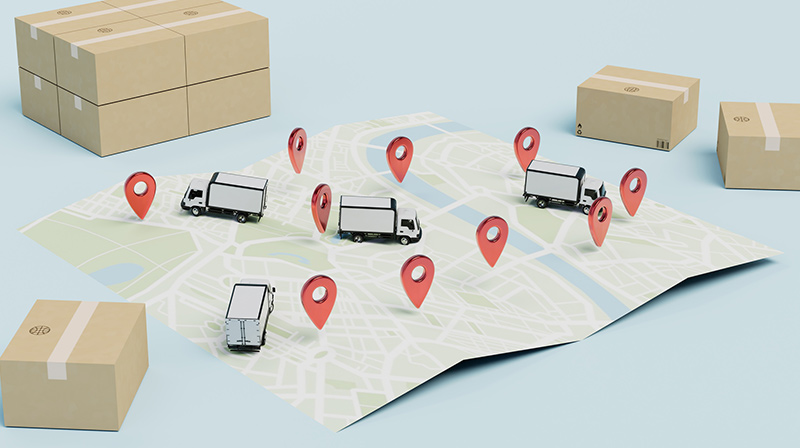
Efficient routing and dispatch planning have become mission-critical for logistics providers, distributors, 3PLs, and retailers. With last-mile delivery volumes surging—fueled by eCommerce growth, rapid urbanization, and increasing demand for same-day and next-day delivery—operations teams are under pressure to manage more stops, tighter delivery windows, and rising transportation costs. Manual planning or outdated route scheduling tools simply can’t keep up with the complexity of modern last-mile networks.
This is where a Last Mile TMS (Transportation Management System) becomes a game-changer. It brings routing, planning, dispatch management, real-time visibility, and customer communication into a single integrated platform. By combining AI, automation, and advanced route optimization, a Last Mile TMS helps companies improve delivery accuracy, reduce operating expenses, and create predictable, scalable workflows—whether managing a small regional fleet or a nationwide operation.
The following sections break down exactly how a Last Mile TMS transforms routing and dispatch planning, and why logistics organizations are rapidly adopting this technology to stay competitive, efficient, and customer-centric.
Automate Route Planning With AI & Real-Time Data
Traditional route planning depends heavily on static maps, spreadsheets, and manual decision-making. This often results in suboptimal routes, higher fuel usage, missed delivery windows, and planning delays—especially when delivery volumes fluctuate or unexpected disruptions occur.
A Last Mile TMS replaces this outdated approach with AI-driven route optimization that continuously analyzes live data to generate the most efficient delivery paths. Instead of planning based on estimates, the system calculates optimal routes using real-world variables to ensure the fastest and most cost-effective execution.
A modern Last Mile TMS uses advanced algorithms and real-time traffic intelligence to:
- Recommend the best delivery sequence for every driver, based on location density, service times, order priorities, and delivery windows.
- Incorporate live traffic, weather updates, and road restrictions, ensuring routes stay efficient even in dynamic environments.
- Automatically re-optimize routes when conditions change, such as sudden congestion, road closures, last-minute orders, or customer rescheduling.
- Reduce total distance traveled and driving time, directly lowering fuel consumption and mileage-related fleet expenses.
- Improve on-time delivery performance, resulting in higher customer satisfaction and more predictable SLAs.
Impact on Operations
In high-density regions real-time, AI-powered recalculations dramatically minimize delays caused by congestion, construction zones, weather disruptions, and peak-hour traffic. Logistics providers gain the agility to maintain delivery consistency even in the most complex urban environments.
Running a small delivery business and want to cut miles and time on every route? This article shows how.
Explore Route Optimization ToolsOptimizes Dispatch Allocation for Maximum Productivity
Manual dispatching can quickly become inefficient—especially when coordinating multiple drivers, diverse order types, varying delivery windows, and fluctuating daily demand. Dispatchers often spend hours matching drivers to routes, correcting overlaps, or reallocating loads when conditions change. These inefficiencies directly impact fleet productivity and increase operational costs.
A Last Mile TMS brings intelligence and automation into this process, ensuring every route is assigned to the right driver with minimal manual intervention.
A Last Mile TMS makes dispatch smarter by:
- Automatically assigning the best driver to each route, based on proximity, skillset, delivery requirements, and past performance.
- Balancing load capacity, vehicle type, and service-level commitments, ensuring specialized orders—like oversized items, white-glove service, or temperature-controlled deliveries—go to the right vehicles.
- Eliminating route overlaps and unnecessary trips, preventing two drivers from visiting the same area or making conflicting stops.
- Maximizing the number of successful stops per route, improving both route density and overall delivery throughput.
Result
The outcome is increased driver productivity, fewer empty miles, optimized fleet utilization, and a measurable reduction in operating costs. Dispatch teams can handle more deliveries with the same resources, while maintaining service quality.
Enhances Real-Time Visibility & Predictability
One of the most persistent challenges in last-mile logistics is the lack of real-time visibility—both for internal operations teams and for end customers expecting accurate delivery information. Without live tracking and proactive alerts, dispatchers struggle to identify issues early, and customers often experience uncertainty about delivery timing, leading to frustration and increased support calls.
A Last Mile TMS solves this by offering comprehensive, real-time operational visibility across every driver, vehicle, and delivery route.
A Last Mile TMS provides:
- Real-time driver and vehicle tracking, allowing dispatchers to monitor movement, speed, and route adherence at every moment.
- Live route progress updates, showing completed stops, upcoming stops, delays, and any deviations from the planned route.
- Dynamic ETA calculations, automatically adjusted based on live traffic, weather conditions, and driver behavior.
- Instant alerts for delays, exceptions, failed deliveries, or missed stops, giving teams the opportunity to react before issues escalate.
- Digital Proof of Delivery (POD) with photos, customer signatures, barcodes, or geotagged timestamps for complete delivery verification and compliance.
Why This Matters
This level of visibility dramatically improves predictability, reduces “Where is my order?” inquiries, and empowers logistics teams to resolve problems faster. In busy metropolitan areas and high-density delivery zones, real-time insights also help maintain tighter SLAs and minimize customer dissatisfaction—directly impacting brand reputation and repeat business.
Reduces Delivery Costs Across the Board
Rising fuel prices, ongoing driver shortages, increasing wage pressures, and heightened customer expectations have made cost control one of the biggest challenges in last-mile logistics. Companies can no longer afford inefficient routing, empty miles, or failed delivery attempts—every mile and minute now has a direct impact on profitability.
A Last Mile TMS delivers significant cost reductions by optimizing every part of the delivery workflow, from planning to execution.
A Last Mile TMS helps reduce costs through:
- Reduced total travel distance, thanks to AI-powered route optimization that eliminates unnecessary detours and backtracking.
- Improved route density, ensuring more stops per route and maximizing each vehicle’s delivery potential.
- Fewer failed or missed deliveries, enabled by real-time communication, accurate ETAs, and proactive exception handling.
- Lower fuel consumption, driven by shorter routes, less idling, and fewer congestion delays.
- Optimized driver schedules, reducing overtime costs and improving labor planning accuracy.
- Better asset utilization, ensuring every vehicle and driver in the fleet is used at optimal capacity.
The Impact
Most logistics companies—especially those operating in urban hubs see 10–30% cost savings within the first few months of adopting a modern route optimization platform. These savings compound over time as operations become more predictable, efficient, and data-driven.
Improves Customer Experience Through Accurate ETAs
Customer expectations in the last-mile space have shifted dramatically. Whether it’s a residential eCommerce delivery or a business receiving critical inventory, customers now want precise, transparent, real-time information about their orders. Uncertain delivery windows or outdated tracking increases frustration, missed handoffs, and support escalations.
A Last Mile TMS helps companies deliver a superior customer experience by providing accurate, automated, and continuously updated delivery insights.
A Last Mile TMS enhances customer experience with:
- Highly accurate, AI-powered ETAs, updated in real time based on traffic, driver progress, and route changes.
- Automated SMS and email notifications, keeping customers informed about order dispatch, upcoming delivery windows, and arrival alerts.
- Self-service tracking portals, allowing customers to check delivery status without calling support.
- Live updates throughout the delivery journey, including “driver en route,” “stops away,” and “delivered with proof.”
End Result
With clearer expectations and more transparency, companies experience fewer customer support calls, reduced failed delivery attempts, and higher customer satisfaction scores. For brands competing on delivery experience, a Last Mile TMS becomes a key differentiator in building trust and encouraging repeat business.
Enables Scalable Multi-Stop & High-Density Routing
Across the retailers, distributors, healthcare providers, and 3PLs handle increasingly complex multi-stop delivery routes. High-density areas, strict delivery windows, and specialized delivery requirements make manual planning almost impossible to scale. As delivery volumes grow, so does the challenge of efficiently managing routes that include dozens—or even hundreds—of stops per driver.
A Last Mile TMS is designed to optimize and scale these multi-stop operations with sophisticated algorithms that account for real-world constraints and resource availability.
A Last Mile TMS supports:
- High-density urban routes, ensuring drivers make more stops in less time while navigating traffic-heavy areas.
- Advanced multi-stop sequencing, using AI to find the most efficient order of deliveries and minimize total drive time.
- Route consolidation, combining orders across multiple customers or zones to maximize route density and reduce fleet costs.
- Multi-driver and multi-depot planning, essential for enterprises with distributed networks or regional hubs.
- Complex delivery constraints, such as strict time windows, temperature-controlled cargo, white-glove services, access restrictions, or high-priority orders.
Why This Matters
These capabilities make operations far more scalable—whether during peak retail seasons (holiday surge, back-to-school, Black Friday), sudden demand spikes, or daily operational fluctuations. Logistics teams gain the flexibility to grow without adding proportional labor, vehicles, or planning hours.
Struggling with delays and missed windows? Real-time route planning keeps things on track. See Real-Time Delivery Solutions
Streamlines Communication Between Drivers, Dispatchers & Customers
Miscommunication is one of the biggest hidden costs in last-mile operations. When drivers, dispatchers, and customers rely on phone calls, fragmented apps, or manual updates, it often results in missed instructions, late deliveries, incorrect drop-offs, and unnecessary reattempts. For operations with high delivery volumes, this lack of synchronized communication quickly leads to inefficiency and customer dissatisfaction.
A Last Mile TMS eliminates these issues by bringing all communication channels into one seamless platform.
A Last Mile TMS centralizes communication by:
- Providing in-app driver messaging, allowing dispatchers to share updates, instructions, or route changes instantly.
- Automating customer notifications, so receivers know when their order is shipped, out for delivery, or arriving soon.
- Offering dispatcher dashboards, giving a complete view of driver status, delivery progress, and exceptions in real time.
- Recording and storing delivery instructions, ensuring drivers always have access to gate codes, contact details, special handling notes, and access restrictions.
- Reducing back-and-forth phone calls, as all updates and alerts flow directly through the platform.
Result
This integrated communication flow leads to smoother operations, fewer misunderstandings, higher first-attempt delivery success, and improved delivery accuracy. For logistics providers, it means more predictable workflows and a better customer experience across every route.
Why Companies Are Moving Toward AI-Powered Last Mile TMS Platforms
Across the location, logistics providers, retailers, distributors, and 3PLs are rapidly shifting toward AI-powered Last Mile TMS platforms. The pressure to deliver faster, cheaper, and more reliably has never been higher—driven by rising eCommerce volumes, changing customer expectations, and increasing operational constraints. Traditional dispatching tools, manual processes, and legacy routing systems are no longer enough to stay competitive.
The market is prioritizing:
- Faster delivery promises, including same-day and next-day SLAs that require precise planning and real-time adjustments.
- Lower cost per delivery, as rising fuel, labor, and insurance costs squeeze margins.
- High-volume urban drops, especially in dense metros, where route optimization is essential.
- End-to-end real-time visibility, demanded by both B2C and B2B customers who expect live tracking and accurate ETAs.
- Driver shortage management, pushing companies to maximize productivity from existing workforce and assets.
- Digital compliance and Proof of Delivery, needed for audits, dispute resolution, and operational transparency.
A modern, AI-enabled Last Mile TMS addresses all of these priorities by combining automation, optimization, and real-time intelligence into one unified platform.
The Bottom Line
For logistics teams, an AI-powered Last Mile TMS is no longer just a technology upgrade—it’s a strategic investment. It enables faster deliveries, tighter cost control, higher fleet productivity, and a dramatically better customer experience. As companies plan for 2025 and beyond, adopting a modern TMS has become essential for staying competitive in a rapidly evolving delivery landscape.
About nuVizz
nuVizz is a leading AI-powered Last Mile Delivery & Transportation Management (TMS) platform designed to help enterprises streamline routing, dispatching, visibility, and end-to-end delivery execution. Built for the complexities of logistics, nuVizz equips organizations with advanced optimization tools that reduce costs, eliminate inefficiencies, and deliver consistently superior customer experiences.
With its intelligent route optimization engine and dynamic dispatch logic, nuVizz allows logistics providers, retailers, distributors, healthcare networks, and 3PLs to scale operations across high-density urban areas, regional territories, or nationwide delivery networks. The platform is built to adapt to real-world challenges—traffic fluctuations, capacity variations, delivery windows, driver shortages, and peak-season surges.
Key capabilities of the nuVizz platform include:
- AI-driven dynamic route optimization, enabling faster, smarter, and more cost-effective route creation.
- Multi-stop and multi-driver route planning, ideal for high-volume delivery operations.
- Real-time visibility & live ETAs, improving predictability, SLA adherence, and customer transparency.
- Mobile driver app with POD capture, supporting photos, signatures, barcodes, and geolocation compliance.
- Automated dispatch workflows, reducing manual effort and improving fleet utilization.
- Advanced analytics and dashboards, helping operations teams reduce costs, monitor performance, and make data-driven decisions.
By combining automation, intelligence, and operational visibility, nuVizz empowers organizations to elevate their last-mile delivery performance and stay competitive in an increasingly demanding logistics market.
Conclusion
A Last Mile TMS is no longer a “nice-to-have” — it has become a core operational requirement for logistics teams that want to cut costs, improve routing accuracy, streamline dispatch planning, and meet today’s demanding delivery expectations. With delivery volumes rising and competition intensifying across the industry, companies that rely on manual planning or legacy tools risk falling behind in both efficiency and customer satisfaction.
Modern Last Mile TMS platforms powered by AI, automation, and real-time visibility give logistics organizations the intelligence and agility needed to succeed in fast-moving last-mile environments. They optimize every step of delivery execution — from generating efficient multi-stop routes to keeping customers informed with accurate ETAs.
Solutions like nuVizz last mile TMS take this transformation even further by offering end-to-end capabilities built specifically for the complexities of delivery networks. Whether it’s reducing empty miles, improving on-time performance, or scaling high-density routes during peak seasons, a platform like nuVizz gives logistics providers the competitive edge they need for 2025 and beyond.
By adopting a modern Last Mile TMS, businesses position themselves for greater productivity, lower operational costs, improved customer experience, and long-term growth in an increasingly demanding and dynamic market.




FAQs
It optimizes routing, reduces fuel costs, improves dispatch efficiency, and provides real-time visibility to enhance delivery performance across U.S. cities and states.
Yes, modern TMS platforms use AI and traffic data to manage multi-stop routes in congested cities like New York, Chicago, or Los Angeles.
By shortening routes, increasing route density, minimizing failed deliveries, and improving vehicle utilization.
Absolutely — it provides live GPS tracking, ETAs, exception alerts, and POD capture for full delivery transparency.
Retailers, distributors, 3PLs, courier services, healthcare logistics providers, and food/furniture delivery companies.