LMD Logo
LMD Logo
LMD Logo
  • Benefits of Last Mile TMS
  • Features of Last Mile TMS
  • Blogs

Category: Uncategorized

Blog

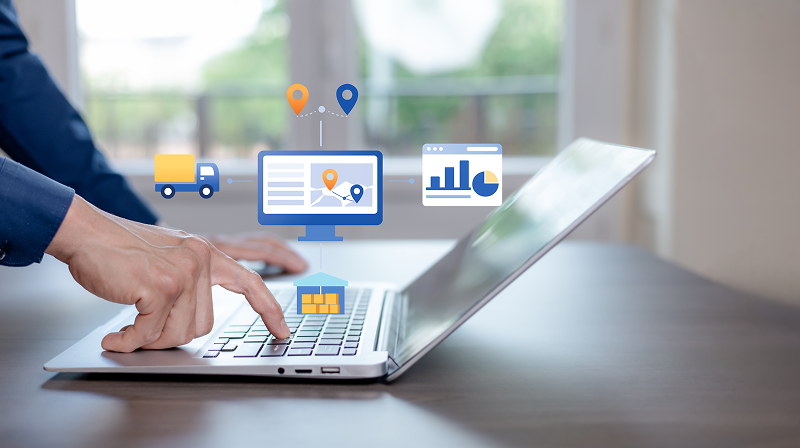
Reducing Costs via AI Last Mile Delivery Management Software
Reducing-Costs-via-AI-Last-Mile-Delivery-Management-Software

Last mile delivery accounts for 53% of total shipping costs, yet 70% of businesses still rely on manual route planning and scheduling processes. If your delivery operations feel expensive and inefficient, you’re not alone. The challenge isn’t a lack of effort—it’s that traditional delivery management approaches simply weren’t designed for today’s speed and scale.

This comprehensive blog reveals how AI-powered last mile delivery management software is transforming operations and cutting costs by 25-40% across industries. We’ll walk you through the specific mechanisms driving savings, real business results, and how to implement these solutions in your own operations.

The Final Mile Cost Crisis: Why it’s the Most Expensive Phase

In modern logistics, there is a sobering mathematical reality: while transporting freight from a manufacturing plant to a regional distribution center costs pennies per mile, the final journey to the customer’s doorstep is a financial drain.

Despite representing the shortest distance in the supply chain, the last mile accounts for 53% of total shipping costs. For e-commerce and B2B distributors, this translates to a staggering $8–$15 per parcel just for the final leg.

The Anatomy of “Legacy Leakage”

Where exactly is your capital going? When we audit legacy delivery operations, the “cost bleed” typically breaks down into five primary categories:

Cost Category% of Total Last Mile CostThe “Legacy” Pain Point
Labor & Driver Wages40–45%Manual dispatching and inefficient “dwell times” at stops.
Vehicle Operations35–40%Rising fuel costs, maintenance, and high vehicle depreciation.
Route Inefficiency10–15%“The Spreadsheet Trap”—backtracking and traffic delays.
Failed Deliveries5–8%Incorrect addresses and “Not at Home” redelivery attempts.
Tech Infrastructure3–5%Fragmented GPS and basic communication tools.

The Compound Interest of Inefficiency

To put this into perspective: for a mid-sized carrier or distributor handling 1,000 deliveries daily, a minor 5% inefficiency doesn’t just slow you down—it results in over $50,000 in unnecessary annual overhead. In a market where margins are tightening, this “Legacy Leakage” is the difference between scaling your business and merely surviving.

Why Distance Doesn’t Equal Cost

The reason the last mile is so disproportionately expensive isn’t just distance; it’s complexity. Unlike long-haul trucking (the “Middle Mile”), the last mile involves:

  • High Stop Density: Multiple starts and stops increasing fuel consumption.
  • Urban Friction: Navigating traffic, parking restrictions, and gated communities.
  • Customer Interaction: The need for precise ETAs and Proof of Delivery (POD).

The Anatomy of Operational Friction: Common Pain Points

Most logistics operations in 2026 still suffer from the “Legacy Paradox”: they use high-tech vehicles but manage them with “gut instinct” and fragmented spreadsheets. This disconnect creates a cascade of hidden costs that erode margins.

1. The Failure of Manual Route Planning

In a manual environment, routes are often built on “Tribal Knowledge”—a dispatcher’s memory of the roads. This lacks real-time variables like dynamic traffic patterns, driver HOS (Hours of Service), and vehicle weight constraints.

  • The Efficiency Gap: A manually planned route typically covers 50–60 miles for a sequence that an AI algorithm could optimize down to 35–40 miles. Over a year, those “extra” 20 miles per vehicle represent a massive, unrecovered expense.

2. GPS “Blind Spots” and Execution Gaps

Legacy GPS only tells you where a truck is; it doesn’t tell you if the truck is on plan.

  • The Problem: If a driver takes an unauthorized detour or gets stuck at a loading dock, the dispatcher only finds out when the customer calls to complain.
  • The Impact: Hours are wasted before a correction can be made, leading to missed pickups and a domino effect of delays across the entire fleet.

3. The Scheduling Imbalance

Without AI-driven demand forecasting, companies fall into two expensive traps:

  1. Over-deployment: Paying for drivers and fuel that aren’t needed (Wasted Labor).
  2. Under-deployment: Missing delivery windows, leading to contract penalties and customer churn (Revenue Loss).

4. The Hidden Drain: Driver Idle Time

Driver wages are your highest variable cost. Yet, in manual systems, drivers spend 10–15% of their shift in “non-productive” states: waiting for gate access, navigating poorly sequenced stops, or idling in preventable traffic. This is pure labor cost with zero output.

Stop paying for empty miles and inefficient, fixed delivery routes..

Ditch Static Routing

The Real Business Impact: A $2.4 Million “Waste” Case Study

To understand the scale of the crisis, let’s look at the math for a mid-sized logistics provider operating 50 vehicles with an average cost of $8 per delivery.

The Annual Cost of Inefficiency

MetricLegacy Impact (Manual)Annual Financial Leakage
Annual Volume1.5 Million Deliveries$12,000,000 Base Cost
Failed Delivery Rate8% (120,000 failures)$720,000 (Retry costs @ $6/ea)
Excess Fuel/Miles10% Route Inefficiency$1,200,000
Unnecessary OvertimeManual scheduling gaps$500,000
Total Annual Waste—$2,420,000

For this carrier, over $2.4 million is being lost to operational friction every year. This is capital that isn’t being used for fleet electrification, driver retention, or business expansion—it is simply “evaporating” due to outdated technology.

The Digital Dispatcher: How AI Orchestration Works

In a legacy environment, dispatching is a reactive task. In 2026, AI-powered delivery management software acts as a “Digital Dispatcher”—an autonomous intelligence that never tires, processes millions of data points per second, and learns from every GPS ping.

1. The Core Components of the AI Tech Stack

Modern delivery management is built on a “Logistics Brain” composed of five interconnected layers:

  • Autonomous Route Optimization: Unlike static planning, these algorithms analyze hundreds of variables—including real-time traffic, vehicle weight capacity, driver HOS, and customer-specific delivery windows—to calculate the most efficient path in milliseconds.
  • Predictive Demand Forecasting: By analyzing historical delivery patterns, seasonal trends, and even weather forecasts, the system predicts volume surges before they happen, allowing for precise labor scheduling.
  • Dynamic Load Balancing: The AI ensures “Fleet Equilibrium.” It prevents driver burnout by distributing stops evenly based on real-time location and vehicle capacity.
  • Driver Performance Analytics: The system creates a continuous feedback loop, tracking metrics like “time-at-curb” and fuel efficiency to refine future route assignments.
  • Unified Ecosystem Integration: The software acts as a “Single Pane of Glass,” connecting your WMS, ERP, and CRM into one synchronized data stream.

2. AI Capabilities That Drive Exponential ROI

The true competitive advantage of an AI TMS like nuVizz lies in its ability to move beyond simple “if-then” rules into Prescriptive Intelligence.

I. Machine Learning & Pattern Recognition

The system identifies efficiencies a human dispatcher would never see. It may recognize that “Driver A” is 15% faster in high-density urban zones, while “Driver B” excels in suburban long-hauls. It then automatically weights future assignments to play to those strengths.

II. Anomaly Detection & Real-Time Adaptation

AI doesn’t just watch the fleet; it protects it.

  • The Scenario: A sudden accident blocks a main artery.
  • The AI Response: While a manual dispatcher is still discovering the delay, the AI has already pushed a silent reroute to five affected drivers, saving an average of 20 minutes per route.
  • Proactive Alerts: The system flags “Behavioral Anomalies”—such as a vehicle consuming 10% more fuel than its peers—triggering a Predictive Maintenance alert before a costly roadside breakdown occurs.

III. Automated Hub & Terminal Synchronization

By tracking “Handling Units” rather than just “Trucks,” the AI ensures that the warehouse is ready for the driver the moment they back into the dock. This eliminates the “Dwell Time Drain“ that costs carriers thousands in lost labor every month.

Stop guessing your true cost-per-delivery and start measuring it. View Your Delivery ROI

The ROI Pillars: 3 Concrete Ways AI Slashes Last Mile Costs

Moving from manual legacy systems to AI orchestration isn’t just an operational shift—it’s a financial transformation. Here is the data-backed breakdown of where the 25–40% savings actually materialize.

1 Pillar I: Route Optimization & Fuel Intelligence

This is the most immediate source of “green” savings—both in currency and carbon. AI doesn’t just “group” stops; it mathematically solves for the most efficient path.

MetricTraditional Manual PlanningAI-Optimized Orchestration
Avg. Route Distance52 Miles35 Miles (33% Reduction)
Fuel Consumption12.5 Gallons8.4 Gallons
Time per Route3h 45m2h 50m
Annual Fleet Impact—$147,600 Fuel Savings

The “Maintenance Multiplier”: Beyond fuel, every mile reduced extends the life of your assets. By cutting 200,000 miles annually from a 50-vehicle fleet, you save an additional $100,000+ in maintenance and depreciation.

Real-World Result: A regional food distributor used the AI-Optimized Orchestration to cut daily miles by 33%, extending their vehicle lifespan from 5 to 7 years and saving $400,000 in fleet replacement costs over a decade.

2 Pillar II: Labor Productivity & The “Efficiency Multiplier”

Driver wages are a carrier’s largest variable expense. AI doesn’t replace the driver; it removes the friction that prevents them from being productive.

  • Density Maximization: AI increases the industry average of 85 deliveries per day to 110–130 deliveries per day through better sequencing and reduced “dwell time.”
  • The Math of Scale: By increasing deliveries per driver by 35%, your cost-per-delivery drops from $14.71 to $10.87.
  • The Retention Bonus: High driver turnover (often 40%+) is a silent killer of margins. When routes are optimized, drivers face less congestion and more predictable finish times. Reducing turnover by just 15% can save a mid-sized fleet $200,000 in annual recruiting and training costs.

3 Pillar III: Eliminating the “Failed Delivery” Drain

A failed delivery is a double loss: you’ve spent the labor/fuel to fail, and you must now spend it again to succeed.

The Anatomy of a Failure:

  • Driver & Fuel Waste: $12–$17
  • Warehouse Re-processing: $3–$5
  • Customer Service Handling: $2–$4
  • Total Cost Per Failure: $17–$28

The AI Solution: Using AI Solution, this cleanses “dirty” address data and provides predictive ETA alerts to customers. By reducing a 10% failure rate down to 2%, a 50-vehicle operation saves $1.6 million annually in unrecovered re-delivery costs.

Eliminating the “Failed Delivery” Drain: From 10% to 3%

A failed delivery is a double financial hit: you pay for the initial failure, and then you pay again for the successful recovery. By moving from random delivery windows to Predictive Orchestration, AI solution helps carriers collapse their failure rates by over 60%.

1. The AI Mechanism: How Failures are Prevented

AI doesn’t just track the package; it predicts the human behavior around the delivery.

  • Predictive Delivery Windows: Using historical data and machine learning, the system identifies the “Highest Probability Window” for each address. Instead of a generic 4-hour block, deliveries are scheduled when the customer is statistically most likely to be present.
  • Geofencing & Precision Geocoding: AI identifies “Problematic Access” points—such as gated communities or confusing apartment numbering—before the driver arrives. Drivers receive turn-by-turn “Micro-Instructions” to the exact unloading point, not just the street address.
  • Real-Time Active Notifications: By providing customers with a hyper-precise 15–30 minute arrival window via automated SMS/Email, the “I wasn’t home” excuse is virtually eliminated.
  • Automated ePOD & Dispute Resolution: Through Electronic Proof of Delivery (ePOD), including high-resolution photo evidence and GPS timestamps, “Item Not Received” disputes are reduced by 85%, saving thousands in customer service labor.

2. The Exponential Math of Success

When you reduce your failure rate, the impact on your annual bottom line is transformative. Let’s look at the daily waste versus the AI-optimized future for a 50-vehicle fleet:

MetricLegacy Operations (Manual)AI-Optimized (nuVizz)
Daily Failed Deliveries500 (10% Rate)150 (3% Rate)
Avg. Cost per Failure$20.00$20.00
Daily Financial Waste$10,000$3,000
Daily Savings—$7,000
Projected Annual Savings—$1.75 Million

Strategic Insight: Reducing failed deliveries does more than save fuel; it protects your Brand Equity. In 2026, a single failed delivery can lead to a negative public review that costs you future contracts. AI is your primary tool for Reputation Insurance.

Strategic Fleet Optimization: Doing More with Less

A common misconception in logistics is that scaling delivery volume requires scaling the fleet. In reality, legacy fleets are often riddled with “Phantom Capacity”—underutilized space and redundant vehicles that drain capital. AI orchestration allows carriers to “right-size” their operations, often handling the same volume with 15–25% fewer vehicles.

1. The “Right-Sizing” Revolution

When every route is mathematically optimized and every trailer is at maximum capacity, the need for “safety vehicles” or peak-hour overcapacity vanishes.

  • Density Maximization: By increasing deliveries per vehicle, a 50-truck fleet can often be streamlined down to 38–42 vehicles without losing a single stop.
  • The Capital Impact: Eliminating just 10 redundant vehicles saves a carrier between $120,000 and $180,000 annually in insurance, fuel, and depreciation alone.
  • Asset Utilization: AI ensures that your high-value assets are moving, not sitting in a lot waiting for a manual dispatch.

2. Moving from Scheduled to Predictive Maintenance

Legacy maintenance is “calendar-based” (every 6 months), which often leads to servicing parts that aren’t worn or missing parts that are about to fail.

  • Diagnostic Intelligence: AI solution uses real-time vehicle telematics to trigger maintenance only when the data dictates. This shifts your team from “Reactive Repair” to “Predictive Prevention.”
  • The Maintenance Math: For a 50-vehicle fleet with a $175,000 annual maintenance budget, AI-driven precision can slash costs by 15% ($26,250) while virtually eliminating roadside breakdowns.
  • Downtime Recovery: Reducing unplanned downtime by 30–40% keeps your revenue-generating assets on the road. For a mid-sized fleet, this “uptime bonus” adds $30,000–$45,000 in recovered capacity annually.

3. Extending the Asset Lifecycle

The ultimate “hidden” ROI of AI orchestration is the extension of the vehicle’s usable life. By reducing total miles driven and ensuring proactive engine care, carriers are extending vehicle lifespans from 5 years to 7 years.

  • The Replacement Windfall: For a 50-vehicle operation, delaying a full fleet replacement by just 24 months can save over $500,000 in deferred capital expenditure (CAPEX).
Fleet MetricLegacy (Manual)AI-Optimized (nuVizz)
Active Fleet Size50 Vehicles40 Vehicles
Avg. Annual Maintenance$3,500 / unit$2,975 / unit
Unplanned Downtime5-7 Days / year2-3 Days / year
Total Fleet Savings—$150,000 – $300,000 / year

Real-World Impact: The 27% Cost Reduction Case Study

Evidence is the strongest driver of digital transformation. To understand how AI-powered orchestration works in the field, we audited a mid-sized regional e-commerce fulfillment provider that transitioned from manual legacy dispatch to the nuVizz AI platform.

If you’re only using software to print labels, you’re missing half the ROI.

Go Beyond the Label

Case Study: High-Velocity E-Commerce Fulfillment

  • Company Profile: Regional hub managing 45 delivery vehicles for marketplace sellers.
  • The Challenge: 10% failed delivery rates, rising fuel costs, and a two-person dispatch team overwhelmed by manual route planning for 4,500 daily deliveries.

The Implementation Roadmap

Digital transformation doesn’t happen overnight, but with the right framework, ROI is achieved in months, not years.

PhaseDurationFocus Area
Phase 1: AssessmentWeeks 1–2Identified $3.2M in annual cost-savings opportunities.
Phase 2: IntegrationWeeks 3–8System deployment and seamless WMS/ERP synchronization.
Phase 3: OptimizationWeeks 9–12Driver training and AI-model tuning for regional route density.
Phase 4: ExecutionMonth 4+Full-scale autonomous orchestration and performance monitoring.

The 6-Month Results: By the Numbers

After just half a year of operating with AI-driven intelligence, the company saw a radical shift in every core KPI:

  • Failed Delivery Rate: Collapsed from 9.5% to 2.8% (a 71% improvement).
  • Deliveries Per Vehicle: Increased from 98 to 128 daily (a 31% surge in productivity).
  • Cost Per Delivery: Slashed from $8.20 to $5.95 (a 27% direct reduction).
  • Fuel Consumption: Reduced by 28%, saving $189,000 annually.
  • Customer Satisfaction: Ratings climbed from 3.8 to 4.6 stars, significantly reducing churn.

The Financial Impact: The company realized $945,000 in direct annual cost savings. When factoring in the $340,000 saved from reduced customer service complaints and improved retention, the total annual impact reached $1.28 Million. > Full ROI was achieved in just 7 months.

The Key Insight: Predictive Success

The single biggest driver of value wasn’t just shorter routes—it was Predictive Delivery Windows. By giving customers a precise 15-minute arrival window, the company turned “Not at Home” failures into “First-Time Success,” effectively repairing their most expensive operational leak.

Must-Have Features in AI Delivery Management Software

Not all delivery software is created equal. When evaluating solutions, ensure they include these critical capabilities.

Route Optimization Engine

The core of the system. The route optimization engine should:

  • Use advanced algorithms (not simple distance minimization)
  • Optimize for multiple objectives simultaneously (distance, time, cost, customer satisfaction)
  • Handle complex constraints (time windows, vehicle capacity, driver breaks, restricted zones)
  • Adapt in real-time as conditions change
  • Leverage machine learning to improve over time

Real-Time Tracking & Visibility

You need visibility into where every vehicle is and what every driver is doing.

  • GPS accuracy (should be within 10 meters)
  • Live dashboard showing all active vehicles
  • Historical tracking data (ability to replay a day’s routes)
  • Geofencing alerts (notifications when drivers enter/exit zones)
  • Customer delivery notifications (customers know when driver is arriving)

Predictive Analytics

The system should use historical data and external factors to predict:

  • Demand volume by hour/day/location
  • Delivery times based on historical patterns and current conditions
  • Vehicle maintenance needs
  • Driver performance
  • Customer delivery preferences and likelihood of being home

Integration Capabilities

The software should connect seamlessly with your existing technology:

  • ERP systems (SAP, Oracle, NetSuite)
  • Accounting software (QuickBooks, Xero)
  • Warehouse management systems
  • CRM and customer database
  • E-commerce platforms
  • Customer communication tools

Mobile & Driver Experience

Drivers spend hours per day with this app. It needs to be intuitive:

  • Simple route navigation (integrated with maps)
  • One-tap delivery confirmation with photo capture
  • Real-time delivery time estimation
  • Direct communication with dispatch/customers
  • Offline functionality (works without internet)
  • Performance tracking and incentive dashboard

Reporting & Analytics

You need data to optimize further:

  • Custom report building
  • Pre-built KPI dashboards
  • Exportable data (CSV, Excel, PDF)
  • Benchmarking against industry standards
  • Performance trends over time
  • Exception reports (late deliveries, failed attempts, etc.)

Conclusion

In 2026, the gap between “Legacy Carriers” and “AI-Powered Orchestrators” is no longer a small rift—it is a canyon. For a 50-vehicle operation, the $2.4 million in annual operational waste is more than just a line item; it is a direct threat to business viability.

Implementing AI-powered last-mile delivery management software isn’t just about saving fuel or cutting minutes off a route. It is about reclaiming your margins, protecting your driver’s time, and delivering a customer experience that secures future contracts.

Ready to transform your delivery operations?

  • Get a free cost savings analysis for your delivery operations →
  • View our case study library →
  • Schedule a demo of the optimization system →
bookmark_fill [#fff1226] Created with Sketch. Related Content
Blog

Why Static Routing Fails: Route Planning...

Why-Static-Routing-Fails-Route-Planning-Software-Tips
Blog

Beyond Basic Labels: Shipping Software f...

Beyond-Basic-Labels-Shipping-Software-for-Ecommerce
Blog

Solving the ‘Blind Spot’ Cri...

Solving the 'Blind Spot' Crisis in Last Mile Logistics with Orchestration
Blog

How Poor Data Integration with Carriers ...

How Poor Data Integration with Carriers Creates Supply Chain Black Holes
Blog

What Shippers Need to Know: The Real Dif...

What Shippers Need to Know The Real Difference Between Tracking and Visibility
Blog

Retail Store Distribution Blind Spots: W...

Retail Store Distribution Blind Spots Why Inventory Vanishes at the Dock
Blog

Reverse Logistics and Returns Management...

Reverse Logistics and Returns Management Solutions
Blog

The Neural Network of the Last Mile: How...

The-Neural-Network-of-the-Last-Mile-How-AI-Route-Optimization-Outperforms-Traditional-Algorithms
Blog

The Zero-Silo Standard: Why Integrated D...

The-Zero-Silo-Standard-Why-Integrated-Delivery-Tracking-Software-is-the-Future-of-Final-Mile-Logistics
Blog

The ROI of Intelligence: Benchmarking AI...

The ROI of Intelligence: Benchmarking AI Logistics Software Against Traditional Systems

FAQs

AI reduces fuel costs by an average of 25–35% through Autonomous Route Optimization. Unlike manual planning, AI calculates millions of variables—including real-time traffic, vehicle weight, and stop density—to eliminate "empty miles" and reduce total distance driven.

Yes. By optimizing routes to reduce congestion and eliminating manual paperwork through ePOD (Electronic Proof of Delivery), AI reduces driver frustration and burnout. Carriers using nuVizz often see a 15–20% reduction in driver turnover due to more predictable and efficient workdays.

Most mid-to-large-scale operations achieve full ROI within 6 to 9 months. Savings are realized immediately through reduced fuel consumption, lower failed delivery rates, and the ability to handle higher delivery volumes without increasing fleet size.

Yes. Modern AI-powered TMS platforms are API-first, allowing for seamless, bi-directional integration with major ERPs, WMS, and accounting software. This creates a Digital Twin of your operation, ensuring data flows perfectly from order entry to final settlement.

AI uses Predictive Delivery Windows and Address Cleansing to ensure drivers arrive when customers are most likely to be home. By providing customers with hyper-precise 15-minute arrival alerts and using geofencing for accurate drop-offs, failed delivery rates typically drop from 10% to under 3%.

Blog

Beyond Basic Labels: Shipping Software for Ecommerce

Beyond-Basic-Labels-Shipping-Software-for-Ecommerce

In the early days of an e-commerce brand, shipping is an afterthought. You print a label, a carrier picks it up, and you move on to the next marketing campaign. But as you scale past 500 orders a day, “Simple Shipping” becomes a growth killer.

The industry is seeing a massive shift in 2026. Consumers no longer compare your shipping to your direct competitors; they compare it to Amazon and DoorDash. If you cannot offer real-time windows, branded tracking, and seamless returns, you are facing a permanent “Execution Break”. To bridge this gap, e-commerce leaders are moving toward a Unified Platform that treats the delivery as the most important touchpoint of the customer journey.

The “Label-Only” Trap: Why Legacy Software Stalls E-commerce Growth

Most e-commerce “shipping apps” are effectively just API connectors to parcel carriers. While they are great for printing a 4×6 thermal label, they lack the intelligence to manage a complex supply chain. Here is why the “Label-Only” model fails at scale:

1. The Data Silo (The “Sync Break”)

In a basic setup, your storefront (Shopify, Magento, BigCommerce) and your shipping software are two different worlds. When a customer places an order, the data is pushed to a shipping queue.

● The Problem

If a customer contacts support to change an address or add an item, the shipping software often doesn’t “see” that change in real-time. This results in the wrong item being sent to the wrong place—a classic Sync Break.

● The Smart Fix

A modern Transportation Network Management system uses a Unified Order Capture engine. It doesn’t just “pull” data; it synchronizes it. If a change happens in the ERP or the storefront, the manifest in the warehouse updates in milliseconds, preventing costly shipping errors before the label is even generated.

2. The Limited Carrier Palette

Basic software usually limits you to “Big Three” parcel carriers. But what happens when you need to ship a 75-inch TV? Or a pallet of luxury flooring?

● The Constraint

Parcel-only software cannot handle LTL (Less-Than-Truckload) or Local Courier logic.

● The Evolution

Smart e-commerce software allows for Multi-Tenant Delivery Orchestration. This means you can manage USPS for small items, a local “gig” fleet for same-day city deliveries, and a specialized “White Glove” carrier for heavy items—all inside one dashboard.

3. The “Black Hole” of Post-Purchase Visibility

Once a label is printed in basic software, the brand usually loses control. The customer is sent a link to a generic carrier tracking page.

● The Risk

If a package is delayed, the carrier’s site just says “Delayed.” The customer then calls your support team, not the carrier.

● The AI Edge

Using an Event-Based Workflow Engine, smart software keeps the “Post-Purchase” experience inside your brand’s ecosystem. It monitors the GPS and geofence data of the delivery vehicle to provide Prescriptive Recovery—if a delay is detected, the system sends a branded alert with a solution, not just a notification of a problem.

Omnichannel Integration & Conversational Order Capture

In the “Label-Only” era, shipping was a back-end utility that happened after the sale was finalized. In the New Model, the line between the storefront and the shipping dock has evaporated. To survive in a world where 73% of shoppers use multiple channels before buying, e-commerce brands must build their foundation on Omnichannel Orchestration—ensuring that every digital touchpoint is physically synchronized in real-time.

This foundation isn’t just about moving data; it’s about eliminating the friction that causes cart abandonment and “Where Is My Order” (WISMO) anxiety. By moving to a Unified Platform, brands replace fragmented silos with a single, intelligent thread that connects the “Buy” button to the delivery vehicle’s GPS.

1. The Death of the Batch: Real-Time API Sync

Legacy e-commerce shipping relies on “batches”—downloading orders every hour. In 2026, an hour is an eternity.

● Immediate Visibility

The Platform relies on real-time API/EDI integration. The second a “Buy” button is clicked, the Order Capture module analyzes the inventory location, the customer’s proximity, and the carrier’s current capacity.

● Mirroring the Shipper

This creates a “Mirror Effect” where the warehouse, the storefront, and the customer service team are all looking at the exact same Single Source of Truth.

2. Conversational Order Capture: The New Frontier

E-commerce is no longer a one-way street. Customers expect to interact with their orders.

● AI-Driven IVR & Chatbots

By integrating Conversational Order Capture, brands allow customers to interact with the shipping engine via text or voice.

● Self-Service Adjustments

“Can I pick this up at a locker instead?” or “Can I delay delivery until Friday?” In the Old Model, these requests required a human agent. In the New Model, the AI processes the request, checks the AI for route feasibility, and updates the driver’s manifest automatically.

3. OCR and Document Digitization

Even in e-commerce, paper still exists—especially in international shipping or B2B e-commerce.

● Killing the Paper Trail

Using AI-driven OCR and Doc Scanning, brands can digitize commercial invoices and customs forms instantly. This ensures that “Handling Unit Integrity” is maintained from the moment the box leaves the packing station until it clears customs, preventing the “Information Break” that causes international delays.

AI Vizzard & Dynamic Routing for Modern Retail

In the “Label-Only” model, the shipping decision is binary: Which parcel carrier is cheapest? In the New Model of e-commerce, the decision is multi-dimensional. This is where the AI —the proprietary optimization engine—becomes the most valuable player in your tech stack.

1. The Shift to “Ship-from-Store” (SFS) Logic

For e-commerce brands with physical retail footprints, your stores are no longer just showrooms; they are high-velocity micro-distribution centers.

● The Traditional Failure

Most basic shipping software treats a store like a warehouse. It doesn’t understand that a store has limited “pack-and-ship” labor and different pickup windows than a central DC.

● The AI Vizzard Solution

The engine performs AI-Powered Algorithm Selection. It looks at the customer’s zip code and asks: “Is it cheaper to ship this from the Memphis hub via FedEx, or have a local gig-worker pick it up from our Brooklyn store and deliver it in two hours?” * Dynamic Capacity Balancing: The AI balances the “Order Density” of the day. If a specific store is overwhelmed with foot traffic, the AI automatically reroutes e-commerce fulfillment to a quieter location or the main hub, preventing a “fulfillment break” that leads to late deliveries.

2. Beyond the Poly-Mailer: White-Glove & Big-and-Bulky Logic

E-commerce is moving into “high-consideration” goods—peloton bikes, sectional sofas, and designer refrigerators. You cannot slap a label on these and hope for the best.

● Constraint-Aware Scheduling

This is where the New Model shines. The shipping software must understand Vehicle Capacity and Specialty Skills. If an order requires “room-of-choice” delivery and assembly, the system won’t just book a truck; it will book a two-person team with the specific tools and certifications required.

● Compliance-Aware Routing

The system ensures the route respects local ordinances (no 53-foot trailers in residential cul-de-sacs) and driver HOS (Hours of Service), protecting the brand from the legal and reputational risks of a safety incident.

3. Dynamic Slot Selection: Giving Power Back to the Consumer

The biggest friction point in e-commerce is the “Delivery Window.”

● The Manual Guess

Basic software gives a 3-to-5 day estimate.

● The Smart Choice

With Dynamic Slot Selection, your checkout page becomes an extension of your routing engine. A customer can see actual available delivery windows (e.g., “Tuesday 2 PM–4 PM”) based on the real-time location and capacity of your fleet.

● Density-Based Pricing

You can even offer “Green Delivery” discounts for slots where a truck is already scheduled to be in that neighborhood, increasing your Stops-per-Mile and reducing your carbon footprint.

Cross-Docking & Micro-Fulfillment Excellence

Even the best AI cannot fix a broken physical process. How smart e-commerce software manages the Physical Execution through hubs and spokes.

1. Predictive Hub Synchronization

As e-commerce brands grow, they often move to a “Hub and Spoke” model to keep inventory closer to customers.

● The Synchronization Break

In manual systems, the warehouse doesn’t know when the truck is arriving, and the truck doesn’t know if the warehouse is ready.

● The Fix

Using Predictive Hub Synchronization, the system uses GPS data from inbound shipments to trigger labor workflows in the warehouse. By the time the trailer hits the dock, the cross-docking team is staged and ready to move the “Handling Units” to the final-mile vans.

2. Maintaining “Handling Unit Integrity”

In e-commerce, a “miss-ship” is a lost customer.

● Granular Tracking

Basic software tracks the order. Smart software tracks the Handling Unit (the box, the pallet, or the crate).

● The Inter-Hub Audit

As an e-commerce order moves from a regional DC to a local micro-fulfillment center, every scan is a “healing” event. If a box is scanned into the wrong staging lane, the system triggers an immediate alert via the Event-Based Workflow Engine, stopping the error before the package leaves the building.

Real-Time Command: Visibility that Wins Customer Loyalty

For a modern e-commerce consumer, the “Shipping Experience” is the product. If they don’t know where their order is, or if the tracking link is broken, the quality of the item inside the box doesn’t matter. This is where the Event-Based Workflow Engine transforms “Shipping” into “Service”.

1. Beyond the Passive Tracking Number

Legacy shipping software relies on carrier-provided data. When a parcel carrier misses a scan, the customer sees “Label Created” for three days.

● The “Black Hole” Effect

This silence triggers “Where is my order?” (WISMO) calls, which cost e-commerce brands an average of $5 to $12 per inquiry.

● The Smart Fix

By using a Unified Platform, the brand owns the data. The system uses GPS and geofencing from the actual delivery vehicle—whether it’s a 3PL partner or an internal fleet—to provide Branded Customer Alerts. The customer stays on your website or your app, keeping your brand front-and-center.

2. Prescriptive Recovery: Fixing the “Execution Break” Mid-Route

What happens when a truck breaks down or a driver is delayed by a massive snowstorm?

● The Manual Failure

In a basic setup, the customer finds out when the package doesn’t arrive. They are frustrated, and your support team is reactive.

● The AI Edge

The Event-Based Workflow Engine acts as a “Digital Guardian”. If the system detects a geofence deviation or a stop that is taking 20% longer than the AI predicted, it triggers Prescriptive Recovery.

● Proactive Communication

The system automatically pushes a notification: “We’ve hit a snag in traffic, but we’re still on our way! Your new ETA is 4:15 PM.” By “healing” the expectation before it becomes a disappointment, you turn a potential negative review into a demonstration of reliability.

3. AI-Enhanced Proof of Delivery (ePOD)

In 2026, a “Delivered” status is no longer enough. Porch piracy and “did not receive” claims are at an all-time high.

● The Digital Audit Trail

Smart e-commerce software requires AI-Enhanced POD. This isn’t just a signature; it’s a high-resolution photo of the package at the door, a GPS timestamp, and a geofence confirmation.

● Dispute Resolution

If a customer claims they didn’t get their package, your support team has an indisputable record. This “Financial Integrity” saves e-commerce brands thousands in fraudulent reshipment costs every month.

AI-Driven Returns & Reverse Logistics

The biggest “Margin Killer” in e-commerce isn’t the outbound shipping—it’s the Return. Most brands treat returns as a “Sync Break” where inventory disappears for weeks.

1. The Chaos of Manual Returns

In the old model, a customer prints a return label, drops it at a post office, and the package crawls back to a warehouse.

● The Profit Leak

The item sits in a “Returns Pile” for 10 days before it’s inspected. By the time it’s back in stock, the season is over, or the item is outdated.

● The Opportunity Cost

Your capital is tied up in “Inventory Limbo.”

2. Automated Return Orchestration

Smart shipping software treats a return exactly like an outbound delivery—with the same AI optimization.

● Reverse Route Densification

If you have a driver delivering an order on Elm Street, the AI checks if there is a pending Reverse Logistics pickup on the same block. By “Commingling” deliveries and pickups, you cut your return fuel costs by up to 30%.

● Reverse Cross-Docking

When the return reaches the local hub, the system uses Workflow-Driven Hub Operations to prioritize the inspection.

3. Inventory Integrity: “Available to Sell” in Real-Time

The goal of smart reverse logistics is to get the item back on the digital shelf as fast as possible.

● The Digitized Inspection

Using a mobile app, the warehouse team scans the returned item, takes a photo of its condition, and the Unified Platform instantly updates the storefront inventory.

● The Financial Loop

Because the return is verified by AI (GPS/Geofence), the Automated Settlement engine can trigger the customer’s refund the second the driver picks up the item, creating a “Wow” factor that drives repeat purchases.

Scaling the Multi-Carrier E-commerce Network

As an e-commerce brand grows, the “Shipping Bill” becomes one of the largest line items on the P&L. In the “Label-Only” world, you pay whatever the carrier invoices you. In the New Model, you treat every shipping cent with Automated Financial Integrity.

1. Rule-Based Billing: The End of “Invoice Creep”

Parcel carriers are notorious for “Accessorial Fees“—residential surcharges, fuel adjustments, and “extended area” delivery fees that were never in the original quote.

● The Manual Leak

Most e-commerce teams lack the time to audit 5,000 individual tracking numbers against their monthly UPS or FedEx bill.

● The Smart Fix

Using Configurable Customer Billing Rules, the platform automatically audits every carrier invoice against the actual GPS and geofence data. If a carrier charges a “Residential Surcharge” for a commercial address, the system flags the dispute instantly, saving brands an average of 3% to 7% in annual shipping spend.

2. Automated Settlement for 3PLs and Gig-Fleets

If you are using a mix of your own vans, local couriers, and national 3PLs, the accounting becomes a nightmare.

● The Verification Break

How do you know the courier actually made the 50 deliveries they billed you for?

● The Digital Handshake

Automated Driver & Contractor Settlement uses verified AI events. A payment is only triggered when the Event-Based Workflow Engine confirms a successful geofence exit and a photo POD. This “Financial Loop” ensures that you only pay for completed, high-quality execution.

Turning Shipping Data into a Competitive Weapon

The final layer of the Platform is Analytics. In 2026, shipping data isn’t just a report; it’s a map for where to open your next warehouse.

1. Identifying “Margin Leakers” with ML

Basic software tells you what you spent. Smart software tells you why you lost money.

● Cost Benchmarking

Using Machine Learning, the system identifies “Problem Zones”—zip codes where delivery windows are consistently missed or where the “Cost-per-Stop” is eroding your product margin.

● Network Optimization

This data tells “We are spending too much shipping to Chicago from California. We need a Micro-Fulfillment Center in Illinois.”

2. Carrier Performance Scorecards

Don’t guess which carrier is better; use the AI to prove it.

● The Truth in Data

The platform generates Carrier Performance Reporting that ranks every partner based on actual “On-Time Delivery” (OTD) and “Damage Rates”. This gives you the leverage you need during annual contract negotiations to demand better rates for better service.

Conclusion: The New Era of E-commerce Fulfillment

Scaling an e-commerce brand to a global level requires a move Beyond Basic Labels. The brands that will dominate the next decade are those that view shipping not as a “post-purchase” necessity, but as a Digital Orchestration of the entire customer journey.

By integrating the Platform, you are choosing to:

  1. Eliminate the Sync Break between your store and your warehouse.
  2. Optimize with AI to offer faster, greener, and more flexible delivery windows.
  3. Command the Experience with branded, real-time visibility that “heals” delays before the
    customer notices.
  4. Master the Return by turning reverse logistics into a profit-saving asset.

The “Label-Only” era is over. The era of Smart E-commerce Logistics has arrived.

Explore the nuVizz Solutions Today

bookmark_fill [#fff1226] Created with Sketch. Related Content
Blog

Reducing Costs via AI Last Mile Delivery...

Reducing-Costs-via-AI-Last-Mile-Delivery-Management-Software
Blog

Why Static Routing Fails: Route Planning...

Why-Static-Routing-Fails-Route-Planning-Software-Tips
Blog

Solving the ‘Blind Spot’ Cri...

Solving the 'Blind Spot' Crisis in Last Mile Logistics with Orchestration
Blog

How Poor Data Integration with Carriers ...

How Poor Data Integration with Carriers Creates Supply Chain Black Holes
Blog

What Shippers Need to Know: The Real Dif...

What Shippers Need to Know The Real Difference Between Tracking and Visibility
Blog

Retail Store Distribution Blind Spots: W...

Retail Store Distribution Blind Spots Why Inventory Vanishes at the Dock
Blog

Reverse Logistics and Returns Management...

Reverse Logistics and Returns Management Solutions
Blog

The Neural Network of the Last Mile: How...

The-Neural-Network-of-the-Last-Mile-How-AI-Route-Optimization-Outperforms-Traditional-Algorithms
Blog

The Zero-Silo Standard: Why Integrated D...

The-Zero-Silo-Standard-Why-Integrated-Delivery-Tracking-Software-is-the-Future-of-Final-Mile-Logistics
Blog

The ROI of Intelligence: Benchmarking AI...

The ROI of Intelligence: Benchmarking AI Logistics Software Against Traditional Systems

FAQs

Basic labels only provide a carrier tracking number, whereas ecommerce orchestration integrates the entire journey—from Order Capture to Reverse Logistics—using AI to ensure 100% visibility and efficiency.

Ship-from-store uses the AI Vizzard engine to turn retail locations into micro-distribution hubs, reducing the "Stem Time" to the customer and allowing for faster, local, and more sustainable delivery options.

Reverse logistics, when optimized with Automated Settlement and Hub Orchestration, ensures that returned inventory is scanned and put back into "Available to Sell" status in hours, not weeks, protecting brand margins.

By using an Event-Based Workflow Engine, brands can send Branded Customer Alerts with real-time GPS updates and Prescriptive Recovery notifications if a delay occurs, keeping the customer informed without needing a support call.

Blog

Solving the ‘Blind Spot’ Crisis in Last Mile Logistics with Orchestration

Solving the 'Blind Spot' Crisis in Last Mile Logistics with Orchestration

The “Blind Spot” crisis in last-mile logistics refers to the period between a package leaving a distribution center and arriving at the customer’s door where the shipper has zero real-time data on vehicle location, driver behavior, or delivery status. Last-Mile Orchestration solves this by unifying fragmented 3PL data, internal fleet telemetry, and customer feedback into a single pane of glass. Using platforms like nuVizz Last Mile TMS, businesses eliminate these blind spots, leading to a 30% increase in operational efficiency and a 40% reduction in WISMO (Where Is My Order) inquiries.

Defining the ‘Blind Spot’ Crisis in 2026

In an era of instant gratification, the greatest threat to a supply chain isn’t a delay—it’s uncertainty.

A “Blind Spot” occurs when the digital thread of a shipment is broken. This typically happens when:

● Carrier Hand-offs

A package moves from a national carrier to a local “white glove” delivery partner with a different tech stack.

● Static Silos

Warehouse Management Systems (WMS) don’t talk to Transportation Management Systems (TMS) in real-time.

● The “Final 100 Feet”

Data is lost the moment a driver leaves the vehicle to find an apartment or navigating a complex hospital wing.

For the modern logistics manager, these blind spots result in “reactive management”—solving problems only after the customer has already complained.

The High Cost of Operating in the Dark

Operating with blind spots is a massive drain on the bottom line. Research published highlights four primary “hidden costs”:

A. The Customer Service Sinkhole (WISMO)

When a brand cannot tell a customer exactly where their $2,000 sofa is, the customer calls support. Each “Where is my order?” call costs an average of $7 to $12 in labor. Without orchestration, your support team is as blind as the customer.

B. Inefficient Labor Utilization

If you don’t have visibility into driver location and route progress, you cannot adjust for delays. Drivers end up sitting in traffic while other vehicles in the same neighborhood have empty capacity. This lack of visibility leads to under-utilized assets and inflated labor costs.

C. The “False Fail” and Fraud

Without geofenced Proof of Delivery (ePOD), carriers can mark a delivery as “Attempted” when they never actually arrived at the location. This creates a blind spot that leads to unnecessary re-delivery costs and potential “lost package” claims that the company must refund.

Cut hours off your daily routes with smarter multi-stop sequencing.

Get the Practical Guide

What is Last-Mile Orchestration?

Orchestration is the evolution beyond simple “tracking.” While tracking tells you where something is, orchestration tells you what to do about it.

The Three Layers of Orchestration:

  1. The Integration Layer: Pulling data from ELDs (Electronic Logging Devices), GPS, carrier portals, and WMS into a unified data lake.
  2. The Intelligence Layer (AI): Analyzing that data to predict delays. If the “Blind Spot” shows a driver hasn’t moved in 20 minutes, the AI flags a potential breakdown.
  3. The Action Layer: Automatically rerouting, notifying the customer, or assigning a new driver to the remaining stops.

Solving the Multi-Carrier Blind Spot

Many brands use a “Carrier Mix” to save costs. However, every new carrier adds a new blind spot because they use their own proprietary apps and portals.

How nuVizz Solves This: The nuVizz platform acts as a Universal Integration Hub. It allows carriers to “plug and play” into the shipper’s ecosystem.

● Mobile App Standardization

Shippers can require 3PL drivers to use the nuVizz mobile app, ensuring the same level of data (GPS, photo proof, timestamps) is captured regardless of who owns the truck.

● Aggregated Analytics

Compare the performance of “Carrier A” vs. “Carrier B” in real-time to see who has fewer blind spots and higher success rates.

The High Stakes of Food & Beverage Blind Spots

In the F&B sector, a “Blind Spot” isn’t just a late delivery—it’s a safety risk and a total loss of inventory. As of 2026, the shift toward minimally processed fresh goods and D2C grocery delivery has made “Chain of Custody” visibility a regulatory and operational requirement.

The Cold Chain “In-Between” Moments

Failures in the cold chain rarely happen inside a refrigerated warehouse; they happen in the “in-between” moments: during the transfer from a hub to a 3PL van, or when a delivery is left on a porch in 90°F weather.

  • The Blind Spot: Traditional GPS only tells you where the van is. It doesn’t tell you that the refrigeration unit failed three miles ago.
  • The Orchestration Solution: nuVizz integrates IoT telemetry (Bluetooth temperature and humidity sensors) directly into the delivery workflow. If a temperature “drifts” outside a safe threshold, the system triggers an immediate Proactive Exception Alert to both the driver and the dispatcher, allowing for a course correction before the product spoils.

Direct Store Delivery (DSD) Visibility

For F&B brands managing DSD, visibility into “dwell time” at the receiving dock is the ultimate blind spot.

  • Orchestration Impact: By using geofencing, nuVizz Last Mile TMS automatically clocks drivers in and out of delivery zones. This data allows brands to negotiate better terms with retailers by identifying which stores have inefficient receiving processes that eat into carrier margins.
Stop guessing where your freight is and start seeing every milestone in real-time. Eliminate the Black Holes

Retail Orchestration and the “Store-as-a-Hub”

Modern retail has moved away from centralized shipping to Store-First Fulfillment. This creates a massive blind spot: the retail store staff are not professional logisticians.

The Inventory vs. Delivery Gap

  • The Blind Spot: A customer buys an item for “Same-Day Delivery” from a local store. The store system shows it as “Picked,” but the 3PL driver is stuck in a different part of the city. The retailer has no idea when the handoff will actually occur.
  • The Orchestration Solution: nuVizz synchronizes the Store Backroom Planning with Carrier Dispatch. The system “sees” the driver’s ETA and tells the store staff exactly when to bring the package to the curb. This reduces driver dwell time and ensures the “Same-Day” promise is met without manual phone calls between the store and the courier.

Managing the “White Glove” Blind Spot

For high-end retail (furniture, appliances), the blind spot is often the quality of the delivery.

  • Orchestration Impact: nuVizz Last Mile TMS provides Digital Proof of Delivery (ePOD) with multi-photo capture and mandatory checklists. If a sofa is delivered with a scratch, the driver must document it in the app immediately. The orchestration layer then automatically triggers a return or a discount offer to the customer, solving the “Blind Spot” of post-delivery damage before it becomes a viral bad review.

How Orchestration “Lights Up” the Map

Modern orchestration doesn’t just “check” for updates; it listens for events. An event is any change in state—a driver starting an engine, a temperature sensor hitting 40°F, or a customer changing a delivery window.

API-Led Connectivity

Orchestration works because it acts as a translator. It takes API data from a 3PL’s system, GPS data from a driver’s smartphone, and order data from an eCommerce platform (like Shopify or Magento) and unifies them.

  • Self-Service Portals: A key way nuVizz Last Mile TMS eliminates blind spots is by giving carriers a “Self-Service Portal.” Instead of the shipper begging for data, the carrier logs in to see their own performance, and their data flows automatically into the central hub.

The Role of Predictive AI

In 2026, orchestration doesn’t just show you where things are—it shows you where they will be.

  • Dynamic ETAs: If a retail delivery is delayed at Stop #3, the AI recalculates the ETAs for Stops #4 through #20 and automatically texts the customers. This “lights up” the blind spot of a falling-behind schedule, managing expectations before the customer feels ignored.

The Roadmap to Total Visibility

To fully “solve” the crisis, businesses must follow a maturity model:

Step 1: Real-Time Telemetry

Move away from “status updates” (e.g., “Out for delivery”) to Streaming Data. This involves GPS pings every 30 seconds and geofenced triggers that notify the system when a vehicle enters a 5-mile radius of the destination.

Step 2: Predictive Visibility

Use AI to look ahead of the vehicle. If weather sensors indicate a storm is moving into a delivery zone, the orchestration engine should proactively alert the next 10 customers that their windows might shift, effectively “lighting up” a potential blind spot before it becomes a complaint.

Step 3: Closing the Loop with the Customer

The ultimate blind spot is the customer’s availability. Orchestration includes Two-Way Communication. If a customer realizes they won’t be home, they can use the nuVizz portal to “instruct” the driver to leave the package at the back door. This data goes directly to the driver’s handset, eliminating the blind spot of “will they be there?”

Conclusion: Visibility is the Foundation of 2026 Logistics

The “Blind Spot” crisis is a symptom of fragmented growth. As Retail and F&B companies scale their delivery networks, the complexity grows faster than their visibility. Orchestration is the only cure.

By moving from reactive tracking to proactive orchestration with nuVizz, companies don’t just “see” their last mile—they control it. They reduce spoilage in F&B, eliminate chaos in retail stores, and ultimately turn the most expensive leg of the journey into their strongest competitive advantage.

bookmark_fill [#fff1226] Created with Sketch. Related Content
Blog

Reducing Costs via AI Last Mile Delivery...

Reducing-Costs-via-AI-Last-Mile-Delivery-Management-Software
Blog

Why Static Routing Fails: Route Planning...

Why-Static-Routing-Fails-Route-Planning-Software-Tips
Blog

Beyond Basic Labels: Shipping Software f...

Beyond-Basic-Labels-Shipping-Software-for-Ecommerce
Blog

How Poor Data Integration with Carriers ...

How Poor Data Integration with Carriers Creates Supply Chain Black Holes
Blog

What Shippers Need to Know: The Real Dif...

What Shippers Need to Know The Real Difference Between Tracking and Visibility
Blog

Retail Store Distribution Blind Spots: W...

Retail Store Distribution Blind Spots Why Inventory Vanishes at the Dock
Blog

Reverse Logistics and Returns Management...

Reverse Logistics and Returns Management Solutions
Blog

The Neural Network of the Last Mile: How...

The-Neural-Network-of-the-Last-Mile-How-AI-Route-Optimization-Outperforms-Traditional-Algorithms
Blog

The Zero-Silo Standard: Why Integrated D...

The-Zero-Silo-Standard-Why-Integrated-Delivery-Tracking-Software-is-the-Future-of-Final-Mile-Logistics
Blog

The ROI of Intelligence: Benchmarking AI...

The ROI of Intelligence: Benchmarking AI Logistics Software Against Traditional Systems

FAQs

In 2026, a last-mile blind spot is any gap in the digital thread where a shipper loses real-time data on a package’s location, condition, or status. This typically occurs during carrier hand-offs, within complex urban high-rises, or when using fragmented 3rd-party logistics (3PL) providers that lack integrated technology stacks.

Orchestration improves visibility by acting as a "universal translator" between disparate systems like WMS, TMS, and various carrier portals. It unifies real-time telemetry, driver app events, and customer feedback into a single dashboard, allowing logistics managers to see and manage the entire delivery network as one cohesive unit.

For the Food & Beverage industry, orchestration is critical for Cold Chain compliance. It integrates IoT temperature sensors with delivery workflows to provide real-time monitoring of perishables. This eliminates the "blind spot" of spoilage during transit by triggering automated alerts if temperatures drift, ensuring food safety and reducing waste.

Orchestration bridges the gap between store-level inventory and last-mile execution. By synchronizing "Store-as-a-Hub" picking with carrier ETAs, it ensures that store staff bring packages to the curb exactly when the driver arrives. This reduces driver dwell time and solves the visibility gap between the backroom and the doorstep.

Tracking is a passive record of where a package is; orchestration is an active system for managing the delivery outcome. While tracking provides data, orchestration uses that data to make real-time decisions—such as auto-dispatching the next best carrier or proactively rescheduling a delivery based on traffic-induced delays.

Blog

How Poor Data Integration with Carriers Creates Supply Chain Black Holes

How Poor Data Integration with Carriers Creates Supply Chain Black Holes

In the modern supply chain, data is just as important as the physical freight itself. A package moving without digital confirmation is effectively lost until it reappears at its destination. Yet, for many shippers and logistics service providers (LSPs), this lack of visibility is the status quo.

We call these visibility gaps “Supply Chain Black Holes.”

They occur when freight is handed off to third-party carriers, LTL (Less-Than-Truckload) providers, or gig-economy drivers who operate outside the shipper’s internal ecosystem. When your Transport Management System (TMS) cannot “speak” to your carrier’s system, you lose control.

The consequences are severe: reactive firefighting, ballooning operational costs, and frustrated customers. This guide explores why these data gaps exist and how leading shippers are using Unified Last Mile TMS platforms to bridge the digital divide.

What Is a “Supply Chain Black Hole”?

A Supply Chain Black Hole refers to a period during the shipping process where the shipper loses all digital visibility of their inventory. This typically happens during handovers between different carriers or when data fails to sync between the carrier’s GPS system and the shipper’s central dashboard, resulting in a blind spot regarding the shipment’s location and status.

Why It Happens

In a perfect world, every truck, van, and scooter would feed data into a single screen. In reality, logistics is fragmented.

  • Shippers use an ERP (Enterprise Resource Planning) system (e.g., SAP, Oracle).
  • 3PLs use a WMS (Warehouse Management System).
  • Carriers use proprietary dispatch software or legacy ELDs.
  • Gig Drivers use standalone mobile apps.

When these systems fail to integrate via API or EDI, the data stops flowing. The truck keeps moving, but the screen says “Departed Warehouse” for 8 hours straight. That gap is the black hole.

Last-mile costs eating into your shipping margins?

Cut Delivery Costs Now

The Root Cause: The Tower of Babel in Logistics

The primary reason for poor data integration is the lack of standardization. Logistics is a “Tower of Babel” where every stakeholder speaks a different digital language.

Data Format Discrepancies

Even when carriers do send data, they often label it differently.

  • Carrier A might send a status update called “Out for Delivery.”
  • Carrier B might call the same event “En Route to Consignee.”
  • Carrier C might use a code like “Stat-99.”

Without a Middleware or a sophisticated TMS to translate and normalize these statuses, the shipper’s system rejects the data. The result? The dispatcher sees nothing, even though the carrier is technically sending updates.

Manual Entry Reliance

Surprisingly, many “integrations” are still human beings typing into spreadsheets. If a small carrier emails a status update (“Delivered at 2 PM”), and a dispatcher forgets to enter it into the TMS until 5 PM, the data is not only late—it is inaccurate.

EDI vs. API: The Technical Barrier to Real-Time Data

To understand black holes, you must understand the pipes that carry the data. The industry is currently in a painful transition between two technologies: EDI and API.

The Legacy Standard: EDI (Electronic Data Interchange)

For decades, EDI (specifically EDI 214 for status messages) was the gold standard.

  • The Problem: EDI is “batch” processing. It sends updates in bundles, often hours after the event occurred.
  • The Black Hole Effect: A truck could arrive, unload, and leave, but the EDI batch update won’t trigger until that evening. You are looking at the past, not the present.

The Modern Standard: API (Application Programming Interface)

API allows two systems to talk in real-time. When a driver swipes “Delivered” on an app, the API pushes that status to the shipper’s TMS instantly.

  • The Challenge: Many smaller regional carriers and “Mom and Pop” trucking companies do not have the IT infrastructure to support sophisticated API integrations.

The nuVizz Advantage: Leading Last Mile platforms function as a Universal Translator, capable of ingesting dusty old EDI files from legacy carriers and real-time API calls from modern fleets, presenting them both on a single map.

Still confusing shipment tracking with true real-time visibility? Understand the Difference

The 4 Devastating Consequences of Data Fragmentation

When you can’t see the freight, you pay the price. Here are the four costliest outcomes of poor data integration.

1. Reactive Firefighting

Without real-time data, you cannot manage by exception. You only know there is a problem when the customer calls to scream that their delivery is missing. Dispatchers spend 60% of their day chasing information—calling drivers, emailing carrier dispatchers, and checking third-party tracking portals—instead of strategic planning.

2. The “WISMO” Explosion

“Where Is My Order?” (WISMO) calls are the single biggest drain on customer support teams.

  • Scenario: A customer checks their tracking link. Because of poor integration, the status still says “Label Created” even though the package is in the destination city.
  • Result: They call support. Each call costs the retailer an average of $6–$12 in labor time.

3. Inventory Blindness & Safety Stock Bloat

When supply chain managers can’t trust the arrival times of inbound inventory (because of black holes), they overcompensate. They order extra “Safety Stock” just in case. This ties up working capital and fills up warehouse space unnecessarily, all because they couldn’t see the truck that was actually just 10 miles away.

4. Financial Leakage (Demurrage & Detention)

This is the silent killer. If your system doesn’t know a carrier has arrived at the dock because the integration failed, the clock keeps ticking. You might get hit with Detention Charges (fines for keeping a truck waiting) simply because the “Arrival” timestamp wasn’t captured digitally.

The “Handover” Problem: Where Visibility Dies

The darkest black holes occur at the Chain of Custody handovers.

  • First Mile: Factory to Distribution Center (Long Haul Carrier).
  • Middle Mile: DC to Local Hub (LTL Carrier).
  • Last Mile: Hub to Customer (Local Courier/Gig Driver).

The friction happens when the Long Haul carrier drops off the freight. If the Long Haul system doesn’t digitally “handshake” with the Local Courier system, the tracking number often changes, or the data trail goes cold.

The Fix: A Multi-Leg TMS. Sophisticated software links these legs together. It creates a “Parent” tracking number that stays consistent, even as the “Child” shipments move across different carriers. This ensures the customer sees one seamless journey, not three disconnected segments.

The Solution: A Unified Carrier Integration Platform

To eliminate black holes, shippers need a Control Tower—a centralized hub that integrates data from all sources.

How Integration Works in a Modern TMS:

  1. Direct API Connectors: Pre-built connections to major carriers (FedEx, UPS, USPS, DHL) and aggregators (Project44, FourKites).
  2. Driver Mobile Apps: For smaller fleets without IT systems, the TMS provides a driver app. The driver simply downloads the app, and their phone becomes the tracking device, bypassing the need for complex integration.
  3. Aggregated Dashboards: The system takes the disparate data (EDI, API, CSV uploads, App Signals) and visualizes it on one map.

How AI Normalizes “Dirty” Data

Data coming from 50 different carriers is often “dirty”—misspelled cities, wrong time zones, or non-standard status codes.

AI-Driven Data Cleansing:

  • Standardization: The AI recognizes that “NYC,” “New York,” and “NY, NY” are the same location and standardizes the data point.
  • Predictive Filling: If a signal is lost (e.g., a truck goes through a tunnel), AI uses historical travel times and traffic data to “fill in the blanks,” estimating where the truck should be until the signal returns.
  • Anomaly Detection: The AI flags data that doesn’t make sense (e.g., a status update claiming a truck traveled 500 miles in 1 hour) and alerts the dispatcher to verify.

Close the gaps between dispatch, dock, and store inventory.

Optimize Retail Distribution

Real-World Scenario: The “Phantom” Shipment

Theory is one thing, but the operational reality of a data black hole is a customer service nightmare. To illustrate the tangible impact of poor vs. optimized integration, let’s look at a common “Phantom Shipment” scenario—where the freight exists physically, but digitally, it has vanished from the face of the earth.

The Scenario (Before Integration): A furniture retailer ships a sofa via a regional LTL carrier. The carrier uses an old EDI system. The sofa arrives at the local hub on Friday. The EDI batch update fails over the weekend. The customer waits all Saturday for a delivery that never comes. They cancel the order on Monday. The retailer loses the sale and pays for return shipping.

The Scenario (After Integration with Last Mile TMS): The retailer uses a TMS with a Driver App. Even though the carrier has an old system, the delivery driver uses the retailer’s app.

  1. Friday: Driver scans the sofa at the hub. The app pushes a “Received at Hub” status instantly via API.
  2. Saturday: The customer gets an automated SMS: “Your order is loaded and 4 stops away.”
  3. Result: Successful delivery. Zero calls to support.

Conclusion:

Supply chain black holes are not inevitable; they are a choice. They are the result of choosing legacy processes over modern integration.

In an era where consumers track pizza deliveries in real-time, the inability to track high-value freight is unacceptable. By adopting a Unified Last Mile TMS that bridges the gap between EDI and API, and leveraging AI to clean and normalize data, shippers can finally turn the lights on.

Don’t let your data disappear in the final mile. Gain complete control over your carrier network today.

TALK TO A nuVizz INTEGRATION EXPERT

bookmark_fill [#fff1226] Created with Sketch. Related Content
Blog

Reducing Costs via AI Last Mile Delivery...

Reducing-Costs-via-AI-Last-Mile-Delivery-Management-Software
Blog

Why Static Routing Fails: Route Planning...

Why-Static-Routing-Fails-Route-Planning-Software-Tips
Blog

Beyond Basic Labels: Shipping Software f...

Beyond-Basic-Labels-Shipping-Software-for-Ecommerce
Blog

Solving the ‘Blind Spot’ Cri...

Solving the 'Blind Spot' Crisis in Last Mile Logistics with Orchestration
Blog

What Shippers Need to Know: The Real Dif...

What Shippers Need to Know The Real Difference Between Tracking and Visibility
Blog

Retail Store Distribution Blind Spots: W...

Retail Store Distribution Blind Spots Why Inventory Vanishes at the Dock
Blog

Reverse Logistics and Returns Management...

Reverse Logistics and Returns Management Solutions
Blog

The Neural Network of the Last Mile: How...

The-Neural-Network-of-the-Last-Mile-How-AI-Route-Optimization-Outperforms-Traditional-Algorithms
Blog

The Zero-Silo Standard: Why Integrated D...

The-Zero-Silo-Standard-Why-Integrated-Delivery-Tracking-Software-is-the-Future-of-Final-Mile-Logistics
Blog

The ROI of Intelligence: Benchmarking AI...

The ROI of Intelligence: Benchmarking AI Logistics Software Against Traditional Systems

FAQs

Poor data integration is caused by fragmented technology stacks, a lack of standardization between carriers (API vs. EDI), and a reliance on manual data entry. When systems cannot communicate in real-time, visibility gaps occur.

A Last Mile TMS solves integration problems by acting as a "middleware" layer. It connects to various carriers via API, EDI, or mobile apps, ingests their raw data, normalizes it into a standard format, and presents it on a single dashboard for the shipper.

EDI (Electronic Data Interchange) is an older, batch-based system that sends updates periodically (often delaying visibility). API (Application Programming Interface) enables real-time communication, allowing systems to push status updates instantly as they happen.

Visibility reduces WISMO (Where Is My Order) calls. When customers receive proactive, real-time updates about their shipment's location, anxiety decreases, trust increases, and support costs drop significantly.

Blog

What Shippers Need to Know: The Real Difference Between Tracking and Visibility

What Shippers Need to Know The Real Difference Between Tracking and Visibility

In the logistics industry, “Visibility” has become the most abused buzzword of the decade. Every TMS, carrier, and 3PL brochure promises it. But if you dig into their dashboards, what you usually find isn’t true visibility—it is just Tracking.

For a small business moving five packages a week, the difference is negligible. But for a mid-to-enterprise shipper managing thousands of orders, the distinction isn’t just semantic; it is financial.

Reliance on basic tracking creates a “False Sense of Control.” You see the dots moving on the screen, so you assume operations are running smoothly. It is only when a customer calls screaming about a missed delivery—while the dot still shows “En Route”—that you realize the dot was lying.

To survive the margin pressures of 2026, shippers must graduate from Monitoring (Tracking) to Management (Visibility). This guide explains exactly how to bridge that gap.

1. The Core Distinction: Data vs. Intelligence

The fundamental difference lies in context. Tracking provides isolated data points; Visibility provides actionable intelligence.

What is shipment tracking?

Shipment tracking is the monitoring of a specific asset (truck, van, or parcel) using GPS coordinates or status scans. It is binary and singular.

  • The Output: “Truck #405 is at Mile Marker 112 on I-95.”
  • The Limitation: It doesn’t tell you what is on the truck, why it is stopped, or if it will arrive on time. It is a “rearview mirror” metric—it confirms what is happening right now, without looking forward.

What is real-time visibility?

Real-time visibility is the synthesis of tracking data with order data, traffic patterns, and inventory details. It connects the “Dot on the Map” to the specific SKU inside the box and the customer waiting for it.

  • The Output: “Order #1234 (Blue Shirt) is on Truck #405. The truck is delayed by traffic. The new predicted ETA is 4:45 PM, which misses the 4:00 PM receiving window. Action Required.“
  • The Advantage: It calculates the Estimated Time of Arrival (ETA) dynamically and alerts you before the service failure happens.

The Weather Radar Analogy:

  • Tracking is seeing a storm on a radar. You know it’s raining in Ohio.
  • Visibility is knowing that the storm will hit your specific distribution center at 2:00 PM, delaying 500 specific orders, and automatically suggesting an alternate route to avoid it.

Automate receiving workflows to ensure every item is accounted for the moment it arrives.

Optimize Retail Logistics

2. The 3 Levels of Logistics Maturity

Where does your current operation sit? Most shippers are stuck at Level 1, paying for Level 3 results.

Level 1: The “Tracker” (Reactive)

  • Technology: Carrier portals, spreadsheets, and basic GPS dots.
  • Behavior: You manually check a website to see where a truck is. You only know there is a delay when the customer calls you.
  • Result: High “Where is my Order?” (WISMO) call volume and constant firefighting.

Level 2: The “Observer” (Real-Time Visibility)

  • Technology: Aggregator platforms or API-connected Last Mile TMS.
  • Behavior: You have a dashboard that shows all your shipments in one place. The system flags delays (e.g., turning a route red).
  • Result: You know about problems as they happen, allowing you to notify customers. However, you still have to manually intervene to fix the issue.

Level 3: The “Orchestrator” (Predictive & Actionable)

  • Technology: Advanced platforms like nuVizz Last Mile TMS.
  • Behavior: The system uses “Management by Exception.” It predicts delays based on historical traffic or weather. It doesn’t just flag the issue; it triggers workflows (e.g., auto-rescheduling the appointment or re-optimizing the route).
  • Result: Problems are solved before the customer feels them. Operations scale without adding headcount.

3. The Technical Underbelly: How the Data Flows

To understand why “Tracking” often fails, you have to understand where the data comes from.

Why ELD Tracking isn’t enough

Many tracking providers scrape data from Electronic Logging Devices (ELDs) hardwired into trucks. While this is great for long-haul trucking (Middle Mile), it fails in the Last Mile.

  • The Gap: ELDs track the truck, not the package. If a driver parks the truck and walks 10 minutes to a delivery point in a high-rise, the ELD thinks the truck is “Stopped/Idle.” It cannot confirm the actual delivery.

The App-Based Advantage

True visibility (Level 3) usually requires an App-Based Approach (driver mobile workflow).

  • The Flow: The driver scans the package off the truck -> walks to the door -> captures a photo proof of delivery (POD) -> collects a signature.
  • The Benefit: This creates a “Chain of Custody.” You aren’t just tracking the vehicle’s engine; you are tracking the physical hand-off of the goods. This is the only way to defend against “Porch Piracy” claims or “Damaged Goods” disputes.

4. The Business Case: The Cost of “Flying Blind”

If your CFO asks why you need to upgrade from a cheap tracking tool to a visibility platform, show them these three cost centers.

A. Detention and Demurrage Fees

  • The Cost: Carriers charge shippers when drivers are kept waiting at docks.
  • The Visibility Fix: With visibility, you can see a truck is running 2 hours early. Instead of letting them sit in the yard (accruing fees), you can adjust your dock schedule to unload them immediately.
  • ROI: Many shippers reduce detention fees by 20-40% within the first year of visibility implementation.

B. The High Cost of WISMO

  • The Cost: Industry data suggests a single customer support call costs between $5.00 and $12.00 in labor and technology overhead.
  • The Visibility Fix: Proactive alerts. If a system texts the customer “Your driver is 10 stops away,” they don’t call.
  • ROI: Reducing call volume by just 25% can pay for the entire software license.

C. Inventory Safety Stock

  • The Cost: When you don’t know exactly when inventory will arrive, you keep extra “Safety Stock” in the warehouse just in case. This ties up cash.
  • The Visibility Fix: When you trust your inbound ETAs, you can operate a leaner, Just-In-Time (JIT) inventory model.
Eliminate the blind spots between the warehouse and the doorstep. Get full shipping visibility

5. Real-World Scenarios: Tracking vs. Visibility

Let’s look at two hypothetical scenarios to see how the difference plays out in the real world.

Scenario A: The “Blind” Retailer (Tracking Only)

  • Situation: A furniture delivery truck gets a flat tire at 10:00 AM.
  • The System: The GPS dot stops moving. The dispatcher is busy and doesn’t notice.
  • The Outcome: The 2:00 PM customer waits at home all afternoon. At 3:00 PM, they call support. Support calls the driver, who explains the flat tire. The customer is furious about the wasted day and cancels the order.
  • Cost: Lost revenue + Return logistics costs + Damaged brand reputation.

Scenario B: The “Orchestrated” Retailer (Visibility)

  • Situation: The same truck gets a flat tire at 10:00 AM.
  • The System: The driver logs “Vehicle Breakdown” in the driver app.
  • The Orchestration:
    1. The system immediately flags the route as “Critical.”
    2. It recalculates ETAs for all subsequent stops.
    3. It automatically sends an SMS to the 2:00 PM customer: “We are experiencing a delay. Would you like to reschedule for tomorrow AM?”
  • The Outcome: The customer is annoyed but feels respected. They reschedule via text. The dispatcher alerts a backup van to rescue the remaining packages.
  • Cost: $0 lost revenue. Customer retention secured.

6. Implementation Checklist: Auditing Your Gap

Is your current setup giving you the full picture? Use this checklist to audit your logistics technology.

FeatureTracking (Level 1)Visibility (Level 3)
Data SourceGPS Coordinate OnlyGPS + Traffic + Order Data
Update FrequencyEvery 15–30 MinutesReal-Time / Streaming
Exception HandlingManual DiscoveryAutomated Alerts
Customer CommsNone / Generic EmailPredictive SMS / Live Map
Proof of DeliveryNonePhoto, Signature, Geostamp
ETA CalculationStatic (Distance / Speed)Dynamic (Traffic / Dwell Time)

7. Conclusion: Stop Settling for Dots

In 2026, “knowing where the truck is” is table stakes. It is the minimum requirement to play the game. To win the game, you need to know what that location implies for your business.

If your Last Mie TMS only offers tracking, you are getting raw data and doing the hard work yourself. You are paying to watch the dots move.

To compete, shippers need Orchestration. You need a platform that takes that GPS data and turns it into actionable business intelligence—predicting delays, automating alerts, and protecting your margins.

Tracking tells you where you are. Visibility tells you where you are going.

See how nuVizz turns data into orchestration.

Upgrade to True Visibility

bookmark_fill [#fff1226] Created with Sketch. Related Content
Blog

Reducing Costs via AI Last Mile Delivery...

Reducing-Costs-via-AI-Last-Mile-Delivery-Management-Software
Blog

Why Static Routing Fails: Route Planning...

Why-Static-Routing-Fails-Route-Planning-Software-Tips
Blog

Beyond Basic Labels: Shipping Software f...

Beyond-Basic-Labels-Shipping-Software-for-Ecommerce
Blog

Solving the ‘Blind Spot’ Cri...

Solving the 'Blind Spot' Crisis in Last Mile Logistics with Orchestration
Blog

How Poor Data Integration with Carriers ...

How Poor Data Integration with Carriers Creates Supply Chain Black Holes
Blog

Retail Store Distribution Blind Spots: W...

Retail Store Distribution Blind Spots Why Inventory Vanishes at the Dock
Blog

Reverse Logistics and Returns Management...

Reverse Logistics and Returns Management Solutions
Blog

The Neural Network of the Last Mile: How...

The-Neural-Network-of-the-Last-Mile-How-AI-Route-Optimization-Outperforms-Traditional-Algorithms
Blog

The Zero-Silo Standard: Why Integrated D...

The-Zero-Silo-Standard-Why-Integrated-Delivery-Tracking-Software-is-the-Future-of-Final-Mile-Logistics
Blog

The ROI of Intelligence: Benchmarking AI...

The ROI of Intelligence: Benchmarking AI Logistics Software Against Traditional Systems

FAQs:

No. Tracking provides the geographic location of a vehicle or asset (GPS coordinates). Visibility provides the context of that location relative to the order status, inventory, and delivery promise, offering predictive insights rather than just raw data.

Management by Exception is a strategy enabled by visibility software. Instead of monitoring every single delivery, managers are only alerted when a specific delivery deviates from the plan (e.g., a delay or damage). This allows dispatchers to handle 5x more volume by focusing only on "problem" shipments.

Visibility reduces "Where Is My Order" (WISMO) calls by providing customers with self-service tracking. When a customer receives a link to a live map with a predictive ETA (e.g., "Arriving in 15 mins"), they no longer need to call customer support to ask for a status update.

Truck-level tracking only tells you where the vehicle is. Item-level visibility tells you exactly which boxes are on that vehicle. This is critical for partial deliveries, where a driver might drop off 10 items but keep 2 on the truck. Without item-level visibility, those 2 items disappear into a "blind spot."

Blog

Retail Store Distribution Blind Spots: Why Inventory Vanishes at the Dock

Retail Store Distribution Blind Spots Why Inventory Vanishes at the Dock

In the world of retail supply chain management, there is a persistent mystery that costs the industry billions of dollars every year.

You have a Warehouse Management System (WMS) that tracks inventory with 99.9% accuracy inside your Distribution Center (DC). You have a Point of Sale (POS) system that tracks every item sold to a customer with absolute precision.

Yet, somewhere between the DC shipping dock and the store sales floor, inventory vanishes.

Items are marked as “shipped” but never arrive. Pallets are dropped off, but the specific SKUs inside don’t match the manifest. The system says you have 10 units of a high-margin item in stock, but the shelf is empty.

This is the “Retail Distribution Blind Spot.”

While retailers have spent millions optimizing the customer-facing side of the business (omnichannel, e-commerce, mobile apps), the “back door” of the retail store remains surprisingly analog. For many chains, the inbound receiving process is the Bermuda Triangle of inventory—a place where data accuracy goes to die.

Why does inventory vanish at the dock? And more importantly, how can retailers close this visibility gap to stop shrinkage and “ghost inventory”?

The “Last 50 Feet” Problem

The journey from the manufacturing plant to the store shelf is long, but the most dangerous part of the journey is the Last 50 Feet—the transition from the delivery truck to the store’s backroom.

In an ideal world, this handoff is digital and verified. The driver scans the goods, the store manager verifies them electronically, and the inventory system updates instantly.

In the real world, it often looks like this:

  1. A truck arrives at a busy retail location at 4:00 AM.
  2. The driver unloads three pallets on the dock.
  3. A sleepy store associate signs a paper bill of lading (BOL) without counting the boxes.
  4. The driver leaves.
  5. The pallet sits in the backroom for 6 hours before being broken down.

This “Dump and Run” delivery model creates a massive disconnect between what the system thinks happened and what actually happened.

Don’t let returns eat your margins—turn your reverse logistics into a recovery engine.

Optimize Your Returns Management

The 4 Silent Killers of Dock-Level Accuracy

To fix the problem, we must identify the specific points of failure. Inventory doesn’t just evaporate; it is lost through process gaps.

1. The “Paper Manifest” Fallacy

Many retailers still rely on paper manifests for store deliveries.

  • The Problem: Paper is static. If the DC couldn’t fulfill an item at the last minute (a “cut”), the paper manifest might still list it. Or, if the driver accidentally grabbed the wrong pallet intended for Store #102 instead of Store #101, the paper won’t alert anyone.
  • The Result: The store associate signs for “3 Pallets,” assuming the contents are correct. They accept legal responsibility for inventory they haven’t verified.

2. Ghost Inventory (Phantom Stock)

This is the most damaging outcome of poor dock visibility.

  • The Scenario: The system sends an Advance Shipping Notice (ASN) saying 50 units of Product X are coming. The truck arrives with only 40. The store auto-receives the shipment based on the ASN without verifying the shortage.
  • The Result: Your inventory system now believes you have 50 units. You sell the 40 real units. Now, the system thinks you still have 10. It won’t trigger a re-order because it thinks you are stocked. Meanwhile, the shelf is empty, and customers are walking out the door.

3. Inefficient OS&D Management

Over, Short, and Damaged (OS&D) claims are a nightmare to manage manually.

  • The Problem: If a box is crushed or missing, the store manager might write a note on the paper invoice. That piece of paper has to be faxed or mailed to HQ. It might take weeks to process the claim.
  • The Result: By the time the claim is processed, the inventory data is weeks old. The financial reconciliation is a mess, and the store takes the hit on their P&L for “shrinkage” that wasn’t their fault.

4. Labor Drain at the Back of Store

Retail labor is expensive and scarce. You want your staff on the floor selling, not in the backroom counting boxes.

  • The Problem: Without scanning technology, receiving a shipment is a manual, time-consuming process. Or, conversely, staff skip the check entirely to save time, leading to errors.
  • The Result: Retailers are forced to choose between Accuracy (spending hours counting) or Speed (ignoring errors).
Customers shouldn’t have to call you to find their package—give them the answer instantly. End the “WISMO” Problem

The Solution: Digitizing the “Handshake”

The solution to the dock blind spot isn’t to hire more people to count boxes; it is to digitize the handshake between the Carrier and the Store.

This requires a Store Delivery Management System (or Last Mile TMS) that connects the DC, the Driver, and the Store Associate on a single platform.

1. The Power of the ASN (Advance Shipping Notice)

Visibility starts before the truck arrives.

  • The Fix: The DC sends a digital ASN to the store’s system. When the truck arrives, the store associate doesn’t need a paper list. They pull up the shipment on a handheld device or tablet. They know exactly what should be on that truck down to the SKU level.

2. Scan-Based Receiving

Stop trusting; start verifying.

  • The Fix: Instead of signing a paper, the driver or store associate scans the License Plate Number (LPN) on the pallet or the individual handling units.
  • The Logic: If the wrong pallet is scanned, the device beeps/alerts immediately: “Wrong Stop.” This prevents cross-dock errors where Store A gets Store B’s inventory.
  • The Benefit: Receiving is instant. One scan receives the whole pallet hierarchy into inventory, updating the stock levels in real-time.

3. Real-Time OS&D Capture

Handle exceptions in the moment, not next month.

  • The Fix: If a box is damaged, the store associate snaps a photo with the handheld device. The system automatically tags it as “Damaged,” adjusts the inventory count (so you don’t sell broken goods), and triggers a claim to the carrier or DC immediately.
  • The Benefit: Financial reconciliation happens in real-time. The “blame game” between the warehouse and the store ends because the evidence is digital and timestamped.

4. Unattended Deliveries (Keyless Entry)

For retailers looking to optimize labor, the “night drop” is the holy grail.

  • The Fix: Using smart locks and geofencing, drivers can enter a secure area of the store after hours to drop off goods. They scan the goods upon delivery.
  • The Benefit: Inventory is waiting for staff when they arrive in the morning. No store labor is wasted waiting for a late truck.

Stop blaming drivers for delays that actually started at the loading dock.

See How WMS Powers Delivery

The Financial Impact: Why This Matters

Fixing the dock blind spot isn’t just an operational “nice to have”; it is a margin protector.

1. Reduced Shrinkage

By catching shortages at the moment of delivery, you stop paying for goods you didn’t receive. 

2. Increased Sales

By eliminating “Ghost Inventory,” your auto-replenishment algorithms work correctly. You stay in stock on your best-sellers. 

3. Labor Efficiency

Digital receiving is 4x faster than manual checking. That allows store associates to spend more time serving customers.

Conclusion:

Retailers spend enormous energy securing the front door to prevent shoplifting. It is time to apply that same rigor to the back door.

The loading dock is the critical junction where assets transfer custody. If that transfer is blind, you are bleeding profit. By implementing a digital, scan-based receiving process, you turn the “Black Hole” of the backroom into a transparent, data-rich environment.

Inventory shouldn’t vanish. With the right tools, it won’t.

Stop the Shrink. Start the Visibility.

Don’t let your profits disappear at the dock. See how the nuVizz platform digitizes the entire store delivery process—from the DC to the shelf—eliminating ghost inventory and streamlining your receiving operations.

Ready to see it in action?

Book a Live Demo with nuVizz

bookmark_fill [#fff1226] Created with Sketch. Related Content
Blog

Reducing Costs via AI Last Mile Delivery...

Reducing-Costs-via-AI-Last-Mile-Delivery-Management-Software
Blog

Why Static Routing Fails: Route Planning...

Why-Static-Routing-Fails-Route-Planning-Software-Tips
Blog

Beyond Basic Labels: Shipping Software f...

Beyond-Basic-Labels-Shipping-Software-for-Ecommerce
Blog

Solving the ‘Blind Spot’ Cri...

Solving the 'Blind Spot' Crisis in Last Mile Logistics with Orchestration
Blog

How Poor Data Integration with Carriers ...

How Poor Data Integration with Carriers Creates Supply Chain Black Holes
Blog

What Shippers Need to Know: The Real Dif...

What Shippers Need to Know The Real Difference Between Tracking and Visibility
Blog

Reverse Logistics and Returns Management...

Reverse Logistics and Returns Management Solutions
Blog

The Neural Network of the Last Mile: How...

The-Neural-Network-of-the-Last-Mile-How-AI-Route-Optimization-Outperforms-Traditional-Algorithms
Blog

The Zero-Silo Standard: Why Integrated D...

The-Zero-Silo-Standard-Why-Integrated-Delivery-Tracking-Software-is-the-Future-of-Final-Mile-Logistics
Blog

The ROI of Intelligence: Benchmarking AI...

The ROI of Intelligence: Benchmarking AI Logistics Software Against Traditional Systems

FAQs

Ghost Inventory occurs when a retailer’s system shows an item is in stock, but physically it is missing. This is often caused by receiving errors at the dock—such as accepting a shipment based on a manifest (ASN) without verifying if all items were actually delivered.

Retailers can reduce shrinkage by implementing Scan-Based Receiving. Instead of signing paper bills of lading, store associates scan pallet barcodes (LPNs) or cartons. This verifies that the physical delivery matches the digital order, catching shortages immediately.

OS&D stands for Over, Short, and Damaged. It refers to discrepancies between what was ordered and what was delivered. Managing OS&D digitally allows store staff to take photos of damaged goods and flag shortages instantly, ensuring inventory accuracy and faster financial claims.

An ASN alerts the store exactly what is coming before the truck arrives. This allows store managers to plan labor for unloading. When combined with digital receiving, the ASN allows for "one-scan receiving," where scanning a single pallet label automatically updates the inventory for all items on that pallet.

The "Last 50 Feet" refers to the handover from the delivery truck to the store. It is critical because it is the point where custody transfers. If errors happen here (e.g., wrong pallet dropped off), the error propagates into the store’s inventory system, leading to stockouts and lost sales.

Blog

Reverse Logistics and Returns Management Solutions

Reverse Logistics and Returns Management Solutions

For years, the logistics industry has been obsessed with the “forward” journey—getting the package to the doorstep faster, cheaper, and with better visibility. But while we were optimizing the last mile, a massive challenge was building up in the shadows: the journey back.

According to recent 2025 industry projections, merchandise returns in the U.S. alone are expected to reach nearly $890 billion, representing roughly 17% of all retail sales.

In the past, returns were treated as a nuisance—a “cost of doing business” handled by a few staff members in the back of a warehouse. Today, they are a critical operational threat. An inefficient reverse logistics process doesn’t just annoy customers; it bleeds profit margins dry through high transportation costs, inventory deprecation, and wasted labor.

To survive in an era of “free returns” and “try-before-you-buy,” businesses must stop treating returns as an afterthought. They need to deploy Reverse Logistics Solutions that are just as sophisticated as their delivery networks.

What is Reverse Logistics?

Reverse Logistics is the supply chain process of moving goods from their final destination (the consumer) back to the seller or manufacturer. unlike traditional logistics, the goal is to recapture value or ensure proper disposal. This encompasses return authorization, transportation, testing, refurbishment, and recycling.

What is the difference between Reverse Logistics and Returns Management? While often used interchangeably, there is a nuance:

  • Returns Management is the broader strategy and customer-facing policy (e.g., “How easy is it to click ‘return’ on the app?”).
  • Reverse Logistics is the physical execution—the trucks, routes, and warehouses that actually move the product back.

The “Reverse” Paradox: Why Going Backward is 3x Harder

Most supply chains are designed to flow in one direction: downstream. Turning that river upstream creates friction at every step. In fact, industry data suggests that processing a return can cost up to 59% more than the original cost of selling the item.

Why is it so difficult?

● The “Many-to-One” Logistics Nightmare

Forward logistics is efficient because it is “One-to-Many”—a full truck leaves a central warehouse and drops off packages. Reverse logistics is “Many-to-One.” It involves sporadic, unpredictable pickups from thousands of different doorsteps, often requiring a truck to go miles off-route for a single item.

● Quality Uncertainty (The “Mystery Box”)

When a product leaves the warehouse, it is pristine and barcoded. When it comes back, it might be opened, damaged, missing parts, or simply unwanted. Assessing this “disposition” requires manual labor and specialized workflows that standard delivery drivers aren’t equipped to handle.

● Inventory Depreciation

Speed is profit. Fashion items lose value seasonally; electronics lose value monthly. Every day a returned item sits in a truck or a holding cage, it becomes less sellable.

Why traditional algorithms fail in modern logistics.

See AI in Action

Tech Solution: Turning Returns into Revenue

To solve this, businesses are moving away from manual return slips and adopting Reverse Logistics Technology. This isn’t just about printing a label; it’s about digitizing the physical movement of the goods.

Modern logistics technology solves the “Reverse Paradox” in three ways:

A. Integrated RMA & Disposition

Advanced systems integrate the Return Merchandise Authorization (RMA) directly into the driver’s app. When a driver arrives for a pickup, the app prompts them to verify the item’s condition (e.g., “Is the box sealed?”, “Take a photo of the damage”). This “gatekeeping” ensures that trash doesn’t clutter the warehouse.

B. Dynamic Route Interleaving

This is the game-changer for profitability. Instead of sending a dedicated “returns truck,” modern algorithms interleave pickups with deliveries.

Example: A driver drops off a package at House A, then drives two blocks to pick up a return at House B. This reduces the “cost per stop” significantly.

C. The Execution Partner

Planning the return is one thing; executing it is another. Retailers are increasingly relying on specialized last mile delivery platforms to orchestrate these complex moves. By using a platform that connects internal fleets with gig-drivers and third-party carriers, retailers can expand their “return footprint”—offering customers doorstep pickup without buying more trucks.

Transform your logistics partnership with the right software. Upgrade Now

Sustainability & The Circular Economy

Beyond the financial cost, the “returns tsunami” has a massive environmental price tag. It is estimated that in the U.S. alone, returns generate over 24 million metric tons of CO2 annually—roughly equivalent to the emissions of 3 million cars. Worse, nearly 9.5 billion pounds of returned inventory ends up in landfills because it is cheaper to throw away than to process.

This is where Smart Reverse Logistics becomes a sustainability superpower. By optimizing the reverse loop, companies can transition from a “Linear Economy” (Take-Make-Dispose) to a “Circular Economy” (Reduce-Reuse-Recycle).

Here is how technology drives Green Logistics:

● Reduced Empty Miles

Traditional delivery trucks often return to the warehouse empty (“deadheading”). An orchestration platform can fill that empty space with return pickups, maximizing fuel efficiency.

● Local Disposition

instead of shipping a returned toaster across the country to a central hub, smart software can route it to a local refurbishment center or charity, drastically cutting carbon emissions.

● Resale & Refurbishment

By grading items at the point of pickup (using the driver app), viable products can be instantly re-routed to secondary markets or outlet stores, keeping them out of the trash and back in circulation.

Conclusion

The era of treating returns as an “unavoidable nuisance” is over. In today’s market, your reverse logistics strategy is just as visible to the customer—and just as critical to the bottom line—as your delivery speed.

A strong returns strategy does three things: it protects your profit margins, it boosts customer loyalty (because nobody likes a difficult return), and it measurably reduces your carbon footprint. But strategy without execution is just a document. To truly close the loop, you need an execution partner capable of navigating the complexity of the last mile, both forward and backward.

Don’t let your supply chain be a one-way street. Master the return journey, and you unlock a hidden source of efficiency and value.

See nuVizz Solutions in Action

bookmark_fill [#fff1226] Created with Sketch. Related Content
Blog

Reducing Costs via AI Last Mile Delivery...

Reducing-Costs-via-AI-Last-Mile-Delivery-Management-Software
Blog

Why Static Routing Fails: Route Planning...

Why-Static-Routing-Fails-Route-Planning-Software-Tips
Blog

Beyond Basic Labels: Shipping Software f...

Beyond-Basic-Labels-Shipping-Software-for-Ecommerce
Blog

Solving the ‘Blind Spot’ Cri...

Solving the 'Blind Spot' Crisis in Last Mile Logistics with Orchestration
Blog

How Poor Data Integration with Carriers ...

How Poor Data Integration with Carriers Creates Supply Chain Black Holes
Blog

What Shippers Need to Know: The Real Dif...

What Shippers Need to Know The Real Difference Between Tracking and Visibility
Blog

Retail Store Distribution Blind Spots: W...

Retail Store Distribution Blind Spots Why Inventory Vanishes at the Dock
Blog

The Neural Network of the Last Mile: How...

The-Neural-Network-of-the-Last-Mile-How-AI-Route-Optimization-Outperforms-Traditional-Algorithms
Blog

The Zero-Silo Standard: Why Integrated D...

The-Zero-Silo-Standard-Why-Integrated-Delivery-Tracking-Software-is-the-Future-of-Final-Mile-Logistics
Blog

The ROI of Intelligence: Benchmarking AI...

The ROI of Intelligence: Benchmarking AI Logistics Software Against Traditional Systems

FAQs

Reverse logistics is often 3x more expensive because it lacks the uniformity of forward logistics. While forward shipments are consolidated and planned (one truck to many stops), reverse shipments are sporadic and "many-to-one," requiring manual handling, individual quality checks, and inefficient pickup routes.

Software automates the physical execution. It allows you to offer self-service returns to customers, automatically dispatches the nearest driver for pickup, and provides real-time visibility into incoming inventory so warehouses can plan accordingly.

The Circular Economy is a model where products are kept in use for as long as possible. In logistics, this means designing return workflows that prioritize repair, refurbishment, and resale over disposal, turning waste back into revenue.

Gatekeeping is the screening process used to validate a return before it enters the supply chain. This can happen digitally (via a customer portal) or physically (at the doorstep). By equipping drivers with a mobile app to verify the item's condition or serial number before loading it onto the truck, companies prevent invalid, damaged, or fraudulent returns from cluttering their network. This "filter" saves transportation costs by stopping bad returns at the source.

Blog

The Neural Network of the Last Mile: How AI Route Optimization Outperforms Traditional Algorithms

The-Neural-Network-of-the-Last-Mile-How-AI-Route-Optimization-Outperforms-Traditional-Algorithms

The “last mile” of delivery has always been the most expensive and complex link in the supply chain. For decades, logistics managers relied on traditional algorithms—rigid mathematical models that worked well on paper but failed in the chaotic reality of city traffic.

Today, we are witnessing a shift from these linear models to what we call the “Neural Network of the Last Mile.” Just as a brain rewires itself based on new experiences, modern Last Mile Delivery Software uses Artificial Intelligence (AI) to learn, adapt, and optimize in real-time.

Here is how AI-driven optimization outperforms the old guard and why your fleet needs a “nervous system,” not just a map.

The Problem with Traditional Algorithms (The “Old Brain”)

Traditional route planning (often based on the Dijkstra algorithm or Clarke-Wright savings method) treats delivery routes like a fixed math problem.

● It assumes static conditions

It calculates a route at 6:00 AM assuming traffic at 2:00 PM will be predictable.

● It lacks memory

If a specific loading dock always causes a 15-minute delay, traditional software won’t “remember” this for next time.

● It is reactive, not proactive

It only fixes a problem after it has happened.

The AI Advantage: A Learning “Neural Network”

AI Route Optimization, like the technology powering nuVizz, operates differently. It functions as a neural network—an interconnected system that processes vast amounts of data to make intelligent decisions.

1. Dynamic Adaptation (The “Reflexes”)

A neural network reacts instantly to stimuli. Similarly, AI routing handles dynamic routing. If a sudden traffic accident blocks Main Street, the AI instantly re-optimizes the schedules of every driver in the vicinity, not just the one trapped in traffic. It balances the load across the entire fleet network in milliseconds.

2. Predictive Analytics (The “Foresight”)

Traditional models look at current distance. AI looks at future time.

  • Historical Data: The system learns that “Driver A delivers 20% faster in Sector B” or “Traffic spikes on 5th Avenue every Thursday at 3 PM.”
  • Weather Integration: It predicts how rain will slow down average road speeds and adjusts ETAs accordingly.

3. Continuous Learning (The “Memory”)

This is where the “Neural Network” analogy shines. Every delivery made feeds data back into the system. If a specific drop-off location has a difficult entry point that adds 5 minutes to service time, the AI learns this. The next time it plans a route to that location, it automatically buffers that extra time.

Is your tech stack ready for 2026? See why disjointed systems are costing you growth.

Read the Integration Guide

AI vs. Traditional Algorithms

For quick reference, here is how the two approaches compare across critical logistics metrics.

FeatureTraditional AlgorithmsAI Route Optimization (Neural Network)
Data SourceStatic maps & manual constraintsReal-time traffic, weather, & historical data
FlexibilityRigid (routes set at start of day)Dynamic (routes adjust in real-time)
DispatchingManual or semi-automatedAutomated (RoboDispatch)
ETA AccuracyOften inaccurate (estimates based on distance)Highly accurate (predictive based on conditions)
Cost EfficiencyLowers mileage (linear)Lowers Total Cost to Serve (holistic)
Reclaim 20% of your support team’s day by automating order status updates. See the 20% Solution

Real-World Impact: The nuVizz Approach

In Last Mile TMS, we have seen firsthand how integrating a robust AI solution changes operations. By leveraging nuVizz’s AI-driven platform, fleets move from “reacting to chaos” to “orchestrating flow.”

● RoboDispatch

AI can automatically assign on-demand orders to the best-suited driver without human intervention, reducing dispatch overhead.

● Network-Wide Visibility

Just as a brain knows what the hands and feet are doing, AI provides a single pane of glass to see every asset in your network—from long-haul trucks to final-mile scooters.

● Customer Experience

With higher precision comes better communication. AI allows for tight delivery windows and proactive customer alerts, reducing “Where is my order?” (WISMO) calls.

Conclusion

The supply chain is no longer a linear chain; it is a complex, living organism. Treating it that way requires technology that thinks, learns, and adapts.

Traditional algorithms were sufficient for the logistics of yesterday. But to survive the speed and complexity of modern commerce, your last mile needs a brain. It needs the neural network of AI optimization.

Ready to upgrade your fleet’s nervous system? Check out how nuVizz is pioneering the future of delivery management with AI that works for you.

bookmark_fill [#fff1226] Created with Sketch. Related Content
Blog

Reducing Costs via AI Last Mile Delivery...

Reducing-Costs-via-AI-Last-Mile-Delivery-Management-Software
Blog

Why Static Routing Fails: Route Planning...

Why-Static-Routing-Fails-Route-Planning-Software-Tips
Blog

Beyond Basic Labels: Shipping Software f...

Beyond-Basic-Labels-Shipping-Software-for-Ecommerce
Blog

Solving the ‘Blind Spot’ Cri...

Solving the 'Blind Spot' Crisis in Last Mile Logistics with Orchestration
Blog

How Poor Data Integration with Carriers ...

How Poor Data Integration with Carriers Creates Supply Chain Black Holes
Blog

What Shippers Need to Know: The Real Dif...

What Shippers Need to Know The Real Difference Between Tracking and Visibility
Blog

Retail Store Distribution Blind Spots: W...

Retail Store Distribution Blind Spots Why Inventory Vanishes at the Dock
Blog

Reverse Logistics and Returns Management...

Reverse Logistics and Returns Management Solutions
Blog

The Zero-Silo Standard: Why Integrated D...

The-Zero-Silo-Standard-Why-Integrated-Delivery-Tracking-Software-is-the-Future-of-Final-Mile-Logistics
Blog

The ROI of Intelligence: Benchmarking AI...

The ROI of Intelligence: Benchmarking AI Logistics Software Against Traditional Systems

FAQs:

AI reduces costs by cutting fuel consumption through more efficient paths, minimizing vehicle wear and tear, and reducing failed delivery attempts by providing customers with accurate ETAs.

Yes. Unlike static tools, AI dynamic routing instantly reshuffles the remaining stops to fill the gap, ensuring no time or fuel is wasted.

Modern platforms like nuVizz are designed to integrate seamlessly with existing ERPs and WMS, acting as the intelligent layer on top of your current data.

Blog

The Zero-Silo Standard: Why Integrated Delivery Tracking Software is the Future of Final-Mile Logistics

The-Zero-Silo-Standard-Why-Integrated-Delivery-Tracking-Software-is-the-Future-of-Final-Mile-Logistics

For decades, the final mile of delivery has been treated as a “black box” in the supply chain. Once a vehicle leaves the distribution center, data visibility often vanishes, only to reappear once the delivery is completed—or failed. This lack of transparency, often referred to as the Dark Mile, is the direct result of siloed logistics data.

In today’s e-commerce-driven economy, the “Dark Mile” is no longer just an operational nuisance; it is a financial drain. With the rise of the Zero-Silo Standard, industry leaders like nuVizz are redefining what it means to have true end-to-end visibility. This article explores why integrated delivery tracking is not just a trend, but the essential future of final-mile logistics.

What is the Zero-Silo Standard?

The Zero-Silo Standard is a logistics framework where data flows seamlessly across every stakeholder—shippers, carriers, dispatchers, drivers, and customers—without interruption. Instead of checking five different portals for one delivery status, all information is centralized in a single Last Mile TMS (Transportation Management System).

The Hidden Costs of Data Silos in Final-Mile Logistics

Before we look at the solution, we must quantify the problem. When delivery tracking software is not integrated with your WMS, ERP, and carrier network, the cost manifests in three primary ways:

A. The WISMO Epidemic (Where Is My Order?)

Customer service centers are frequently overwhelmed by WISMO inquiries. When tracking data is siloed, support agents must manually call carriers or toggle between legacy systems to find an update.

  • The Math: Every WISMO call costs a company between $5.00 and $12.00 in labor. By integrating tracking data into a customer-facing portal via nuVizz, businesses have reported up to a 40% reduction in support tickets.

B. High Rate of Refusal and Failed Deliveries

When a customer doesn’t know exactly when their order is arriving, they aren’t there to sign for it. Siloed systems provide vague “day of” windows. Integrated systems provide real-time, live-map tracking.

  • The Impact: Failed deliveries can cost $15.00 to $75.00 per attempt depending on the cargo. A Zero-Silo approach increases first-attempt success rates by ensuring the customer is home and ready.

C. Inefficient Resource Allocation

Without integrated tracking, dispatchers cannot see vehicle location in real-time alongside warehouse capacity. This lead to “idle minutes” and wasted fuel.

Still relying on traditional systems with hidden efficiency gaps?

Compare ROI

The Pillars of an Integrated Delivery Tracking Ecosystem

To be truly “Zero-Silo,” a platform must move beyond basic GPS. The nuVizz Last Mile TMS exemplifies this by focusing on four foundational pillars:

Pillar 1: Carrier & 3PL Orchestration

Modern logistics rarely uses just one fleet. Most enterprises use a mix of private fleets, 3PL partners, and independent contractors.

  • The Solution: An integrated platform must be carrier-agnostic. It should pull API data from 3PLs and telematics from private vans into one “Single Source of Truth.”

Pillar 2: Cross-Dock and Hub Visibility

The final mile doesn’t always start at the warehouse. It often involves cross-docks, local hubs, or pharmacy labs.

  • The nuVizz Advantage: nuVizz provides Cross-Dock Network Visibility, allowing managers to track movements between touchpoints, reducing dwell time and handling costs before the package even hits the final truck.

Pillar 3: Electronic Proof of Delivery (ePOD)

Integrated tracking must include the “Close of the Loop.” This includes:

  • Geo-stamped Photo Evidence: Proving the item was left at the correct door.
  • Real-time Signature Capture: Feeding directly into the billing system.
  • Digital Chain of Custody: Especially critical for high-value items or healthcare logistics.

Pillar 4: Real-Time Event Exchange

Integrated tracking means Event-Based Information Exchange. If a driver marks a package as “Damaged on Arrival,” that event should immediately trigger a replacement order in the ERP and a refund notification in the CRM.

Why AI and Machine Learning are the Engines of Integration

A key reason nuVizz was recognized in the 2025 Gartner® Market Guide for Vehicle Routing and Scheduling is its use of AI and ML to interpret tracking data.

Integrated tracking isn’t just about showing a dot on a map; it’s about Predictive Visibility.

● Hyper-Accurate ETAs

By analyzing historical data on parking times, traffic, and even “detention times” at specific delivery sites, the nuVizz AI provides ETAs that are far more accurate than standard Google Maps calculations.

● Vizzard AI Assistant

New tools like nuVizz’s “Vizzard” help dispatchers select the best algorithms for real-time changes, turning tracking data into active route adjustments.

Stop managing by “firefighting” and start seeing risks before they disrupt your deliveries. Uncover My Supply Chain Risks

Sustainability: The Green ROI of Integrated Systems

For the modern enterprise, “Zero-Silo” also means “Zero-Waste.” Integrated tracking is the most direct path to reducing a fleet’s carbon footprint.

● Route Compression

By seeing the entire network, the software can combine routes and eliminate “deadhead” miles (empty miles).

● EV Monitoring

For fleets utilizing Electric Vehicles, integrated tracking is a necessity to monitor battery range and charging schedules against the delivery manifest.

● Paperless Operations

Moving to an integrated digital ePOD system saves millions of pages of paper annually, contributing directly to Corporate Social Responsibility (CSR) goals.

The Industry-Specific Impact of Zero-Silo Tracking

Integrated visibility looks different depending on the vertical. nuVizz has pioneered solutions for:

● Healthcare & Lab Logistics

Ensuring “Chain of Custody” for sensitive medical samples with 24/7 visibility.

● Retail & DSD (Direct Store Delivery)

Synchronizing hub transfers with powerful AI-based algorithms.

● Auto Parts & OEM Distribution

Managing entire distribution networks on a single platform to ensure SLA compliance.

Strategic Advice: How to Implement the Zero-Silo Standard

Moving from legacy silos to an integrated TMS like nuVizz requires a structured approach:

1. Audit Your Blind Spots

Identify where delivery data currently “disappears.”

2. Select an Integration-Agnostic Platform

Ensure your software can talk to your existing ERP (SAP, Oracle, etc.) and WMS.

3. Prioritize the Customer Experience

Choose a tool that offers white-labeled tracking pages to keep your brand front and center.

Conclusion: The Final Mile is a Data Problem

The future of logistics belongs to those who can see their entire network clearly. By adopting the Zero-Silo Standard and leveraging an integrated platform like nuVizz, businesses turn the “Dark Mile” into their greatest competitive advantage. In the world of final-mile logistics, visibility isn’t just a feature—it’s the future.

bookmark_fill [#fff1226] Created with Sketch. Related Content
Blog

Reducing Costs via AI Last Mile Delivery...

Reducing-Costs-via-AI-Last-Mile-Delivery-Management-Software
Blog

Why Static Routing Fails: Route Planning...

Why-Static-Routing-Fails-Route-Planning-Software-Tips
Blog

Beyond Basic Labels: Shipping Software f...

Beyond-Basic-Labels-Shipping-Software-for-Ecommerce
Blog

Solving the ‘Blind Spot’ Cri...

Solving the 'Blind Spot' Crisis in Last Mile Logistics with Orchestration
Blog

How Poor Data Integration with Carriers ...

How Poor Data Integration with Carriers Creates Supply Chain Black Holes
Blog

What Shippers Need to Know: The Real Dif...

What Shippers Need to Know The Real Difference Between Tracking and Visibility
Blog

Retail Store Distribution Blind Spots: W...

Retail Store Distribution Blind Spots Why Inventory Vanishes at the Dock
Blog

Reverse Logistics and Returns Management...

Reverse Logistics and Returns Management Solutions
Blog

The Neural Network of the Last Mile: How...

The-Neural-Network-of-the-Last-Mile-How-AI-Route-Optimization-Outperforms-Traditional-Algorithms
Blog

The ROI of Intelligence: Benchmarking AI...

The ROI of Intelligence: Benchmarking AI Logistics Software Against Traditional Systems

FAQs

Integrated tracking combines real-time GPS data with order details, vehicle constraints, and customer time windows. While GPS shows location, integrated tracking provides context and predictability, which are essential for business operations.

nuVizz acts as an orchestration layer, pulling data from various carrier portals into one dashboard. This allows shippers to maintain a consistent customer experience regardless of which carrier is actually delivering the package.

Companies typically see ROI through a 15-20% reduction in mileage, a 40% drop in WISMO calls, and significant labor savings via automated billing and settlement.

Yes. nuVizz has been recognized as a Representative Vendor in the 2024 and 2025 Gartner® Market Guides for Last-Mile Delivery Technology and Vehicle Routing and Scheduling, respectively.

Blog

The ROI of Intelligence: Benchmarking AI Logistics Software Against Traditional Systems

The ROI of Intelligence: Benchmarking AI Logistics Software Against Traditional Systems

For the past decade, the goal for most logistics providers was simple: Digitization. If you moved from paper manifests to digital maps, you were ahead of the curve. However, in today’s hyper-competitive last-mile landscape, simply having a digital record of your fleet is no longer a competitive advantage—it’s the bare minimum.

The real profit is no longer found in just “tracking” assets; it is found in intelligence. Many companies are still operating on “Legacy TMS”—systems that are great at recording what happened yesterday but are functionally blind to what is happening right now or what will happen two hours from now. As margins shrink and customer expectations for precision grow, businesses must face a critical question: What is the actual financial return of upgrading from a standard system to one powered by Artificial Intelligence?

In this blog, we benchmark the operational ROI of AI-driven logistics software against traditional legacy platforms to show why “intelligence” is the highest-yielding investment you can make in your supply chain today.

What is the Difference Between Traditional TMS and AI Logistics Software?

To understand the ROI, we must first define the technological gap. While both systems manage deliveries, they operate on fundamentally different philosophies.

Traditional TMS: The Reactive Model

Traditional Transportation Management Systems (TMS) are rule-based. They rely on fixed parameters and historical averages manually entered by a dispatcher.

  • How it works: It follows a “If This, Then That” logic. If an order is in Zip Code 30301, it goes to Driver A.
  • The Limitation: It treats every day as a “standard” day. It cannot account for a sudden highway closure, a driver running 15 minutes late, or a spike in volume in a specific neighborhood until the delay has already occurred.

AI-Powered Logistics: The Proactive Model

AI-driven software, like nuVizz, is predictive. It uses Machine Learning (ML) to ingest thousands of real-time data points—including live traffic, weather patterns, and individual driver performance—to orchestrate the fleet.

  • How it works: Instead of following static rules, it calculates probabilities. It recognizes patterns that a human dispatcher might miss, such as a specific loading dock always being backed up on Tuesday mornings.
  • The Advantage: It doesn’t just show you where your trucks are; it tells you where they should be to maximize profit and minimize waste.

The Benchmark: Traditional systems focus on Digitization (replacing paper with a screen). AI systems focus on Optimization (replacing human “guestimates” with mathematical certainty).

Don’t just buy software—invest in a framework built for 2026’s complex supply chain demands.

Download the 2026 Buyer’s Framework

The Hidden Cost of Manual Intervention

In logistics, time is literally money. Decision Latency is the time gap between an exception occurring (like a vehicle breakdown or a last-minute order) and the solution being implemented.

● The Traditional Lag

In legacy systems, when an exception occurs, the system flags it, but a human dispatcher must manually intervene. They have to call the driver, check other vehicle locations, and re-assign tasks. This process can take 15–30 minutes per incident.

● The AI Advantage

AI-powered systems operate with “zero latency.” The software identifies the bottleneck and re-calculates the entire fleet’s optimization in milliseconds.

● The ROI Factor

By automating the response to disruptions, companies reduce their “Planner-to-Driver” ratio. One dispatcher can effectively manage a much larger fleet, reducing administrative overhead by 20–30% while ensuring that “on-the-road” downtime is virtually eliminated.

Static Boundaries vs. Dynamic Orchestration

One of the most significant ROI drains in traditional systems is the reliance on Fixed Territories.

The “Legacy” Approach: Rigid Borders

Traditional systems often divide cities into “North, South, East, West” zones. While this makes sense to a human brain, it is mathematically inefficient. On a day when 80% of your orders are in the “North,” your “South” drivers sit idle or return early, while your “North” drivers rack up expensive overtime.

The “AI” Approach: Fluid Orchestration

AI logistics software uses Dynamic Territory Management. It doesn’t care about arbitrary borders; it cares about density and proximity. It shifts assignments in real-time based on the actual volume of the day.

  • The Benchmark: Benchmarking shows that dynamic orchestration can reduce total fleet mileage by 10–15% compared to static territory models.
  • The ROI Factor: Lower mileage translates directly to reduced fuel spend and lower maintenance costs. More importantly, it allows you to handle a “heavy day” without the need for additional rental vehicles or third-party contractors.
Ready to slash transportation costs by 15% while handling double the order volume? See the Scaling Blueprint

The End of “Average” Service Times

The most common flaw in traditional TMS is the use of the “Standard Stop.” Most legacy systems assume every delivery takes exactly 15 or 20 minutes.

The Traditional Failure

If your system assumes a delivery to a massive hospital complex takes the same time as a drop-off at a suburban residence, your schedule is doomed before the driver even leaves the depot. This lead to “Route Drift,” where drivers fall further behind as the day progresses, resulting in missed delivery windows and expensive overtime.

The AI ROI

AI-driven systems use Machine Learning to calculate location-specific service times. It learns that:

  • Stop A (City Center): Requires 10 minutes for parking + 15 minutes for security clearance.
  • Stop B (Retail Hub): Takes 8 minutes at the loading dock.
  • Stop C (Residential): Takes 3 minutes.

The ROI Factor: By perfecting service time predictions, you eliminate “dead time” in the schedule. Benchmarking shows this typically allows fleets to increase Stop Density—often fitting one extra delivery per driver, per day without extending their shift.

AI vs. Traditional Systems

To visualize the ROI of intelligence, here is a direct benchmark of core operational metrics.

Performance MetricTraditional TMS (Legacy)AI-Powered Logistics (nuVizz)Profit Impact
Route PlanningStatic / Rule-BasedPredictive / Dynamic15% Fuel Reduction
Decision SpeedManual (15–30 mins)Automated (Milliseconds)Lower Admin Costs
Service WindowsWide “Estimates”Precise 30-60 min windowsReduced Customer Churn
Territory ManagementFixed / RigidFluid / Density-BasedEliminated Overtime
Exception HandlingReactive (Firefighting)Proactive (Self-Healing)Higher Asset Utilization

Customer Experience and Retention ROI

While fuel and labor are the most visible costs, the “Soft ROI” of AI intelligence is often the most valuable.

The Precision Premium: Traditional systems give customers a 4-hour delivery window. In a world of instant updates, this is a recipe for customer dissatisfaction. AI allows for narrow, accurate windows and real-time “Uber-style” tracking.

The ROI Factor:

  • Reduced WISMO (Where Is My Order?) Calls: Precise ETA updates reduce customer service call volume by up to 40%.
  • First-Attempt Success: Better accuracy means fewer failed deliveries and redelivery costs, which are typically 2x to 3x the cost of the original delivery.

Conclusion: Making the Shift to Intelligent Logistics

Transitioning from a traditional TMS to an AI-powered platform is no longer just a “tech upgrade”—it is a fundamental margin-expansion strategy. As we have seen through these benchmarks, the ROI of intelligence isn’t found in a single feature, but in the compounding effect of hundreds of optimized decisions made every second.

While legacy systems act as a digital filing cabinet for your routes, AI-driven platforms like nuVizz act as a “co-pilot,” proactively protecting your profits from the unpredictability of the road. In an industry where a 2% gain in efficiency can mean the difference between a profitable year and a loss, the move toward intelligence isn’t just a choice—it’s a necessity for survival.

Ready to see the Intelligence ROI in action? Schedule your nuVizz demo today.

bookmark_fill [#fff1226] Created with Sketch. Related Content
Blog

Reducing Costs via AI Last Mile Delivery...

Reducing-Costs-via-AI-Last-Mile-Delivery-Management-Software
Blog

Why Static Routing Fails: Route Planning...

Why-Static-Routing-Fails-Route-Planning-Software-Tips
Blog

Beyond Basic Labels: Shipping Software f...

Beyond-Basic-Labels-Shipping-Software-for-Ecommerce
Blog

Solving the ‘Blind Spot’ Cri...

Solving the 'Blind Spot' Crisis in Last Mile Logistics with Orchestration
Blog

How Poor Data Integration with Carriers ...

How Poor Data Integration with Carriers Creates Supply Chain Black Holes
Blog

What Shippers Need to Know: The Real Dif...

What Shippers Need to Know The Real Difference Between Tracking and Visibility
Blog

Retail Store Distribution Blind Spots: W...

Retail Store Distribution Blind Spots Why Inventory Vanishes at the Dock
Blog

Reverse Logistics and Returns Management...

Reverse Logistics and Returns Management Solutions
Blog

The Neural Network of the Last Mile: How...

The-Neural-Network-of-the-Last-Mile-How-AI-Route-Optimization-Outperforms-Traditional-Algorithms
Blog

The Zero-Silo Standard: Why Integrated D...

The-Zero-Silo-Standard-Why-Integrated-Delivery-Tracking-Software-is-the-Future-of-Final-Mile-Logistics

FAQs

On average, AI logistics software reduces total mileage by 10–15% and fuel costs by up to 12% compared to traditional, static routing systems.

The primary ROI comes from increased stop density (fitting more deliveries into a single shift) and the reduction of administrative overhead through automated exception handling.

No. AI acts as a force multiplier, allowing a single dispatcher to manage a larger fleet more effectively by automating repetitive calculations and only flagging issues that require human empathy or complex problem-solving.

Posts navigation

Older posts

Recent Posts

  • Reducing Costs via AI Last Mile Delivery Management Software
  • Why Static Routing Fails: Route Planning Software Tips
  • Beyond Basic Labels: Shipping Software for Ecommerce
  • Solving the ‘Blind Spot’ Crisis in Last Mile Logistics with Orchestration
  • How Poor Data Integration with Carriers Creates Supply Chain Black Holes

Recent Comments

No comments to show.

Archives

  • March 2026
  • February 2026
  • January 2026
  • December 2025
  • November 2025
  • October 2025
  • September 2025
  • August 2025
  • July 2025
  • June 2025
  • May 2025
  • April 2025
  • March 2025
  • February 2025
  • January 2025
  • December 2024
  • November 2024
  • October 2024
  • September 2024

Categories

  • Uncategorized
  • Share via
    • Facebook
    • Twitter
    • Linkedin
  • Facebook
  • Twitter
  • Linkedin

© 2026 Last Mile TMS. All Rights Reserved.

Privacy Policy