LMD Logo
LMD Logo
LMD Logo
  • Benefits of Last Mile TMS
  • Features of Last Mile TMS
  • Blogs

Month: November 2025

Blog

How Route Optimization Improves Multi-Stop Deliveries
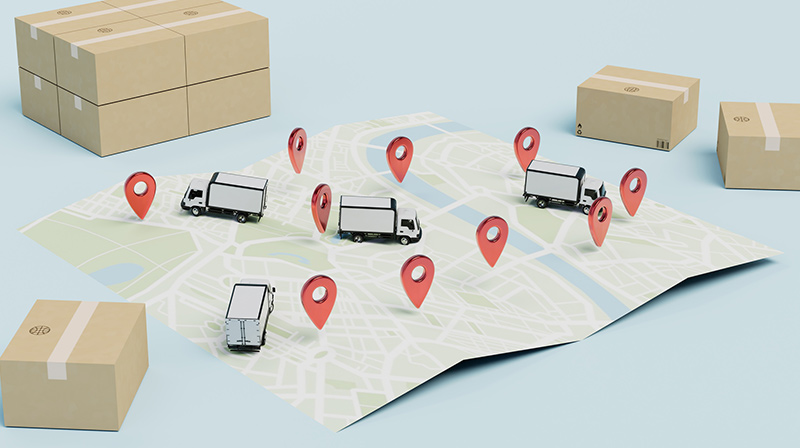
How Route Optimization Improves Multi-Stop Deliveries

Efficient routing and dispatch planning have become mission-critical for logistics providers, distributors, 3PLs, and retailers. With last-mile delivery volumes surging—fueled by eCommerce growth, rapid urbanization, and increasing demand for same-day and next-day delivery—operations teams are under pressure to manage more stops, tighter delivery windows, and rising transportation costs. Manual planning or outdated route scheduling tools simply can’t keep up with the complexity of modern last-mile networks.

This is where a Last Mile TMS (Transportation Management System) becomes a game-changer. It brings routing, planning, dispatch management, real-time visibility, and customer communication into a single integrated platform. By combining AI, automation, and advanced route optimization, a Last Mile TMS helps companies improve delivery accuracy, reduce operating expenses, and create predictable, scalable workflows—whether managing a small regional fleet or a nationwide operation.

The following sections break down exactly how a Last Mile TMS transforms routing and dispatch planning, and why logistics organizations are rapidly adopting this technology to stay competitive, efficient, and customer-centric.

Automate Route Planning With AI & Real-Time Data

Traditional route planning depends heavily on static maps, spreadsheets, and manual decision-making. This often results in suboptimal routes, higher fuel usage, missed delivery windows, and planning delays—especially when delivery volumes fluctuate or unexpected disruptions occur.

A Last Mile TMS replaces this outdated approach with AI-driven route optimization that continuously analyzes live data to generate the most efficient delivery paths. Instead of planning based on estimates, the system calculates optimal routes using real-world variables to ensure the fastest and most cost-effective execution.

A modern Last Mile TMS uses advanced algorithms and real-time traffic intelligence to:

  • Recommend the best delivery sequence for every driver, based on location density, service times, order priorities, and delivery windows.
  • Incorporate live traffic, weather updates, and road restrictions, ensuring routes stay efficient even in dynamic environments.
  • Automatically re-optimize routes when conditions change, such as sudden congestion, road closures, last-minute orders, or customer rescheduling.
  • Reduce total distance traveled and driving time, directly lowering fuel consumption and mileage-related fleet expenses.
  • Improve on-time delivery performance, resulting in higher customer satisfaction and more predictable SLAs.

Impact on Operations

In high-density regions real-time, AI-powered recalculations dramatically minimize delays caused by congestion, construction zones, weather disruptions, and peak-hour traffic. Logistics providers gain the agility to maintain delivery consistency even in the most complex urban environments.

Running a small delivery business and want to cut miles and time on every route? This article shows how.

Explore Route Optimization Tools

Optimizes Dispatch Allocation for Maximum Productivity

Manual dispatching can quickly become inefficient—especially when coordinating multiple drivers, diverse order types, varying delivery windows, and fluctuating daily demand. Dispatchers often spend hours matching drivers to routes, correcting overlaps, or reallocating loads when conditions change. These inefficiencies directly impact fleet productivity and increase operational costs.

A Last Mile TMS brings intelligence and automation into this process, ensuring every route is assigned to the right driver with minimal manual intervention.

A Last Mile TMS makes dispatch smarter by:

  • Automatically assigning the best driver to each route, based on proximity, skillset, delivery requirements, and past performance.
  • Balancing load capacity, vehicle type, and service-level commitments, ensuring specialized orders—like oversized items, white-glove service, or temperature-controlled deliveries—go to the right vehicles.
  • Eliminating route overlaps and unnecessary trips, preventing two drivers from visiting the same area or making conflicting stops.
  • Maximizing the number of successful stops per route, improving both route density and overall delivery throughput.

Result

The outcome is increased driver productivity, fewer empty miles, optimized fleet utilization, and a measurable reduction in operating costs. Dispatch teams can handle more deliveries with the same resources, while maintaining service quality.

Enhances Real-Time Visibility & Predictability

One of the most persistent challenges in last-mile logistics is the lack of real-time visibility—both for internal operations teams and for end customers expecting accurate delivery information. Without live tracking and proactive alerts, dispatchers struggle to identify issues early, and customers often experience uncertainty about delivery timing, leading to frustration and increased support calls.

A Last Mile TMS solves this by offering comprehensive, real-time operational visibility across every driver, vehicle, and delivery route.

A Last Mile TMS provides:

  • Real-time driver and vehicle tracking, allowing dispatchers to monitor movement, speed, and route adherence at every moment.
  • Live route progress updates, showing completed stops, upcoming stops, delays, and any deviations from the planned route.
  • Dynamic ETA calculations, automatically adjusted based on live traffic, weather conditions, and driver behavior.
  • Instant alerts for delays, exceptions, failed deliveries, or missed stops, giving teams the opportunity to react before issues escalate.
  • Digital Proof of Delivery (POD) with photos, customer signatures, barcodes, or geotagged timestamps for complete delivery verification and compliance.

Why This Matters 

This level of visibility dramatically improves predictability, reduces “Where is my order?” inquiries, and empowers logistics teams to resolve problems faster. In busy metropolitan areas and high-density delivery zones, real-time insights also help maintain tighter SLAs and minimize customer dissatisfaction—directly impacting brand reputation and repeat business.

Reduces Delivery Costs Across the Board

Rising fuel prices, ongoing driver shortages, increasing wage pressures, and heightened customer expectations have made cost control one of the biggest challenges in last-mile logistics. Companies can no longer afford inefficient routing, empty miles, or failed delivery attempts—every mile and minute now has a direct impact on profitability.

A Last Mile TMS delivers significant cost reductions by optimizing every part of the delivery workflow, from planning to execution.

A Last Mile TMS helps reduce costs through:

  • Reduced total travel distance, thanks to AI-powered route optimization that eliminates unnecessary detours and backtracking.
  • Improved route density, ensuring more stops per route and maximizing each vehicle’s delivery potential.
  • Fewer failed or missed deliveries, enabled by real-time communication, accurate ETAs, and proactive exception handling.
  • Lower fuel consumption, driven by shorter routes, less idling, and fewer congestion delays.
  • Optimized driver schedules, reducing overtime costs and improving labor planning accuracy.
  • Better asset utilization, ensuring every vehicle and driver in the fleet is used at optimal capacity.

The Impact

Most logistics companies—especially those operating in urban hubs see 10–30% cost savings within the first few months of adopting a modern route optimization platform. These savings compound over time as operations become more predictable, efficient, and data-driven.

Improves Customer Experience Through Accurate ETAs

Customer expectations in the last-mile space have shifted dramatically. Whether it’s a residential eCommerce delivery or a business receiving critical inventory, customers now want precise, transparent, real-time information about their orders. Uncertain delivery windows or outdated tracking increases frustration, missed handoffs, and support escalations.

A Last Mile TMS helps companies deliver a superior customer experience by providing accurate, automated, and continuously updated delivery insights.

A Last Mile TMS enhances customer experience with:

  • Highly accurate, AI-powered ETAs, updated in real time based on traffic, driver progress, and route changes.
  • Automated SMS and email notifications, keeping customers informed about order dispatch, upcoming delivery windows, and arrival alerts.
  • Self-service tracking portals, allowing customers to check delivery status without calling support.
  • Live updates throughout the delivery journey, including “driver en route,” “stops away,” and “delivered with proof.”

End Result

With clearer expectations and more transparency, companies experience fewer customer support calls, reduced failed delivery attempts, and higher customer satisfaction scores. For brands competing on delivery experience, a Last Mile TMS becomes a key differentiator in building trust and encouraging repeat business.

Enables Scalable Multi-Stop & High-Density Routing

Across the retailers, distributors, healthcare providers, and 3PLs handle increasingly complex multi-stop delivery routes. High-density areas, strict delivery windows, and specialized delivery requirements make manual planning almost impossible to scale. As delivery volumes grow, so does the challenge of efficiently managing routes that include dozens—or even hundreds—of stops per driver.

A Last Mile TMS is designed to optimize and scale these multi-stop operations with sophisticated algorithms that account for real-world constraints and resource availability.

A Last Mile TMS supports:

  • High-density urban routes, ensuring drivers make more stops in less time while navigating traffic-heavy areas.
  • Advanced multi-stop sequencing, using AI to find the most efficient order of deliveries and minimize total drive time.
  • Route consolidation, combining orders across multiple customers or zones to maximize route density and reduce fleet costs.
  • Multi-driver and multi-depot planning, essential for enterprises with distributed networks or regional hubs.
  • Complex delivery constraints, such as strict time windows, temperature-controlled cargo, white-glove services, access restrictions, or high-priority orders.

Why This Matters

These capabilities make operations far more scalable—whether during peak retail seasons (holiday surge, back-to-school, Black Friday), sudden demand spikes, or daily operational fluctuations. Logistics teams gain the flexibility to grow without adding proportional labor, vehicles, or planning hours.

Struggling with delays and missed windows? Real-time route planning keeps things on track. See Real-Time Delivery Solutions

Streamlines Communication Between Drivers, Dispatchers & Customers

Miscommunication is one of the biggest hidden costs in last-mile operations. When drivers, dispatchers, and customers rely on phone calls, fragmented apps, or manual updates, it often results in missed instructions, late deliveries, incorrect drop-offs, and unnecessary reattempts. For operations with high delivery volumes, this lack of synchronized communication quickly leads to inefficiency and customer dissatisfaction.

A Last Mile TMS eliminates these issues by bringing all communication channels into one seamless platform.

A Last Mile TMS centralizes communication by:

  • Providing in-app driver messaging, allowing dispatchers to share updates, instructions, or route changes instantly.
  • Automating customer notifications, so receivers know when their order is shipped, out for delivery, or arriving soon.
  • Offering dispatcher dashboards, giving a complete view of driver status, delivery progress, and exceptions in real time.
  • Recording and storing delivery instructions, ensuring drivers always have access to gate codes, contact details, special handling notes, and access restrictions.
  • Reducing back-and-forth phone calls, as all updates and alerts flow directly through the platform.

Result

This integrated communication flow leads to smoother operations, fewer misunderstandings, higher first-attempt delivery success, and improved delivery accuracy. For logistics providers, it means more predictable workflows and a better customer experience across every route.

Why Companies Are Moving Toward AI-Powered Last Mile TMS Platforms

Across the location, logistics providers, retailers, distributors, and 3PLs are rapidly shifting toward AI-powered Last Mile TMS platforms. The pressure to deliver faster, cheaper, and more reliably has never been higher—driven by rising eCommerce volumes, changing customer expectations, and increasing operational constraints. Traditional dispatching tools, manual processes, and legacy routing systems are no longer enough to stay competitive.

The market is prioritizing:

  • Faster delivery promises, including same-day and next-day SLAs that require precise planning and real-time adjustments.
  • Lower cost per delivery, as rising fuel, labor, and insurance costs squeeze margins.
  • High-volume urban drops, especially in dense metros, where route optimization is essential.
  • End-to-end real-time visibility, demanded by both B2C and B2B customers who expect live tracking and accurate ETAs.
  • Driver shortage management, pushing companies to maximize productivity from existing workforce and assets.
  • Digital compliance and Proof of Delivery, needed for audits, dispute resolution, and operational transparency.

A modern, AI-enabled Last Mile TMS addresses all of these priorities by combining automation, optimization, and real-time intelligence into one unified platform.

The Bottom Line

For logistics teams, an AI-powered Last Mile TMS is no longer just a technology upgrade—it’s a strategic investment. It enables faster deliveries, tighter cost control, higher fleet productivity, and a dramatically better customer experience. As companies plan for 2025 and beyond, adopting a modern TMS has become essential for staying competitive in a rapidly evolving delivery landscape.

About nuVizz

nuVizz is a leading AI-powered Last Mile Delivery & Transportation Management (TMS) platform designed to help enterprises streamline routing, dispatching, visibility, and end-to-end delivery execution. Built for the complexities of logistics, nuVizz equips organizations with advanced optimization tools that reduce costs, eliminate inefficiencies, and deliver consistently superior customer experiences.

With its intelligent route optimization engine and dynamic dispatch logic, nuVizz allows logistics providers, retailers, distributors, healthcare networks, and 3PLs to scale operations across high-density urban areas, regional territories, or nationwide delivery networks. The platform is built to adapt to real-world challenges—traffic fluctuations, capacity variations, delivery windows, driver shortages, and peak-season surges.

Key capabilities of the nuVizz platform include:

  • AI-driven dynamic route optimization, enabling faster, smarter, and more cost-effective route creation.
  • Multi-stop and multi-driver route planning, ideal for high-volume delivery operations.
  • Real-time visibility & live ETAs, improving predictability, SLA adherence, and customer transparency.
  • Mobile driver app with POD capture, supporting photos, signatures, barcodes, and geolocation compliance.
  • Automated dispatch workflows, reducing manual effort and improving fleet utilization.
  • Advanced analytics and dashboards, helping operations teams reduce costs, monitor performance, and make data-driven decisions.

By combining automation, intelligence, and operational visibility, nuVizz empowers organizations to elevate their last-mile delivery performance and stay competitive in an increasingly demanding logistics market.

Conclusion

A Last Mile TMS is no longer a “nice-to-have” — it has become a core operational requirement for logistics teams that want to cut costs, improve routing accuracy, streamline dispatch planning, and meet today’s demanding delivery expectations. With delivery volumes rising and competition intensifying across the industry, companies that rely on manual planning or legacy tools risk falling behind in both efficiency and customer satisfaction.

Modern Last Mile TMS platforms powered by AI, automation, and real-time visibility give logistics organizations the intelligence and agility needed to succeed in fast-moving last-mile environments. They optimize every step of delivery execution — from generating efficient multi-stop routes to keeping customers informed with accurate ETAs.

Solutions like nuVizz last mile TMS take this transformation even further by offering end-to-end capabilities built specifically for the complexities of delivery networks. Whether it’s reducing empty miles, improving on-time performance, or scaling high-density routes during peak seasons, a platform like nuVizz gives logistics providers the competitive edge they need for 2025 and beyond.

By adopting a modern Last Mile TMS, businesses position themselves for greater productivity, lower operational costs, improved customer experience, and long-term growth in an increasingly demanding and dynamic market.


bookmark_fill [#fff1226] Created with Sketch. Related Content
Blog

Reducing Costs via AI Last Mile Delivery...

Reducing-Costs-via-AI-Last-Mile-Delivery-Management-Software
Blog

Why Static Routing Fails: Route Planning...

Why-Static-Routing-Fails-Route-Planning-Software-Tips
Blog

Beyond Basic Labels: Shipping Software f...

Beyond-Basic-Labels-Shipping-Software-for-Ecommerce
Blog

Solving the ‘Blind Spot’ Cri...

Solving the 'Blind Spot' Crisis in Last Mile Logistics with Orchestration
Blog

How Poor Data Integration with Carriers ...

How Poor Data Integration with Carriers Creates Supply Chain Black Holes
Blog

What Shippers Need to Know: The Real Dif...

What Shippers Need to Know The Real Difference Between Tracking and Visibility
Blog

Retail Store Distribution Blind Spots: W...

Retail Store Distribution Blind Spots Why Inventory Vanishes at the Dock
Blog

Reverse Logistics and Returns Management...

Reverse Logistics and Returns Management Solutions
Blog

The Neural Network of the Last Mile: How...

The-Neural-Network-of-the-Last-Mile-How-AI-Route-Optimization-Outperforms-Traditional-Algorithms
Blog

The Zero-Silo Standard: Why Integrated D...

The-Zero-Silo-Standard-Why-Integrated-Delivery-Tracking-Software-is-the-Future-of-Final-Mile-Logistics

FAQs

It optimizes routing, reduces fuel costs, improves dispatch efficiency, and provides real-time visibility to enhance delivery performance across U.S. cities and states.

Yes, modern TMS platforms use AI and traffic data to manage multi-stop routes in congested cities like New York, Chicago, or Los Angeles.

By shortening routes, increasing route density, minimizing failed deliveries, and improving vehicle utilization.

Absolutely — it provides live GPS tracking, ETAs, exception alerts, and POD capture for full delivery transparency.

Retailers, distributors, 3PLs, courier services, healthcare logistics providers, and food/furniture delivery companies.


Blog

Why Static Routing Fails: Route Planning Software Tips

Why-Static-Routing-Fails-Route-Planning-Software-Tips

In the legacy world of logistics, the “Master Route” was king. Shippers relied on fixed, static paths that operated on a dangerous assumption: that every Monday was identical to every Thursday. This “set-it-and-forget-it” mentality worked when fuel was cheap and customer patience was high. But in 2026, the last mile has evolved into a chaotic, high-speed environment where predictability is a relic of the past.

The modern landscape is defined by the “Amazon Effect”—a world where sub-two-hour delivery windows are no longer a luxury but a standard expectation. Coupled with fluctuating fuel prices and volatile labor markets, static routing has shifted from being merely inefficient to being financially dangerous.

From Planning to Orchestration

As we move into an era of Last-Mile Orchestration, the fundamental objective of the dispatcher has changed. The question is no longer “How do we plan a route?” but “How do we orchestrate a living, breathing network?”. Static models fail because they are “blind” to real-time variables—traffic surges, vehicle breakdowns, or last-minute order cancellations.

This blog explores the structural failures of static models and why transitioning to AI-driven dynamic software provides a definitive, measurable ROI for the modern shipper.

What is the difference between static and dynamic routing in 2026?

Static routing relies on fixed, historical paths that fail to account for real-time variables, leading to wasted fuel and missed delivery windows. Dynamic routing uses AI-driven orchestration to adjust paths instantly based on live traffic, order priority, and vehicle capacity, typically resulting in 15-20% fuel savings and 100% delivery accuracy.

1. The Anatomy of Static Failure: Why Rigid Models Break

At its core, static routing is built on the flawed principle of “Inelasticity”. It operates under the assumption that variables such as traffic patterns, weather conditions, driver availability, and vehicle capacity are constants. In the real-world environment of 2026, these factors are anything but stable; when they deviate from the “master plan,” a static system lacks the foundational intelligence to adapt, causing the entire delivery sequence to break.

The Traffic Paradox

Static routes are typically constructed using historical averages—data that reflects what happened last year, not what is happening right now.

  • The Cascading Delay: A “typical” Tuesday morning commute can be instantly derailed by a single road closure or an unexpected accident.
  • The Inability to “Re-Think”: Because static systems cannot re-calculate mid-route, drivers are forced to sit in predictable congestion, creating delays that cascade through every subsequent delivery window for the rest of the day.

The Inefficiency of “Empty Miles”

Static routing fails to scale with fluctuating daily demand.

  • Fixed Routes vs. Variable Volume: When order volume drops, static routes remain unchanged, leading to vehicles running half-empty.
  • Imbalanced Capacity: Conversely, while some trucks return to the hub hours early, other routes may be dangerously over-capacity.
  • The Margin Killer: This fundamental lack of Asset Utilization acts as a silent margin killer, as shippers pay for fuel and labor that do not translate into delivered revenue.

Why is static routing inefficient for modern logistics?

Static routing fails because it lacks real-time data integration. It cannot account for variable constraints such as live traffic, vehicle maintenance, or “on-the-fly” order changes, leading to an average 15-20% increase in operational waste.

Manual intervention is too slow for today’s shippers—it’s time for autonomous execution fixes.

See AI in Action

2. Quantifying the ROI: Data-Backed Results of the Dynamic Shift

The transition from static to dynamic planning is often viewed through the lens of operational convenience, but the true driver is Financial Transformation. In a legacy environment, costs are “baked in” to rigid routes that cannot adapt to daily fluctuations. By moving to a unified SaaS TMS platform, shippers stop paying for the inefficiency of the “Master Route” and start paying only for the most optimized path possible.

The following performance metrics represent the measurable improvements across every critical KPI:

The Efficiency Gains

In a dynamic environment, every mile is scrutinized for value. By moving away from rigid master routes, shippers unlock significant “found” capital within their existing operations:

  • Fuel Savings (15-20%): By optimizing delivery paths in real-time based on live variables, vehicles drive significantly fewer miles to complete the same—or a higher—number of stops.
  • Asset Utilization (15-20%): Dynamic software ensures every cubic inch of vehicle space is used effectively. Through strategic planning, the system balances loads across the fleet, ensuring no truck leaves the hub under-capacity while another is overworked.
  • Labor Cost Reduction (30-35%): Automated dispatching and optimized routing allow drivers to be more productive with far less downtime. By eliminating the manual “guesswork” of navigation and sequencing, drivers complete routes faster and more accurately.

The Sustainability Factor: “Green” as a Financial Driver

In 2026, “Green Logistics” is no longer a public relations luxury; it is a financial and regulatory requirement.

  • Carbon Footprint Reduction: Reducing mileage through dynamic optimization results in a direct 15-20% reduction in CO₂ Emissions.
  • Financial Incentives: This data is now crucial for mandatory ESG reporting, which is increasingly tied to corporate tax incentives, lower interest rates from institutional lenders, and access to “green” investment capital.
  • Regulatory Compliance: As urban centers implement stricter emissions zones, the ability to prove a reduced carbon footprint through technology becomes a license to operate in key markets.

What is the measurable ROI of switching from static to dynamic routing? Shippers typically see a 15-20% reduction in fuel costs and CO₂ emissions, alongside a 30-35% drop in labor costs. This is achieved by increasing Asset Utilization by 15-20%, ensuring that every vehicle in the fleet is performing at its maximum financial capacity.

Stop wasting hours on manual data entry and start using shipping software that thinks for you. Streamline Your Fulfillment

3. The “Invisible” Costs of Staying Static

While many organizations hesitate to upgrade their logistics stack due to the perceived Technology TCO (Total Cost of Ownership), the modern reality of 2026 is that the cost of not upgrading is significantly higher. Static routing creates “invisible” financial leaks that erode margins through administrative bloat and customer dissatisfaction.

WISMO and Customer Churn

“Where Is My Order?” (WISMO) calls are the most expensive and least productive type of customer interaction.

  • The Predictive Solution: Unlike static routing, which provides vague, wide delivery windows, dynamic software utilizes real-time data to provide Predictive ETAs and Proactive Alerts.
  • Reduced Support Overhead: When a customer has total visibility into their package arrival, they no longer need to contact the support center.
  • Brand Loyalty: This transparency increases Customer Satisfaction by 15-20%, directly reducing churn and increasing long-term revenue.

The Billing Cycle Lag

In a static, paper-heavy environment, the “Credit-to-Cash” cycle is notoriously slow, trapping capital in the “Last-Mile Black Hole”.

  • Digital Acceleration: Transitioning to a digital, dynamic system can reduce the Billing Cycle by 50-60%.
  • Instant Settlement: By utilizing Electronic Proof of Delivery (ePOD), the settlement process begins the second the driver presses the “Submit” button on their mobile device.
  • Improved Liquidity: Shifting to an automated billing and settlement process ensures that completed deliveries are converted into liquid revenue almost instantly.

How does dynamic routing impact the bottom line beyond fuel and labor?

Beyond operational savings, dynamic routing software eliminates “Invisible Costs” by reducing WISMO call volume through 15-20% higher customer satisfaction. Furthermore, it accelerates the Credit-to-Cash cycle by 50-60% through automated ePOD settlement, ensuring that deliveries are converted into revenue almost instantly.

4. Strategic Tips: Choosing the Right Route Planning Software

If you are ready to move beyond the limitations of static routes, your selection process must be guided by the ability to pivot and scale. Below are three critical tips to ensure your investment drives maximum ROI.

Tip #1: Look for Unified Orchestration

Fragmented tools—where dispatch, tracking, and billing live in separate silos—create data blind spots and integration headaches.

  • Consolidate the Ecosystem: A Unified SaaS TMS Platform can reduce your Technology TCO (Total Cost of Ownership) by 15-20% by bringing all last-mile functions into one cohesive environment.
  • Streamline Operations: Consolidation eliminates the need for manual data syncing between systems, reducing the risk of human error and administrative bloat.

Tip #2: Demand “What-If” Simulation

In 2026, a modern TMS must do more than record what is happening; it should act as a Digital Twin of your entire operation.

  • Risk-Free Testing: You should be able to simulate “What-If” scenarios—such as a 20% spike in orders or the opening of a new warehouse location—to see the exact impact on your cost-per-stop.
  • Predictive Capital Planning: This capability allows you to calculate the ROI of operational changes before you commit a single dollar of capital to a physical move.

Tip #3: Prioritize 100% Delivery Accuracy

In the age of AI and real-time data, there is no longer an excuse for “estimated” locations or vague delivery status.

  • Real-Time Visibility: High-performance software ensures 100% Delivery Accuracy through precise GPS tracking and automated status updates.
  • Performance Benchmarking: Accuracy allows you to identify “Top Performers” within your fleet and provides stakeholders with the “ground truth” data required for high-level decision-making.

How do you choose the best route planning software for ROI?

To maximize ROI, prioritize Unified SaaS TMS Platforms that offer 100% Delivery Accuracy and “What-If” simulation capabilities. This approach typically reduces Technology TCO by 15-20% while providing the strategic agility needed to handle demand surges or operational shifts without increasing overhead.

The most successful carriers have already traded spreadsheets for smart models—don’t get left behind.

See the New Model

5. The Hybrid Fleet: The Ultimate Flexibility

Today’s leading shippers are moving away from rigid ownership models in favor of a Hybrid Model. This approach allows for a seamless blend of your dedicated internal drivers, third-party logistics (3PL) partners, and on-demand Gig-economy workers within a single operational view.

The Logic: AI-Driven “Best-Fit” Assignment

Dynamic software removes the human bias and manual coordination typically required to manage multiple carrier types.

  • Intelligent Dispatching: The AI engine analyzes the entire network in real-time, assigning each stop to the closest and most cost-effective vehicle, regardless of who owns it.
  • Seamless Integration: Whether a driver is an employee or a contractor, they receive the same optimized route and digital instructions through a unified mobile interface.

The Result: Scalability Without Compromise

The primary benefit of a hybrid fleet powered by dynamic orchestration is the ability to maintain your “Brand Promise” even during extreme volatility.

  • Elastic Capacity: Shippers using this model can handle a 400% spike in demand without the capital expense of purchasing new vehicles or the time-consuming process of hiring full-time staff.
  • Operational Resilience: If a private fleet vehicle breaks down, the system can instantly “re-route” that capacity to a 3PL partner, ensuring the end customer never feels the disruption.

How does a hybrid fleet improve last-mile delivery?

A hybrid fleet allows shippers to blend private, 3PL, and gig-economy drivers into a single, dynamic network. By using AI to assign stops to the most cost-effective vehicle in real-time, companies can manage 400% demand surges while keeping operational costs low and delivery accuracy high.

6. How AI Engines Change the Game

In the traditional logistics model, software uses “linear algorithms”—mathematical rules that calculate the shortest path between point A and point B. However, point A and B do not exist in a vacuum. Modern platforms have evolved into Machine Learning (ML) engines, which don’t just calculate; they learn, predict, and adapt.

Advanced Constraint Mapping

AI Engines transcends simple GPS coordinates by processing a massive array of “variables” simultaneously. It doesn’t just look at distance; it maps every delivery against a complex matrix of real-world constraints:

  • Vehicle Specifics: It accounts for vehicle height (bridge clearances), weight limits, and specialized needs like refrigeration.
  • Personnel Requirements: It matches specific orders to driver certifications (e.g., hazmat or white-glove installation).
  • Destination Intelligence: It factor in loading dock availability, operating hours, and historical “dwell time” at specific locations to ensure the schedule is actually achievable.

Predictive Correction vs. Reactive Fixing

The most transformative feature of an AI engine is the ability to see a failure before it occurs.

  • Early Warning System: AI engine flags a “High Probability” of a missed delivery window before the truck even leaves the hub.
  • Proactive Rerouting: By identifying these risks early, the system allows dispatchers to perform proactive rerouting, shifting a high-risk stop to a different driver to protect the customer experience.
  • Continuous Learning: Every “real-world” delay—whether a traffic pattern or a slow loading dock—is fed back into the ML model, making the next day’s routes even more accurate.

How does an AI engine outperform traditional routing?

Traditional algorithms only solve for distance, but AI engine solves for constraints. By simultaneously mapping vehicle requirements, driver skills, and dock availability, it identifies high-probability delays before they happen, allowing for predictive correction that saves time, fuel, and customer trust.

7. Conclusion: From Reactive to Predictive

In 2026, static routing is no longer just an inefficiency—it is a financial liability. While legacy models rely on “hope-based” logistics, dynamic route planning software provides a real-time pulse of your entire operation, transforming a volatile cost center into a scalable competitive advantage.

The Final Word on ROI

The transition to a unified, AI-driven platform like nuVizz delivers a “Triple Threat” of measurable financial benefits:

  • Operational Integrity: Achieve 100% Delivery Accuracy and 15-20% fuel savings through real-time orchestration.
  • Labor Efficiency: Realize 30-35% lower labor costs by automating manual dispatch and optimizing driver paths.
  • Financial Velocity: Accelerate cash flow with a 50-60% faster billing cycle powered by automated ePOD settlement.

The competitive gap is widening. The question for modern logistics leaders is no longer whether you can afford to switch—it is whether your brand can afford to stay static while the industry moves at the speed of AI.

bookmark_fill [#fff1226] Created with Sketch. Related Content
Blog

Reducing Costs via AI Last Mile Delivery...

Reducing-Costs-via-AI-Last-Mile-Delivery-Management-Software
Blog

Beyond Basic Labels: Shipping Software f...

Beyond-Basic-Labels-Shipping-Software-for-Ecommerce
Blog

Solving the ‘Blind Spot’ Cri...

Solving the 'Blind Spot' Crisis in Last Mile Logistics with Orchestration
Blog

How Poor Data Integration with Carriers ...

How Poor Data Integration with Carriers Creates Supply Chain Black Holes
Blog

What Shippers Need to Know: The Real Dif...

What Shippers Need to Know The Real Difference Between Tracking and Visibility
Blog

Retail Store Distribution Blind Spots: W...

Retail Store Distribution Blind Spots Why Inventory Vanishes at the Dock
Blog

Reverse Logistics and Returns Management...

Reverse Logistics and Returns Management Solutions
Blog

The Neural Network of the Last Mile: How...

The-Neural-Network-of-the-Last-Mile-How-AI-Route-Optimization-Outperforms-Traditional-Algorithms
Blog

The Zero-Silo Standard: Why Integrated D...

The-Zero-Silo-Standard-Why-Integrated-Delivery-Tracking-Software-is-the-Future-of-Final-Mile-Logistics
Blog

The ROI of Intelligence: Benchmarking AI...

The ROI of Intelligence: Benchmarking AI Logistics Software Against Traditional Systems

FAQs

Companies utilizing a unified SaaS TMS platform routinely see a 30-35% reduction in labor costs through automated dispatching and a 15-20% increase in asset utilization. Additionally, by moving to electronic proof of delivery (ePOD), businesses can accelerate their billing cycle by 50-60%.

Static routing is inelastic; it cannot "re-think" mid-route when constraints change. This leads to the "Traffic Paradox," where drivers are forced into cascading delays, and "Empty Miles," where vehicles run under-capacity because the fixed route cannot absorb new demand. This lack of flexibility leads to an average 15-20% increase in operational waste.

Invisible costs are financial leaks caused by legacy systems, primarily WISMO (Where Is My Order) support calls and Billing Cycle Lags. Dynamic software reduces these costs by increasing customer satisfaction by 15-20% through predictive ETAs and automating the credit-to-cash process via digital settlements.

Yes. Modern dynamic software allows shippers to blend private fleets, 3PL partners, and gig-economy workers into a single network. The AI engine assigns stops to the closest and most cost-effective vehicle regardless of ownership, allowing companies to handle 400% demand spikes without increasing permanent overhead.

Unlike traditional algorithms that only solve for the shortest distance, AI engines like Vizzard solve for complex constraints. They simultaneously map vehicle height, refrigeration needs, driver certifications, and loading dock availability. Furthermore, they provide predictive correction, flagging a high probability of a missed window before the truck even leaves the hub.

Blog

Solving the ‘Blind Spot’ Crisis in Last Mile Logistics with Orchestration

Solving the 'Blind Spot' Crisis in Last Mile Logistics with Orchestration

The “Blind Spot” crisis in last-mile logistics refers to the period between a package leaving a distribution center and arriving at the customer’s door where the shipper has zero real-time data on vehicle location, driver behavior, or delivery status. Last-Mile Orchestration solves this by unifying fragmented 3PL data, internal fleet telemetry, and customer feedback into a single pane of glass. Using platforms like nuVizz Last Mile TMS, businesses eliminate these blind spots, leading to a 30% increase in operational efficiency and a 40% reduction in WISMO (Where Is My Order) inquiries.

Defining the ‘Blind Spot’ Crisis in 2026

In an era of instant gratification, the greatest threat to a supply chain isn’t a delay—it’s uncertainty.

A “Blind Spot” occurs when the digital thread of a shipment is broken. This typically happens when:

● Carrier Hand-offs

A package moves from a national carrier to a local “white glove” delivery partner with a different tech stack.

● Static Silos

Warehouse Management Systems (WMS) don’t talk to Transportation Management Systems (TMS) in real-time.

● The “Final 100 Feet”

Data is lost the moment a driver leaves the vehicle to find an apartment or navigating a complex hospital wing.

For the modern logistics manager, these blind spots result in “reactive management”—solving problems only after the customer has already complained.

The High Cost of Operating in the Dark

Operating with blind spots is a massive drain on the bottom line. Research published highlights four primary “hidden costs”:

A. The Customer Service Sinkhole (WISMO)

When a brand cannot tell a customer exactly where their $2,000 sofa is, the customer calls support. Each “Where is my order?” call costs an average of $7 to $12 in labor. Without orchestration, your support team is as blind as the customer.

B. Inefficient Labor Utilization

If you don’t have visibility into driver location and route progress, you cannot adjust for delays. Drivers end up sitting in traffic while other vehicles in the same neighborhood have empty capacity. This lack of visibility leads to under-utilized assets and inflated labor costs.

C. The “False Fail” and Fraud

Without geofenced Proof of Delivery (ePOD), carriers can mark a delivery as “Attempted” when they never actually arrived at the location. This creates a blind spot that leads to unnecessary re-delivery costs and potential “lost package” claims that the company must refund.

Cut hours off your daily routes with smarter multi-stop sequencing.

Get the Practical Guide

What is Last-Mile Orchestration?

Orchestration is the evolution beyond simple “tracking.” While tracking tells you where something is, orchestration tells you what to do about it.

The Three Layers of Orchestration:

  1. The Integration Layer: Pulling data from ELDs (Electronic Logging Devices), GPS, carrier portals, and WMS into a unified data lake.
  2. The Intelligence Layer (AI): Analyzing that data to predict delays. If the “Blind Spot” shows a driver hasn’t moved in 20 minutes, the AI flags a potential breakdown.
  3. The Action Layer: Automatically rerouting, notifying the customer, or assigning a new driver to the remaining stops.

Solving the Multi-Carrier Blind Spot

Many brands use a “Carrier Mix” to save costs. However, every new carrier adds a new blind spot because they use their own proprietary apps and portals.

How nuVizz Solves This: The nuVizz platform acts as a Universal Integration Hub. It allows carriers to “plug and play” into the shipper’s ecosystem.

● Mobile App Standardization

Shippers can require 3PL drivers to use the nuVizz mobile app, ensuring the same level of data (GPS, photo proof, timestamps) is captured regardless of who owns the truck.

● Aggregated Analytics

Compare the performance of “Carrier A” vs. “Carrier B” in real-time to see who has fewer blind spots and higher success rates.

The High Stakes of Food & Beverage Blind Spots

In the F&B sector, a “Blind Spot” isn’t just a late delivery—it’s a safety risk and a total loss of inventory. As of 2026, the shift toward minimally processed fresh goods and D2C grocery delivery has made “Chain of Custody” visibility a regulatory and operational requirement.

The Cold Chain “In-Between” Moments

Failures in the cold chain rarely happen inside a refrigerated warehouse; they happen in the “in-between” moments: during the transfer from a hub to a 3PL van, or when a delivery is left on a porch in 90°F weather.

  • The Blind Spot: Traditional GPS only tells you where the van is. It doesn’t tell you that the refrigeration unit failed three miles ago.
  • The Orchestration Solution: nuVizz integrates IoT telemetry (Bluetooth temperature and humidity sensors) directly into the delivery workflow. If a temperature “drifts” outside a safe threshold, the system triggers an immediate Proactive Exception Alert to both the driver and the dispatcher, allowing for a course correction before the product spoils.

Direct Store Delivery (DSD) Visibility

For F&B brands managing DSD, visibility into “dwell time” at the receiving dock is the ultimate blind spot.

  • Orchestration Impact: By using geofencing, nuVizz Last Mile TMS automatically clocks drivers in and out of delivery zones. This data allows brands to negotiate better terms with retailers by identifying which stores have inefficient receiving processes that eat into carrier margins.
Stop guessing where your freight is and start seeing every milestone in real-time. Eliminate the Black Holes

Retail Orchestration and the “Store-as-a-Hub”

Modern retail has moved away from centralized shipping to Store-First Fulfillment. This creates a massive blind spot: the retail store staff are not professional logisticians.

The Inventory vs. Delivery Gap

  • The Blind Spot: A customer buys an item for “Same-Day Delivery” from a local store. The store system shows it as “Picked,” but the 3PL driver is stuck in a different part of the city. The retailer has no idea when the handoff will actually occur.
  • The Orchestration Solution: nuVizz synchronizes the Store Backroom Planning with Carrier Dispatch. The system “sees” the driver’s ETA and tells the store staff exactly when to bring the package to the curb. This reduces driver dwell time and ensures the “Same-Day” promise is met without manual phone calls between the store and the courier.

Managing the “White Glove” Blind Spot

For high-end retail (furniture, appliances), the blind spot is often the quality of the delivery.

  • Orchestration Impact: nuVizz Last Mile TMS provides Digital Proof of Delivery (ePOD) with multi-photo capture and mandatory checklists. If a sofa is delivered with a scratch, the driver must document it in the app immediately. The orchestration layer then automatically triggers a return or a discount offer to the customer, solving the “Blind Spot” of post-delivery damage before it becomes a viral bad review.

How Orchestration “Lights Up” the Map

Modern orchestration doesn’t just “check” for updates; it listens for events. An event is any change in state—a driver starting an engine, a temperature sensor hitting 40°F, or a customer changing a delivery window.

API-Led Connectivity

Orchestration works because it acts as a translator. It takes API data from a 3PL’s system, GPS data from a driver’s smartphone, and order data from an eCommerce platform (like Shopify or Magento) and unifies them.

  • Self-Service Portals: A key way nuVizz Last Mile TMS eliminates blind spots is by giving carriers a “Self-Service Portal.” Instead of the shipper begging for data, the carrier logs in to see their own performance, and their data flows automatically into the central hub.

The Role of Predictive AI

In 2026, orchestration doesn’t just show you where things are—it shows you where they will be.

  • Dynamic ETAs: If a retail delivery is delayed at Stop #3, the AI recalculates the ETAs for Stops #4 through #20 and automatically texts the customers. This “lights up” the blind spot of a falling-behind schedule, managing expectations before the customer feels ignored.

The Roadmap to Total Visibility

To fully “solve” the crisis, businesses must follow a maturity model:

Step 1: Real-Time Telemetry

Move away from “status updates” (e.g., “Out for delivery”) to Streaming Data. This involves GPS pings every 30 seconds and geofenced triggers that notify the system when a vehicle enters a 5-mile radius of the destination.

Step 2: Predictive Visibility

Use AI to look ahead of the vehicle. If weather sensors indicate a storm is moving into a delivery zone, the orchestration engine should proactively alert the next 10 customers that their windows might shift, effectively “lighting up” a potential blind spot before it becomes a complaint.

Step 3: Closing the Loop with the Customer

The ultimate blind spot is the customer’s availability. Orchestration includes Two-Way Communication. If a customer realizes they won’t be home, they can use the nuVizz portal to “instruct” the driver to leave the package at the back door. This data goes directly to the driver’s handset, eliminating the blind spot of “will they be there?”

Conclusion: Visibility is the Foundation of 2026 Logistics

The “Blind Spot” crisis is a symptom of fragmented growth. As Retail and F&B companies scale their delivery networks, the complexity grows faster than their visibility. Orchestration is the only cure.

By moving from reactive tracking to proactive orchestration with nuVizz, companies don’t just “see” their last mile—they control it. They reduce spoilage in F&B, eliminate chaos in retail stores, and ultimately turn the most expensive leg of the journey into their strongest competitive advantage.

bookmark_fill [#fff1226] Created with Sketch. Related Content
Blog

Reducing Costs via AI Last Mile Delivery...

Reducing-Costs-via-AI-Last-Mile-Delivery-Management-Software
Blog

Why Static Routing Fails: Route Planning...

Why-Static-Routing-Fails-Route-Planning-Software-Tips
Blog

Beyond Basic Labels: Shipping Software f...

Beyond-Basic-Labels-Shipping-Software-for-Ecommerce
Blog

How Poor Data Integration with Carriers ...

How Poor Data Integration with Carriers Creates Supply Chain Black Holes
Blog

What Shippers Need to Know: The Real Dif...

What Shippers Need to Know The Real Difference Between Tracking and Visibility
Blog

Retail Store Distribution Blind Spots: W...

Retail Store Distribution Blind Spots Why Inventory Vanishes at the Dock
Blog

Reverse Logistics and Returns Management...

Reverse Logistics and Returns Management Solutions
Blog

The Neural Network of the Last Mile: How...

The-Neural-Network-of-the-Last-Mile-How-AI-Route-Optimization-Outperforms-Traditional-Algorithms
Blog

The Zero-Silo Standard: Why Integrated D...

The-Zero-Silo-Standard-Why-Integrated-Delivery-Tracking-Software-is-the-Future-of-Final-Mile-Logistics
Blog

The ROI of Intelligence: Benchmarking AI...

The ROI of Intelligence: Benchmarking AI Logistics Software Against Traditional Systems

FAQs

In 2026, a last-mile blind spot is any gap in the digital thread where a shipper loses real-time data on a package’s location, condition, or status. This typically occurs during carrier hand-offs, within complex urban high-rises, or when using fragmented 3rd-party logistics (3PL) providers that lack integrated technology stacks.

Orchestration improves visibility by acting as a "universal translator" between disparate systems like WMS, TMS, and various carrier portals. It unifies real-time telemetry, driver app events, and customer feedback into a single dashboard, allowing logistics managers to see and manage the entire delivery network as one cohesive unit.

For the Food & Beverage industry, orchestration is critical for Cold Chain compliance. It integrates IoT temperature sensors with delivery workflows to provide real-time monitoring of perishables. This eliminates the "blind spot" of spoilage during transit by triggering automated alerts if temperatures drift, ensuring food safety and reducing waste.

Orchestration bridges the gap between store-level inventory and last-mile execution. By synchronizing "Store-as-a-Hub" picking with carrier ETAs, it ensures that store staff bring packages to the curb exactly when the driver arrives. This reduces driver dwell time and solves the visibility gap between the backroom and the doorstep.

Tracking is a passive record of where a package is; orchestration is an active system for managing the delivery outcome. While tracking provides data, orchestration uses that data to make real-time decisions—such as auto-dispatching the next best carrier or proactively rescheduling a delivery based on traffic-induced delays.

Blog

How Poor Data Integration with Carriers Creates Supply Chain Black Holes

How Poor Data Integration with Carriers Creates Supply Chain Black Holes

In the modern supply chain, data is just as important as the physical freight itself. A package moving without digital confirmation is effectively lost until it reappears at its destination. Yet, for many shippers and logistics service providers (LSPs), this lack of visibility is the status quo.

We call these visibility gaps “Supply Chain Black Holes.”

They occur when freight is handed off to third-party carriers, LTL (Less-Than-Truckload) providers, or gig-economy drivers who operate outside the shipper’s internal ecosystem. When your Transport Management System (TMS) cannot “speak” to your carrier’s system, you lose control.

The consequences are severe: reactive firefighting, ballooning operational costs, and frustrated customers. This guide explores why these data gaps exist and how leading shippers are using Unified Last Mile TMS platforms to bridge the digital divide.

What Is a “Supply Chain Black Hole”?

A Supply Chain Black Hole refers to a period during the shipping process where the shipper loses all digital visibility of their inventory. This typically happens during handovers between different carriers or when data fails to sync between the carrier’s GPS system and the shipper’s central dashboard, resulting in a blind spot regarding the shipment’s location and status.

Why It Happens

In a perfect world, every truck, van, and scooter would feed data into a single screen. In reality, logistics is fragmented.

  • Shippers use an ERP (Enterprise Resource Planning) system (e.g., SAP, Oracle).
  • 3PLs use a WMS (Warehouse Management System).
  • Carriers use proprietary dispatch software or legacy ELDs.
  • Gig Drivers use standalone mobile apps.

When these systems fail to integrate via API or EDI, the data stops flowing. The truck keeps moving, but the screen says “Departed Warehouse” for 8 hours straight. That gap is the black hole.

Last-mile costs eating into your shipping margins?

Cut Delivery Costs Now

The Root Cause: The Tower of Babel in Logistics

The primary reason for poor data integration is the lack of standardization. Logistics is a “Tower of Babel” where every stakeholder speaks a different digital language.

Data Format Discrepancies

Even when carriers do send data, they often label it differently.

  • Carrier A might send a status update called “Out for Delivery.”
  • Carrier B might call the same event “En Route to Consignee.”
  • Carrier C might use a code like “Stat-99.”

Without a Middleware or a sophisticated TMS to translate and normalize these statuses, the shipper’s system rejects the data. The result? The dispatcher sees nothing, even though the carrier is technically sending updates.

Manual Entry Reliance

Surprisingly, many “integrations” are still human beings typing into spreadsheets. If a small carrier emails a status update (“Delivered at 2 PM”), and a dispatcher forgets to enter it into the TMS until 5 PM, the data is not only late—it is inaccurate.

EDI vs. API: The Technical Barrier to Real-Time Data

To understand black holes, you must understand the pipes that carry the data. The industry is currently in a painful transition between two technologies: EDI and API.

The Legacy Standard: EDI (Electronic Data Interchange)

For decades, EDI (specifically EDI 214 for status messages) was the gold standard.

  • The Problem: EDI is “batch” processing. It sends updates in bundles, often hours after the event occurred.
  • The Black Hole Effect: A truck could arrive, unload, and leave, but the EDI batch update won’t trigger until that evening. You are looking at the past, not the present.

The Modern Standard: API (Application Programming Interface)

API allows two systems to talk in real-time. When a driver swipes “Delivered” on an app, the API pushes that status to the shipper’s TMS instantly.

  • The Challenge: Many smaller regional carriers and “Mom and Pop” trucking companies do not have the IT infrastructure to support sophisticated API integrations.

The nuVizz Advantage: Leading Last Mile platforms function as a Universal Translator, capable of ingesting dusty old EDI files from legacy carriers and real-time API calls from modern fleets, presenting them both on a single map.

Still confusing shipment tracking with true real-time visibility? Understand the Difference

The 4 Devastating Consequences of Data Fragmentation

When you can’t see the freight, you pay the price. Here are the four costliest outcomes of poor data integration.

1. Reactive Firefighting

Without real-time data, you cannot manage by exception. You only know there is a problem when the customer calls to scream that their delivery is missing. Dispatchers spend 60% of their day chasing information—calling drivers, emailing carrier dispatchers, and checking third-party tracking portals—instead of strategic planning.

2. The “WISMO” Explosion

“Where Is My Order?” (WISMO) calls are the single biggest drain on customer support teams.

  • Scenario: A customer checks their tracking link. Because of poor integration, the status still says “Label Created” even though the package is in the destination city.
  • Result: They call support. Each call costs the retailer an average of $6–$12 in labor time.

3. Inventory Blindness & Safety Stock Bloat

When supply chain managers can’t trust the arrival times of inbound inventory (because of black holes), they overcompensate. They order extra “Safety Stock” just in case. This ties up working capital and fills up warehouse space unnecessarily, all because they couldn’t see the truck that was actually just 10 miles away.

4. Financial Leakage (Demurrage & Detention)

This is the silent killer. If your system doesn’t know a carrier has arrived at the dock because the integration failed, the clock keeps ticking. You might get hit with Detention Charges (fines for keeping a truck waiting) simply because the “Arrival” timestamp wasn’t captured digitally.

The “Handover” Problem: Where Visibility Dies

The darkest black holes occur at the Chain of Custody handovers.

  • First Mile: Factory to Distribution Center (Long Haul Carrier).
  • Middle Mile: DC to Local Hub (LTL Carrier).
  • Last Mile: Hub to Customer (Local Courier/Gig Driver).

The friction happens when the Long Haul carrier drops off the freight. If the Long Haul system doesn’t digitally “handshake” with the Local Courier system, the tracking number often changes, or the data trail goes cold.

The Fix: A Multi-Leg TMS. Sophisticated software links these legs together. It creates a “Parent” tracking number that stays consistent, even as the “Child” shipments move across different carriers. This ensures the customer sees one seamless journey, not three disconnected segments.

The Solution: A Unified Carrier Integration Platform

To eliminate black holes, shippers need a Control Tower—a centralized hub that integrates data from all sources.

How Integration Works in a Modern TMS:

  1. Direct API Connectors: Pre-built connections to major carriers (FedEx, UPS, USPS, DHL) and aggregators (Project44, FourKites).
  2. Driver Mobile Apps: For smaller fleets without IT systems, the TMS provides a driver app. The driver simply downloads the app, and their phone becomes the tracking device, bypassing the need for complex integration.
  3. Aggregated Dashboards: The system takes the disparate data (EDI, API, CSV uploads, App Signals) and visualizes it on one map.

How AI Normalizes “Dirty” Data

Data coming from 50 different carriers is often “dirty”—misspelled cities, wrong time zones, or non-standard status codes.

AI-Driven Data Cleansing:

  • Standardization: The AI recognizes that “NYC,” “New York,” and “NY, NY” are the same location and standardizes the data point.
  • Predictive Filling: If a signal is lost (e.g., a truck goes through a tunnel), AI uses historical travel times and traffic data to “fill in the blanks,” estimating where the truck should be until the signal returns.
  • Anomaly Detection: The AI flags data that doesn’t make sense (e.g., a status update claiming a truck traveled 500 miles in 1 hour) and alerts the dispatcher to verify.

Close the gaps between dispatch, dock, and store inventory.

Optimize Retail Distribution

Real-World Scenario: The “Phantom” Shipment

Theory is one thing, but the operational reality of a data black hole is a customer service nightmare. To illustrate the tangible impact of poor vs. optimized integration, let’s look at a common “Phantom Shipment” scenario—where the freight exists physically, but digitally, it has vanished from the face of the earth.

The Scenario (Before Integration): A furniture retailer ships a sofa via a regional LTL carrier. The carrier uses an old EDI system. The sofa arrives at the local hub on Friday. The EDI batch update fails over the weekend. The customer waits all Saturday for a delivery that never comes. They cancel the order on Monday. The retailer loses the sale and pays for return shipping.

The Scenario (After Integration with Last Mile TMS): The retailer uses a TMS with a Driver App. Even though the carrier has an old system, the delivery driver uses the retailer’s app.

  1. Friday: Driver scans the sofa at the hub. The app pushes a “Received at Hub” status instantly via API.
  2. Saturday: The customer gets an automated SMS: “Your order is loaded and 4 stops away.”
  3. Result: Successful delivery. Zero calls to support.

Conclusion:

Supply chain black holes are not inevitable; they are a choice. They are the result of choosing legacy processes over modern integration.

In an era where consumers track pizza deliveries in real-time, the inability to track high-value freight is unacceptable. By adopting a Unified Last Mile TMS that bridges the gap between EDI and API, and leveraging AI to clean and normalize data, shippers can finally turn the lights on.

Don’t let your data disappear in the final mile. Gain complete control over your carrier network today.

TALK TO A nuVizz INTEGRATION EXPERT

bookmark_fill [#fff1226] Created with Sketch. Related Content
Blog

Reducing Costs via AI Last Mile Delivery...

Reducing-Costs-via-AI-Last-Mile-Delivery-Management-Software
Blog

Why Static Routing Fails: Route Planning...

Why-Static-Routing-Fails-Route-Planning-Software-Tips
Blog

Beyond Basic Labels: Shipping Software f...

Beyond-Basic-Labels-Shipping-Software-for-Ecommerce
Blog

Solving the ‘Blind Spot’ Cri...

Solving the 'Blind Spot' Crisis in Last Mile Logistics with Orchestration
Blog

What Shippers Need to Know: The Real Dif...

What Shippers Need to Know The Real Difference Between Tracking and Visibility
Blog

Retail Store Distribution Blind Spots: W...

Retail Store Distribution Blind Spots Why Inventory Vanishes at the Dock
Blog

Reverse Logistics and Returns Management...

Reverse Logistics and Returns Management Solutions
Blog

The Neural Network of the Last Mile: How...

The-Neural-Network-of-the-Last-Mile-How-AI-Route-Optimization-Outperforms-Traditional-Algorithms
Blog

The Zero-Silo Standard: Why Integrated D...

The-Zero-Silo-Standard-Why-Integrated-Delivery-Tracking-Software-is-the-Future-of-Final-Mile-Logistics
Blog

The ROI of Intelligence: Benchmarking AI...

The ROI of Intelligence: Benchmarking AI Logistics Software Against Traditional Systems

FAQs

Poor data integration is caused by fragmented technology stacks, a lack of standardization between carriers (API vs. EDI), and a reliance on manual data entry. When systems cannot communicate in real-time, visibility gaps occur.

A Last Mile TMS solves integration problems by acting as a "middleware" layer. It connects to various carriers via API, EDI, or mobile apps, ingests their raw data, normalizes it into a standard format, and presents it on a single dashboard for the shipper.

EDI (Electronic Data Interchange) is an older, batch-based system that sends updates periodically (often delaying visibility). API (Application Programming Interface) enables real-time communication, allowing systems to push status updates instantly as they happen.

Visibility reduces WISMO (Where Is My Order) calls. When customers receive proactive, real-time updates about their shipment's location, anxiety decreases, trust increases, and support costs drop significantly.

Recent Posts

  • Reducing Costs via AI Last Mile Delivery Management Software
  • Why Static Routing Fails: Route Planning Software Tips
  • Beyond Basic Labels: Shipping Software for Ecommerce
  • Solving the ‘Blind Spot’ Crisis in Last Mile Logistics with Orchestration
  • How Poor Data Integration with Carriers Creates Supply Chain Black Holes

Recent Comments

No comments to show.

Archives

  • March 2026
  • February 2026
  • January 2026
  • December 2025
  • November 2025
  • October 2025
  • September 2025
  • August 2025
  • July 2025
  • June 2025
  • May 2025
  • April 2025
  • March 2025
  • February 2025
  • January 2025
  • December 2024
  • November 2024
  • October 2024
  • September 2024

Categories

  • Uncategorized
  • Share via
    • Facebook
    • Twitter
    • Linkedin
  • Facebook
  • Twitter
  • Linkedin

© 2026 Last Mile TMS. All Rights Reserved.

Privacy Policy