Blog
E-Commerce Boom: Adapting Last Mile TMS to Meet Growing Demands
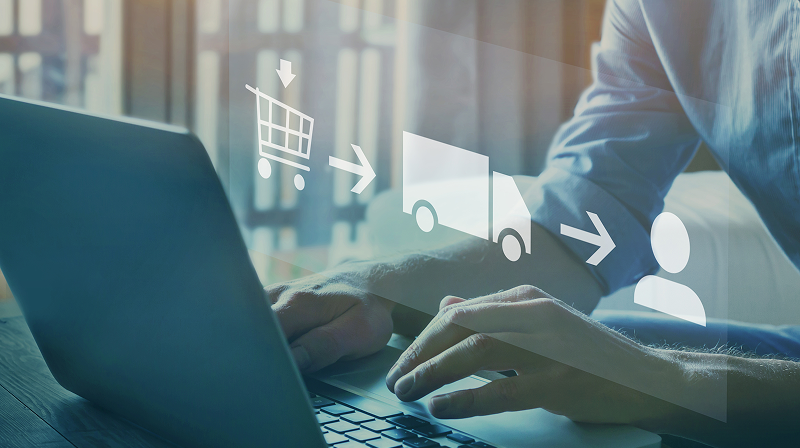
In the last decade, e-commerce has gone from convenience to necessity. With changing consumer behaviors, accelerated digital adoption, and the rise of mobile-first shopping, the industry is witnessing explosive growth. According to industry reports, global e-commerce sales are expected to reach over $8 trillion by 2027. But behind every successful e-commerce brand lies an unsung hero — Last Mile Delivery.
As more customers click “Buy Now,” businesses scramble to fulfill that promise on the final leg of delivery. This last mile is the most complex, cost-intensive, and experience-defining phase of the supply chain. That’s where a Last Mile Transportation Management System (TMS) plays a pivotal role — not just in delivery execution, but in redefining how modern e-commerce logistics work.
Understanding the Challenge: The Delivery Dilemma in E-Commerce
The e-commerce explosion has brought unique challenges for logistics leaders:
● Order Volumes Are Skyrocketing
Thousands of micro-shipments per day.
● Delivery Timelines Are Shrinking
Same-day and next-day delivery is now expected.
● Customer Expectations Are Higher
Real-time updates, flexible delivery windows, and instant feedback.
● Urban Density Is Increasing
Congestion, zero-parking zones, and route complexity.
● Margins Are Thinner
Free shipping isn’t free for the seller.
E-commerce businesses now find themselves in a dilemma — how to deliver faster, better, and cheaper Traditional tools and legacy systems simply cannot keep pace with this demand.
Last Mile TMS: The Digital Backbone of E-Commerce Delivery
A Last Mile TMS is an intelligent logistics platform designed to automate and optimize the delivery operations from the distribution center to the end customer. But modern Last Mile TMS solutions are no longer just about moving packages — they are about orchestrating customer delight, maximizing resource utilization, and driving strategic business insights.
How a Modern Last Mile TMS Adapts to E-Commerce Growth
The rapid rise of e-commerce has not only reshaped how consumers shop but also how logistics providers operate. The traditional delivery models are now considered outdated in the face of today’s dynamic e-commerce environment. From handling massive volumes of daily orders to managing customer expectations for real-time updates and flexible delivery options, logistics needs a digital overhaul — and that’s exactly where a modern Last Mile Transportation Management System (TMS) comes in.
Unlike legacy systems built for linear supply chains, a modern Last Mile TMS is agile, intelligent, and customer-centric. It adapts in real time, aligns with omnichannel delivery models, and transforms the last mile into a strategic growth engine for e-commerce companies.
Let’s break down how a modern Last Mile TMS evolves to support — and even anticipate — the growing demands of the e-commerce boom:
1. Intelligence at the Core: AI & ML for Smarter Routing
AI is revolutionizing route planning. A modern Last Mile TMS can ingest real-time data (like traffic, weather, and road conditions) and dynamically adjust routes to:
● Minimize delivery time
● Maximize the number of successful deliveries
● Reduce fuel consumption and vehicle wear
The use of AI & ML algorithms helps the system learn from historical delivery patterns and continuously improve routing logic.
2. Beyond Visibility: Turning Data into Predictive Insights
Modern Last Mile TMS goes far beyond GPS tracking. It turns raw delivery data into predictive insights that logistics teams can act upon proactively.
● Predict package arrival times using real-time variables.
● Forecast delivery exceptions before they happen and create contingency plans.
● Analyze customer behavior patterns (like preferred delivery windows or frequent
returns) to fine-tune service offerings.
This capability allows brands to move from a reactive delivery model to a predictive one — saving time, costs, and reputational damage.
3. Scalability Without Friction: Designed for E-Commerce Peaks
One of the toughest tests of any delivery system is during demand surges — Black Friday sales, festive seasons, or flash discounts. Traditional systems often crash under such stress, leading to delayed or missed deliveries.
Modern Last Mile TMS platforms are cloud-native and modular, which means they can:
● Scale operations on-demand without performance drops
● Easily onboard new warehouses, hubs, or 3PL partners
● Centralize control of multi-location delivery networks
They are built with elastic infrastructure — adjusting effortlessly to both growth spurts and lean periods, ensuring business continuity and customer satisfaction.
Discover the key benefits of implementing a Last Mile TMS – Read more.
4. Customer-Centric Delivery: Personalization in the Last Mile
In e-commerce, delivery is the final brand impression — and it needs to be memorable. A Last Mile TMS enables personalized, real-time interactions with customers that go far beyond generic tracking numbers.
● Dynamic delivery time slot selection
● Branded tracking pages and notifications
● Live chat support embedded in tracking interfaces
● Feedback capture immediately after delivery
This level of personalization makes customers feel in control and valued, leading to higher brand loyalty and repeat purchases.
Understand critical considerations for logistics software – Click here to learn more.
5. Sustainability and Cost Efficiency: The Green Advantage
With rising awareness about carbon emissions and sustainable commerce, e-commerce brands are under pressure to deliver not just fast, but responsibly. A smart Last Mile TMS enables:
● Route consolidation to reduce vehicle trips
● Carbon emission tracking per delivery
● Idle-time alerts to optimize driver behavior
● Electric vehicle compatibility and routing
By reducing costs and supporting green delivery practices, Last Mile TMS solutions deliver a dual win — for the planet and for the profit margin.
New Frontiers: How Last Mile TMS Supports New E-Commerce Models
Modern commerce isn’t just about warehouse-to-door deliveries. The best Last Mile TMS platforms support:
● Hyperlocal Delivery Models (Dark stores, micro-fulfillment centers)
● Curbside Pickup & BOPIS
● Same-hour delivery for perishables
● Reverse Logistics for Easy Returns
By supporting these emerging fulfillment strategies, TMS becomes the foundation for omnichannel success.
Key Features to Look For in a Last Mile TMS for E-Commerce Brands
| Feature | Why It Matters |
| Robust API Integrations | For seamless syncing with marketplaces, WMS, OMS, CRMs |
| Smart Dispatching (Robodispatch) | To reduce manual errors and optimize driver utilization |
| Delivery Zones & Territory Planning | For optimized load distribution and cost- effective routing |
| Real-Time Dashboards | For better control, faster decisions, and KPI tracking |
| Customer Visibility Portals | To reduce support calls and increase transparency |
| Proof of Delivery (POD) | For quicker closure and dispute reduction |
Conclusion: Powering the Future of E-Commerce Delivery
The e-commerce boom isn’t slowing down. As competition heats up, brands that invest in intelligent, scalable, and customer-first delivery infrastructure will win the loyalty of tomorrow’s buyers.
A modern Last Mile TMS is no longer just a logistics tool — it’s a business enabler. It empowers companies to deliver excellence, not just packages.
If you’re ready to adapt your logistics for the new age of e-commerce, now is the time to evaluate your last mile strategy — and choose a TMS that aligns with your vision for scale, service, and success.








FAQs
It helps manage delivery operations efficiently, ensuring real-time visibility, customer communication, optimized routing, and seamless scalability.
Yes! TMS platforms can scale up or down based on business size, making them ideal for startups to enterprises.
By offering real-time updates, flexible delivery options, and branded communication, it enhances the post-purchase experience.
It refers to AI-driven automatic dispatching, assigning the best driver or route without human intervention.
Absolutely. Most modern platforms allow custom workflows, territory mapping, and API-level integrations.