Blog
How AI Is Revolutionizing Route Planning in Last-Mile Delivery
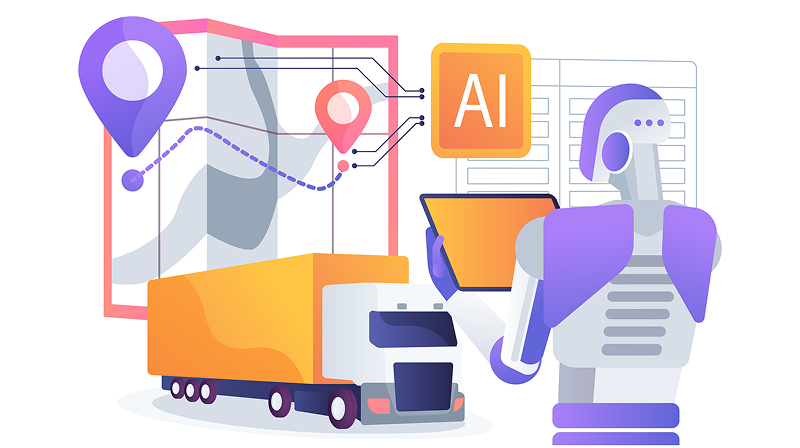
The last mile of delivery is often the most expensive, unpredictable, and complex part of the logistics chain. As consumer expectations shift toward same-day and next-day delivery, logistics providers face mounting pressure to deliver faster while reducing costs. Traditional route planning tools, reliant on static rules and historical averages, fall short in today’s dynamic environment.
Enter Artificial Intelligence (AI). AI-powered route planning is transforming how businesses manage last-mile delivery, making operations more efficient, agile, and intelligent. This blog explores how AI is driving the next generation of logistics innovation—and why companies embracing it are staying ahead.
Why Traditional Route Planning Falls Short
Conventional routing systems rely heavily on preset rules, fixed schedules, and manual intervention. While this may work for smaller or less complex operations, it introduces significant inefficiencies when scaled.
Key limitations of traditional route planning include:
● Inability to adapt to real-time events (traffic, weather, cancellations)
● No learning mechanism from past data or driver performance
● Rigid route assignments that ignore evolving service windows
● Manual re-routing causes delays and inefficiencies
These shortcomings result in delayed deliveries, higher fuel costs, driver frustration, and lost customer trust.
What Is AI-Powered Route Planning?
AI-powered route planning uses machine learning algorithms to analyze historical and real-time data to generate the most efficient routes. Unlike static systems, AI adapts and improves continuously.
How it works:
● AI ingests data from GPS, weather APIs, delivery time windows, driver availability, and order
priorities
● It continuously learns from historical performance (e.g., typical traffic delays, driver speeds,
customer behavior)
● It suggests the best routes not just for today, but optimizes for the long term as well
By doing so, AI enables predictive, personalized, and highly efficient last-mile deliveries.
5 Key Ways AI Transforms Last-Mile Route Planning
AI brings tangible, real-time intelligence to route planning that was previously impossible with rule-based systems. This section explores five critical ways AI is transforming last-mile delivery into a smarter, leaner, and more adaptive process—giving logistics teams the power to react, predict, and optimize like never before.
1. Real-Time Traffic and Weather Adaptability
AI systems process real-time inputs from traffic and weather APIs to dynamically adjust routes. If a storm hits or an accident blocks a road, the software instantly reroutes drivers based on updated conditions—minimizing delays.
2. Demand Forecasting for Smarter Planning
AI predicts high-demand areas and peak delivery windows based on past order patterns, holidays, and regional trends. This allows logistics teams to pre-position drivers, vehicles, or inventory closer to customers before demand spikes.
3. Dynamic Re-Routing for Exceptions and Delays
With AI, rerouting is automatic. If a customer cancels a delivery or an order changes, the system reallocates tasks and recalculates the most efficient delivery plan for all remaining stops.
4. Fuel-Efficient Path Optimization
AI helps reduce fuel costs by prioritizing routes that minimize mileage and idle time. It even takes into account vehicle load, stop sequences, and known congestion patterns to maximize fuel efficiency.
5. Better Driver Allocation and Load Balancing
Machine learning models assess driver strengths, geographic knowledge, and past delivery performance to assign the right driver to the right route. This improves on-time performance and reduces the stress of unfamiliar areas.
Want AI to plan your last mile routes?
👉 Explore nuVizz Route Optimization
Business Benefits of AI-Driven Route Optimization
Businesses leveraging AI for route planning enjoy clear advantages:
● Reduced delivery times: AI adapts to road conditions to get packages delivered faster.
● Lower operational costs: Route efficiency reduces fuel usage, overtime, and fleet wear.
● Improved customer satisfaction: On-time deliveries and accurate ETAs build loyalty.
● Increased driver productivity: Smart assignments and navigation reduce idle time.
● Scalability: AI allows businesses to grow without increasing logistics complexity.
How nuVizz Is Using AI to Optimize Last-Mile Logistics
nuVizz has embedded advanced AI models within its Last Mile TMS platform to bring real-time intelligence to every stage of delivery. The platform delivers:
● Real-time route optimization using live traffic, service windows, and driver availability
● Dynamic re-routing and exception handling without manual intervention
● AI-based fuel cost reduction by optimizing stop sequences and distances
● Driver and vehicle-level insights for performance tuning
● Integration-ready APIs to connect with TMS, ERP, and WMS systems
With nuVizz, companies gain visibility, flexibility, and control over last-mile delivery like never before.








FAQs
AI-powered route planning uses machine learning to analyze historical and real-time data (traffic, weather, delivery windows) to optimize delivery routes automatically and efficiently.
AI helps improve last-mile delivery by enabling real-time re-routing, minimizing delays, reducing fuel consumption, and ensuring better driver assignments—leading to faster and more accurate deliveries.
Key benefits include reduced delivery time, lower operational costs, improved route accuracy, enhanced customer experience, and predictive insights for better planning.
Yes. By adjusting routes based on live traffic or weather conditions and enabling proactive rerouting, AI significantly reduces failed deliveries and missed time windows.
Absolutely. AI systems like nuVizz scale with your operations—from regional fleets to enterprise-level logistics—without increasing complexity.