Blog
Reverse Logistics and Returns Management Solutions
For years, the logistics industry has been obsessed with the “forward” journey—getting the package to the doorstep faster, cheaper, and with better visibility. But while we were optimizing the last mile, a massive challenge was building up in the shadows: the journey back.
According to recent 2025 industry projections, merchandise returns in the U.S. alone are expected to reach nearly $890 billion, representing roughly 17% of all retail sales.
In the past, returns were treated as a nuisance—a “cost of doing business” handled by a few staff members in the back of a warehouse. Today, they are a critical operational threat. An inefficient reverse logistics process doesn’t just annoy customers; it bleeds profit margins dry through high transportation costs, inventory deprecation, and wasted labor.
To survive in an era of “free returns” and “try-before-you-buy,” businesses must stop treating returns as an afterthought. They need to deploy Reverse Logistics Solutions that are just as sophisticated as their delivery networks.
What is Reverse Logistics?
Reverse Logistics is the supply chain process of moving goods from their final destination (the consumer) back to the seller or manufacturer. unlike traditional logistics, the goal is to recapture value or ensure proper disposal. This encompasses return authorization, transportation, testing, refurbishment, and recycling.
What is the difference between Reverse Logistics and Returns Management? While often used interchangeably, there is a nuance:
- Returns Management is the broader strategy and customer-facing policy (e.g., “How easy is it to click ‘return’ on the app?”).
- Reverse Logistics is the physical execution—the trucks, routes, and warehouses that actually move the product back.
The “Reverse” Paradox: Why Going Backward is 3x Harder
Most supply chains are designed to flow in one direction: downstream. Turning that river upstream creates friction at every step. In fact, industry data suggests that processing a return can cost up to 59% more than the original cost of selling the item.
Why is it so difficult?
● The “Many-to-One” Logistics Nightmare
Forward logistics is efficient because it is “One-to-Many”—a full truck leaves a central warehouse and drops off packages. Reverse logistics is “Many-to-One.” It involves sporadic, unpredictable pickups from thousands of different doorsteps, often requiring a truck to go miles off-route for a single item.
● Quality Uncertainty (The “Mystery Box”)
When a product leaves the warehouse, it is pristine and barcoded. When it comes back, it might be opened, damaged, missing parts, or simply unwanted. Assessing this “disposition” requires manual labor and specialized workflows that standard delivery drivers aren’t equipped to handle.
● Inventory Depreciation
Speed is profit. Fashion items lose value seasonally; electronics lose value monthly. Every day a returned item sits in a truck or a holding cage, it becomes less sellable.
Why traditional algorithms fail in modern logistics.
See AI in ActionTech Solution: Turning Returns into Revenue
To solve this, businesses are moving away from manual return slips and adopting Reverse Logistics Technology. This isn’t just about printing a label; it’s about digitizing the physical movement of the goods.
Modern logistics technology solves the “Reverse Paradox” in three ways:
A. Integrated RMA & Disposition
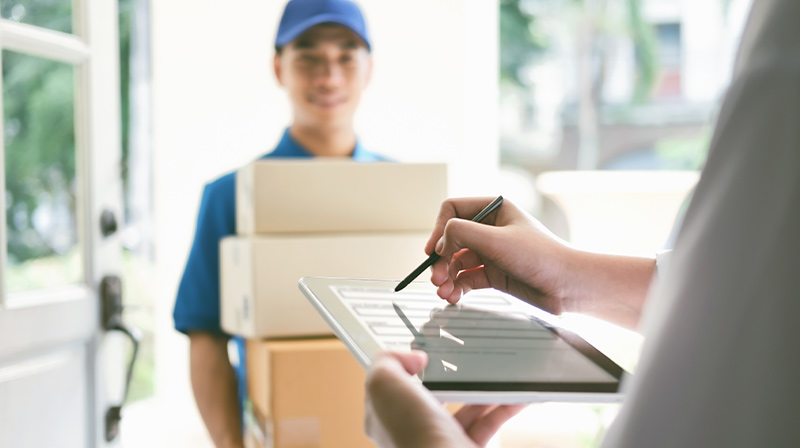
Advanced systems integrate the Return Merchandise Authorization (RMA) directly into the driver’s app. When a driver arrives for a pickup, the app prompts them to verify the item’s condition (e.g., “Is the box sealed?”, “Take a photo of the damage”). This “gatekeeping” ensures that trash doesn’t clutter the warehouse.
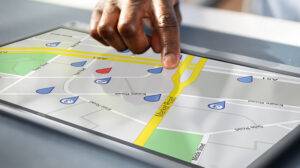
B. Dynamic Route Interleaving
This is the game-changer for profitability. Instead of sending a dedicated “returns truck,” modern algorithms interleave pickups with deliveries.
Example: A driver drops off a package at House A, then drives two blocks to pick up a return at House B. This reduces the “cost per stop” significantly.
C. The Execution Partner
Planning the return is one thing; executing it is another. Retailers are increasingly relying on specialized last mile delivery platforms to orchestrate these complex moves. By using a platform that connects internal fleets with gig-drivers and third-party carriers, retailers can expand their “return footprint”—offering customers doorstep pickup without buying more trucks.
Transform your logistics partnership with the right software. Upgrade Now
Sustainability & The Circular Economy
Beyond the financial cost, the “returns tsunami” has a massive environmental price tag. It is estimated that in the U.S. alone, returns generate over 24 million metric tons of CO2 annually—roughly equivalent to the emissions of 3 million cars. Worse, nearly 9.5 billion pounds of returned inventory ends up in landfills because it is cheaper to throw away than to process.
This is where Smart Reverse Logistics becomes a sustainability superpower. By optimizing the reverse loop, companies can transition from a “Linear Economy” (Take-Make-Dispose) to a “Circular Economy” (Reduce-Reuse-Recycle).
Here is how technology drives Green Logistics:
● Reduced Empty Miles
Traditional delivery trucks often return to the warehouse empty (“deadheading”). An orchestration platform can fill that empty space with return pickups, maximizing fuel efficiency.
● Local Disposition
instead of shipping a returned toaster across the country to a central hub, smart software can route it to a local refurbishment center or charity, drastically cutting carbon emissions.
● Resale & Refurbishment
By grading items at the point of pickup (using the driver app), viable products can be instantly re-routed to secondary markets or outlet stores, keeping them out of the trash and back in circulation.
Conclusion
The era of treating returns as an “unavoidable nuisance” is over. In today’s market, your reverse logistics strategy is just as visible to the customer—and just as critical to the bottom line—as your delivery speed.
A strong returns strategy does three things: it protects your profit margins, it boosts customer loyalty (because nobody likes a difficult return), and it measurably reduces your carbon footprint. But strategy without execution is just a document. To truly close the loop, you need an execution partner capable of navigating the complexity of the last mile, both forward and backward.
Don’t let your supply chain be a one-way street. Master the return journey, and you unlock a hidden source of efficiency and value.

FAQs
Reverse logistics is often 3x more expensive because it lacks the uniformity of forward logistics. While forward shipments are consolidated and planned (one truck to many stops), reverse shipments are sporadic and "many-to-one," requiring manual handling, individual quality checks, and inefficient pickup routes.
Software automates the physical execution. It allows you to offer self-service returns to customers, automatically dispatches the nearest driver for pickup, and provides real-time visibility into incoming inventory so warehouses can plan accordingly.
The Circular Economy is a model where products are kept in use for as long as possible. In logistics, this means designing return workflows that prioritize repair, refurbishment, and resale over disposal, turning waste back into revenue.
Gatekeeping is the screening process used to validate a return before it enters the supply chain. This can happen digitally (via a customer portal) or physically (at the doorstep). By equipping drivers with a mobile app to verify the item's condition or serial number before loading it onto the truck, companies prevent invalid, damaged, or fraudulent returns from cluttering their network. This "filter" saves transportation costs by stopping bad returns at the source.